by Gene Caballero | February 25, 2026
How to Choose the Best Lawn Care Company in Austin in 2026
Choosing a lawn care company in Austin used to be straightforward. In 2026, with Stage 3 Exceptional Drought restrictions active and fines of up to $1,000 per watering violation, the decision carries real financial and environmental consequences. The right provider needs to understand Austin's water regulations, hold proper Texas Department of Agriculture licensing, and offer transparent pricing. Not just show up with a mower.
At GreenPal, we connect over a million homeowners nationwide with vetted local lawn care professionals, including thousands of Austin-area providers. Through our platform, we've watched the Austin market shift dramatically over the past year. This guide breaks down exactly what to look for, what to avoid, and what a fair price looks like when hiring lawn care in 2026.

Austin's water situation in 2026 is serious. The Barton Springs Edwards Aquifer Conservation District reported flow at approximately 12.5 cubic feet per second in early 2026. That's dangerously close to the 10 cfs threshold that triggers Stage 4 Emergency Response. Jacob's Well Spring has reported zero flow since November 2025, and the Lowe-Coronado Middle Trinity monitor well continues to hit historic lows.
Replenishing these aquifers will require multiple years of significantly above-average rainfall. With weakening La Niña conditions and NOAA forecasting continued below-average precipitation for the Southern U.S., that relief isn't coming soon.
For homeowners, this means a provider who knows basic mowing isn't equipped for 2026 conditions. You need someone who understands soil compaction in Austin's clay-heavy ground, knows when and how your lawn can legally be watered, and can recommend services like core aeration that help your lawn survive on less water.
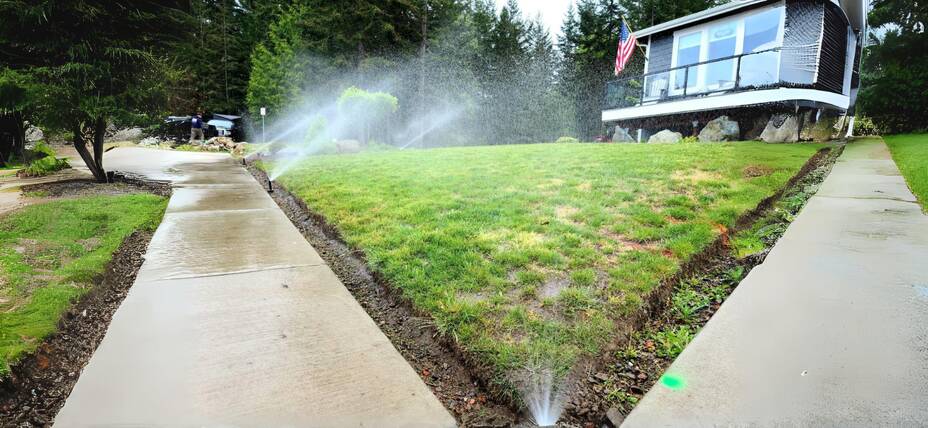
Under Stage 3 rules, the city is targeting a 30% reduction in average daily water use. Your lawn care provider should know these schedules and be able to explain them to you.
Irrigation Method |
Address Type |
Permitted Day(s) |
Allowed Hours |
Automatic Systems |
Even |
Thursday |
12 AM - 10 AM, 7 PM - 12 AM |
Automatic Systems |
Odd |
Wednesday |
12 AM - 10 AM, 7 PM - 12 AM |
Hose-end Sprinklers |
Even |
Thursday and Sunday |
12 AM - 10 AM, 7 PM - 12 AM |
Hose-end Sprinklers |
Odd |
Wednesday and Saturday |
12 AM - 10 AM, 7 PM - 12 AM |
Drip Irrigation |
All |
Wed/Sat or Thu/Sun |
12 AM - 10 AM, 7 PM - 12 AM |
Source: City of Austin and Travis County MUD drought contingency plans.
Beyond the schedule, Stage 3 prohibits washing vehicles with hoses and topping off pools or fountains. But there are exemptions worth knowing about. Watering with a hand-held hose is allowed at any time. Soaker hoses and Treegators for trees and vegetable gardens are also typically exempt from the once-per-week restriction. A knowledgeable provider will use these exemptions to keep high-value trees and shrubs alive while staying within the turfgrass mandates.
Penalties for violations can reach $1,000 per occurrence, and repeat offenses can result in flow-restriction devices or termination of water service. If your lawn care company doesn't understand these rules, their mistakes become your fines.

Pricing has shifted due to inflation, labor shortages, and the added complexity of drought-related maintenance. Here's what to expect in 2026.
Service |
Typical Price Range (2026) |
Frequency |
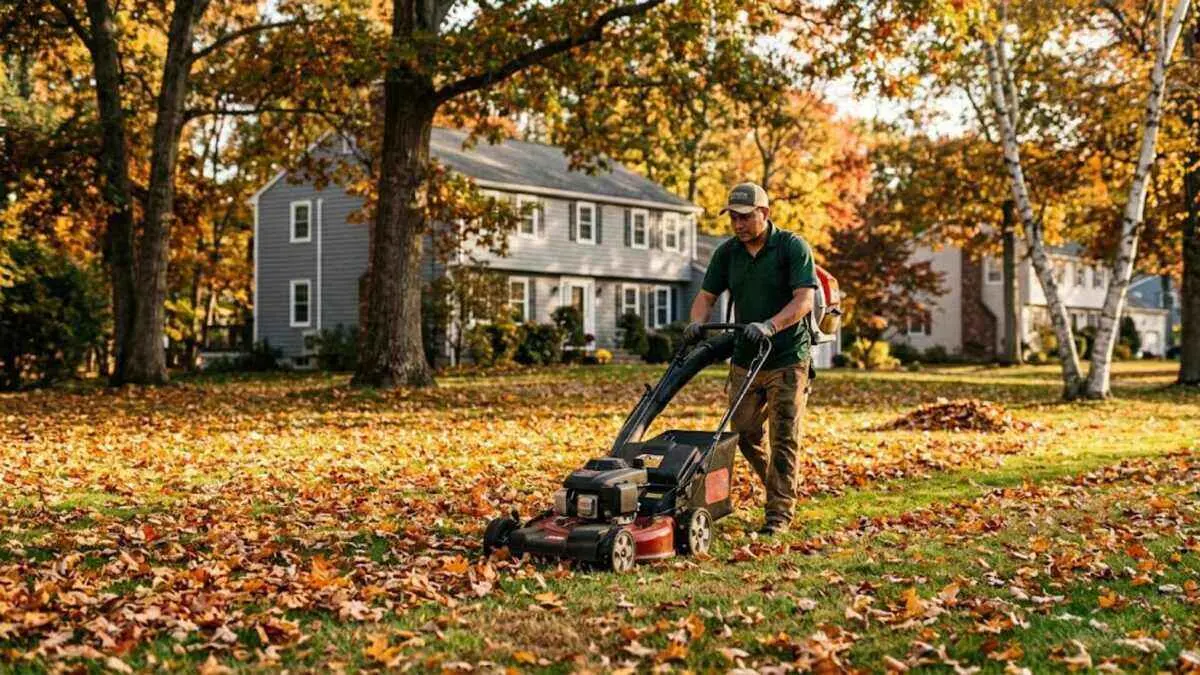
Basic Mowing (1/8 to 1/4 Acre) |
$30 - $85 per visit |
Weekly or Bi-weekly |
Full-Service Maintenance |
$100 - $450 per month |
Monthly |
Fertilization Treatment |
$50 - $150 per session |
3-4 times per year |
Core Aeration |
$75 - $250 per session |
Annual or Bi-annual |
Dethatching |
$150 - $300 per session |
As needed |
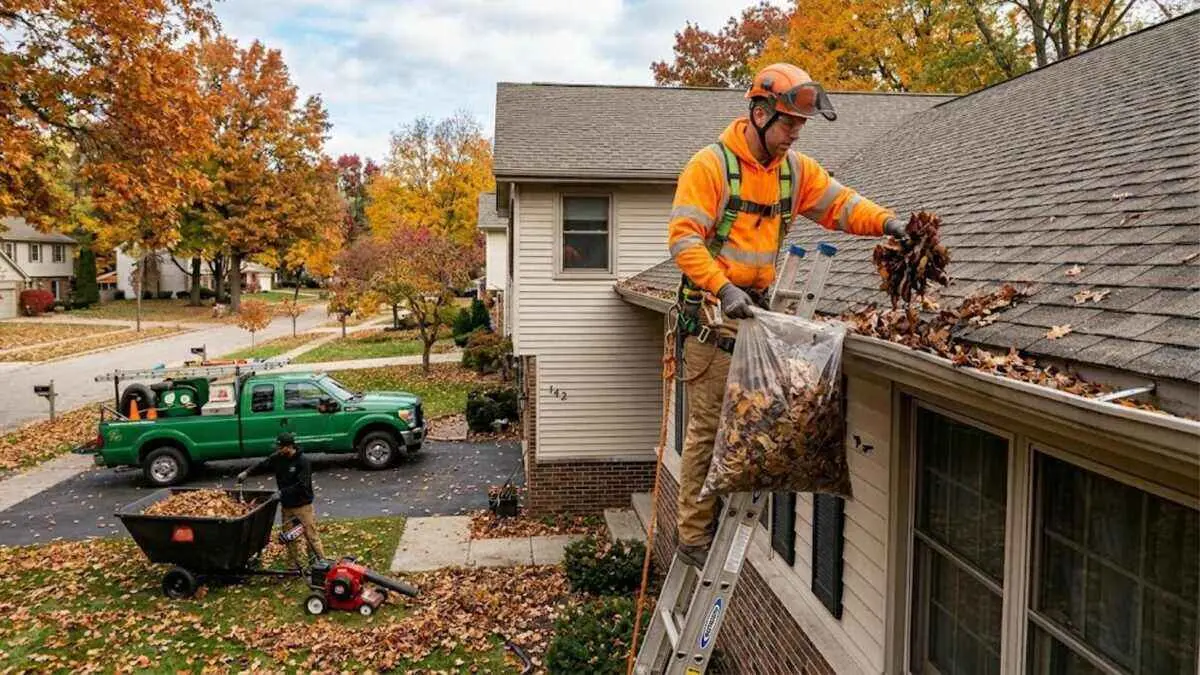
Leaf and Debris Removal |
$100 - $300 per visit |
Seasonal |
Source: Synthesized from Today's Homeowner, HomeGuide, and LawnGuru market data.
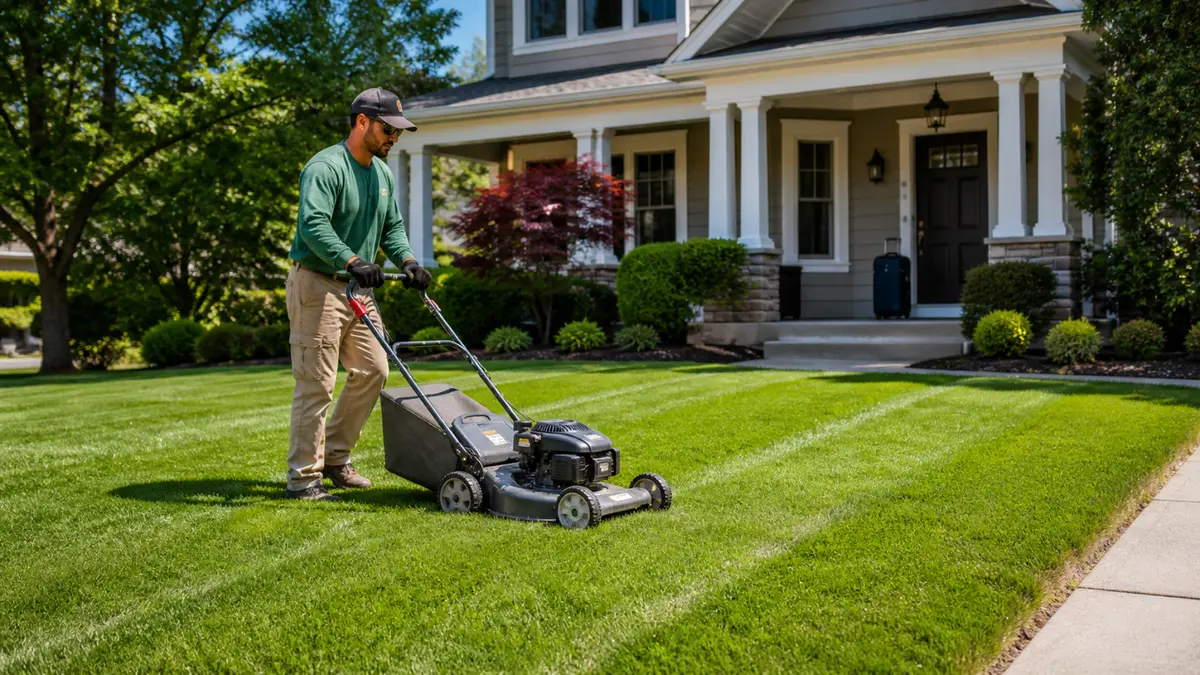
Standard residential lots under a quarter acre typically run $45 to $65 per visit, while larger properties (half acre to one acre) range from $90 to $130. For a deeper breakdown, see our lawn mowing cost guide.
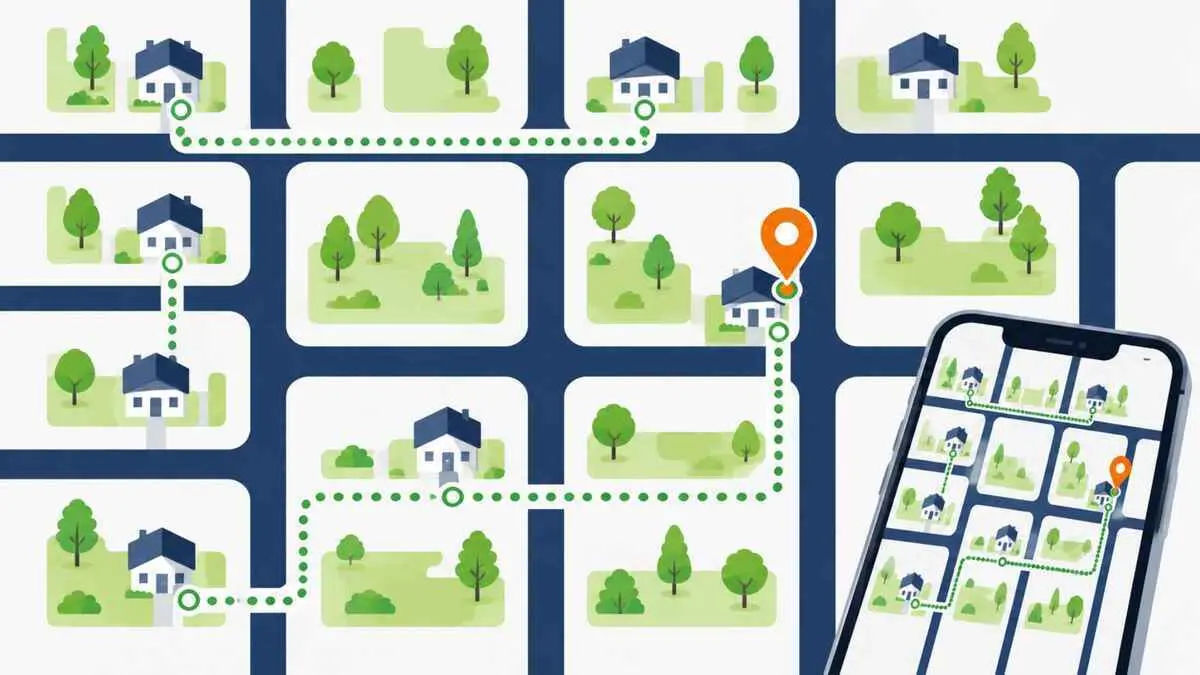
One pricing factor many Austin homeowners don't know about: route density. Professionals who are already servicing other properties on your street often offer lower rates, sometimes as low as $33 per cut. Serving multiple homes in the same neighborhood reduces their travel overhead, and they pass those savings along. Digital marketplace platforms make it easier to find these local pros, which is one reason homeowners in established neighborhoods often get better rates through apps than through traditional companies.
A major pitfall in the Austin market is hiring based solely on the lowest price. Budget services frequently lack proper insurance and licensing. If an uninsured worker is injured on your property, you could be held legally responsible for their medical bills. Inexperienced providers may also ignore Austin's watering schedules, leading to city fines that far outweigh what you saved on the mow.
By 2026, most Austin residents find lawn care through digital platforms. But the internal mechanics of these platforms vary, and those differences affect both your price and your experience.
The key distinction: does the platform let you choose your provider, or does it assign one for you?
Competitive bidding platforms (like GreenPal) let multiple local providers view your property details and send quotes. You compare pricing, ratings, reviews, and even specific equipment before hiring. Assignment-based platforms use an algorithm to pick a provider and hand you a fixed price. Some users find that model leads to inconsistency in quality and difficulty resolving disputes within the industry-standard five-day window.
Commission structure matters too. Some platforms charge providers 15-20% of each job, a cost that gets passed along to you in higher prices. At GreenPal, our commission is around 5%. Providers keep more of their earnings, which keeps them active on the platform and able to offer competitive rates. For a detailed comparison, see our GreenPal vs. LawnStarter breakdown.
One other metric worth knowing: internal data from leading platforms shows that 82% of users receive their first lawn cut within 48 hours of signing up, with an average turnaround of about 20 hours. That speed is especially useful if you're facing an HOA deadline or were just dropped by a previous provider.
Price and convenience matter, but they shouldn't be your only criteria. Here's what to verify before you hire anyone.

In Texas, anyone applying pesticides, herbicides, or regulated fertilizers for hire must be licensed through the Texas Department of Agriculture. This applies even for general-use products available over the counter.
There are three relevant license categories:
Commercial Applicator: Operates a business applying pesticides to others' property for compensation
Noncommercial Applicator: Licensed individuals who apply pesticides as part of job duties but not for hire
Licensed Technician: Works under the direct supervision of a licensed applicator
Professionals must pass exams covering categories like "Lawn and Ornamental" (Category 3A) and earn five continuing education credits per year. You can verify any company's status through the TDA Texas Agriculture Portal or by checking for the mandatory vehicle identification decal on their work vehicles.
The 2026 requirements for lawn care businesses in Texas are clear:
Property Damage: $100,000 minimum per occurrence
Bodily Injury: $100,000 minimum per occurrence
General Aggregate: $200,000 minimum
Ask for proof of coverage before any work begins. This protects you from liability if something goes wrong on your property.
Online reviews are still the most reliable indicator of a company's performance, but you need to read them strategically. Look for verified customer tags and consistent patterns rather than just star counts.
The signals that matter most in Austin's 2026 market:
Reliability: Do they show up on schedule and communicate clearly via text or app?
Attention to detail: Do they trim edges precisely, blow clippings off hard surfaces, and respect the property (locking gates, avoiding garden beds)?
Responsiveness: How quickly do they respond to messages or issues?
On GreenPal, you can see how many jobs a provider has completed and their average star rating before you book. For more tips on evaluating professionals, check out our guide on finding the right pro.
The City of Austin offers rebates that can significantly reduce the cost of making your yard more drought-resilient. A good lawn care provider should know about these programs and be able to help you take advantage of them.
Rebate Program |
Maximum Incentive |
Eligible Actions |
WaterWise Landscape |
$3,000 per property |
Converting turf to native plant beds |
WaterWise Rainscape |
$1,500 per property |
Installing berms, swales, or rain gardens |
Rainwater Harvesting |
$5,000 lifetime |
Installing barrels or cistern systems |
Landscape Survival Tools |
$120 per year |
Mulch, compost, and core aeration |
Irrigation Upgrade |
$1,000 per site |
Smart controllers or drip conversion |
Pool Cover Rebate |
$200 per year |
Installing a pool cover |
Source: Austin Water conservation rebates.
A few things to know before applying. Your lawn must have at least 75% healthy turf grass at the time of inspection to qualify for the WaterWise Landscape rebate. Dead lawns don't qualify. Artificial turf and permeable concrete are also not eligible. Most programs require pre-approval from Austin Water before work begins, so plan ahead.
The Landscape Survival Tools rebate is particularly relevant for routine maintenance. It covers the combination of mulch, compost, and core aeration that helps lawns retain moisture during drought. At $120 per year, it's a straightforward way to offset part of your annual lawn care costs.
Based on what we see across thousands of Austin service requests on our platform, plus what industry experts consistently flag, these are the mistakes that cost homeowners the most:
Hiring too fast out of desperation. Rushed decisions lead to unvetted, unreliable providers. Using a platform with a large pool of active pros makes it easier to find a reliable match quickly, even on short notice.
Ignoring credentials. These workers will have access to your backyard and gate codes. Make sure the company you hire performs background checks on their employees and holds current insurance.
Sacrificing expertise for price. A provider who doesn't understand Austin's current drought conditions can cause long-term lawn damage. Improper mowing heights stress grass during drought. Misapplied fertilizers can burn a lawn that's already struggling. The cost of repairing that damage will always exceed what you saved by going cheap.
Not verifying licensing seasonally. Regulatory status can change. Make it a habit to check the TDA portal at the start of each season to confirm your provider is still in good standing.
If you're ready to find a lawn care provider in Austin, GreenPal lets you get up to five competitive quotes from vetted local professionals in minutes. Compare pricing, reviews, and availability, then choose the provider that fits your needs. There's no cost to sign up and no obligation to accept a quote.
by Gene Caballero | February 25, 2026