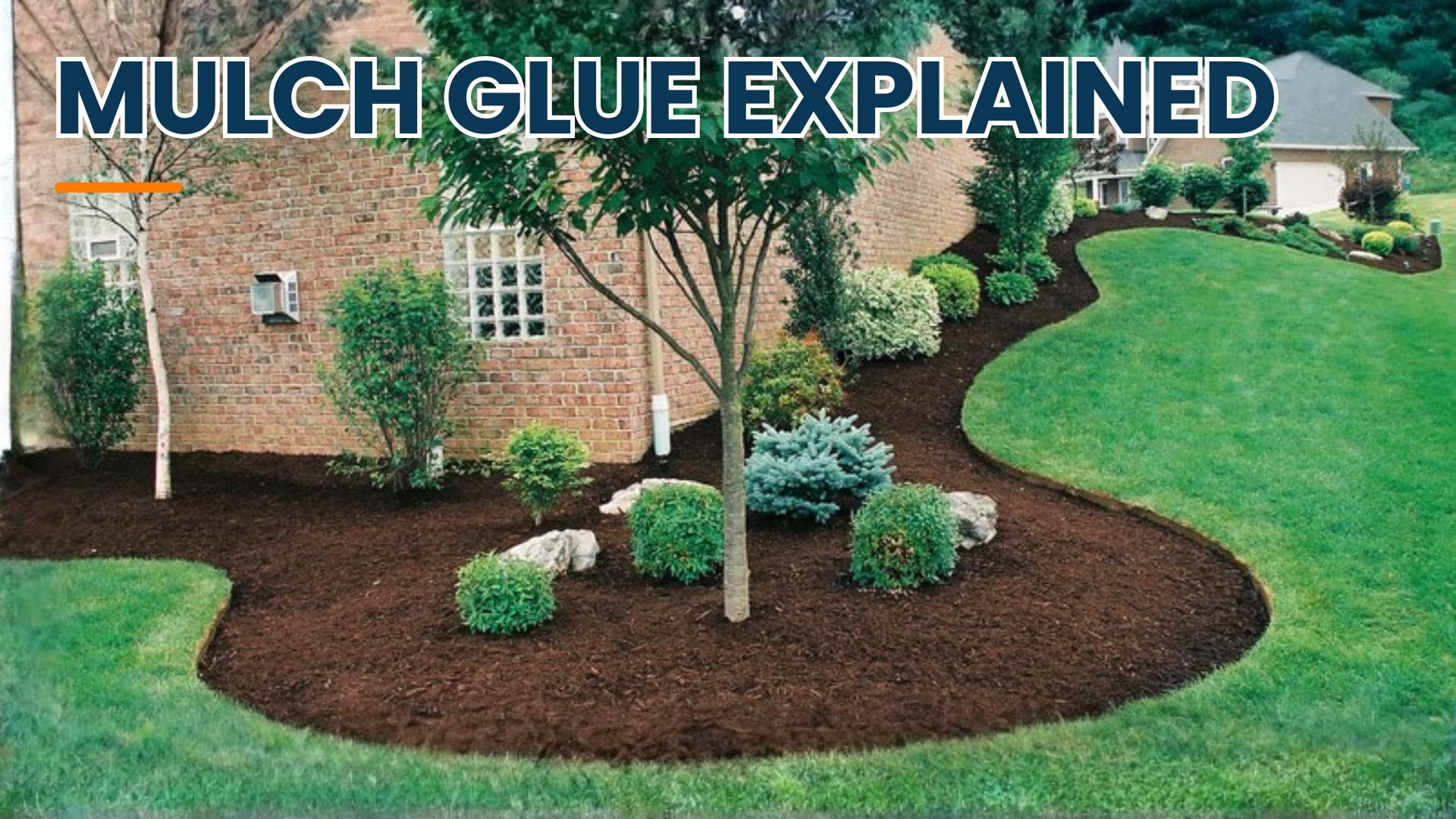
What is mulch glue? Your guide to landscape adhesives
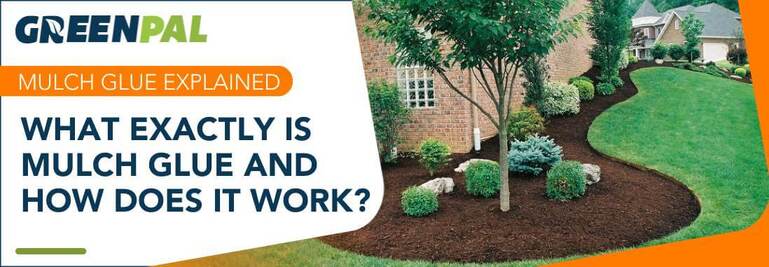
Mulch glue is a landscape adhesive that holds mulch and other landscaping materials in place. Its popularity among landscape professionals and homeowners trends upward due to its many benefits.
We’ve all been there: the wind and the rain and the leafblower and the dog all messing up well-placed mulch. Mulch glue offers a solution. Before you spray any glue, make sure your mulch depth is right: how thick should I mulch my beds.
In this guide, we'll cover:
What is mulch glue
Benefits of mulch glue
Where to use mulch glue
How to apply mulch glue
Frequently asked questions
What is Mulch Glue?
Mulch glue is an adhesive made from either natural or synthetic materials that bind mulch particles to each other or the landscape. It's becoming increasingly popular among lawn care professionals and homeowners for its effectiveness in keeping mulch in place.
Need help with lawn care? Get started with GreenPal.
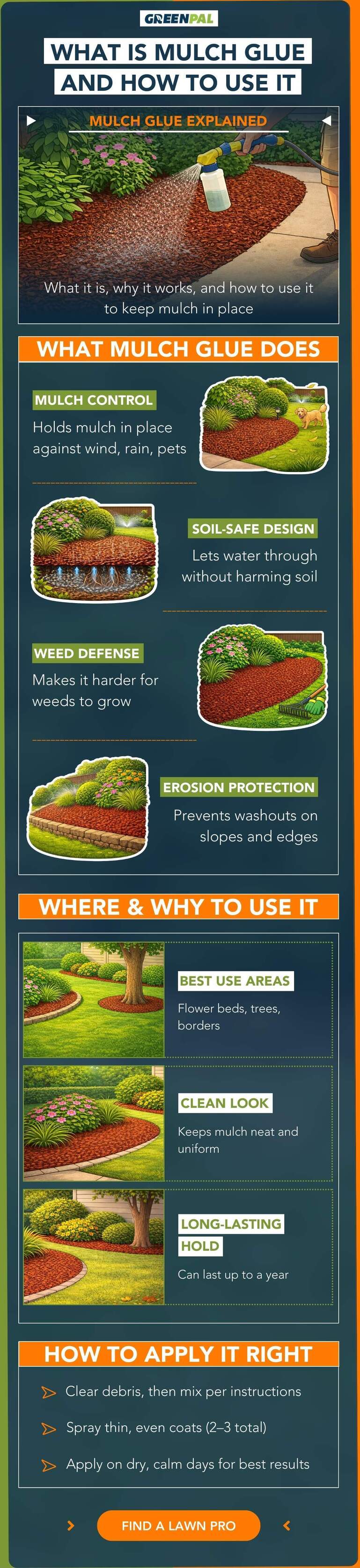
Mulch glue is made of plastic polymers. Mulch glue does not release toxins into the soil and doesn't feature a leaching effect; this means that while it lets water go through, it won't seep into the ground.
Benefits of Mulch Glue
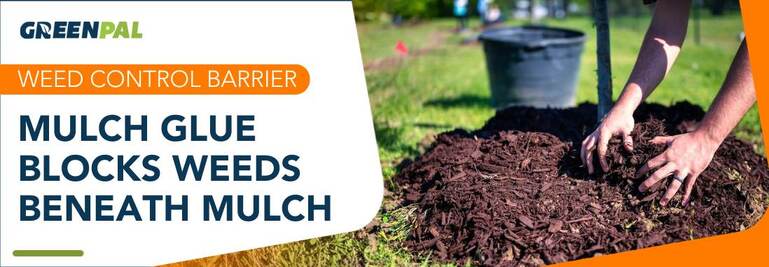
One of the advantages of using mulch glue is that it helps prevent weeds from growing through your mulch layer. Mulch glue helps seal mulch and other landscaping materials, which presents weeds with a difficult — near impossible — environment to germinate and push through.
Mulch glue is also porous, allowing water to flow into the soil.
Mulch glue can also help prevent erosion. If you inadvertently run your leaf blower past a garden bed, mulch glue will save the trouble of raking everything back into place.
Mulch glue also helps add to the aesthetic appeal of your garden and yard by keeping mulch in place. Storms pry mulch loose. Rain loves washing mulch away, and wind enjoys shuffling it around, but mulch glue prevents that.
According to many product labels, mulch glue can keep its hold for up to a year. Many products dry quickly (you're looking at half a day to a day). And many are pet-safe.
Where to Use Mulch Glue
Mulch glue will hold mulch in place well in a residential garden and around flower beds and trees, making it a great item to have on hand for small- to medium-scaled residential landscaping projects. Mulch glue has proven itself in real-world applications, from small gardens at a suburban home to larger garden beds on a commercial property.
Need help with lawn care? Get started with GreenPal.
How to apply mulch glue
Mulch glue products have their specifications, but it's generally an easy process: mix, spray, and spray again. If you’re hiring this out, here’s how to add services like shrub pruning and mulch in your GreenPal account. To get the most out of applying mulch glue, there are a couple of steps to guarantee a great result:
1) Start by cleaning the area. Get rid of any weeds and debris.
2) After cleaning the area, follow the product's mixing chart for the best results. Make sure to follow all instructions to prevent clogs. Many products have specific guides for heavy and light mulch glue applications, requiring more or fewer parts of glue and water based on what the homeowner attempts to keep in place: mulch, gravel, sand, wood chips, pine straw, or pebbles.
3) After getting the right mix, spray the mulch glue over the layer of mulch; the mulch glue should be applied in a smooth, thin coat. Many products suggest using a mechanical sprayer for application, while some mention that watering cans also make for an effective spray tool.
4) Coat again based on instructions. Most products suggest two to three coats for the best results.
Simple.
It's a good idea to wear latex gloves and protective eyewear as safety precautions. Mulch glue is an effective, easy-to-use product.
Common Mistakes to Avoid
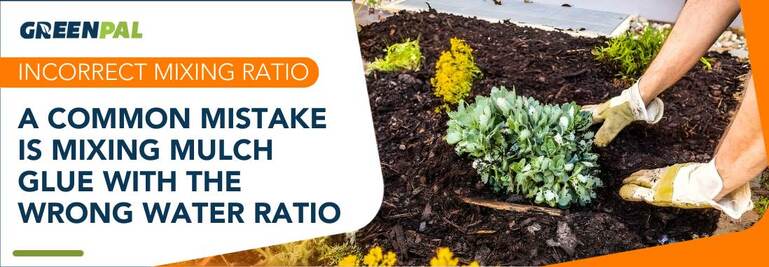
One of the most common errors homeowners make when applying mulch glue is using too much or too little based on the landscaping materials they're attempting to adhere to. The issue arises when the homeowner uses too much or too little water and glue when mixing.
More glue will be needed for heavier materials like gravel. Too little, and the glue will likely be ineffective.
Homeowners should also monitor the weather. If it rains, wait until it’s dry to begin applying mulch glue. Avoid windy days as well.
Need help with lawn care? Get started with GreenPal.
FAQs
How long does mulch glue last?
Many products claim they last for up to a year. Of course, many factors play into the durability of an application's lifespan: how well it was applied, weather, climate, and foot traffic — to name a few.
Will water go through mulch glue?
Yes. Mulch glue products are water-malleable and allow water to flow through.
Is mulch glue safe for pets?
Many, but not all, mulch glue products are safe for pets. It is essential for homeowners to do their due diligence and to read all labeling to ensure the product they choose is safe for pets.
Quick Overview
Mulch glue binds landscaping materials together. There are many benefits to using mulch glue:
Mulch glue allows water to flow into the soil.
It can help prevent erosion.
It saves you time from raking in materials the wind moves around.
Mulch glue enhances the look of your gardening area.
Mulch glue is easy to apply and can last up to a year. When applying mulch glue, there are a few things to keep in mind (e.g., watch the weather and wear gloves and protective eyewear), but it's a straightforward, helpful product to have on hand for your next landscaping project.