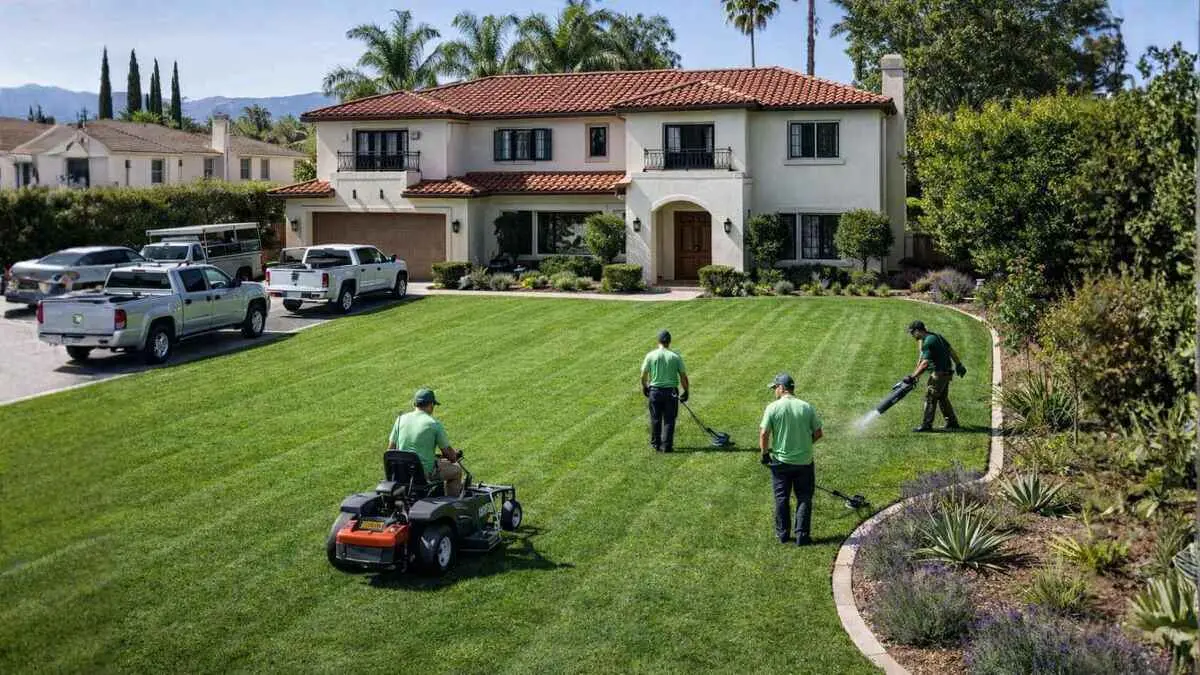
 How to Choose the Best Lawn Care Company in Los Angeles in 2026


How to Choose the Best Lawn Care Company in Phoenix in 2026
by Gene Caballero | February 17, 2026
How to Choose the Best Lawn Care Company in Phoenix in 2026
Finding reliable lawn care in Phoenix has never been more challenging. A labor shortage affecting the entire construction and maintenance industry, combined with record-breaking heat and rising costs, has fundamentally changed what it means to hire a "good" lawn care company. In 2026, the best provider isn't necessarily the cheapest one. It's the one that actually shows up.
At GreenPal, we've connected over a million homeowners with vetted lawn care professionals across the country, and Phoenix is one of our most active markets. Through that experience, we've learned what separates reliable providers from the ones who ghost you mid-season. This guide breaks down exactly what Phoenix homeowners should look for, what to avoid, and how to protect themselves when hiring lawn care this year.
Why Hiring Lawn Care in Phoenix Is Different in 2026
The Phoenix lawn care market is dealing with several converging pressures that didn't exist five years ago.
The Labor Shortage Is Real
According to the Associated Builders and Contractors, the construction and maintenance industry needs to attract 349,000 net new workers in 2026 just to meet current demand. In Arizona, the problem is worse because landscape workers are competing with warehousing and manufacturing jobs at companies like TSMC and Intel. Those employers offer climate-controlled environments and signing bonuses that outdoor service companies can't match.
The result? A survey of commercial landscape professionals found that 54% cite employee retention as a top business risk for 2026. For homeowners, this means the "ghosting" phenomenon, where contractors simply stop showing up or responding, has become common.
Extreme Heat Changes Everything
Phoenix experienced temperatures above 110°F for 19 consecutive days in 2025. The physical toll on outdoor workers has forced the industry to adapt. Crews that used to service 15 properties per day are now capping at 10 to comply with heat safety protocols. This reduction in capacity tightens the supply of available labor hours, driving up prices and making scheduling flexibility harder to find.
Your Lawn Is a Financial Asset
A well-maintained landscape in Phoenix can increase property value by up to 15%, according to local real estate data. But the flip side is also true: neglect from an unreliable vendor can lead to rapid depreciation, especially when mature trees die or irrigation systems fail during peak heat.
What a Basic Lawn Mowing Service Should Include
Before comparing companies, it helps to understand what you're actually paying for. A standard residential mowing service in Phoenix should include:
Professional grass cutting to the appropriate height for your turf type
String trimming (weed whacking) around edges, fences, and obstacles
Edging along sidewalks, driveways, and walkways
Blowing or cleanup of grass clippings from hard surfaces
Most services mulch the clippings rather than bag them, which returns nutrients to the soil. Bagging typically costs extra.
What's usually not included: fertilization, weed control, aeration, irrigation repair, or tree trimming. These are often arranged separately after you establish a relationship with a provider.
Current Lawn Care Pricing in Phoenix (2026 Benchmarks)
Price discovery can be frustrating in this industry. Based on aggregated transaction data from January 2026, here's what Phoenix homeowners should expect to pay:
Service |
Low End |
Market Average |
High End |
Weekly Mowing |
$30 |
$45-$55 |
$70+ |
Bi-Weekly Mowing |
$40 |
$55-$65 |
$80+ |
Aeration |
$75 |
$125 |
$200 |
Tree Trimming |
$270 |
$600 |
$1,800+ |
Yard Cleanup |
$190 |
$350 |
$1,000+ |
These prices are for standard residential lots. Larger properties, difficult access, and overgrown grass will push costs higher.
Why the Lowest Bid Is Often a Red Flag
An aggressively low bid ($20-$25 for a standard lot) is economically unsustainable for a legitimate business carrying insurance and proper equipment. Low-cost operators frequently use cheap initial pricing to secure customers, then either raise rates dramatically or disappear when a higher-paying job comes along.
Targeting the median price range ($45-$55) typically gets you a vendor with a sustainable business model and better long-term reliability.
How to Vet a Lawn Care Company in Phoenix
The vetting process matters more now than it did a few years ago. Here's what to look for:
Check Their Communication Style
How a company responds before you hire them is usually how they'll respond after. Red flags include unanswered calls, full voicemails, and no written communication trail. Companies that use app-based scheduling, text notifications, and send photos of completed work tend to be more reliable.
Verify Insurance
General Liability Insurance is non-negotiable for any service provider entering your property. If an uninsured worker is injured on your property, or if a rock from a mower shatters your sliding glass door, your homeowner's insurance may be the primary target for claims.
Ask for a Certificate of Insurance (COI) sent directly from their broker. This prevents forged documents.
Understand When a License Is Required
In Arizona, the Registrar of Contractors (ROC) oversees licensing for construction professionals. A CR-21 license authorizes irrigation system work, non-loadbearing concrete, pavers, and retaining walls up to three feet.
However, Arizona has a "minor work" exemption: a license isn't required if the total contract price is under $1,000 and no building permit is needed. Routine lawn mowing typically falls under this exemption, so many legitimate mow-and-blow crews operate legally without an ROC license.
The risk with unlicensed operators is that the ROC can't intervene if something goes wrong. If an unlicensed landscaper takes a deposit and disappears, your only recourse is civil court.
Ask the Right Questions
When interviewing potential vendors, these questions serve as a stress test for their legitimacy:
"What is your protocol for heat safety in July and August?" Look for answers about early start times and hydration breaks. Avoid crews claiming they work through the 3 PM heat.
"Can you provide a Certificate of Insurance sent directly from your broker?"
"How do you handle the transition from Rye to Bermuda? Do you adjust mower height?" This tests whether they understand Phoenix's unique turf cycle.
"Do you have a backup plan if your truck breaks down?" Tests operational resilience.
Digital Platforms: Lead Generation vs. Managed Marketplace
The way most people find lawn care has shifted from word-of-mouth to digital platforms. But not all platforms work the same way, and understanding the difference matters.
Lead Generation Platforms (Angi, Thumbtack)
Platforms like Angi and Thumbtack operate on a lead-generation model. When you submit a request, your contact information becomes the product. It gets distributed to multiple contractors who pay for the privilege of contacting you.
The incentive structure creates some problems. Contractors aggressively pursue leads to recoup their marketing spend, often resulting in a flood of unsolicited calls. Because the platform earns revenue from selling leads rather than from successful job completion, quality control on actual service delivery can be less rigorous.
Both platforms offer consumer protections, but with significant caveats:
Angi's Happiness Guarantee requires booking and payment through their platform, a step often bypassed by contractors who prefer direct payment.
Thumbtack's Money-Back Guarantee is capped at $2,500 and requires the pro to be hired within 30 days of the request, with disputes filed within 14 days.
Managed Marketplace Platforms
GreenPal uses a different approach. Instead of selling your contact information, we operate a closed bidding system. Homeowners list their property specifications, and vetted vendors submit competitive bids without seeing contact information until they're hired. Vendors only pay a transaction fee if they win the work and get paid, which aligns their success directly with customer satisfaction.
This structure addresses several common problems:
Privacy protection: Your contact info isn't distributed to multiple contractors
Review integrity: Reviews can only be generated after a verified transaction for a specific job
Payment security: Funds are held until service completion and can be disputed before release if there's an issue
For recurring lawn care in Phoenix, this model tends to work well where reliability and ease of transaction matter most.
Platform Comparison
Feature |
Managed Marketplace (GreenPal) |
Lead Generation (Angi, Thumbtack) |
How it works |
Vendors bid on your job |
Your info sold to vendors |
Contact info |
Private until you hire |
Shared with multiple pros |
Reviews |
Tied to verified transactions |
Open/moderated |
Price transparency |
See bids before contact |
Must contact for quotes |
Dispute resolution |
Payment withholding + mediation |
Guarantee with process requirements |
Best for |
Recurring maintenance |
Major renovations |
Understanding Phoenix's Turf Cycle
Phoenix lawns typically cycle between Summer Bermuda (warm-season) and Winter Rye (cool-season) grasses. A qualified vendor will proactively manage these transitions.
In October, Bermuda must be "scalped" (mowed very low) to allow Rye seed to germinate. In late spring, the Rye dies off as Bermuda emerges. A vendor who doesn't adjust mower deck height seasonally, or who scalps at the wrong time, can permanently damage your turf crown.
If you're interviewing a new provider, asking about their approach to seasonal transitions is a quick way to gauge their local expertise.
Common Scams to Avoid in 2026
The labor shortage and economic pressure have created opportunities for bad actors. Watch out for:
The "Leftover Fertilizer" Scam: Solicitors claiming to have leftover material from a neighbor's yard are almost universally fraudulent. They apply ineffective or damaging substances.
Door-to-Door Deposits: Never pay cash upfront for maintenance. Legitimate businesses bill after service or require deposits only for large material purchases via credit card or check.
Subscription Traps: Be wary of companies requiring long-term contracts with high cancellation fees. The trend in 2026 is toward no-contract flexibility.
When to Use a Licensed Contractor Instead
For routine maintenance like mowing, edging, and basic cleanup, a managed marketplace works well. But for projects exceeding $1,000, major hardscaping, or anything requiring permits, you should seek an ROC-licensed contractor.
Use the Arizona Registrar of Contractors website to verify license status (CR-21) and check for open complaints. The Arizona Landscape Contractors Association (ALCA) also provides directories of certified professionals.
The Bottom Line: What "Best" Means in 2026
In a market defined by labor scarcity and extreme heat, the best lawn care company isn't necessarily the one with the lowest price or the flashiest website. It's the one with:
Operational resilience: They show up consistently, even during the peak summer months
Verified reviews: Their reputation is backed by actual completed transactions, not just marketing
Clear communication: App-based scheduling, text updates, and photo proof of work
Fair pricing: Market-rate pricing that allows them to sustain their business
The research consistently supports using managed platforms for recurring maintenance, where the structure provides financial protection and algorithmic vetting that manual reference checks can't match. For high-value improvements, go with a licensed contractor you've verified through the state registry.
Get Started With Phoenix Lawn Care
Ready to find reliable lawn care in Phoenix? You can compare competitive bids from vetted local providers on GreenPal's Phoenix page. Enter your address, get quotes within minutes, and choose a provider based on price, ratings, and verified reviews. There's no obligation and no cost to get quotes.


 How to Choose the Best Lawn Care Company in Los Angeles in 2026
by Gene Caballero | February 17, 2026
 Should you put down mulch or pine straw in your landscaping beds?
by Gene Caballero | February 17, 2026
 Who should I contact about getting my lawn mower serviced or repaired?
by Gene Caballero | February 17, 2026
 Is TruGreen Worth It? A Genuine Look at Pros, Cons, and What You Can Expect
by Gene Caballero | February 17, 2026
How to Choose the Best Lawn Care Company in Los Angeles in 2026
by Gene Caballero | February 17, 2026
Should you put down mulch or pine straw in your landscaping beds?
by Gene Caballero | February 17, 2026
Who should I contact about getting my lawn mower serviced or repaired?
by Gene Caballero | February 17, 2026
Is TruGreen Worth It? A Genuine Look at Pros, Cons, and What You Can Expect
by Gene Caballero | February 17, 2026

 Could mulch catch fire and burn down a home? (4 Tips to Avoid Mulch Fires)
by Gene Caballero | February 17, 2026

 How to Choose the Best Lawn Care Company in New York | 2026 Guide
by Gene Caballero | February 16, 2026
 What are the best granular fertilizers on the market for your lawn?
by Gene Caballero | February 13, 2026
 How to Treat and Prevent Brown Patches in Your St. Augustine Grass
by Gene Caballero | February 12, 2026


 Charitable Lawn Mowing: Programs, Benefits, and How to Get Involved
by Gene Caballero | February 10, 2026


 GreenPal vs. TruGreen: Which Lawn Care Service is Right for You?
by Gene Caballero | February 10, 2026



GreenPal
Featured Service Areas


Copyright © 2026 GreenPal. All rights reserved.
Featured Service Areas:
Copyright © 2026 GreenPal. All rights reserved.