


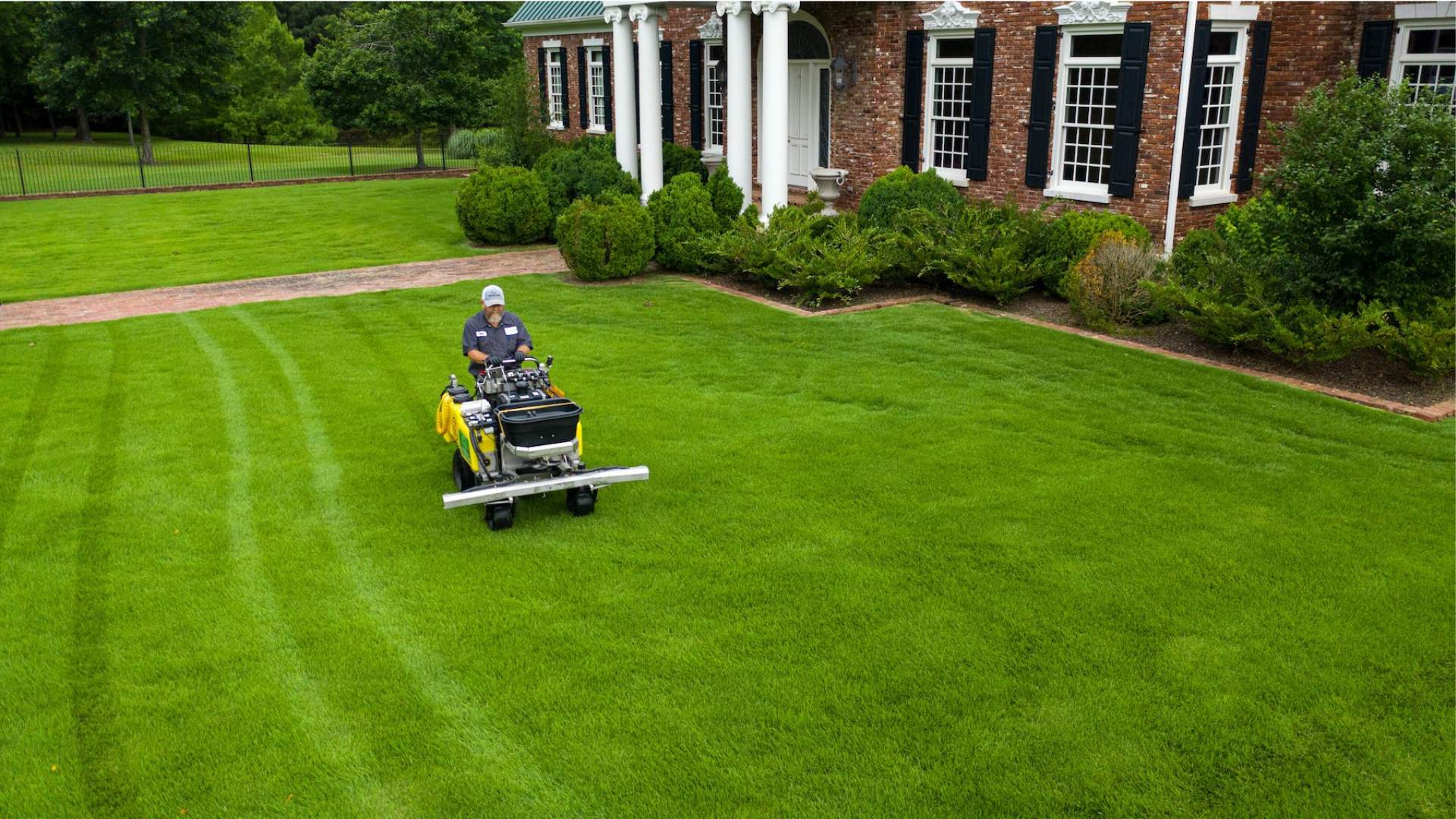
8 Reasons to Hire a Lawn Care Company in 2026 | GreenPal
Hiring a lawn care company saves you 25 to 48 hours of labor per year, protects you from the 80,000+ mower-related injuries that occur annually, and can return up to 217% on your investment when you sell your home. The perceived savings of doing it yourself often disappear once you factor in equipment costs, material expenses, and the value of your time.
Here are the eight strongest reasons to hand your lawn over to a professional.
1. DIY Lawn Care Costs More Than You Think
The sticker price of a push mower looks affordable. The total cost of ownership tells a different story.
Equipment Costs Add Up Fast
To properly maintain a residential lawn, you need more than just a mower. A complete setup includes a string trimmer, blower, broadcast spreader, and safety gear. Here's what that investment looks like:
Equipment |
Consumer Grade |
Prosumer Grade |
Lifespan |
Annual Cost |
Walk-Behind Mower |
$300 - $600 |
$800 - $1,200 |
5-7 years |
$60 - $170 |
Riding Mower |
$1,500 - $3,000 |
$3,500 - $6,000 |
7-10 years |
$215 - $600 |
String Trimmer |
$150 - $300 |
$350 - $500 |
3-5 years |
$50 - $100 |
Blower |
$100 - $300 |
$400 - $600 |
3-5 years |
$33 - $120 |
Broadcast Spreader |
$50 - $150 |
$200 - $350 |
5-10 years |
$10 - $35 |
Safety Gear |
$50 - $100 |
$100 - $200 |
2-3 years |
$25 - $66 |
Total initial investment: $700 to $4,400 or more. Annual depreciation alone runs $400 to $1,000.
Then add maintenance. Mowers need oil changes ($25), blade sharpening ($15-$30), air filters, and spark plugs. A full tune-up for a riding mower costs $200 to $350 annually. Small engines running on ethanol-blended gasoline often need carburetor repairs within 3-4 years.
The Retail Markup on Materials
Professional lawn care companies buy fertilizers and treatments in bulk at wholesale prices. Homeowners pay retail. A consumer-grade 4-step fertilizer program covering 5,000 square feet costs $120 to $190 per year.
Professionals also apply products with calibrated spreaders that ensure exact dosing. Poor calibration on consumer spreaders leads to over-application, wasting 20-30% of product and risking turf burn.
2. Your Time Has Value
The most overlooked cost of DIY lawn care is your time.
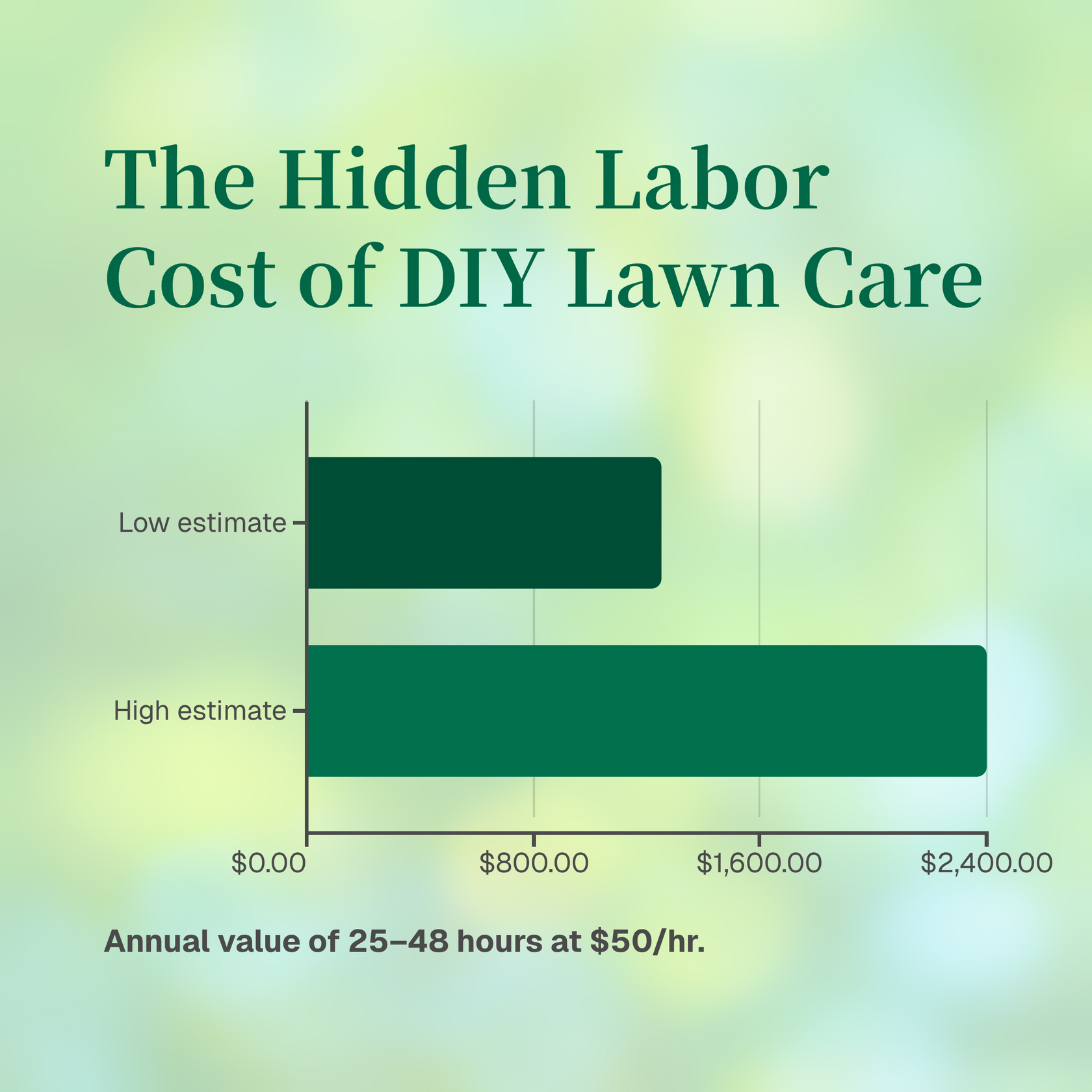
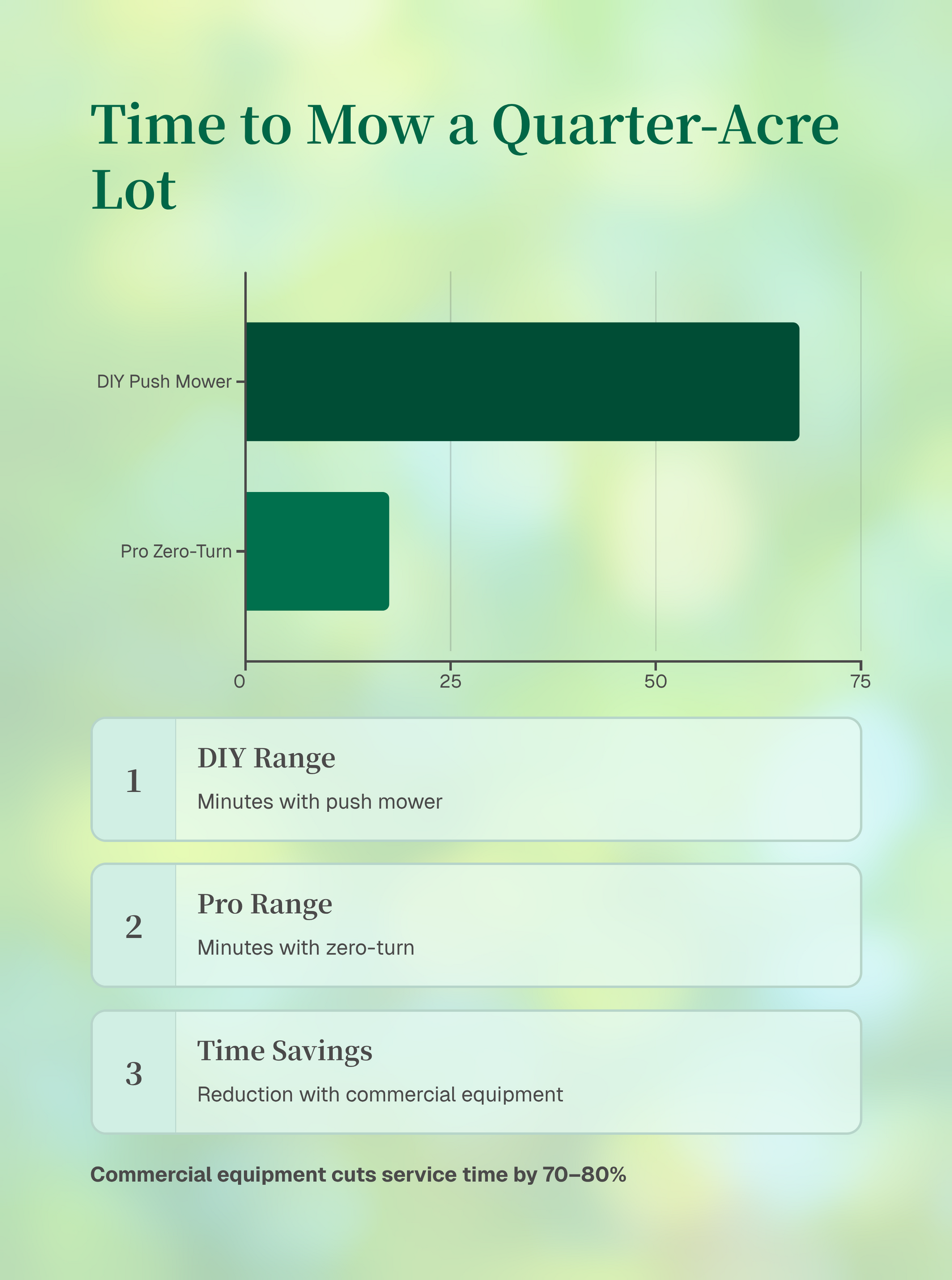
A standard quarter-acre lot takes 45 to 90 minutes to mow, trim, edge, and blow clean. Over a 28 to 32 week growing season, that's 25 to 48 hours spent on lawn maintenance.
If you value your free time at $50 per hour, the labor cost of DIY maintenance ranges from $1,250 to $2,400 annually. Add that to equipment and materials, and the "savings" of doing it yourself often evaporate.
Professional crews using commercial zero-turn mowers complete the same work in 15-20 minutes.
Hiring out lawn care effectively buys back your weekends.
3. Professional Equipment Produces Better Results
The difference between a consumer mower and commercial equipment isn't just speed. It's cut quality.
Why Commercial Mowers Cut Cleaner
Commercial mower decks generate powerful vacuum lift that pulls grass blades upright before cutting. Consumer mowers often push the grass over or tear it, leaving ragged tips that turn brown and create entry points for disease.
Commercial decks are built from heavy-gauge welded steel designed to handle high volumes without clogging. Consumer decks are typically stamped steel. When grass is wet or tall, they clog and leave clumps that smother the turf underneath.
The Maintenance Consistency Problem
A mower blade dulls after about 10 hours of cutting. Professional crews sharpen blades weekly or daily. Most homeowners go entire seasons without sharpening, which causes the blade to bludgeon grass rather than slice it cleanly.
There's also the one-third rule: never remove more than one-third of the grass blade height in a single cut. Violating this rule shocks the plant and turns the lawn yellow.
Homeowners are at the mercy of weather and weekend schedules. If it rains on Saturday, mowing gets pushed to the following week. By then, the grass is overgrown, and cutting it back violates the one-third rule. Professional crews operate on strict schedules with the manpower to catch up after weather delays.
4. Lawn Mowers Cause Serious Injuries
The Consumer Product Safety Commission estimates that over 80,000 people visit emergency rooms each year due to lawn mower injuries. More than 9,000 of those injured are children.

Lawn mowers are the leading cause of traumatic amputations for children in the United States.
The blade tip of a standard mower rotates at approximately 19,000 feet per minute, or over 200 mph. At that speed, a blade striking a rock or piece of metal turns it into a projectile capable of traveling hundreds of feet with enough force to penetrate glass and soft tissue.
Hiring a professional transfers this risk away from your household. Professional operators follow safety protocols, use commercial discharge chutes that deflect debris downward, and work when bystanders aren't present.
5. Chemical Handling Requires Training
Pesticides and herbicides require proper storage, mixing, and application. Homeowners often purchase concentrates that need dilution, and handling these products poses the highest risk of exposure. Spills on a garage floor can be off-gas for months.
Application matters too. Without training, homeowners frequently spray in windy conditions, causing drift onto vegetable gardens, play sets, or neighboring properties. This creates health risks and potential legal liability.
Commercial applicators are licensed by the state, which requires passing exams on toxicology, safety, and environmental regulations. They transport chemicals in secured vehicles, use equipment designed to minimize drift, and carry liability insurance for pollution occurrences.
6. Professional Lawn Care Increases Your Home's Value
Landscaping isn't just maintenance. It's a capital improvement.
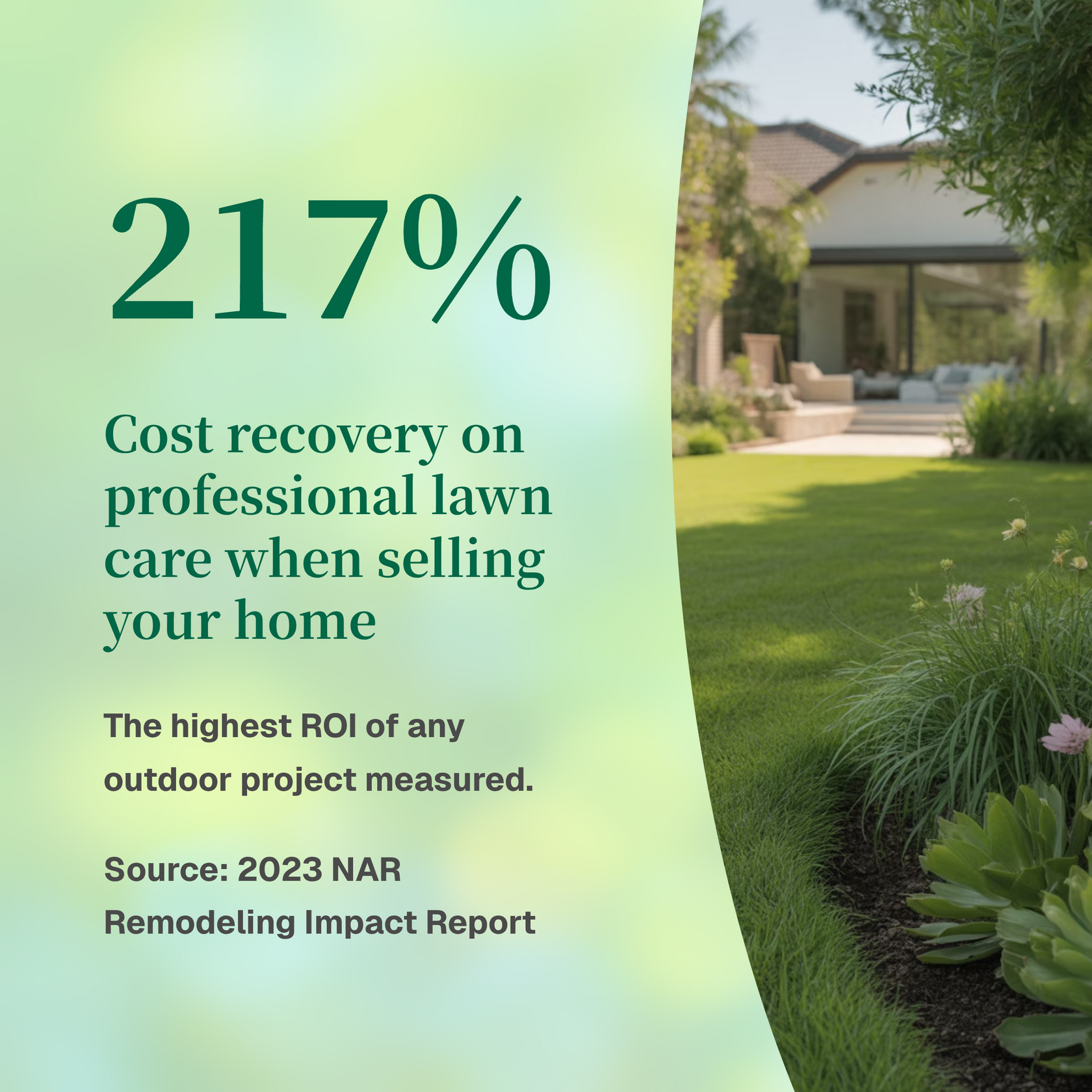
The 2023 NAR Remodeling Impact Report found that standard lawn care service has the highest cost recovery of any outdoor project: 217%. For every $1,000 spent on professional lawn care, sellers see an estimated $2,170 increase in home value.
Properties with well-maintained landscapes also sell up to 15% faster and command 5-12% higher prices than comparable homes with neglected yards.
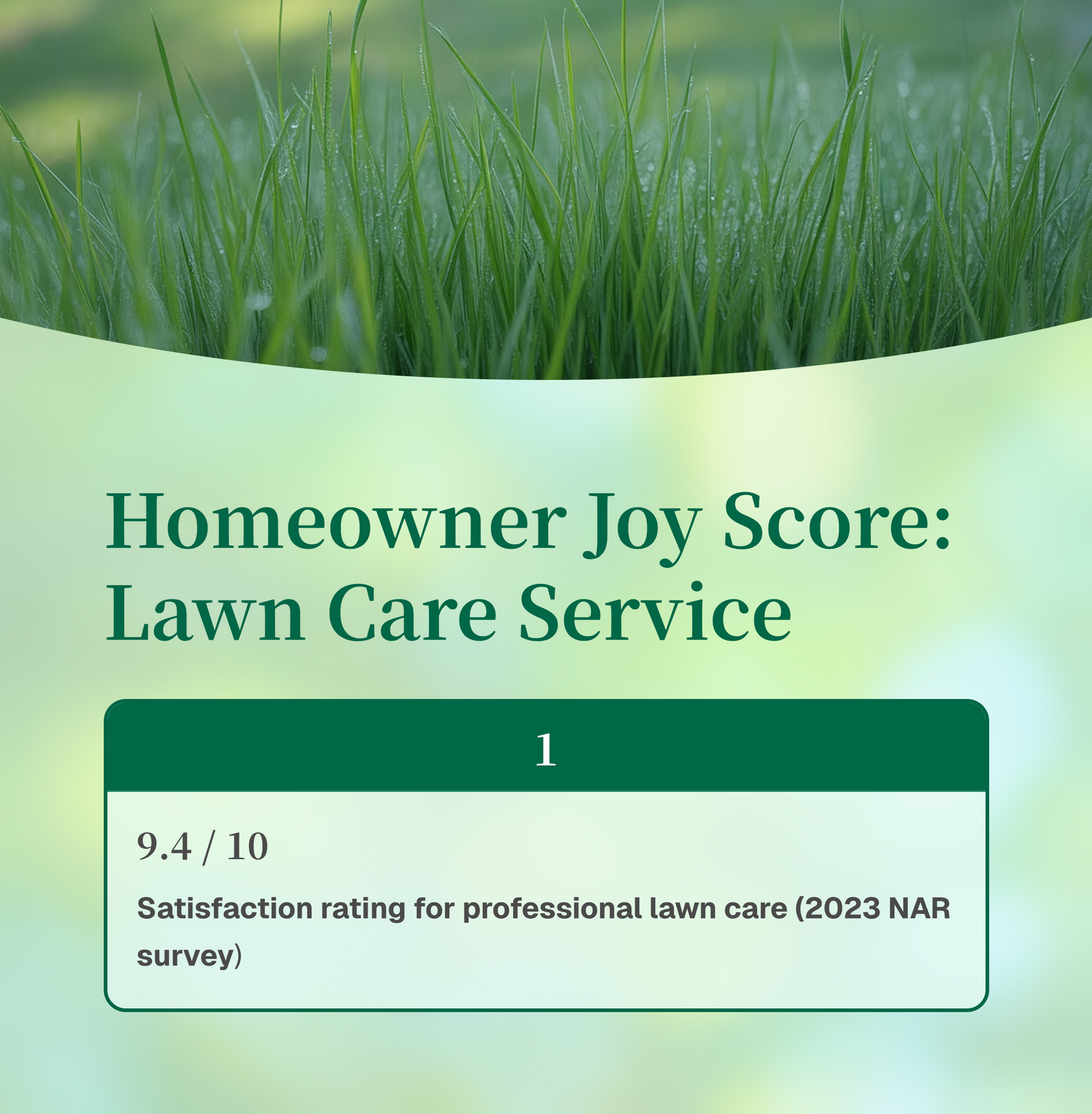
The same report measured homeowner satisfaction with outdoor improvements. Professional lawn care earned a "Joy Score" of 9.4 out of 10, higher than kitchen renovations or HVAC upgrades. 68% of homeowners reported a greater desire to be home after completing outdoor projects.
7. Professionals Protect the Environment Better
A common assumption is that professional lawn care is worse for the environment because of chemical use. The opposite is often true.
Nitrogen and phosphorus runoff from residential lawns is a leading cause of eutrophication in waterways, where excess nutrients trigger algal blooms that deplete oxygen and kill fish.
Homeowners frequently over-apply fertilizer, and the excess washes into storm drains. Many states have enacted laws banning phosphorus in lawn fertilizers unless a soil test confirms a deficiency. New York State's Nutrient Runoff Law is one example.
Licensed professionals operate under these regulations daily. They use zero-phosphorus fertilizers as standard, apply products with calibrated equipment, and understand threshold-based treatment. Rather than blanket-spraying an entire lawn to kill a few weeds, they spot-treat problem areas with targeted applications.
8. Aging in Place Safely
For seniors, lawn care presents real physical hazards. The exertion of pushing a mower in summer heat strains the cardiovascular system. Uneven terrain creates trip-and-fall risks. For anyone over 60, a fall can be a life-altering event.
Over 30% of homeowners using lawn care platforms are 60 or older. Outsourcing lawn maintenance allows seniors to maintain their property standards while protecting their physical mobility and independence.
How to Find a Reliable Lawn Care Provider
The most common concerns about hiring lawn care are cost uncertainty and finding someone trustworthy. Before you hire, confirm what the quote covers and what’s included: confirm service details before hiring a lawn care vendor. Here's what to look for:
Transparent pricing: Get quotes upfront before committing. Avoid providers who can't give you a number until they show up.
Reviews and ratings: Check online reviews from actual customers. Look for consistency, not just high scores.
Vetting process: Ask how providers are screened. The best services check equipment, references, and business history.
Photo proof: Services that send photos of completed work give you confirmation without needing to be home.
Flexible scheduling: One-time service should be available, not just long-term contracts.
Marketplace platforms like GreenPal let you receive multiple competitive quotes from vetted local providers without making phone calls. You compare prices and reviews, choose your provider, and pay only after service is completed. It's a good option if you want to try professional lawn care without committing to an annual contract.
The Bottom Line
DIY lawn care seems cheaper until you account for equipment depreciation, material costs, your time, and the risks involved. Professional lawn care delivers better results, protects your home's value, and gives you back your weekends.
The math works out for most homeowners. The real question is whether you'd rather spend your Saturday mornings pushing a mower or doing something you actually enjoy.
Ready to see what professional lawn care costs in your area? Enter your address on GreenPal to get free quotes from local lawn care pros in minutes.


