


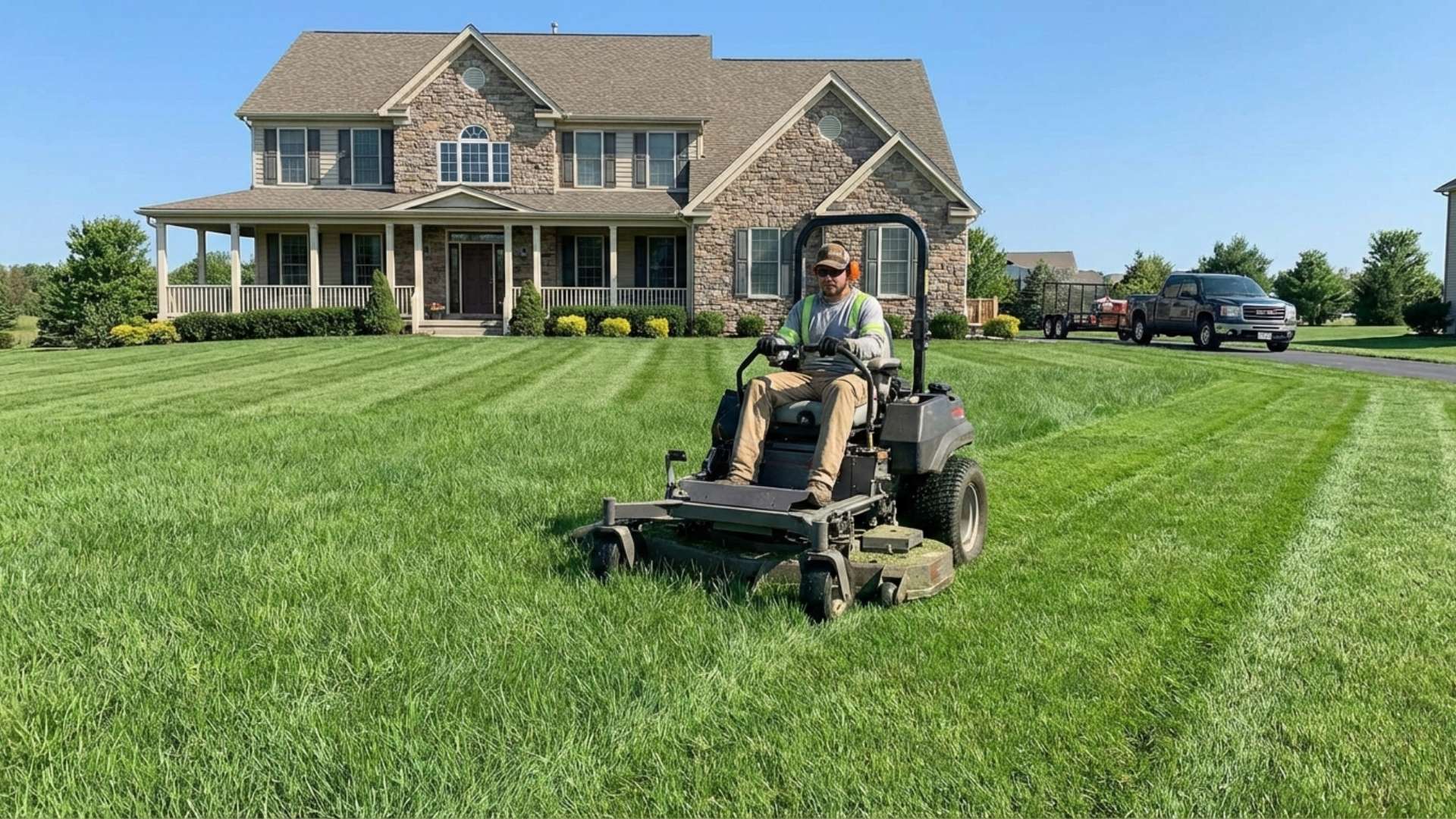
How to Mow Tall Grass in Your Lawn
If your grass has grown into a mini jungle, don't cut it all at once. Cutting overgrown grass in one session can damage your lawn and overwhelm your mower. The grass can go into shock and turn yellow. It may even die from losing too much foliage at once. Your mower might clog or overheat trying to process the volume.
At GreenPal, we work with thousands of lawn care professionals who handle overgrown lawns regularly. The key is taking a gradual approach. You'll mow in stages over several days. This follows the one-third rule: never remove more than one-third of the grass blade length in a single cut.
Below, we'll walk through why this matters, how to prepare, and a complete step-by-step process for safely bringing your tall grass back to a manageable height.
Why You Can't Cut Tall Grass All at Once
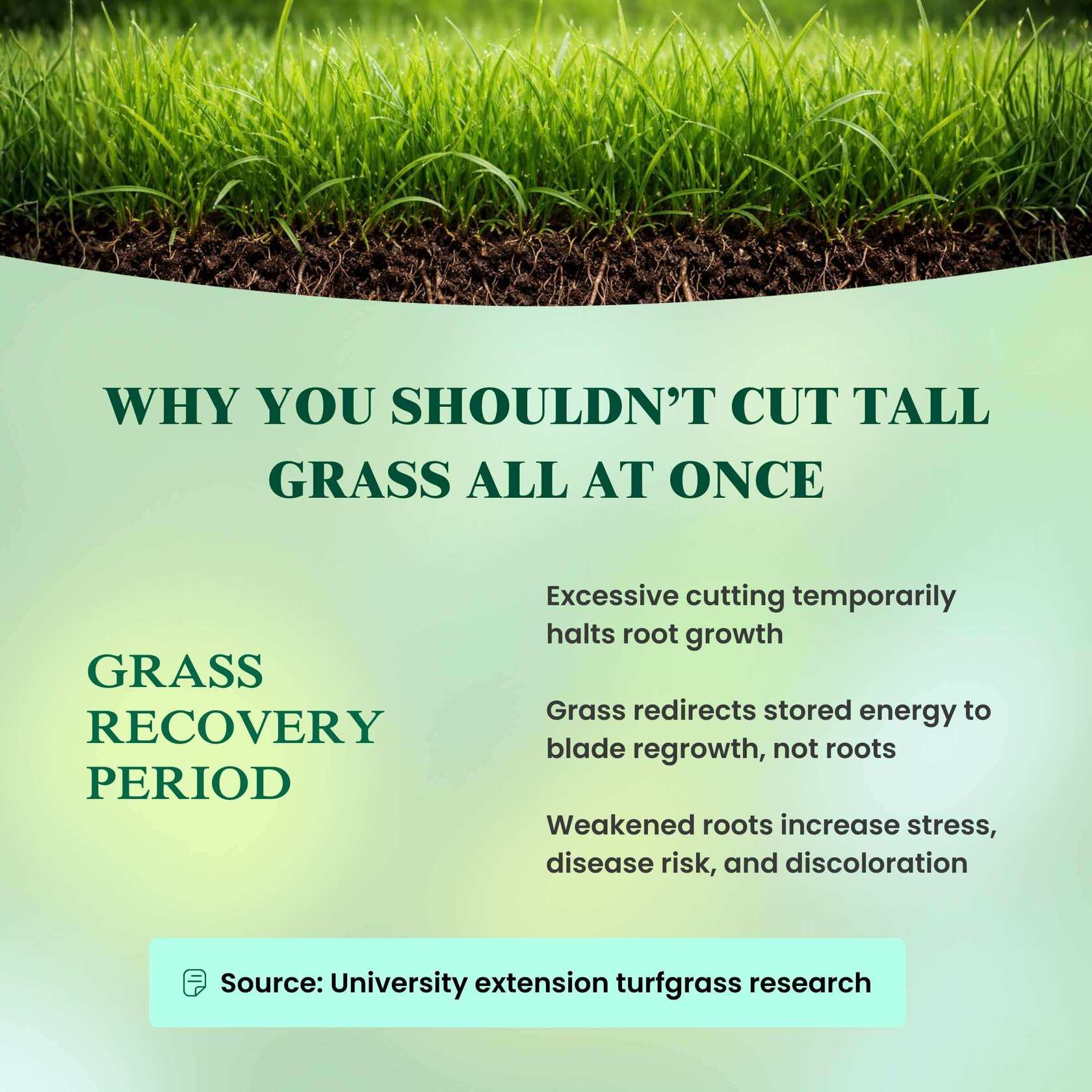
The one-third rule is the foundation of proper mowing. Never remove more than one-third of the grass blade length in a single mowing session.
Cutting more than one-third shocks the grass. The blades lose too much of their food-producing tissue. They can't recover easily.
According to Kansas State University's turf experts, if your grass grows to 6 inches and your goal is 2 inches, don't jump straight there. Your first mowing should be at 4 inches. Several days later, mow again. Continue this pattern until the turf reaches your target height.
What Happens When You Cut Too Much
Removing more than one-third of the blade causes several problems:
Grass stress and yellowing - The sudden reduction in available nutrients causes the grass to turn yellow or brown
Root damage - Excessive cutting weakens root growth. It makes the turf less vigorous
Increased disease risk - Weakened grass becomes more susceptible to disease and weed invasion
Smothering clumps - Extremely long clippings form thick mats that block sunlight and trap moisture
When you cut overgrown grass too short in one session, the massive clippings left behind literally blot out the sun. These clumps also hold excess moisture. This creates ideal conditions for fungal diseases.
A gradual approach produces shorter clippings that filter down to the soil easily. These small clippings decompose quickly and act as natural fertilizer, returning nutrients to your lawn.
Preparing to Mow an Overgrown Lawn
Before you start cutting, take time to prepare. Mowing tall grass requires more planning than your typical weekly maintenance.
What Equipment Do You Need for Tall Grass?
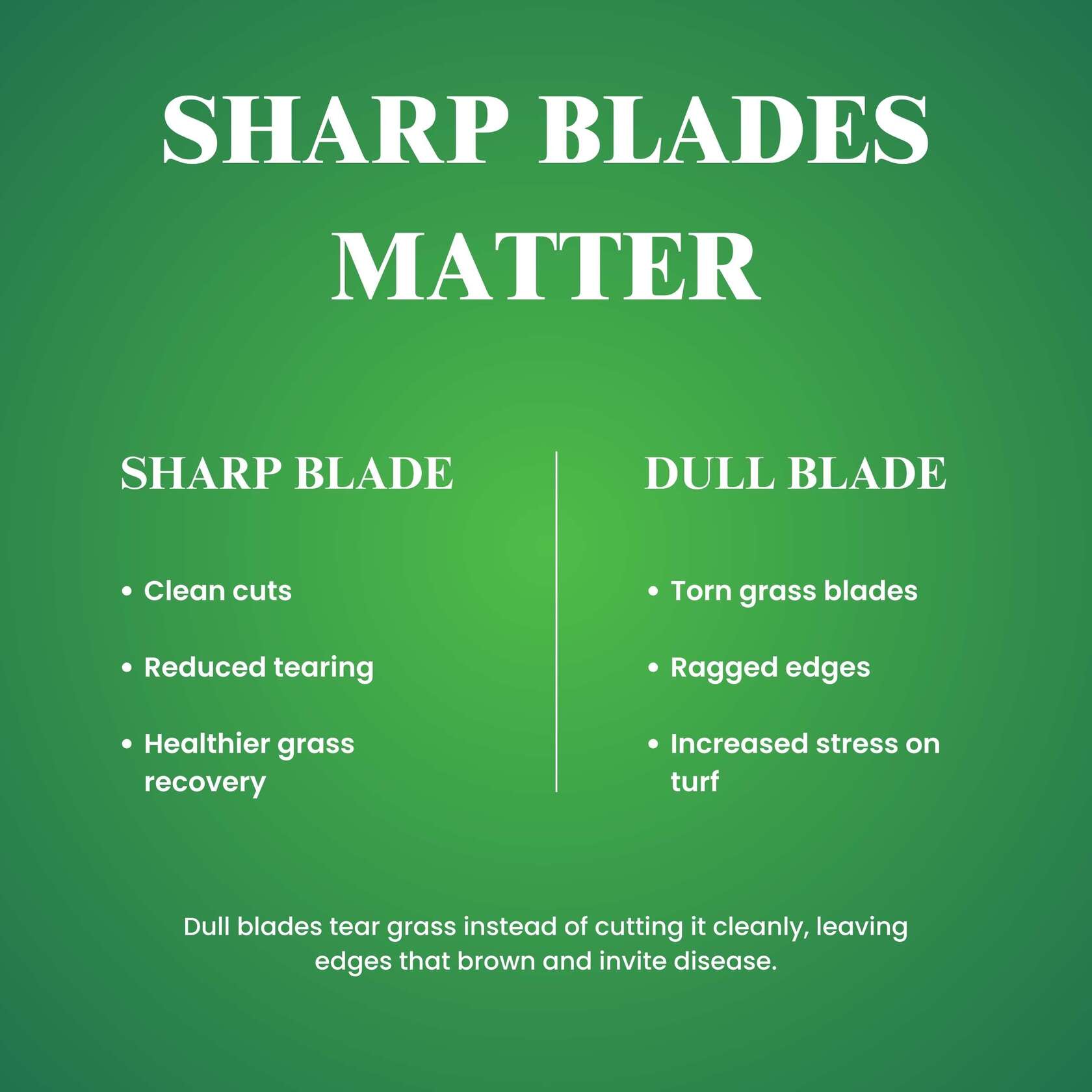
You'll need a mower in good working order with a strong engine and sharp blades. Dull blades tear the grass, leaving ragged edges that brown and invite disease. Sharpen or replace your blade if needed.
For extremely tall grass (ankle-high or taller), you'll also need a string trimmer or brush cutter. These tools can handle growth that would stall a regular mower.
Have these items ready:
Lawnmower with sharp blade
String trimmer (for very tall grass)
Rake or leaf blower
Mower bag or tarps for clippings
Safety glasses
Gloves and long pants
How Do You Prepare Your Lawn Before Mowing?
Walk through the tall grass and remove hidden objects before mowing. Look for rocks, sticks, toys, wires, or any debris. These items can damage your mower or become dangerous projectiles if struck by the blade.
Also watch for wildlife. Tall grass often shelters small animals like rabbits, birds, or frogs. Give them time to escape before you start cutting.
When Should You Mow Tall Grass?
Plan your mowing for a dry, sunny day. Wet grass clumps together and clogs the mower deck. Moisture also makes cutting much harder and increases the chance of spreading disease.
Pick a cooler part of the day, like mid-morning or late afternoon. Avoid the hottest midday sun. High temperatures add stress to fresh-cut grass.
Since you'll be mowing in stages, find a window with no heavy rain forecast. This gives the grass time to dry and recover between cuts.
Step-by-Step: Cutting Tall Grass in Stages
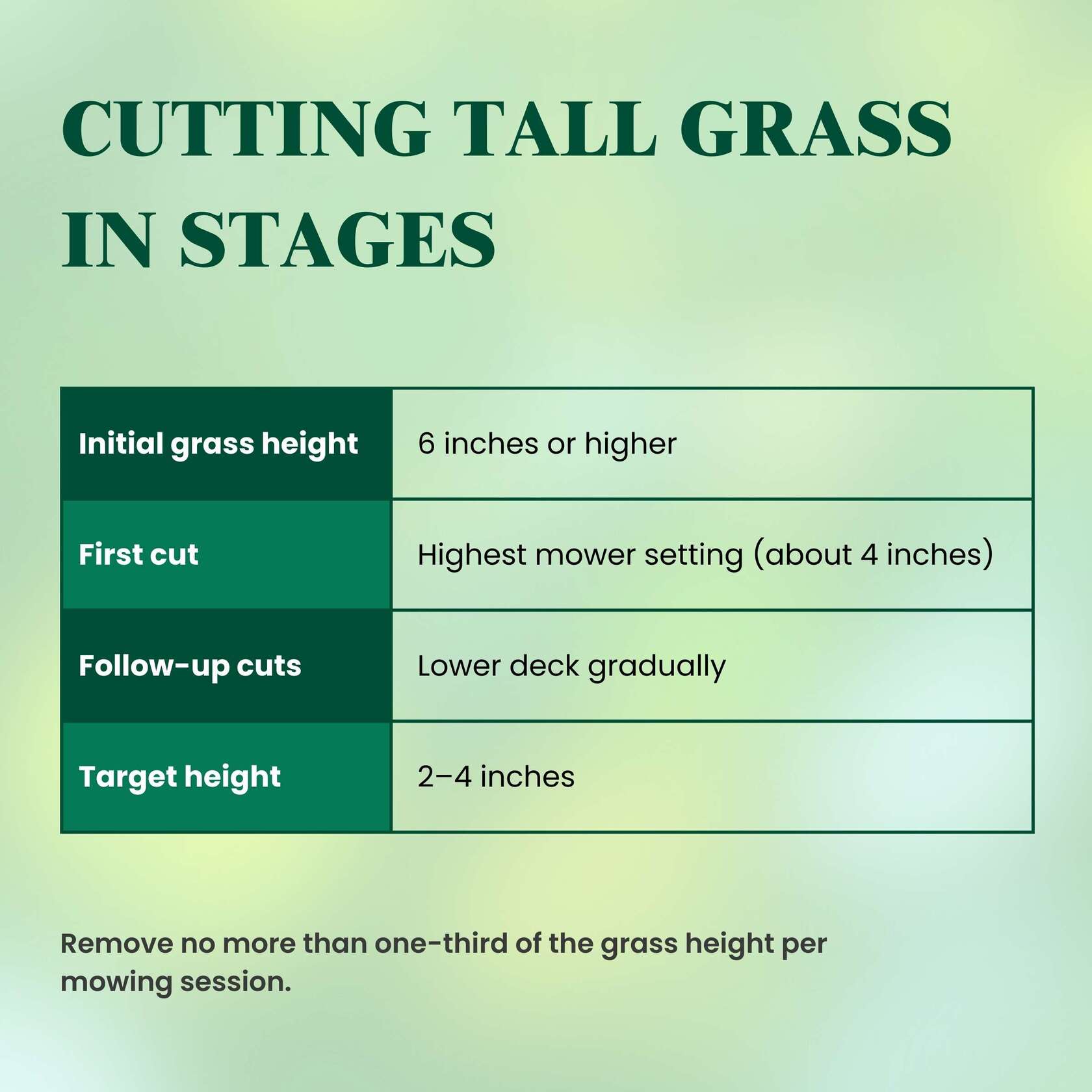
This staged approach takes a week or two depending on how overgrown your lawn is. Each session removes about one-third of the height, giving the grass time to recuperate before the next cut.
Step 1: Trim Down Extremely Tall Grass
If your grass is knee-high or taller, start with a string trimmer instead of your mower. Trying to push a lawnmower through knee-high grass can stall the engine and create safety hazards since you can't see obstacles.
Use your trimmer to cut down the top half of the grass height across the entire yard. For example, if the grass is 12-18 inches tall, trim it down to about 6-9 inches on this first pass.
Work slowly with a steady, side-to-side motion. Overlap your strokes so you don't miss strips. After trimming, rake up and remove the clippings. Don't leave them on the lawn because they'll generate a thick layer that smothers the grass beneath.
Wait 2-4 days after this initial trim before your next cut. This recovery period helps the grass blades and roots adjust.
Note: If your grass is only moderately overgrown (around 6 inches or less), you can skip the trimmer and start with the mower at its highest setting.
Step 2: First Mowing Pass at Maximum Height
Set your mower to its highest cut height. This is typically around 4 inches for most mowers.
If your grass stands at 6 inches after trimming, cutting at 4 inches removes roughly the top third. This maintains the one-third rule while bringing the lawn closer to a normal height.
Mowing tips for this pass:
Mow slowly with overlapping passes
Each row should slightly overlap the last to ensure even cutting
Consider bagging clippings or using side discharge
Even at a high setting, cutting longer grass produces lengthy clippings that can clump
After this first mowing, let the lawn rest for a few days. The grass will likely look lighter green or yellowish because the lower part of the blades is seeing sunlight for the first time in a while. This is normal. With sun and water, it will green up again.
Step 3: Gradually Lower the Cutting Height
Every 3-5 days, mow again and lower your deck by about half an inch to one inch. Continue removing roughly one-third of the current height each time.
Here's a typical mowing schedule for bringing 6-inch grass down to 2.5 inches:
Mowing Session |
Cutting Height |
Days Since Last Cut |
Grass Height After Cut |
First cut |
4 inches |
- |
4 inches |
Second cut |
3 inches |
3-5 days |
3 inches |
Third cut |
2.5 inches |
3-5 days |
2.5 inches (target) |
Continue this cycle until you reach your desired lawn height. Most common turf species do best at 2-4 inches.
Additional tips:
Alternate your mowing pattern each time (north-south one session, east-west the next)
Changing direction prevents grass from developing a "lean" and ensures more even cutting
Keep overlapping your rows slightly for a uniform finish
Be patient - rushing this process risks scalping or damaging the lawn
According to lawn care experts, the entire process might take a week or two. Your lawn didn't turn into a meadow overnight. It can't be recovered in a single afternoon.

Step 4: Manage Clippings
Throughout the multi-stage mowing process, pay attention to clippings. Small clippings (about an inch or less) can stay on the lawn. They decompose quickly and return nitrogen to the soil as natural fertilizer.
However, longer clippings need to be removed. Kansas State University notes that when you cut extremely tall grass, the long clippings break down more slowly than short ones. They can harm the turf by blocking sunlight and holding moisture.
After each cut, inspect the lawn:
If you see mats or clumps of grass, rake them up immediately
Use a bagger if clippings are consistently too thick
Compost excess clippings or dispose of them as green waste
After Mowing: Lawn Recovery
Once you've brought your grass back to a reasonable height, help it recover with proper aftercare.
Water Deeply
Give your lawn a thorough watering after the final mowing session. Cutting is stressful for grass plants. Tall grass often depletes soil moisture. Deep watering helps the grass rehydrate and recover its green color faster.
Lawns generally need about 1 to 1.5 inches of water per week. Spread this over a couple of watering sessions. If the weather is hot or dry, keep the lawn well-watered in the days after mowing. This will reduce shock.
Consider Light Feeding
If the lawn looks especially weak or yellow after cutting down tall grass, a light application of high-nitrogen fertilizer can promote new growth. Always follow product instructions. Don't over-fertilize stressed grass.
Wait a few days to a week after mowing before fertilizing. This gives the lawn time to start recovering. Then it can effectively use the nutrients.
Overseed Thin Areas
An overgrown lawn often has bare or thin patches once cut short. These might be areas where tall grass shaded out weaker shoots. Or where clumps smothered the turf.
Overseed these spots to thicken the lawn:
Choose seed that matches your existing grass type
Loosen the soil in bare spots
Sprinkle seed and keep it moist
New grass will fill in and crowd out weeds
The best time to overseed depends on your grass type. Fall works best for cool-season grasses. Spring is ideal for warm-season varieties.
Preventing Future Overgrowth
The best way to avoid another overgrown lawn is consistent mowing. At GreenPal, we've found that homeowners who maintain regular schedules rarely face the tall grass problem again.
Establish a Regular Schedule
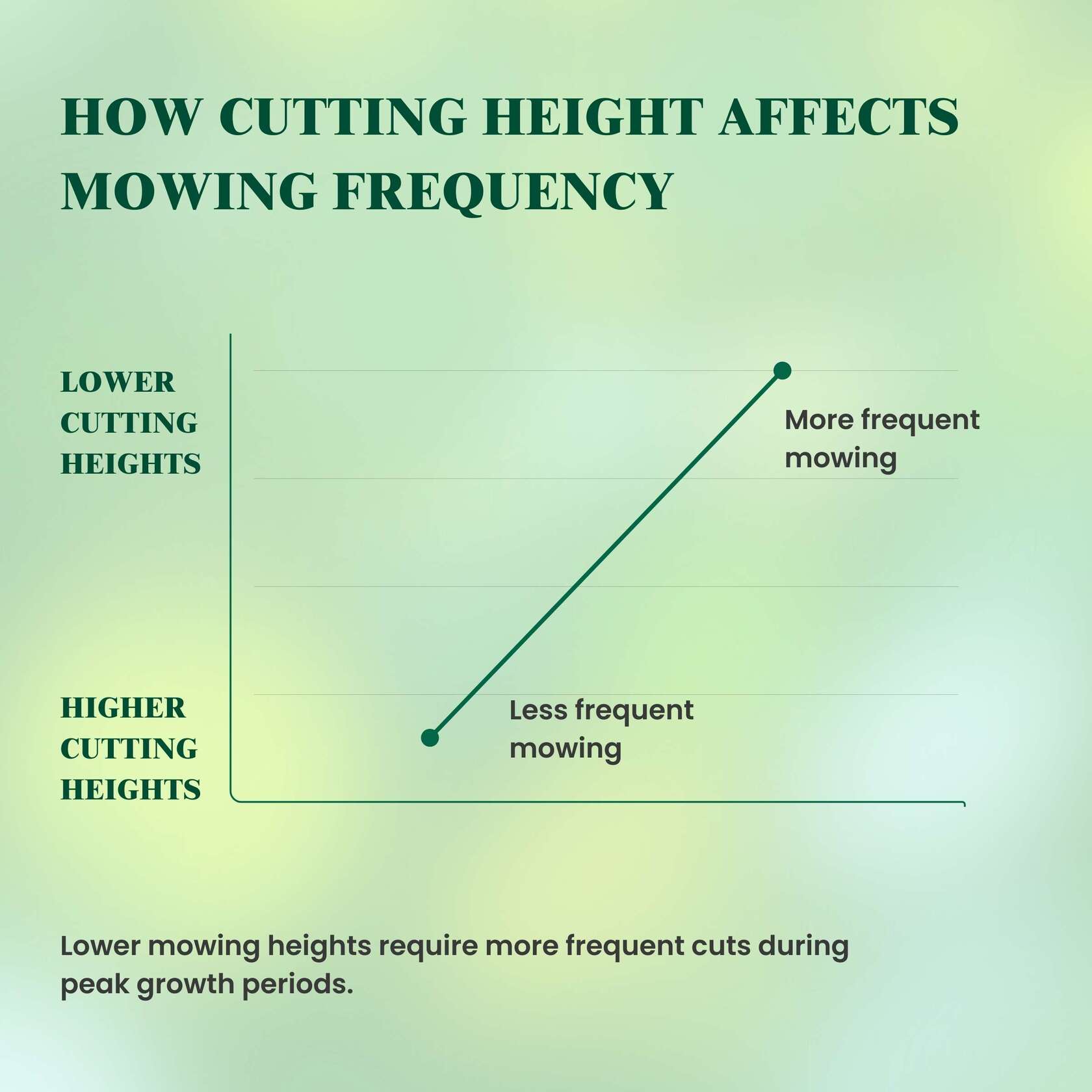
Mow about once a week during peak growing season. The key is observing your lawn's growth rate. Never remove more than one-third at a time.
During fast-growth periods, you might need to mow every 5-7 days. In slower growth periods, every two weeks might be enough. Regular maintenance is much easier on both you and the lawn than infrequent drastic cuts.
Plan for Absences
If you'll be away or too busy for a while, arrange for someone to cut the grass. Many GreenPal lawn care professionals offer flexible scheduling options. This includes one-time cuts when you're on vacation.
Maintain Your Equipment
After handling tall grass, clean out your mower thoroughly. Dried clippings can clog parts and reduce efficiency. Consider sharpening your blade again before the next use. Cutting lots of tough, long grass dulls it more quickly.
When to Call a Professional
If you're dealing with severely overgrown grass, professional help makes sense. If you don't have time for the multi-stage process, consider hiring a pro. If your grass is over 10 inches tall, read this first: What to Do if Your Grass is Over 10" Tall.
Through GreenPal, you can get quotes from vetted lawn care professionals in your area. They have the equipment and experience to handle overgrown lawns efficiently.
Our professionals understand the one-third rule. They will take the proper gradual approach to restore your lawn. They also have commercial-grade equipment that makes the job faster and easier than residential mowers.
What's the Best Way to Mow Tall Grass?
Mowing tall grass safely requires patience:
Never remove more than one-third of blade height in one cut
Use a trimmer first for extremely tall grass (knee-high or more)
Start mowing at the highest deck setting
Gradually lower the height over multiple sessions, 3-5 days apart
Remove long clippings to prevent smothering
Water deeply after the final cut
Resume regular weekly mowing to prevent future overgrowth
By following this staged approach, you'll avoid shocking your grass. You'll prevent mower damage. You'll restore your lawn to a healthy, manageable height.
The process takes time, but the results are worth it. You'll have a thick, green lawn that recovers fully rather than a patchy, stressed-out yard.
Ready to restore your overgrown lawn? Get free quotes from experienced lawn care professionals in your area through GreenPal. Our vetted providers understand proper mowing techniques and can handle lawns of any height, typically with next-day service available.


