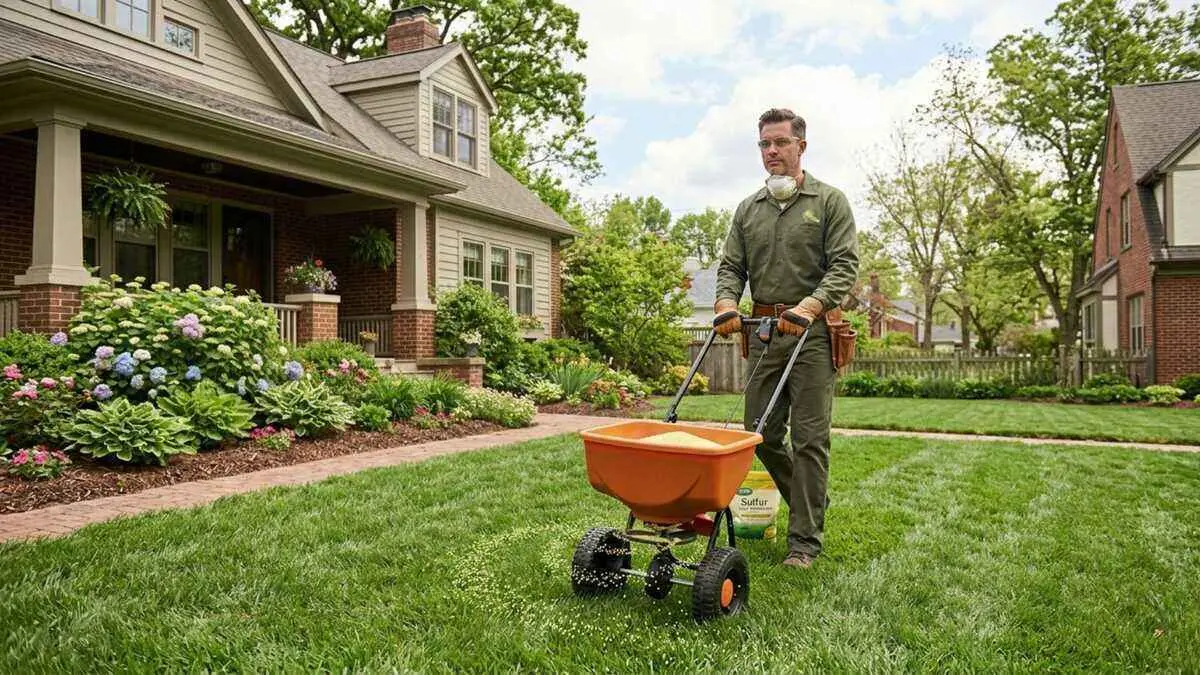
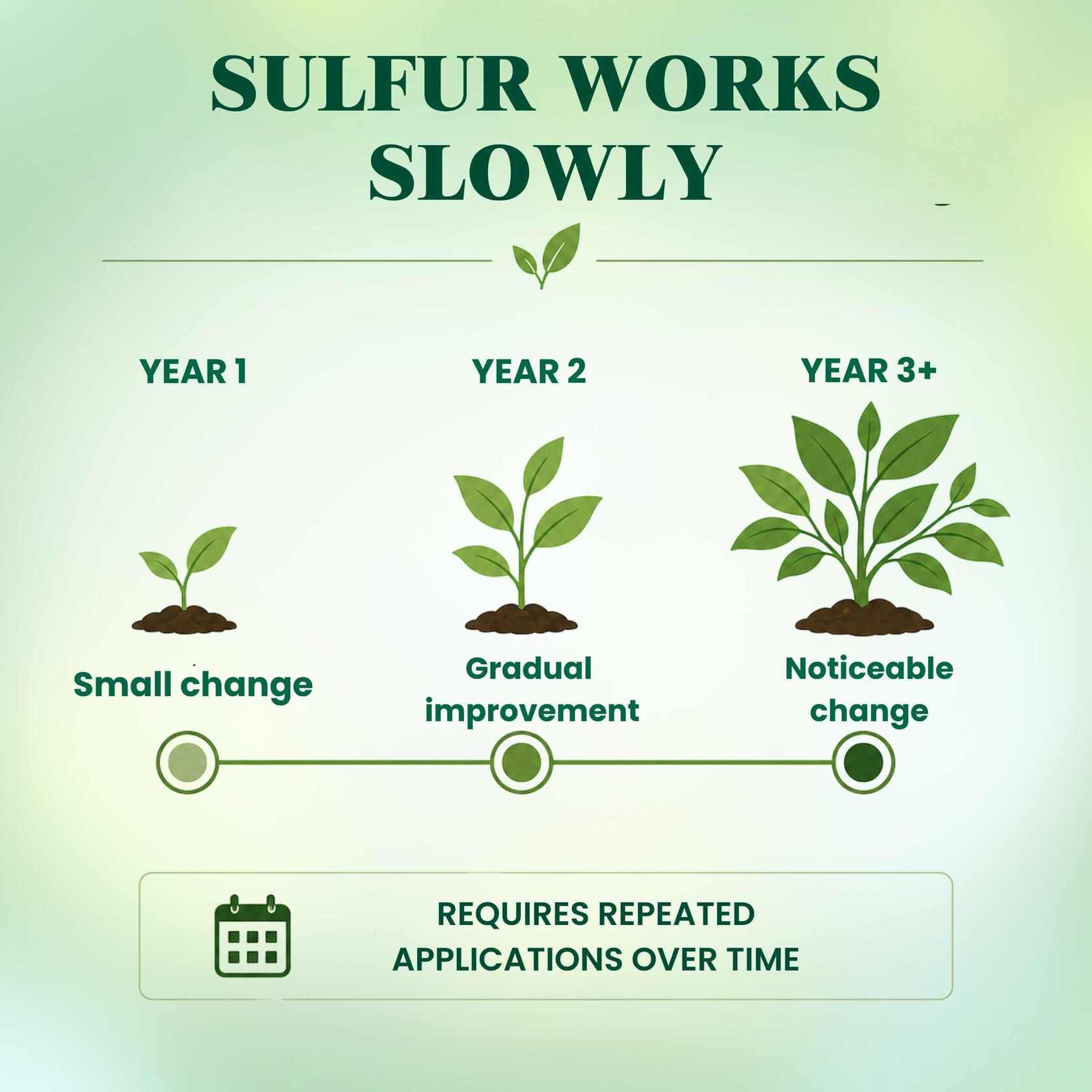
Elemental sulfur may help lower soil pH in some lawns, but it's not a guaranteed fix. Sulfur is slow-acting, and it would take many years of regular sulfur application to notice a significant shift in pH.
In this guide, we'll explain why, when, and how to apply sulfur if your lawn needs it. And when sulfur won't work — it's generally ineffective in soils containing naturally occurring lime — we'll show you what to do instead.
Why Add Sulfur to the Lawn?
When soil pH becomes too high, nutrients in the soil (particularly iron) become inaccessible to the grass roots, resulting in yellowing, weak grass, and stunted growth. Under specific soil conditions, adding elemental sulfur to the lawn may help lower the soil pH.
Most grass types prefer a soil pH between 6.5 and 7.0, with some grasses tolerating slightly more acidic or alkaline soils.
How Does Sulfur Lower Soil pH?
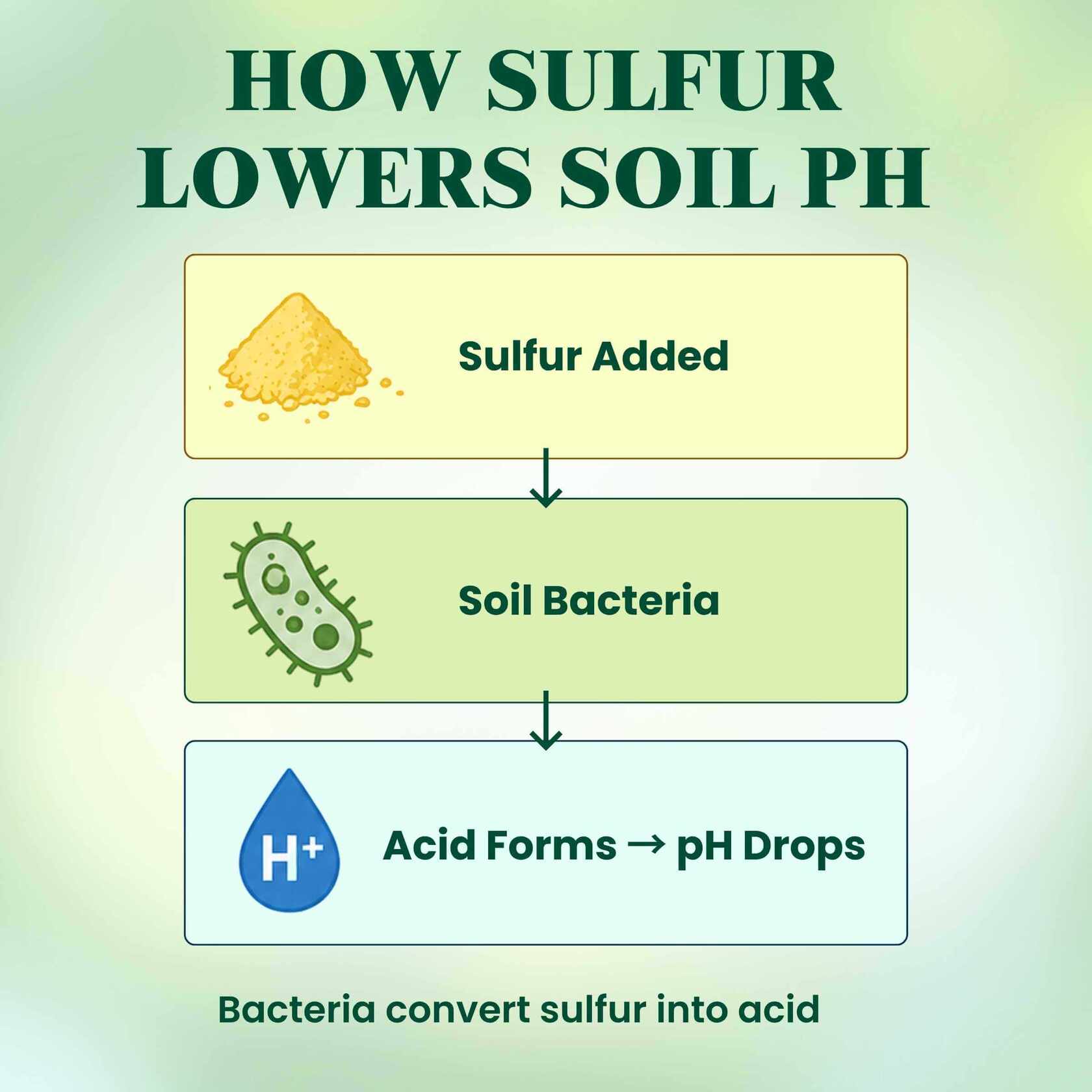
When elemental sulfur is added to the lawn, bacteria in the soil convert it to sulfuric acid, lowering the soil pH.
But here’s the thing:
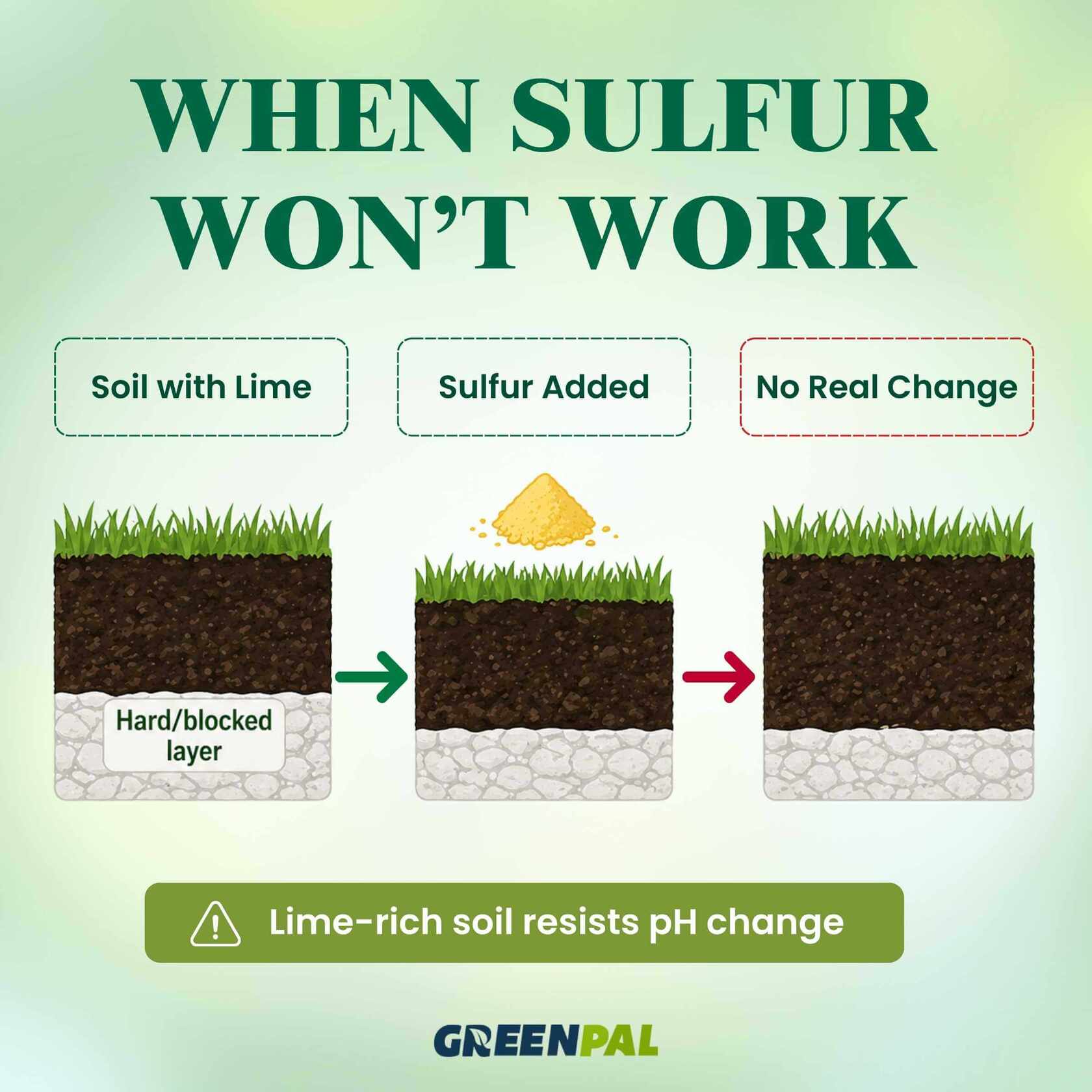
Sulfur is highly inefficient in soils that contain naturally occurring lime (calcium carbonate).
According to the Colorado State University Extension, it is difficult to impossible to lower the pH of soils containing lime. If a soil test reveals your soil contains lime, elemental sulfur is unlikely to work. Jump to When Sulfur Won't Work: What to Do Instead.
Test Your Soil Before Adding Sulfur
Applying too much sulfur can burn your lawn, and it won't work in all soils. For both reasons, a soil test is an important first step before applying it.
How to test soil: Send a soil sample to your local cooperative extension for laboratory testing. Results from a laboratory test provide comprehensive guidance on how much sulfur to apply and when to use it.
DIY soil kits are generally less accurate than laboratory tests and do not provide complete instructions on how to amend soil pH.
How Much Sulfur Should You Use?
Always consult your soil test results or local extension office for guidance specific to your lawn.
According to the Purdue University Extension, the maximum safe rate for turfgrass mowed at 2 inches or higher is 5 lbs per 1,000 sq. ft. per application, with a yearly cap of 10 lbs per 1,000 sq. ft. Shorter mowing heights require even lower rates.
When to Add Sulfur to Your Lawn
Sulfur can be applied in early fall or spring, though the Michigan State University Extension recommends spring as the superior window.
Here's why:
The soil bacteria that convert elemental sulfur into sulfuric acid are most active when soil is moist and above 55°F. Since bacterial activity slows in winter, fall applications have little effect on pH by the following spring.
How to Apply Sulfur
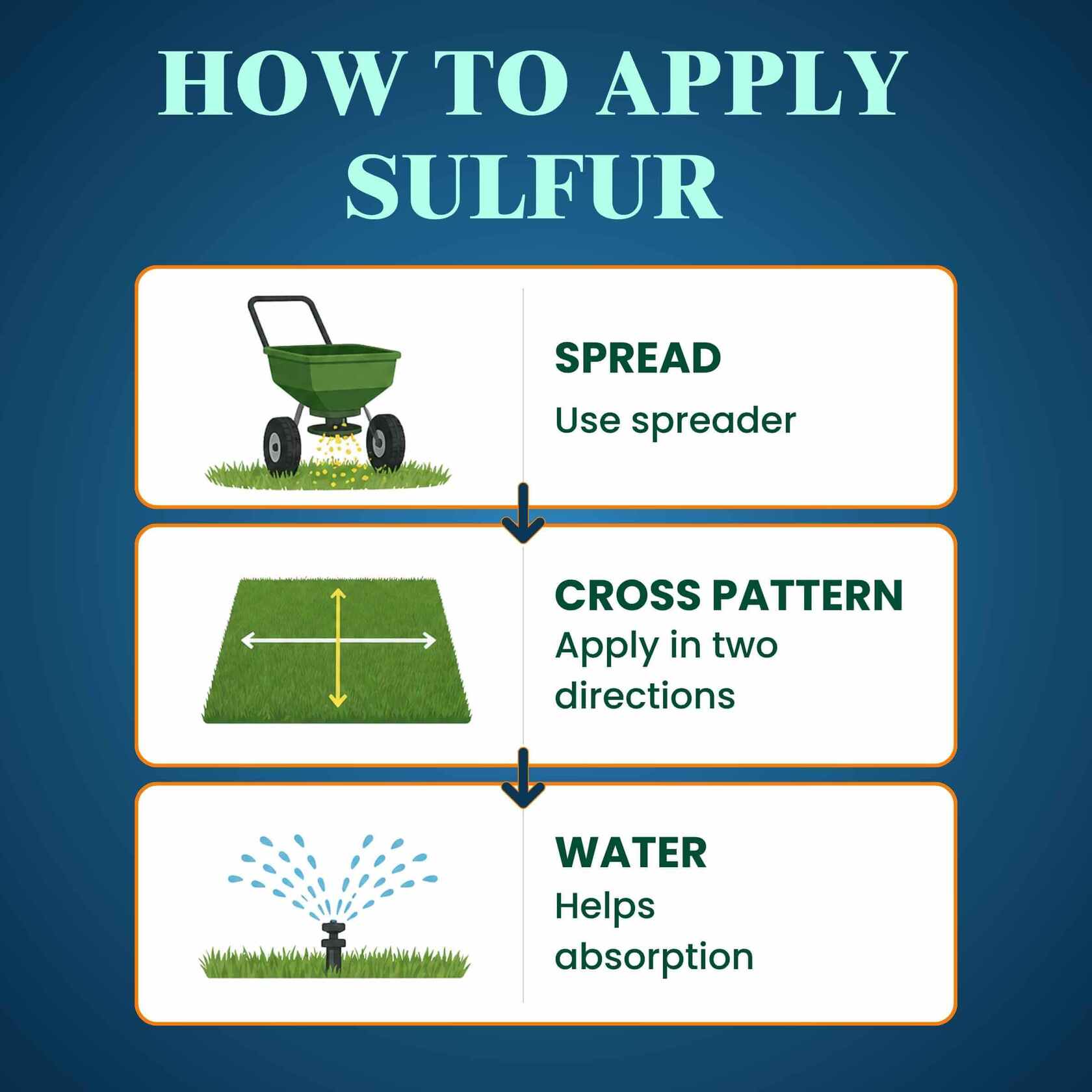
Applying sulfur granules to the lawn is simple. Use either a drop spreader or a rotary spreader, just like you would for a fertilizer application.
To ensure uniform coverage, apply one-half of the sulfur in one direction and the other half in a perpendicular direction to create a crisscross pattern.
After applying sulfur, water the lawn to help dissolve and move the sulfur into the soil.
How Long Does Sulfur Take to Work?
Sulfur is slow-acting, often requiring multiple applications over several years to reach the desired level. Even in favorable soil conditions, results are gradual.
In soils with high lime— common across much of the Midwest — it may take many, many years of repeated application to see significant change, if it works at all.
When Sulfur Won't Work: What to Do Instead
If your soil contains naturally occurring lime, sulfur is not a practical solution.
The math is stark:
The Colorado State University Extension notes that neutralizing just the top 6 inches of a soil containing 2% lime would require around 6.5 tons of elemental sulfur per acre — far beyond what can be safely applied to an established lawn.
If this is the case for your lawn, focus on adaptation rather than acidification:
Choose tolerant grass varieties: Tall fescue, bermudagrass, zoysiagrass, and buffalograss all perform reasonably well in alkaline conditions.
Use chelated iron: High pH soils make it difficult for grass roots to absorb iron, resulting in iron chlorosis. Chelated iron enhances iron availability, even in high pH soils.
Use acidifying fertilizers: Ammonium sulfate won't fix the pH, but it provides a mild ongoing acidifying effect while also supplying sulfur.
In cities with high alkaline soil, such as Omaha or Chicago, connecting with professional landscaping services can help get the most out of your lawn care routine.
Frequently Asked Questions
How Often Should I Apply Sulfur to My Lawn?
Only apply sulfur when a soil test recommends it.
Does Sulfur Kill Grass?
When used correctly, sulfur typically does not kill grass. However, excessive amounts or applications made in hot weather can burn or harm the lawn.
How Do I Raise Soil pH?
To raise your lawn’s soil pH, add agricultural lime. Lime is generally more efficient at raising soil pH than sulfur is at lowering it.
Keep It Simple: Hire a Pro
Lowering your lawn’s soil pH requires years of persistence under the right soil conditions. For many lawns, the better solution is to grow tolerant grass varieties, apply chelated iron, use acidifying fertilizer, and work closely with a local lawn care professional who understands your region's alkaline soil.