Why, When, and How to Apply Lime to Your Lawn
When your lawn has a low soil pH, the most effective way to raise it is with a lime application. In this guide, we’ll explain why, when, and how to apply lime so your lawn can make the most of its available nutrients.
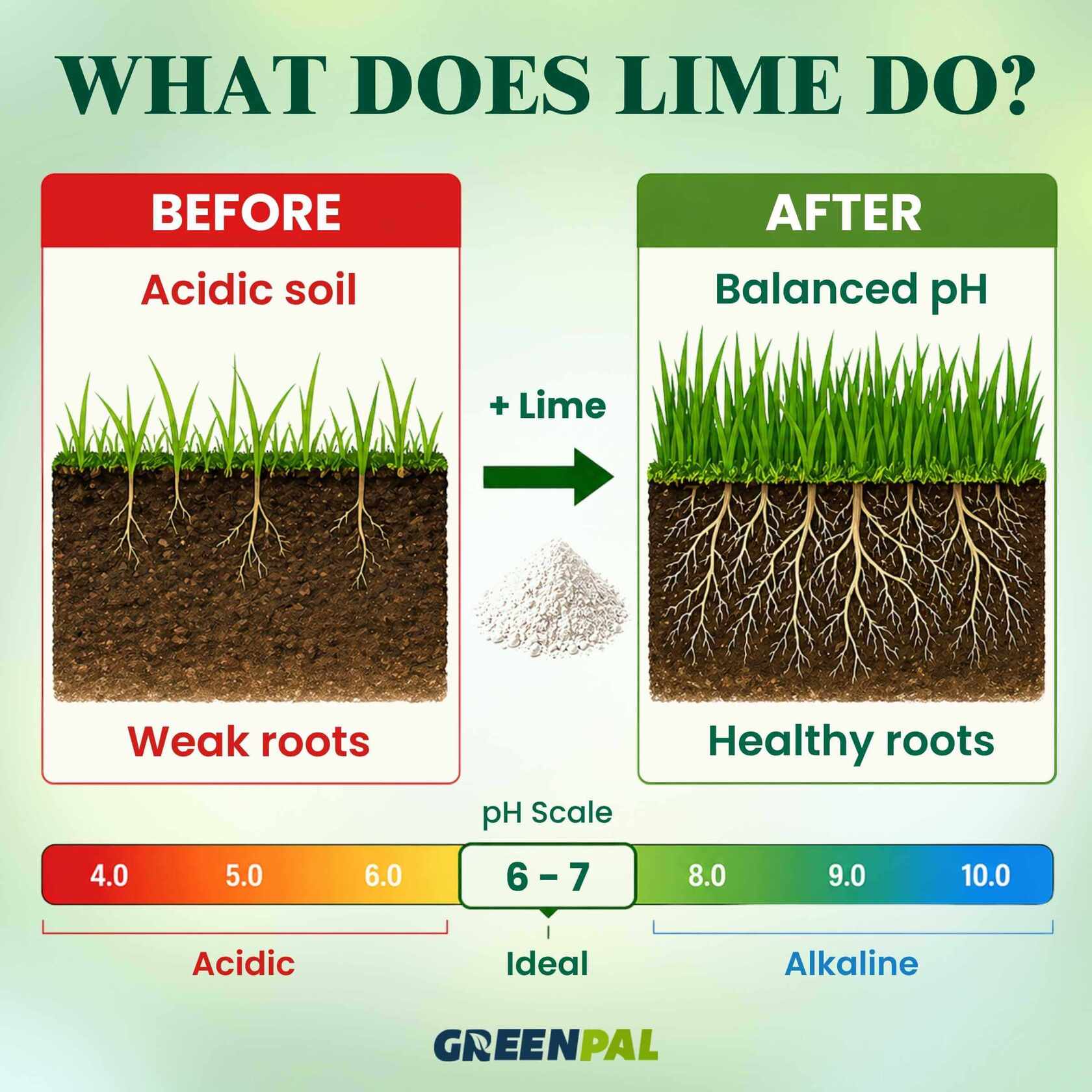
Agricultural lime is a soil amendment, usually available as ground or pelletized limestone rock, that reduces acidity and raises soil pH.
Why Add Lime?
When soil pH — the measure of acidity or alkalinity — drops too low and becomes acidic, grass roots struggle to absorb nutrients. Adding lime reduces acidity and raises pH, allowing your lawn to make full use of fertilizer.
Most grass types prefer a soil pH between 6.5 and 7.0. There are some exceptions, such as centipedegrass, which prefers a soil pH between 5.0 to 6.0.
Test Soil Before Adding Lime
Lime should not be applied to the lawn unless a soil test indicates that it is needed. Too much lime can raise the pH high enough that the soil becomes too alkaline, resulting in the same issue of poor nutrient absorption.
To determine soil pH, send a soil sample to your local cooperative extension for laboratory testing. Results from a laboratory test provide comprehensive guidance on how much lime to apply and what type to use.
DIY soil kits are available for purchase, however, they are generally less accurate than laboratory tests and do not provide complete instructions on how to correct the soil.
What Type of Lime to Use
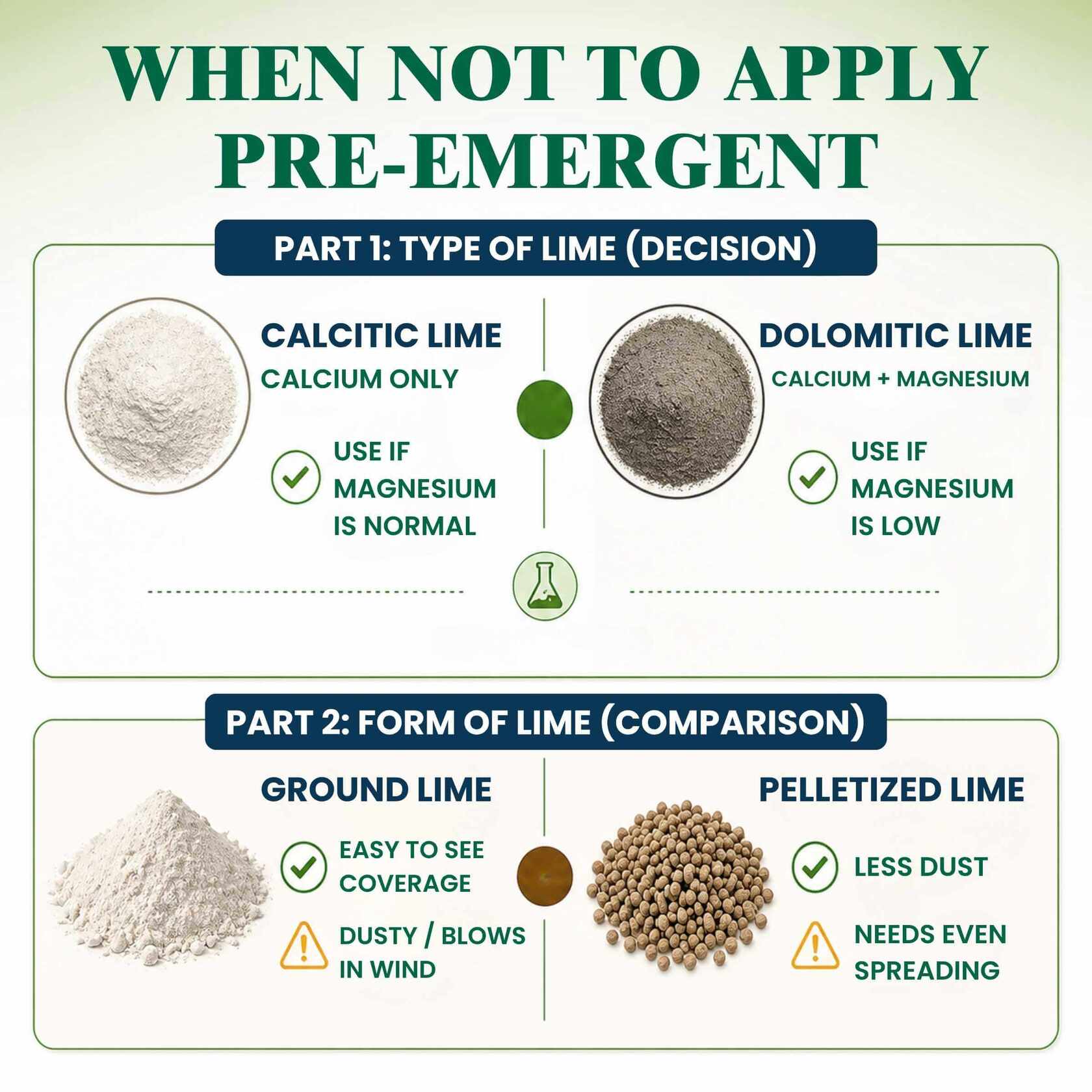
Agricultural lime is generally categorized into two types based on its composition of calcium carbonate and magnesium:
Calcitic lime (mostly calcium carbonate, low magnesium)
Dolomitic lime (both calcium and magnesium carbonate)
Should you use dolomitic or calcitic lime? If your soil test reveals low magnesium levels, choose dolomitic lime. Otherwise, use calcitic lime.
Lime is typically ground or pelletized. Here’s the difference:
Ground lime is finely ground limestone. Because of its visible white color, it’s easy to ensure uniform application. However, it can be dusty and spreads easily in the wind.
Pelletized lime is finely ground limestone bound together with a cementing agent to create pellets. It eliminates the dustiness of ground lime; however, extra care is needed to ensure even application.
When to Add Lime to Your Lawn
Fall is the best time to apply lime. Although it can be applied at any time of year, fall gives the lime enough time to raise the pH over winter and prepare the lawn for spring growth.
How to Apply Lime
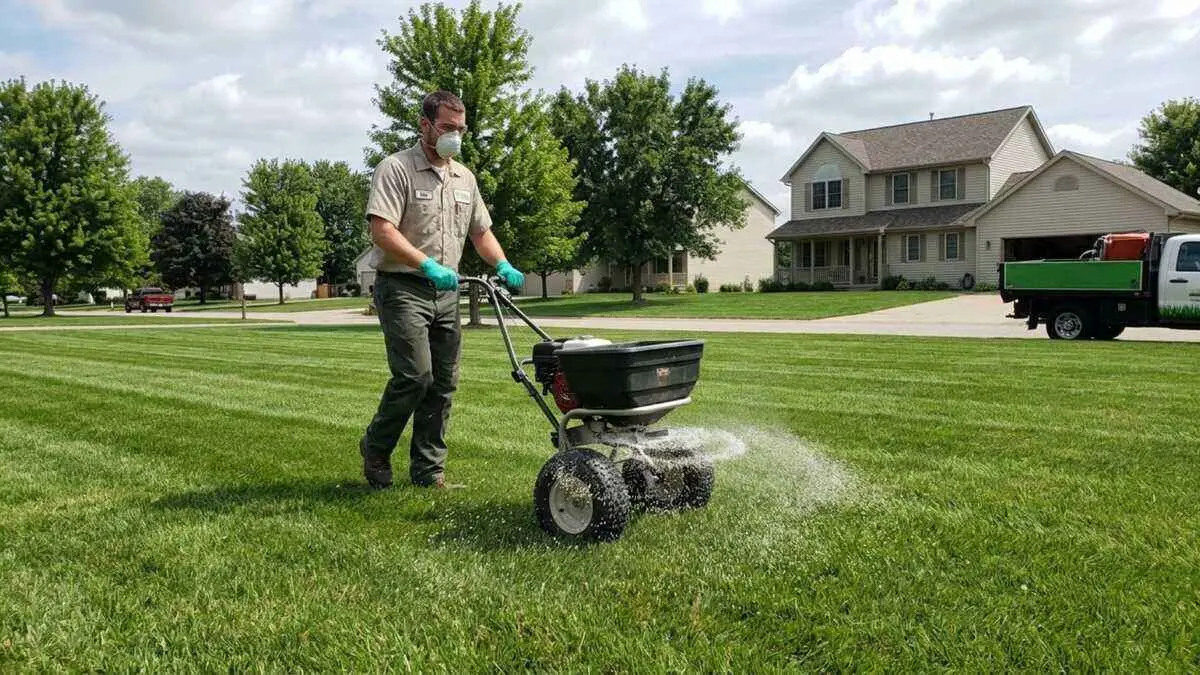
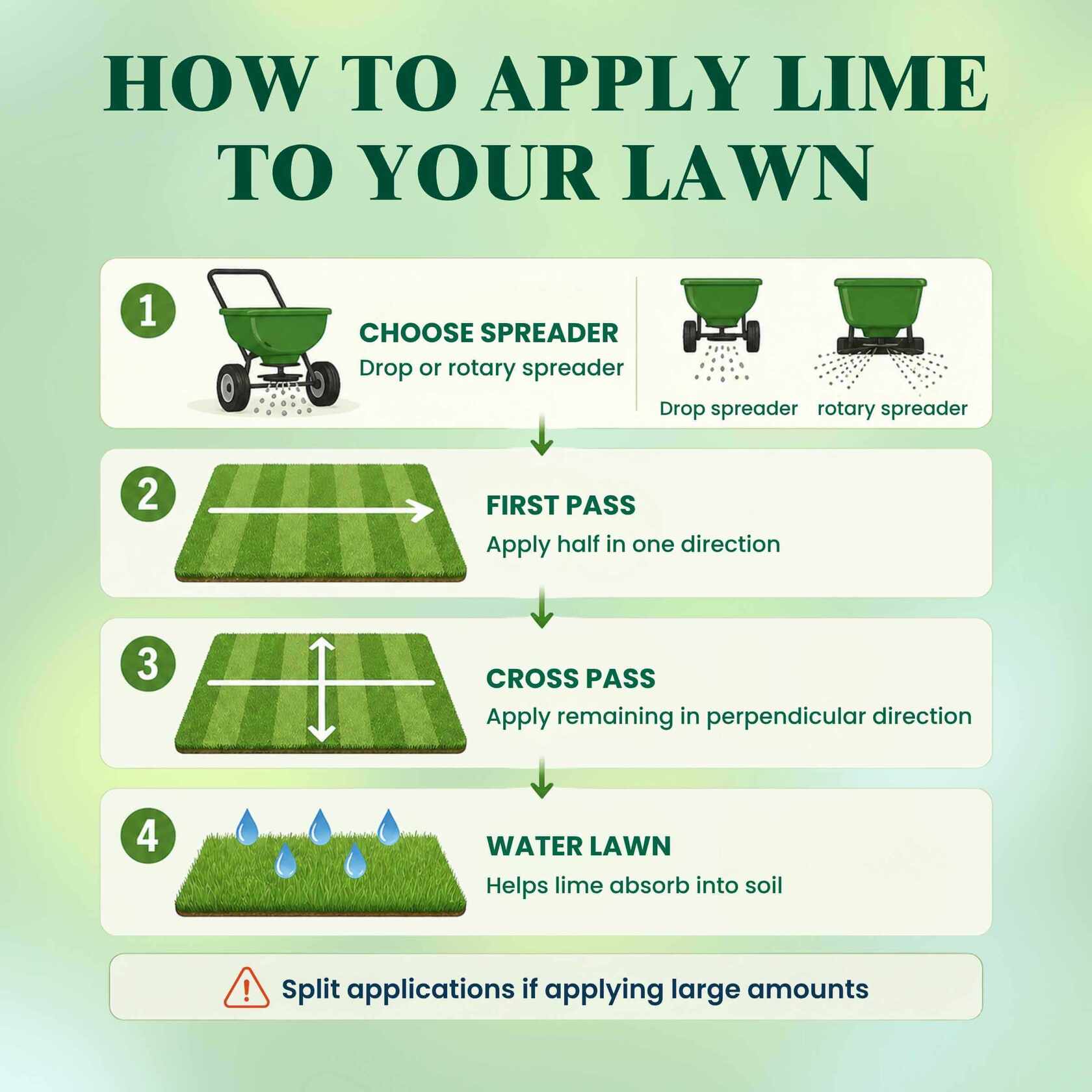
Applying lime to the lawn is simple. Use either a drop spreader or a rotary spreader, just like you would for a fertilizer application.
To ensure uniform coverage, apply one-half of the lime in one direction and the other half in a perpendicular direction to create a crisscross pattern.
After applying lime, water the lawn to help dissolve and move the lime into the soil.
Note: According to the University of New Hampshire Cooperative Extension and several other extension services, if soil pH requires more than 50 lbs of lime per 1000 square feet, the application must be split. Make additional applications 3 to 6 months after the first.
How to Maintain Your Lawn’s pH
Lime needs 3 to 6 months to take effect. After that time, have your soil professionally tested again. If the pH is still too low, apply additional lime.
Continue testing once per year until the desired pH is reached, then retest every 3 to 4 years to maintain it.
Frequently Asked Questions
Can I Apply Fertilizer and Lime At the Same Time?
You can apply fertilizer and lime at the same time, but doing so risks reducing the fertilizer's effectiveness. The grass roots won’t be able to absorb the nutrients, and applying them together can cause a chemical reaction that leads to nitrogen loss.
Wait at least one month after a lime application before adding fertilizer. Keep in mind that even then, the lime hasn't taken full effect, which takes 3 to 6 months.
Why Is My Lawn’s Soil Acidic?
Soil becomes acidic in the following ways:
Excessive rainfall & watering: Rain and heavy irrigation leach basic nutrients, such as calcium, magnesium, and potassium, that keep the soil pH more balanced.
Soil type: Sandy soils are more prone to leaching than clay soils.
Fertilizer: Nitrogen-heavy fertilizers, especially those containing ammonium, can lower soil pH.
Decomposition: When grass clippings, leaves, and other organic matter decompose, they produce acids that lower soil pH.
In cities prone to acidic soil, such as Tallahassee, pairing lime applications with professional landscaping services can help get the most out of your lawn care routine.
What Is Liquid Lime?
Liquid lime is a solution of ground limestone and water. Although it adjusts soil pH faster than dry lime, it requires more frequent reapplication because its effects on soil pH don’t last as long.
Find a Local Lawn Care Pro
Correcting your soil's pH is one of the most impactful things you can do for a struggling lawn. Once the lime has taken effect, your grass will be better equipped to absorb nutrients and thrive.
To keep up with your lawn's new growth, consider hiring a local lawn care professional for regular mowing and maintenance.