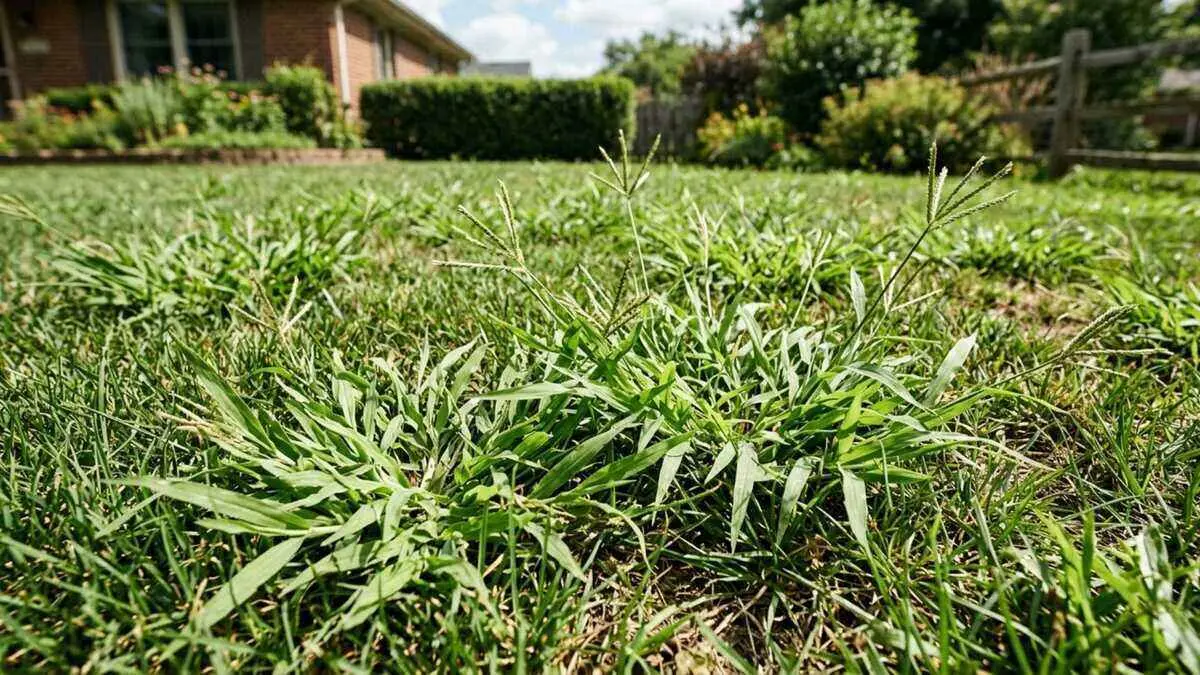
Crabgrass is a warm-season annual weed with leaf blades that resemble — you guessed it — crab legs. In this guide, we’ll show you how to get rid of crabgrass using several methods, including post-emergent herbicides, manual removal, boiling water, vinegar, and prevention.
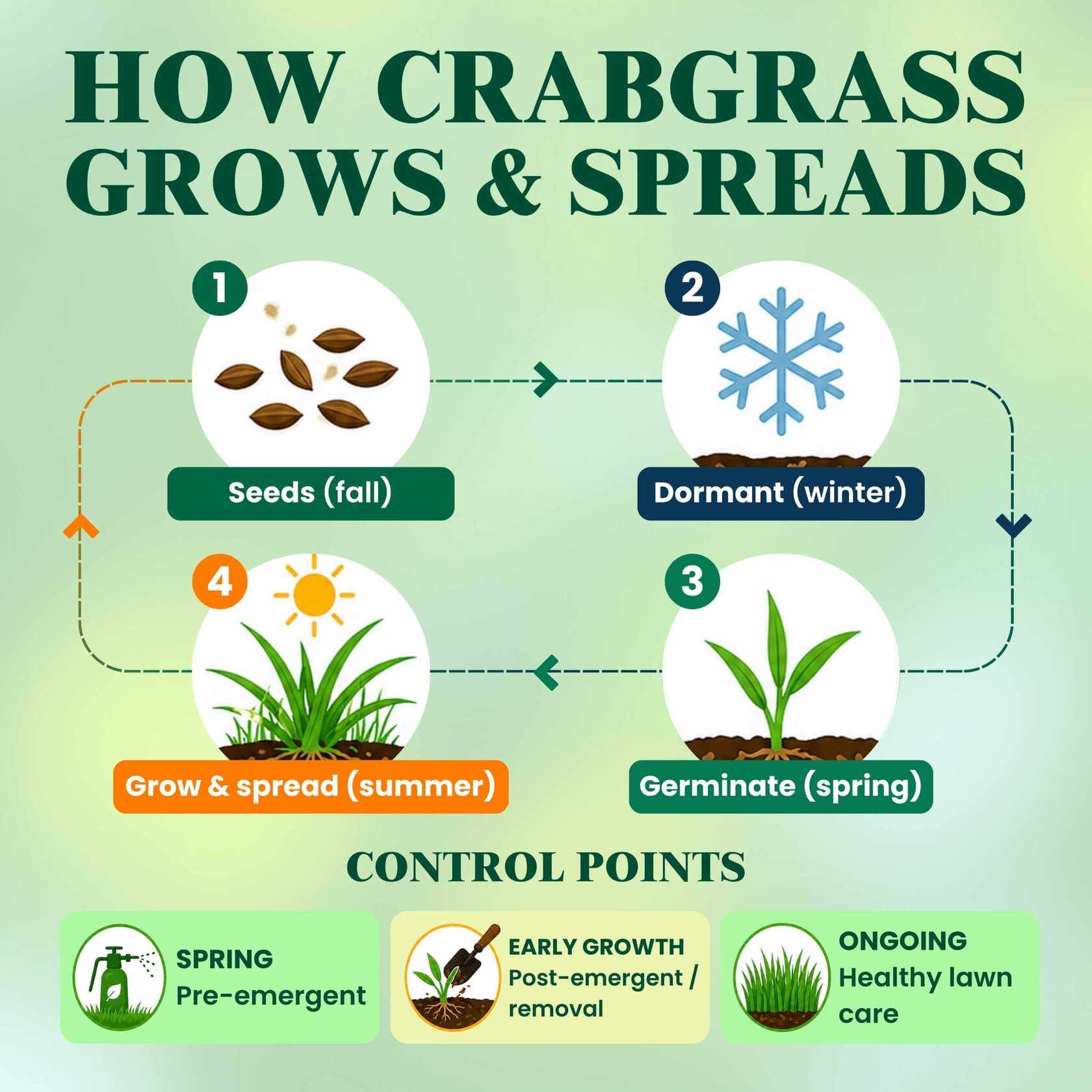
Left unchecked, crabgrass can overrun the lawn. A single plant can produce thousands of seeds, so persistence is key when controlling this weed. When the first hard frost kills the crabgrass plant, its fallen seeds lie dormant through winter, germinate in spring, and reappear by summer.
|
In this guide: How to Get Rid of Crabgrass in the Lawn (And Stop It From Coming Back) Does Boiling Water Kill Crabgrass? |
How to Get Rid of Crabgrass in the Lawn (And Stop It From Coming Back)
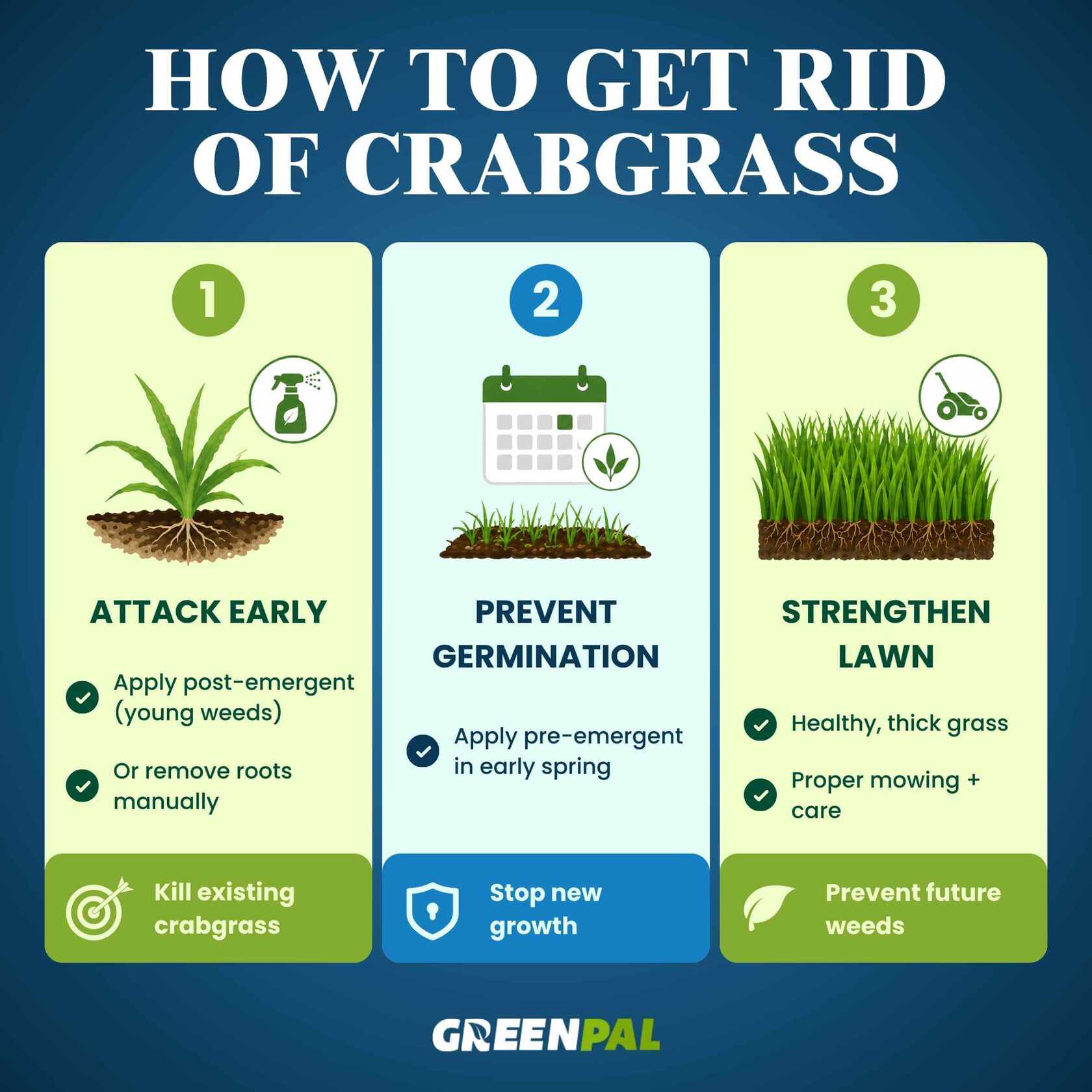
The most effective way to control existing crabgrass is to kill the root using a post-emergent herbicide or manual removal. Methods like vinegar and boiling water may kill the aboveground foliage, but they don’t prevent the regrowth of crabgrass with mature root systems.
Step 1: Attack Early
Apply post-emergent herbicide in late spring to early summer when plants are young and still in the 3 to 5-leaf stage. Herbicides are less effective against mature crabgrass.
Hand pulling or digging can remove mature crabgrass plants, but you must remove the entire root. Otherwise, new growth will sprout.
Manual removal is labor intensive and requires persistence. Missing even one plant before it drops seeds can lead to a new crop of crabgrass the following spring.
Non-selective herbicides kill all plants, so be very careful when applying these chemicals. Only apply non-selective herbicides to the crabgrass and avoid getting it on the turfgrass.
Several selective herbicides are formulated to specifically target crabgrass, making them safer for your grass. However, read the ingredients and application instructions carefully.
Here’s why: Some ingredients in selective herbicides harm specific grass types, especially young grasses or when misapplied during high temperatures. St. Augustinegrass is especially sensitive to certain herbicides. Make sure the selective herbicide you are using is safe for your grass type and that you apply it correctly.
Step 2: Apply Pre-Emergent Herbicide in Spring
Pre-emergent herbicides are designed to prevent seeds from germinating.
Apply pre-emergent herbicide in early spring when soil temperatures are between 50 and 55 degrees Fahrenheit for several consecutive days. Crabgrass seeds begin germinating once soil temperatures are above 55 degrees Fahrenheit, so it’s important not to miss this crucial window.
Step 3: Practice Proper Lawn Care
Crabgrass thrives in sunny lawns with compacted soil and thin or damaged turf. That’s why the best way to prevent crabgrass growth is to practice a healthy lawn care routine. The healthier and more dense your lawn is, the harder it is for crabgrass to germinate and take over.
Follow a month-by-month lawn calendar that includes the following treatments:
Proper irrigation: Crabgrass thrives in dry soils, so ensure your lawn is receiving enough water, especially in summer.
Proper mowing: Avoid common mowing mistakes, such as mowing wet grass, using dull blades, or cutting grass too short.
Core aeration: Aeration relieves soil compaction (crabgrass loves compacted soil) and improves grass health by allowing water, nutrients, and oxygen to reach the grass roots.
Thatch removal: Excessive thatch prevents water, nutrients, and oxygen from accessing soil, resulting in a weaker lawn susceptible to weeds. Remove thatch when it exceeds one-half inch thick.
Fertilizer: Apply fertilizer to give your lawn the nutrients it needs to grow healthy and strong. Test your soil to determine the right amount of fertilizer your lawn needs.
Soil amendments: Add soil amendments according to the results of a soil test to improve the lawn’s soil health, water retention, and pH levels.
Overseeding: Plant grass seed over an existing lawn to encourage new growth and thicken the lawn’s density.
Does Vinegar Kill Crabgrass?
If you're hesitant to apply a synthetic herbicide to the lawn, horticultural vinegar can be used as a non-synthetic alternative, but it is generally less effective.
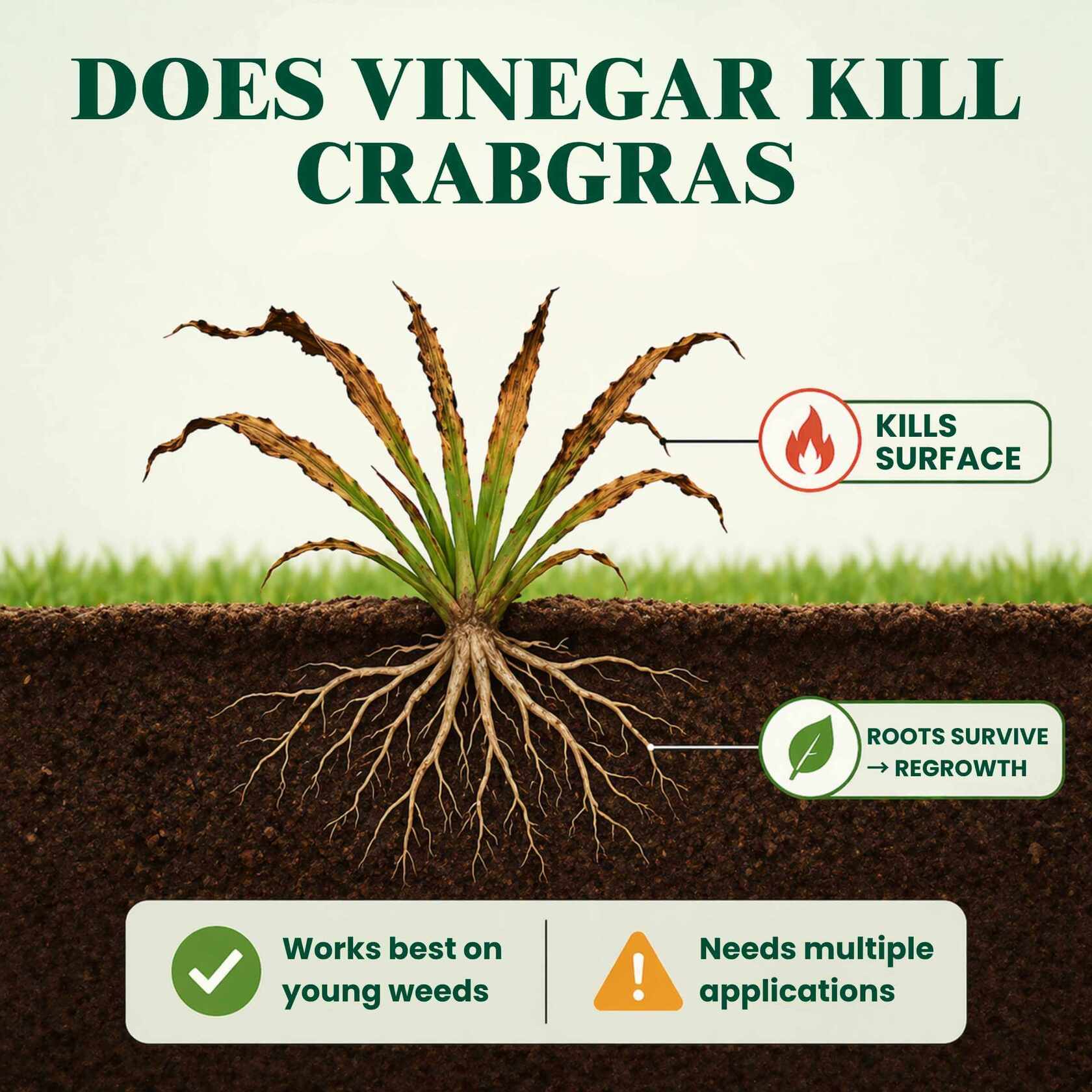
Horticultural vinegar is a non-selective herbicide that contains higher levels of acetic acid than household vinegar. Some homeowners apply horticultural vinegar containing 20% acetic acid to young crabgrass plants to dry out and burn the foliage.
Keep in mind that horticultural vinegar is a contact herbicide, meaning it only burns the foliage and does not move down to the roots. As a result, well-established crabgrass with deeper root systems can regrow, and even young plants may require multiple applications to suppress growth.
For more reliable control, a selective post-emergent herbicide or manual removal of the entire root is a more effective approach.
Caution: Handle horticultural vinegar carefully, as concentrated acetic acid can harm humans and animals through inhalation or skin and eye contact.
Does Boiling Water Kill Crabgrass?
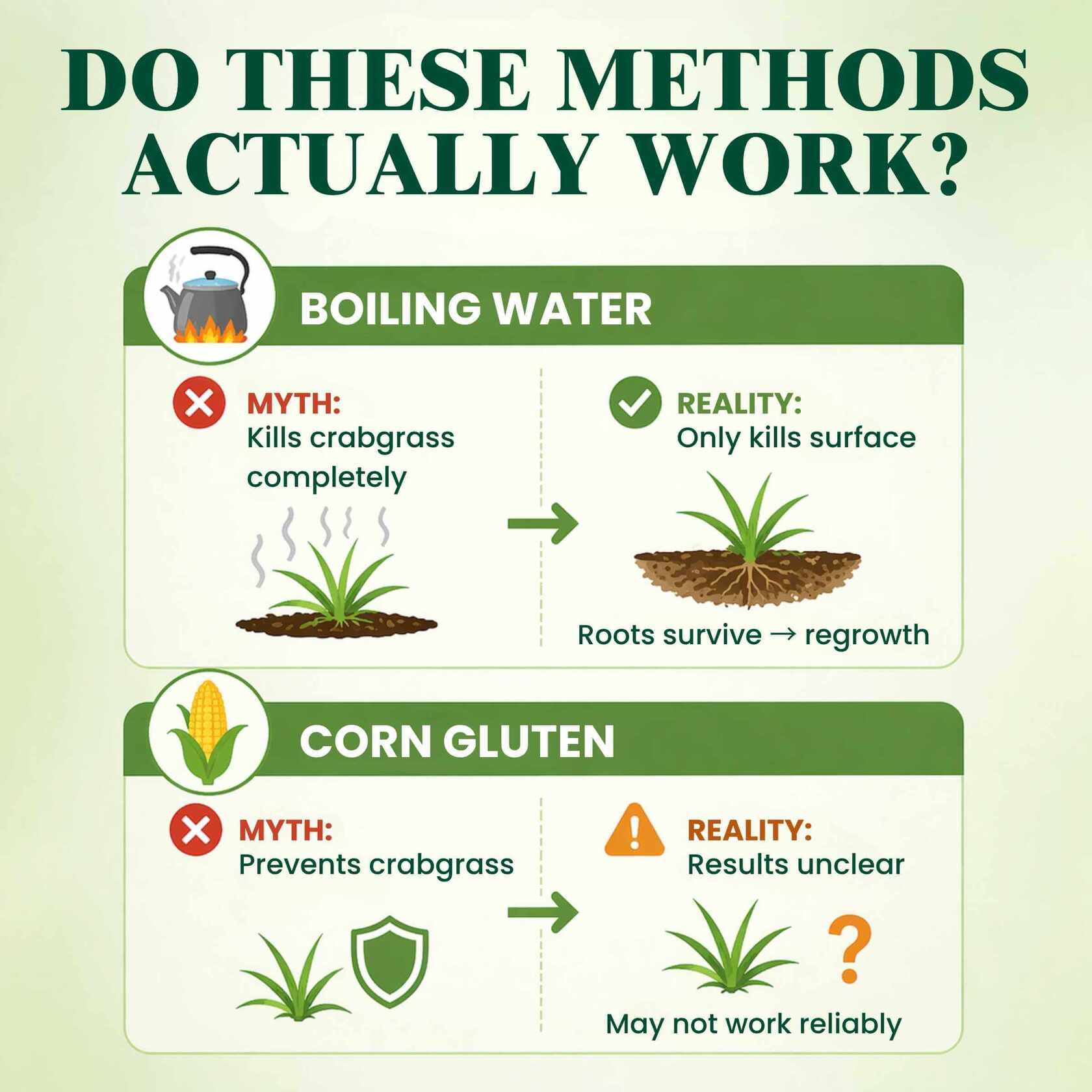
Like horticultural vinegar, boiling water can burn and kill the above-ground foliage of crabgrass but does not reach the roots, allowing established plants to regrow.
Caution: Use extreme care when handling boiling water to avoid burns.
Does Corn Gluten Meal Control Crabgrass?
Corn gluten meal acts as an organic fertilizer that promotes dense turf, which can help crowd out weeds.
However, according to the University of Maine Cooperative Extension, university research data is inconclusive regarding its effectiveness in preventing crabgrass, and its nitrogen content may contribute to water pollution depending on application rate. In some states, applying corn gluten at the rate required for weed suppression may exceed turf fertilizer laws.
Frequently Asked Questions
Why Is Crabgrass in My Lawn?
Crabgrass spreads to the lawn via seeds, and it grows best in weak, dry lawns with compacted soil, thin turf, and lots of sunlight. If your lawn struggles with crabgrass, adopt a healthy lawn maintenance routine to help minimize its growth.
If you live in an area with heavy clay soils, like Cincinnati or Richmond, consider scheduling lawn aeration services to help minimize compaction and prevent crabgrass.
How Long Does It Take to Get Rid of Crabgrass?
There's no quick fix. Full control typically spans two seasons — summer to kill or remove existing plants, then spring to block the seeds they dropped from germinating. Expect to repeat pre-emergent applications for two to three consecutive years to significantly reduce the seeds in your soil.
Does Mowing Make Crabgrass Worse?
Mowing can make crabgrass worse if the crabgrass has developed seedheads or the grass is cut too short. Mowing can spread the weed seeds to other areas of the lawn, and cutting the grass too short can stress the lawn and cast more light onto this sun-loving plant.
How Do I Get Rid of Crabgrass in Garden Areas?
To get rid of crabgrass in the garden, hand pull the plant and make sure to remove the entire root. To prevent seedlings from germinating, apply 2 to 3 inches of mulch to the garden bed.
Control Crabgrass With Professional Lawn Care
No matter how hard you try to remove and prevent crabgrass, this persistent weed may continue to put up a fight. If crabgrass keeps coming back, consider hiring a lawn care professional to improve your lawn's density, health, and resilience against weeds.