


Most Nashville homeowners pay between $35 and $85 per mowing visit, with the median landing around $45-$50 for a standard quarter-acre lot. That puts Nashville roughly in line with the national average of $50 per basic mow. Full-service programs that include fertilization, weed control, and seasonal treatments run $100 to $400 per month depending on yard size and services selected.
At GreenPal, we've processed over 270,000 lawn care transactions in Tennessee as of March 2026. The median accepted mowing price statewide is $45, with Nashville prices starting around $39 and ranging higher depending on lot size, grass type, terrain, and service frequency. This guide breaks down every cost factor and pricing trend specific to the Nashville metro.
What Basic Lawn Mowing Costs in Nashville
The price of a single mowing visit depends primarily on lot size. Here's how Nashville mowing costs scale by property:
Lot Size |
Approx. Sq. Footage |
Nashville Cost Per Mow |
1/8 acre |
~5,445 sq ft |
$28-$40 |
1/4 acre |
~10,890 sq ft |
$37-$55 |
1/2 acre |
~21,780 sq ft |
$51-$65 |
3/4 acre |
~32,670 sq ft |
$65-$79 |
1 acre |
~43,560 sq ft |
$79-$100+ |
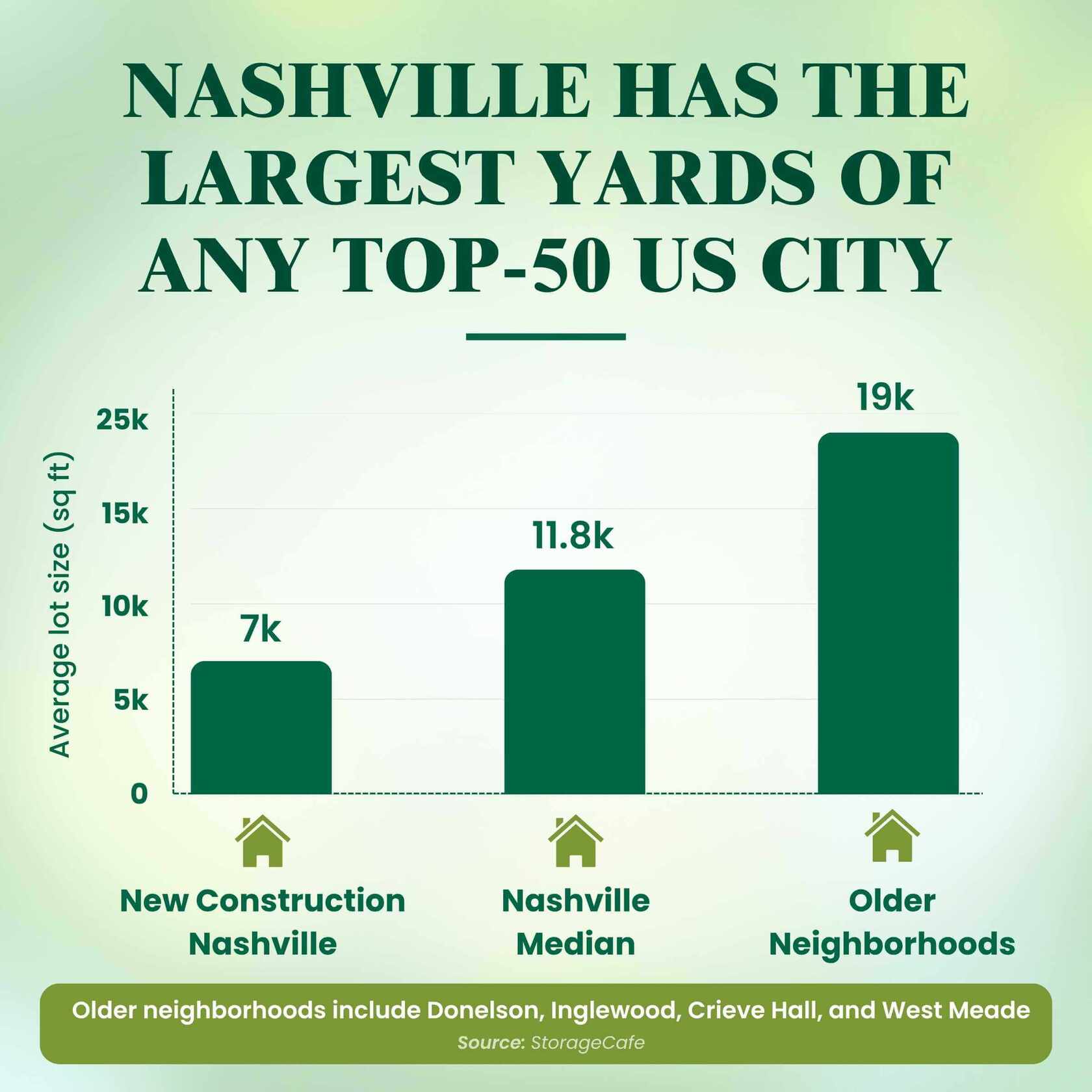
Nashville holds a distinction that directly affects what homeowners pay: it has the largest median lot size among the country's 50 biggest cities at 11,813 square feet (0.27 acres). Older neighborhoods like Donelson, Inglewood, Crieve Hall, and West Meade average nearly 19,000 square feet per lot, while newer construction trends toward smaller 7,000-square-foot lots. The typical Nashville homeowner has significantly more grass to maintain than residents of most other major cities.
On GreenPal, small Nashville yards can find service for as low as $30 for a full mow, trim, and blow. Properties of an acre or more typically run around $80. The median first bid from providers on our platform is $50, and the median accepted price (what homeowners actually pay after comparing quotes) lands at $45.
What's Included in a Standard Mowing Visit
A standard mowing visit in Nashville covers four tasks:
Mowing all turf areas
String trimming around fences, trees, and garden beds
Edging along sidewalks and driveways
Blowing clippings off hard surfaces
Grass clippings are typically mulched back into the lawn rather than bagged. This is standard practice and benefits the soil over time.
Services that generally carry separate charges:
Bagging or removing clippings
Weed pulling
Debris removal
Shrub and hedge trimming
For a full breakdown of what affects lawn mowing service pricing, including how providers calculate their rates, we've covered it in a separate guide.
Full-Service Lawn Care Costs in Nashville
Beyond basic mowing, comprehensive lawn care adds fertilization, weed control, aeration, and seasonal cleanups. Most Nashville providers structure their services into roughly three tiers:
Basic (mowing and edging only): $30-$65 per weekly visit, or $700-$1,200 annually
Standard (mowing, weeding, and fertilization): $100-$200 per month
Premium (mowing, aeration, overseeding, pest control, and seasonal cleanups): $200-$400 per month, or $900-$4,000 annually depending on property size
Here's what individual services typically cost in Nashville:
Service |
Nashville Cost |
Typical Frequency |
Basic mowing (per visit) |
$35-$87 |
Weekly or biweekly |
Fertilization |
~$80 per application |
3-5x per year |
Weed control |
$50-$125 per treatment |
2-4x per year |
Aeration |
~$175 |
1-2x per year (fall) |
Overseeding (standard lot) |
$80-$150 |
1x per year (fall) |
Aeration + overseeding bundle |
$160-$425 per 10,000 sq ft |
1x per year |
Spring or fall cleanup |
$100-$250 |
1-2x per year |
Leaf removal |
$150-$700 |
Fall season |
Dethatching |
$75-$300 |
As needed |
Shrub/hedge trimming |
$5-$20 per plant / $50-$75/hr |
2-4x per year |
Grub treatment |
$50-$150 per treatment |
As needed |
Mulch installation |
$35-$70 per cubic yard |
1-2x per year |
Sod installation |
$1-$2 per sq ft |
As needed |
Sources: Bob Vila
We've also published guides on aeration and overseeding pricing and leaf removal pricing, with input from lawn care professionals on both.
Six Factors That Drive Nashville Lawn Care Prices
1. Yard Size
Yard size is the single largest cost driver, and Nashville homeowners tend to have more of it than most. The city's median lot of 11,813 square feet is the largest among the top 50 US cities, which means most homeowners here are starting from a higher baseline than they might expect when comparing national pricing data.
2. Terrain and Slopes
Nashville's rolling topography adds 10% to 25% to final pricing in many cases. Properties in East Nashville, Bellevue, and areas near the Cumberland River hills often feature significant grade changes that require slower mowing and sometimes specialized equipment. A flat half-acre lot might take 35 minutes to mow. A 30-degree slope pushes that to roughly 50 minutes, and providers price accordingly.
3. Grass Type
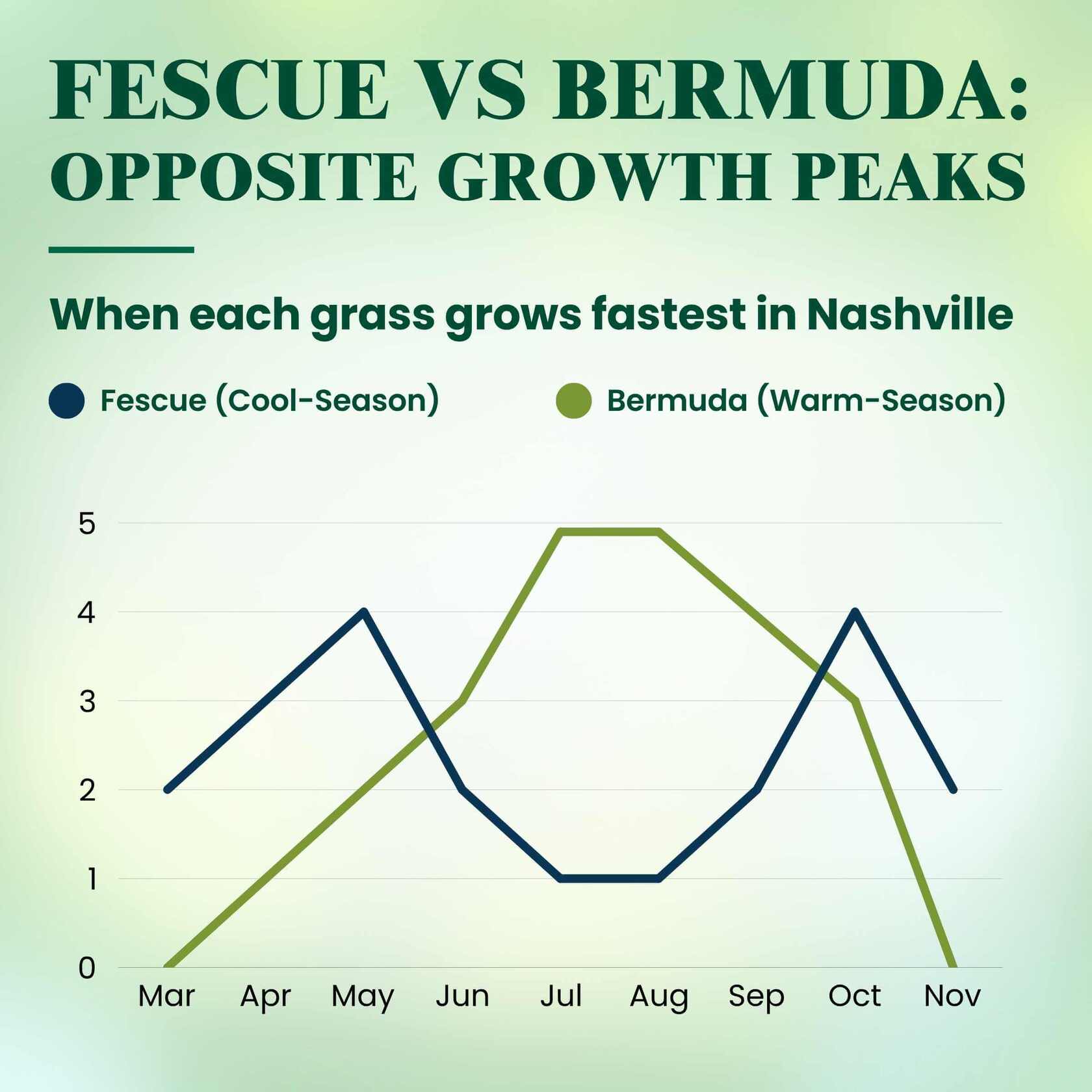
Nashville sits in the transition zone where both warm-season and cool-season grasses grow. According to the University of Tennessee Extension, tall fescue is the most common cool-season turfgrass in the state, while bermudagrass dominates as the warm-season option. Bermuda and zoysia grow thicker and denser than fescue, meaning they take longer to cut for the same area. This directly affects per-visit labor time and cost.
4. Service Frequency
Weekly mowing is the most cost-effective option per visit because the grass stays manageable. Biweekly service costs more per visit due to additional labor and cleanup time. Monthly or one-time mowing can run 50% to 100% more per visit than recurring weekly rates. Most Nashville homeowners opt for weekly or biweekly service, with monthly visits reserved for seasonal use or minimal-maintenance properties.
5. Lot Condition and Obstacles
Overgrown lawns with grass exceeding 8 to 10 inches trigger surcharges of roughly 50% on most platforms, including our own. First-time cuts on neglected properties can cost double the standard rate. Obstacles like fences, play structures, and narrow gate access force crews to switch from riding mowers to push mowers, adding significant service time and cost.
6. Location Within the Metro
Properties outside main service routes may incur travel surcharges. Urban Nashville neighborhoods may also carry slightly higher pricing due to traffic and access constraints. Providers who optimize their schedules by neighborhood often offer better pricing to homeowners who fit their existing routes.
Nashville's Seasonal Lawn Care Pricing
Nashville's growing season runs from roughly March through November, about eight months of active maintenance. The city sits in USDA Hardiness Zone 7b and receives approximately 50 inches of annual rainfall, spread fairly evenly across the year. Here's how pricing and demand shift throughout the year.
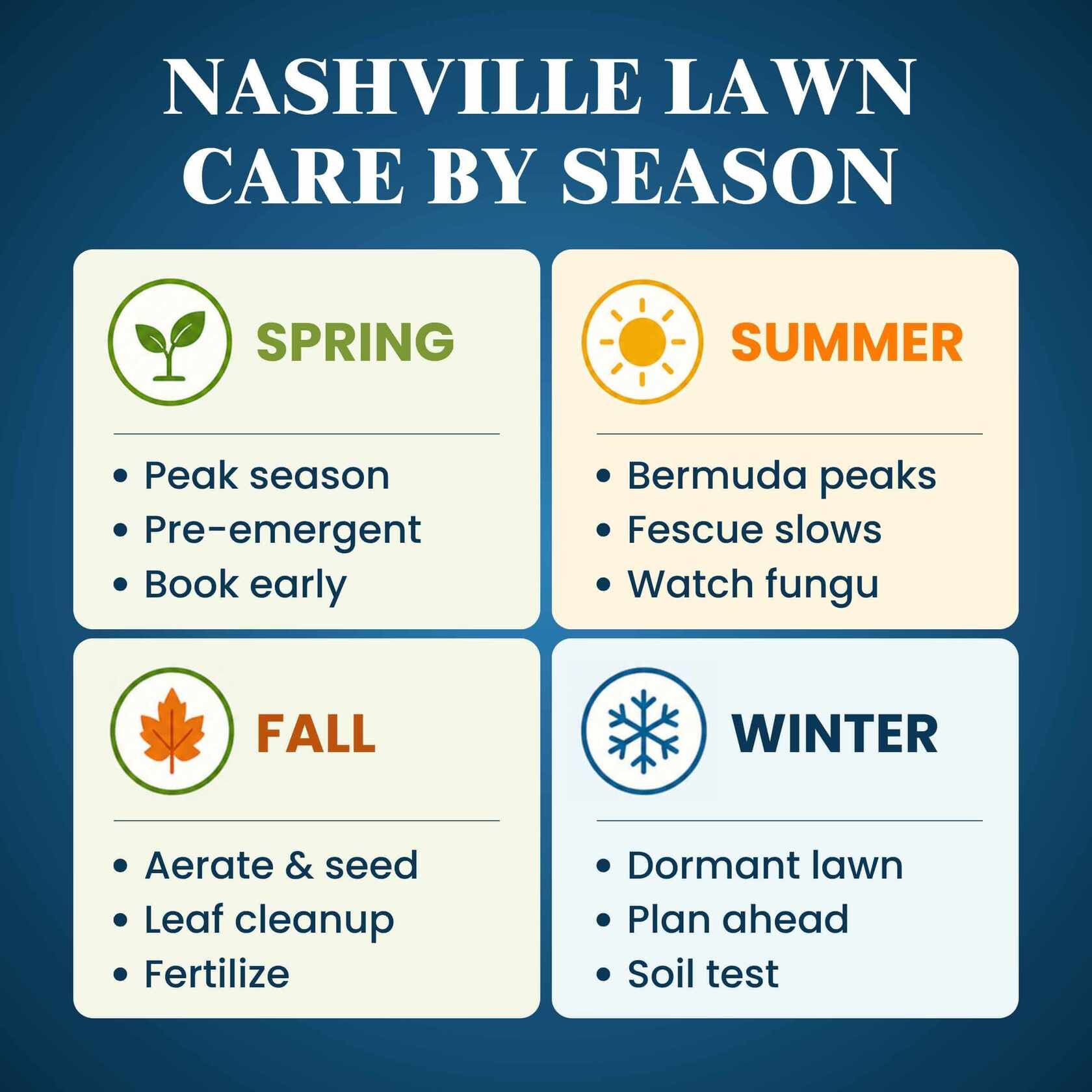
Spring (March-May): Peak Demand
Spring is the busiest season for Nashville lawn care providers, and many charge a premium during peak growing months. According to the University of Tennessee Extension's Lawn Maintenance Calendar, pre-emergent herbicide needs to go down when soil temperatures average 55 degrees at two-inch depth, typically early to mid-March in Nashville. Grass growth accelerates quickly, and by late March, providers are often booked out for weeks.
The most reliable way to avoid surcharges and limited availability is to lock in a provider by February.
Summer (June-August): Divergent Needs by Grass Type
Bermudagrass lawns need their most frequent mowing during summer. Fescue lawns, however, slow dramatically in the heat. A fescue lawn that needs weekly mowing in April may only need cutting once a month during peak summer heat. Summer is also prime time for brown patch fungus in fescue lawns, which sometimes requires preventative fungicide treatments at 28-day intervals.
Fall (September-November): Critical for Fescue
Fall is the most important season for Nashville homeowners with fescue-heavy lawns. September is the ideal window for aerating and overseeding, October calls for fertilization and winter weed prevention, and leaf removal becomes a significant expense as Nashville's tree canopy sheds. Expect leaf removal to cost roughly two to three times your regular mowing price.
Winter (December-February): Dormant but Not Idle
Bermudagrass goes fully brown after the first frost, typically late October to early November. Fescue remains semi-active but slows considerably. Winter is a good time for soil testing and planning your spring care program. The University of Tennessee's soil testing lab charges about $15 plus shipping and can identify nutrient deficiencies before the growing season begins.
How to Find the Right Lawn Care Provider in Nashville
Get Three to Five Quotes
Comparing multiple quotes can yield 20–30% savings. Ask for itemized breakdowns separating labor, materials, and any add-on services so you can compare bids accurately. Giving providers a two-to-three-day scheduling window to fit you into their existing routes often results in lower pricing, since it reduces their travel time and costs.
For a straightforward breakdown of what's a fair price for lawn care and how to tell if a quote is reasonable, we've broken it down from a homeowner's perspective.
Verify Insurance and Licensing
Ask for a certificate of liability insurance and confirm the coverage amount, expiration date, and carrier before scheduling service. Tennessee requires a commercial applicator license for professionals applying fertilizers, herbicides, or pesticides. Always verify your provider holds one before scheduling any treatments.
Prioritize Local Knowledge
Nashville's transition-zone climate, clay-heavy soils, and specific grass varieties require real expertise. A provider who works regularly in your neighborhood will have a better read on local conditions than a generalist. Look for reviews from homeowners in your area specifically. David Hill-Jones, who operates Thru the Green Lawncare in Nashville, described his approach on our blog: "We stay in specific neighborhoods and charge the same in those neighborhoods to keep our pricing simple."
Consider a Seasonal Contract
Signing a seasonal or annual contract can cut per-visit costs by as much as 25% compared to one-off pricing. Contracts provide price stability and guaranteed scheduling during peak season. The trade-off is reduced flexibility, so make sure you're comfortable with the provider before committing.
Book Before the Rush
Secure lawn care services four to six weeks before the growing season begins. For Nashville, that means booking in February for a March start. Waiting until grass is already overgrown limits your provider options and almost always triggers surcharges.
For more guidance on finding the right lawn care pro for your specific needs and yard, we've put together a detailed breakdown of what to look for and ask before hiring.
Get Free Lawn Care Quotes in Nashville
GreenPal connects Nashville homeowners with vetted local lawn care professionals through a competitive bidding system. Enter your address, and local providers submit quotes based on your property details and satellite imagery. Most homeowners receive up to five competitive quotes within minutes, with no phone calls required.
Visit YourGreenPal.com or download our app to get started.


