


How Much Does Leaf Removal Cost in 2026?
Most homeowners pay somewhere between $50 and $700 for a single professional leaf removal visit in 2026, with a typical fall cleanup landing in the low hundreds. That range is so wide because leaf removal is one of the most local jobs in all of lawn care. Two things move the price more than anything else. The first is what labor costs in your area. The second is what your city or county charges to dispose of the leaves. That is also why the national averages you find online disagree by hundreds of dollars, and why none of them reliably predict what you will pay.
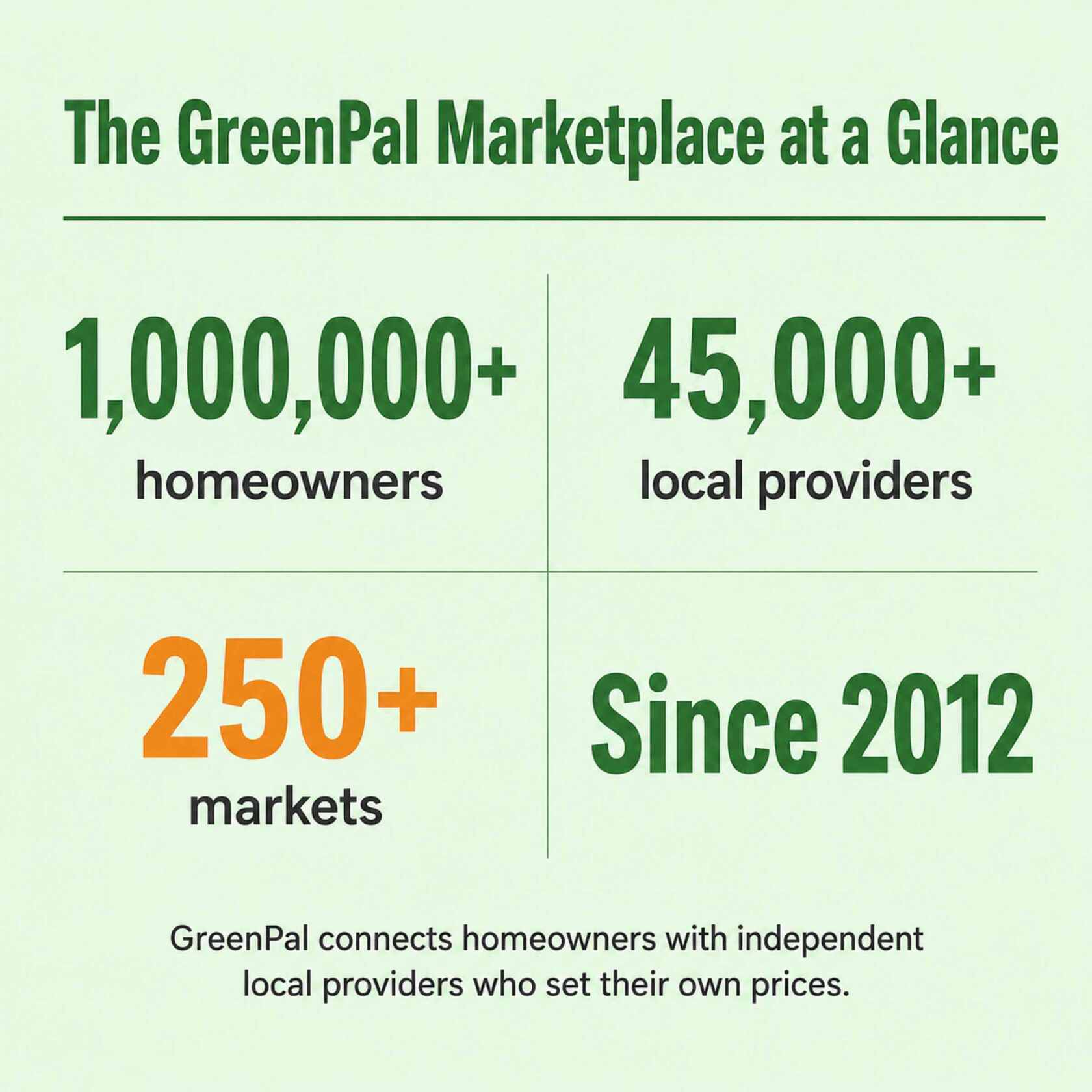
At GreenPal, we see this play out every fall. We run a marketplace where independent, vetted local providers bid on your job, so instead of guessing from a national average, you get real flat-fee prices from pros in your own zip code. Since 2012 we have connected over 1 million homeowners with more than 45,000 local providers across 250-plus markets, and the leaf cleanup prices those providers quote look nothing like a single national number. The most useful figure for your budget is not an average. It is a local quote for your specific yard.
What Leaf Removal Costs on Average in 2026
National cost guides put professional leaf removal in a broad band, and they do not agree with one another. That disagreement is the first sign that a single average is a weak tool for budgeting.
Source |
National Average |
Typical Range |
$390 |
$285 to $500 |
|
$300 |
$150 to $550 |
That $90 gap between the two averages comes from blending very different jobs together. A quick leaf-blowing pass on a small city lot and a full haul-away on a wooded one-acre property both count as "leaf removal." They are not the same service, so averaging them produces a number that describes neither. Fixr, for example, puts a small-yard cleanup around $50 and a full-service acre near $700.
These figures mark the extremes. Your actual bill depends on your yard and your area.
Why National Averages Miss the Mark for Leaf Removal
Leaf removal is heavy on two costs that swing hard by location. Both local labor and local disposal change from one place to the next. A crew's hourly rate in Seattle is not the rate in Little Rock, and the fee your county charges to dump a ton of leaves in Baltimore is not the fee in rural Georgia. Stack those two variables on top of your specific yard and the "average" stops meaning much.
GreenPal's own city pages, where the numbers reflect what independent local providers have actually charged, show how dramatic that spread is.
Market |
Average Booked Price |
Providence, RI |
$31 |
Albuquerque, NM |
$33 |
Chicago, IL |
$35 |
Little Rock, AR |
$46 |
Memphis, TN |
$54 |
Mobile, AL |
$59 |
Seattle, WA |
$84 |
Those lower numbers cluster around basic, high-frequency cleanups on standard suburban lots, which is why they sit well under the national averages. But notice Seattle. The average booked price there runs about $84, more than double Chicago's, and a big part of that is weather. Seattle's frequent rain leaves the ground covered in wet, matted leaves that are heavier and slower to clear, so the labor takes longer and the price climbs. You can see the live local numbers on GreenPal's Seattle leaf removal and Chicago leaf removal pages.
Seasonal, heavily wooded markets swing even wider. In a market like Nashville, a standard mowing visit might run $35 to $85, but a comprehensive fall leaf cleanup can climb to anywhere from $150 to $700 once the full canopy comes down. Homeowners there commonly pay two to three times their normal mowing price for leaf work. To be clear, GreenPal does not set any of these prices. The local provider sets the bid and gets paid directly after the job is done. Our role is to put several of those real bids in front of you so you can compare.
How Leaf Removal Is Priced
Providers do not all quote the same way. Understanding the four common pricing structures helps you read a bid and know whether it is fair for your yard.
Pricing Method |
Typical Numbers |
When You'll See It |
Per hour (per crew) |
$75 to $150 per hour |
Volume is unpredictable, or the yard is unusual |
Flat per-visit fee |
Set upfront, often a $150 to $200 minimum |
Most residential jobs, especially through bidding platforms |
Per acre |
$400 to $700 per acre |
Large suburban and rural properties |
Per square foot |
About $0.01 to $0.02 per square foot |
Estimating tools and larger maintained lawns |
A few notes on how these work in practice:
Hourly rates protect the provider when leaf volume is hard to predict. Individual worker rates vary by task, from roughly $15 to $45 per hour for blowing, $25 to $50 for raking, and $30 to $60 for vacuuming, since each demands different effort and equipment.
Flat per-visit fees are the most common on bidding platforms because they let you approve an exact price before any work starts. Providers protect their time with minimums, commonly $150 to $200 for a small job, $250 to $300 for a mid-sized one, and $300 to $500 in higher-cost Northeast and Pacific Northwest markets.
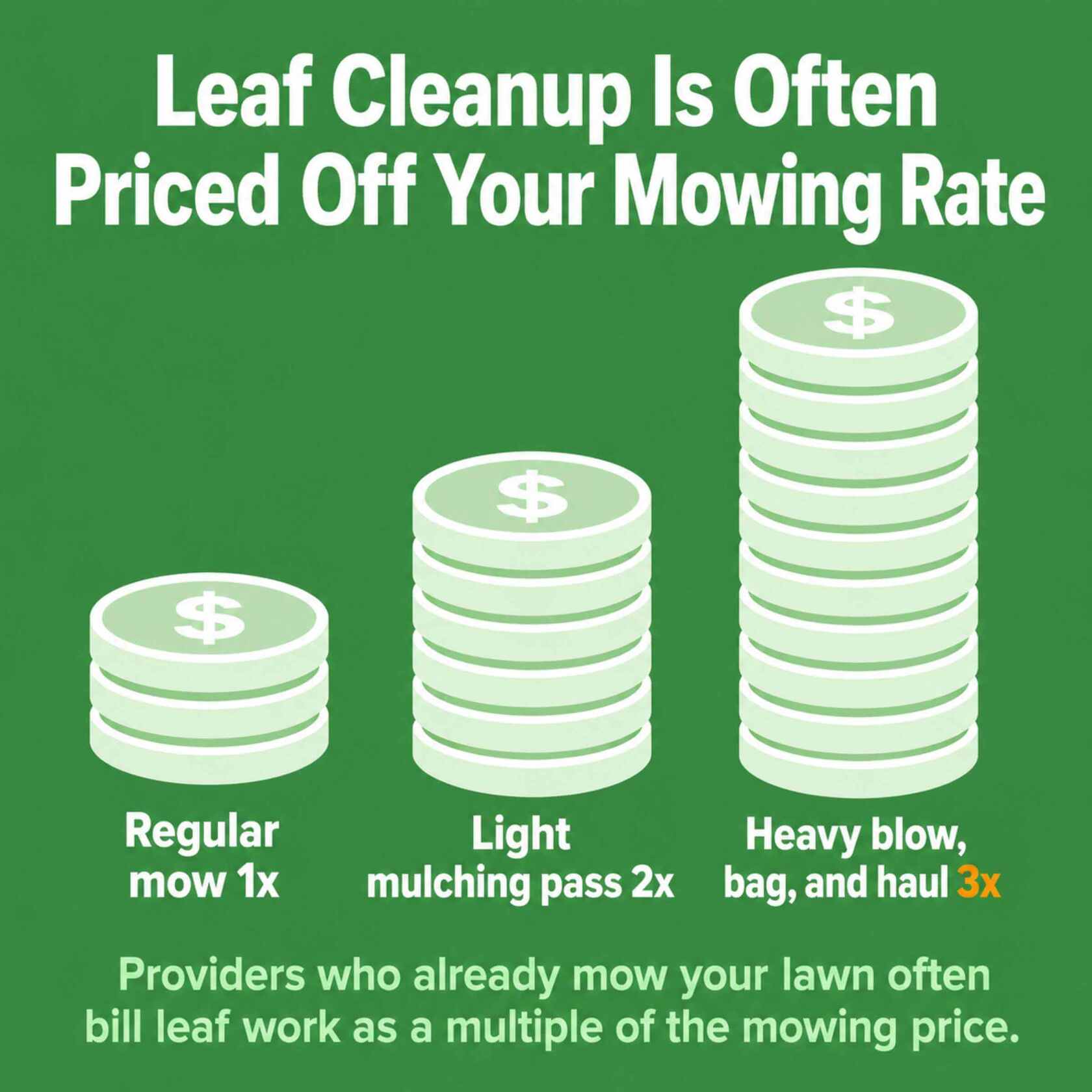
The mowing multiplier is a shortcut providers use for existing weekly or bi-weekly mowing customers. A light mulching pass is often billed at about double the normal mowing rate, and a heavy blow-bag-and-haul cleanup at roughly triple. If you want the full pro's-eye view of how these bids get built, our guide on how to price leaf removal walks through the logic.
Leaf Removal Methods and How They Change the Price
The method a provider uses comes down to their equipment, the condition of your leaves, and how finished you want the yard to look. Each approach carries a different labor cost.
Method |
Typical Cost |
Best For |
Mulching in place |
$50 to $150, or bundled into a slightly higher mowing fee |
Dry leaves, light to moderate volume |
Leaf blowing |
Billed hourly, roughly $15 to $45 per hour |
Dry leaves, pushing to a pile or wooded edge |
Raking and bagging |
Around $25 to $50 per hour, plus $5 to $10 per bag |
Wet, matted, or heavy leaves |
Leaf vacuuming |
About $30 to $60 per hour |
Clean, thorough collection |
Haul-away and disposal |
Highest cost, adds disposal fees |
A completely spotless finish |
Mulching in place is usually the cheapest option and the one turf scientists prefer. The provider runs a mulching mower over dry leaves, shredding them to about a tenth of their size so the pieces settle into the lawn. It only works when leaves are dry and not too deep. Leaf blowing is fast and cheap by the hour but incomplete, since the leaves still need to go somewhere. Raking is the most labor-intensive, which is why it costs the most per hour, but it is often the only thing that works on wet, matted leaves. Vacuuming is thorough and mechanized. Haul-away is the premium finish because it adds fuel, drive time, and disposal fees on top of the labor.
If you want to know what a thorough cleanup should actually include before you compare bids, our yard cleanup tips cover the scope in plain terms.
What Drives Your Leaf Removal Cost
Five factors do most of the work in setting your final price.
Yard Size and Leaf Volume
Square footage alone does not tell the story. A quarter-acre lot under a dense canopy of mature oaks generates far more leaves, and far more labor, than an open acre with one decorative maple. Ankle-deep accumulation means more man-hours to collect and more tonnage to dispose of, both of which raise the price.
Removal Method
As the table above shows, the same yard can cost very different amounts depending on whether the leaves are mulched in place, blown to a pile, or fully hauled away. Haul-away and vacuuming are the usual upcharges.
Local Disposal and Tipping Fees
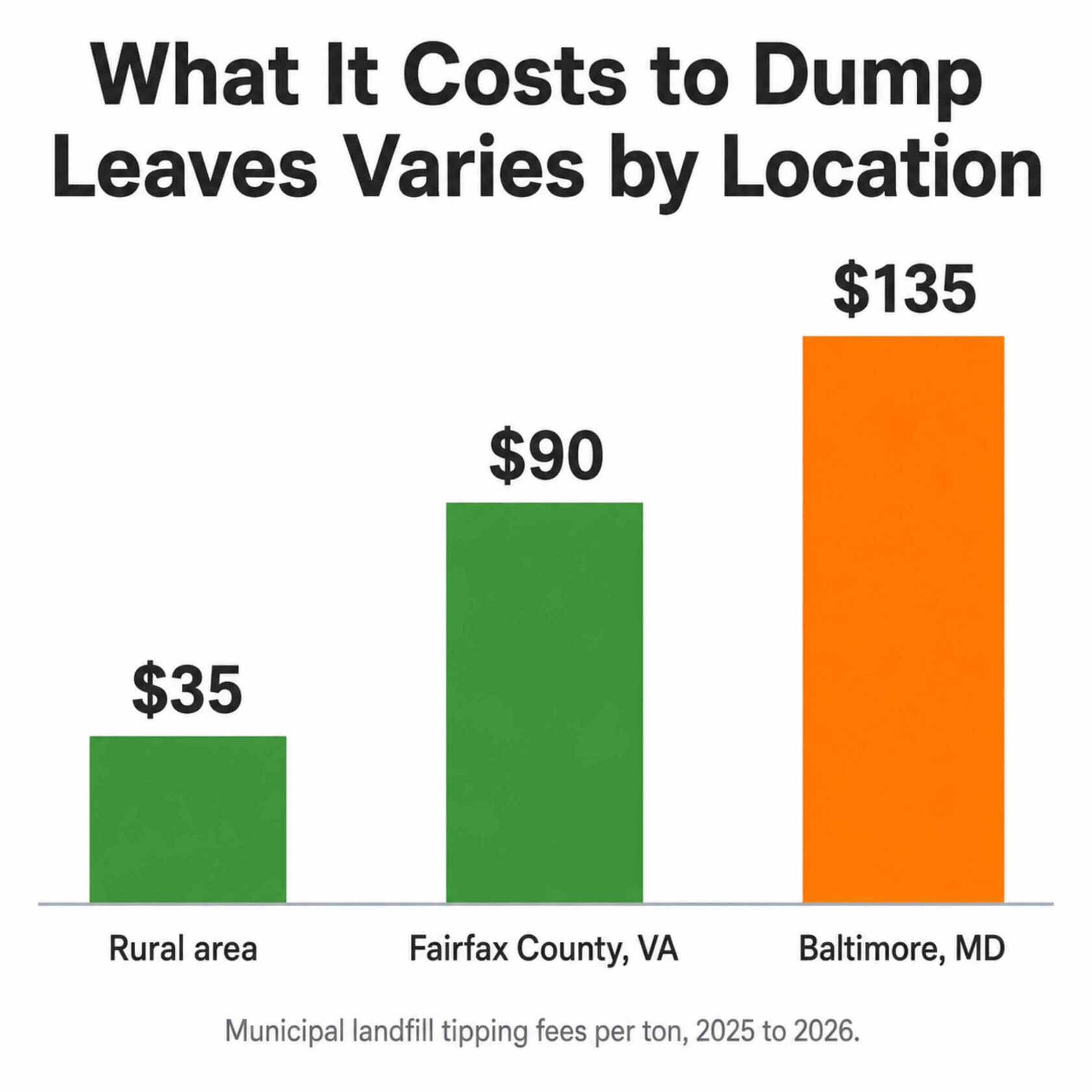
This is the variable that throws national averages off the most. When a provider hauls your leaves off-site, they pay a "tipping fee" to a landfill or transfer station, and those fees vary wildly by location. In late 2025, Baltimore City raised its landfill tipping fee to about $135 per ton, its first increase in 32 years. Fairfax County, Virginia charges about $90 per ton with enforced minimums of $36 to $90 per load, so even a small load triggers a minimum charge. Rural areas can be a fraction of that, closer to $35 per ton. A provider in a high-fee city has to charge more for haul-away just to break even, and that cost lands on your invoice. Providers typically pass along a disposal surcharge of around $20 per load, sometimes more.
Service Frequency
Waiting until December to book one massive cleanup almost always costs more than staying on top of it. A single end-of-season cleanup can run anywhere from about $250 to $850, depending on how bad the buildup has gotten. Spreading the work across several lighter passes, or an annual contract that averages $150 to $500, is far less labor-intensive than removing a compacted, rotting, foot-deep layer all at once.
Seasonal Timing and Moisture
Early-fall leaves are dry and light. Late-season leaves have been rained and frosted on, so they mat down, soak up water, and get heavy. Wet leaves resist blowers, demand hand raking, and weigh more at the dump, so providers charge more for late cleanups.
DIY vs. Hiring a Pro for Leaf Removal
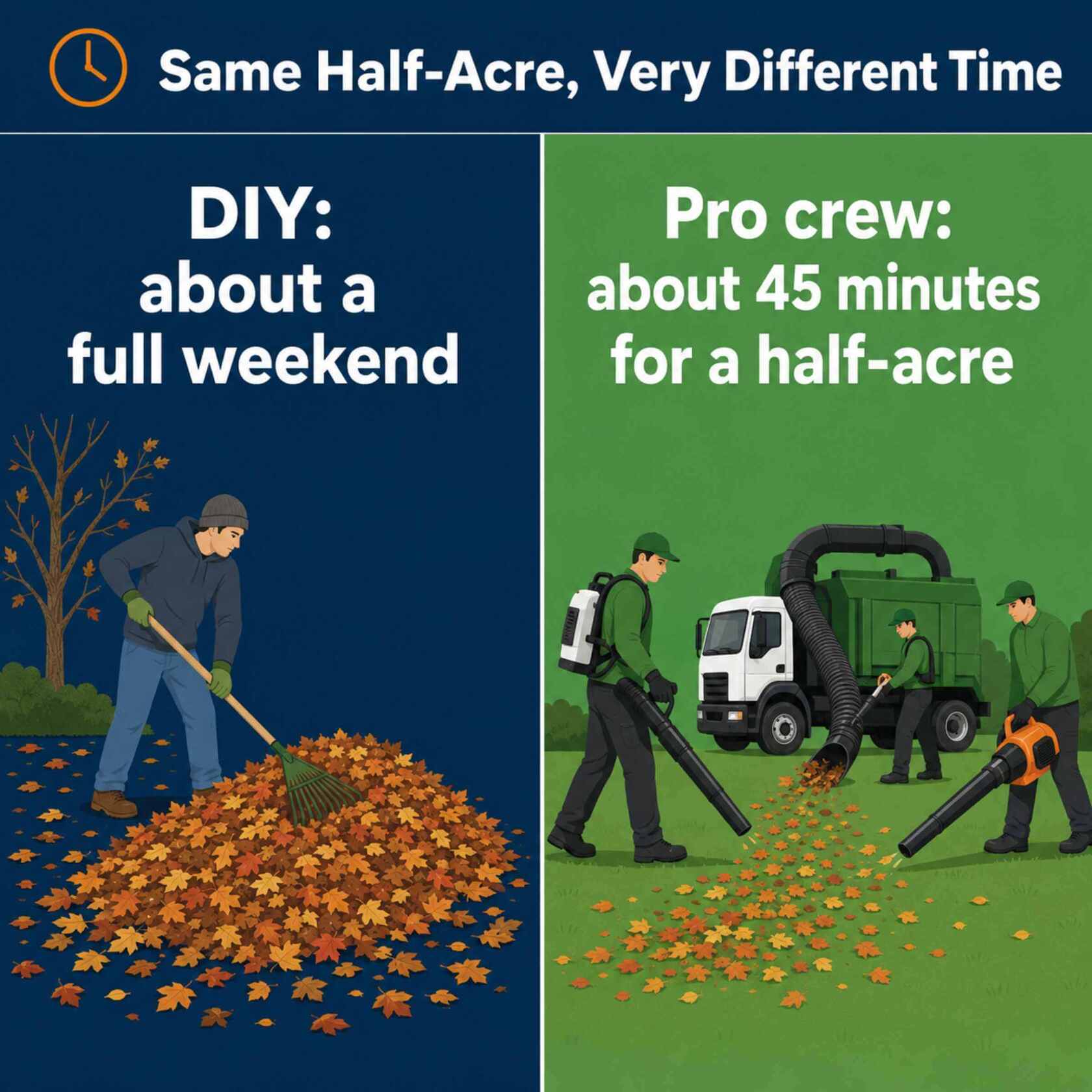
For a small yard with light, dry leaves, doing it yourself is often the cheaper call. The tools are not expensive up front.
DIY Item |
Typical Cost |
Standard fan rake |
$10 to $50 |
Consumer leaf blower |
$30 to $170 |
Electric leaf mulcher |
$149 to $200 |
Biodegradable leaf bags (5-pack) |
$2.75 to $8 |
A homeowner who buys a $150 mulcher, a $25 rake, and $30 in bags is out about $205 in year one, which pays for itself quickly against a $400 professional service if you are willing to put in the labor.
The trade-off is time and physical effort. A three-person crew with commercial blowers and a truck-mounted vacuum can clear a half-acre lot in about 45 minutes. The same lot can eat an entire weekend of raking for one person, along with the back strain and the hassle of driving bags to the dump and paying the tipping fee yourself. For a large, heavily wooded, or wet yard, hiring a pro is usually the better value, and for anyone who physically cannot do the work, it is not really a question. If cost is the main concern, our tips on how to save money on lawn care apply to leaf cleanup too.
Why Leaving the Leaves Is Not Free Either
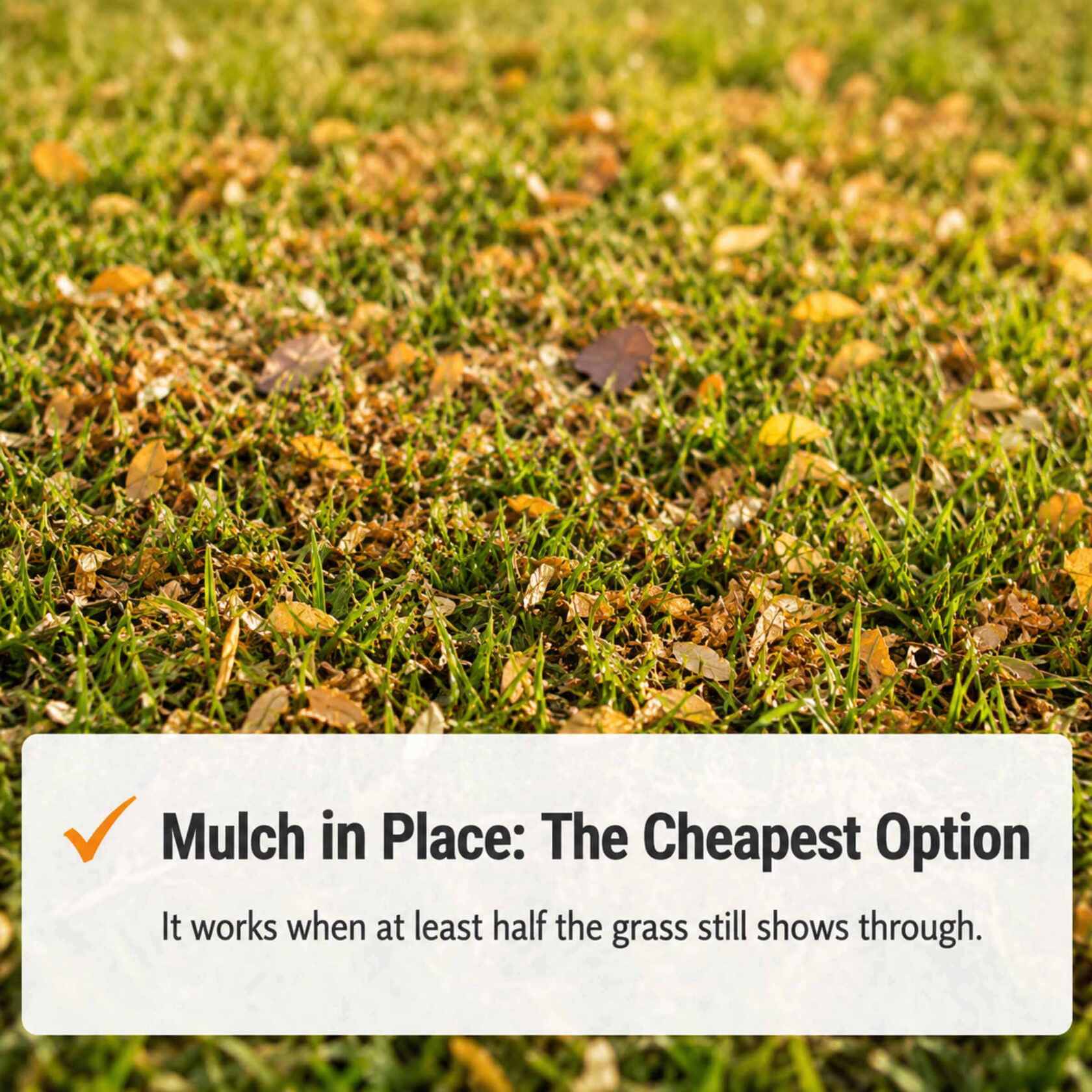
Skipping cleanup entirely has its own cost, just a delayed one. A thick, unbroken layer of leaves blocks sunlight and traps moisture against the lawn, creating conditions for snow mold in the North and large patch disease in the South, and it gives rodents a place to shelter and chew through turf over winter.
The middle-ground option that turf scientists actually recommend is mulching rather than total removal. Mulched leaves break down and feed the soil the same way grass clippings do. Penn State research on recycling mulched clippings found they return a meaningful share of a lawn's nitrogen to the soil, which cuts fertilizer needs. Michigan State research found that consistently mulching maple and oak leaves sharply reduced dandelion and crabgrass over three years. The catch, per University of Minnesota extension specialists, is that mulching only works if at least half your grass canopy still shows through the shredded leaves afterward. Above that, the excess has to be removed. That threshold is exactly why heavily wooded lots still need paid cleanups no matter how good mulching is in theory.
Common Questions About Leaf Removal Cost
Is there a minimum fee for leaf removal?
Usually, yes. Most providers set a minimum to make a dispatch worth their time, commonly $150 to $200 for a small residential job, and higher in expensive markets. On bidding platforms you will see this as a flat per-visit price you approve before work begins.
How often should leaves be removed?
It depends on your tree canopy, but staying ahead of accumulation with several lighter passes across the fall costs less overall than one big end-of-season cleanup. Heavily wooded yards may need service every week or two during peak leaf drop.
Is leaf removal cheaper if bundled with mowing?
Often, yes. If a provider already services your lawn, they may use a "mowing multiplier," billing a light mulching pass at about double your mowing rate and a heavy cleanup at roughly triple, rather than treating it as a separate trip with its own minimum.
Is mulching cheaper than hauling the leaves away?
Almost always. Mulching in place uses equipment the provider already has on site and skips the disposal fee entirely, so it runs about $50 to $150 or gets folded into the mowing fee. Haul-away adds labor, drive time, and tipping fees, which is why it is the most expensive method.
Get Real Leaf Removal Prices for Your Yard
The honest answer to "how much does leaf removal cost" is that it depends on your yard, your leaves, and your local disposal fees, and the only number worth budgeting against is a quote for your specific address. That is exactly what a marketplace gives you. When you post your leaf cleanup on GreenPal, local providers send you flat-fee bids you can compare side by side, and you pay the provider directly only after the work is done and you have approved it. It is free to get quotes, and in many markets you can have someone out the next day. See how GreenPal works and get real local prices before the leaves pile up.


