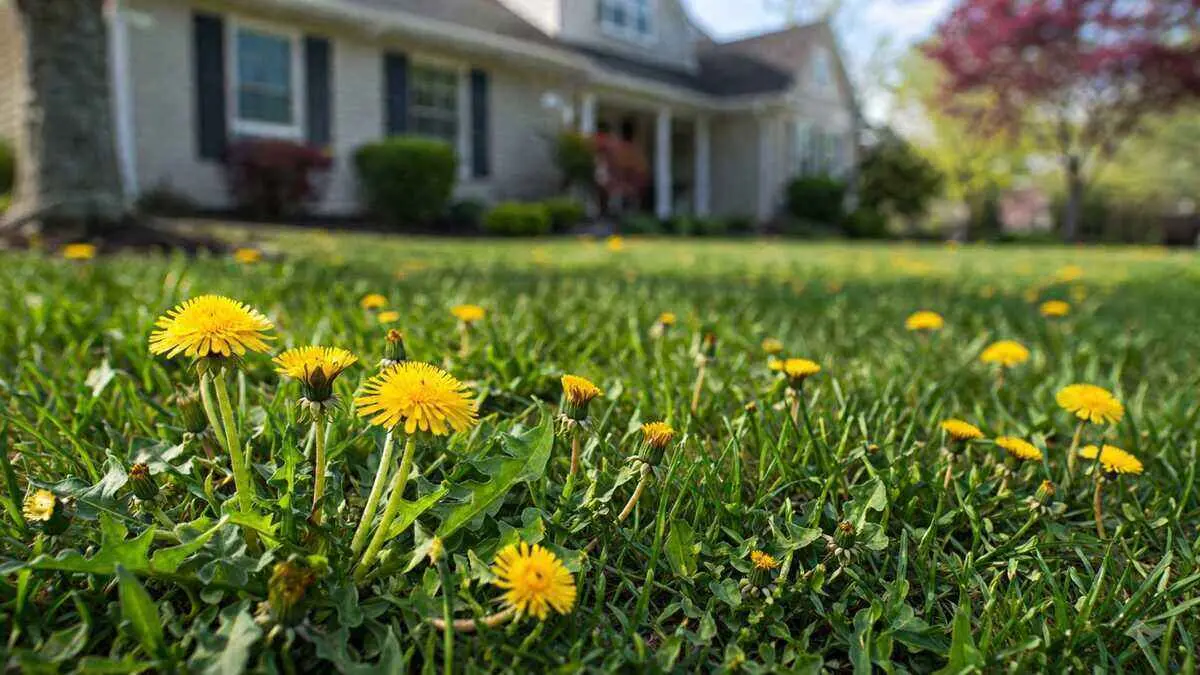
Dandelions spread fast, regrow from deep taproots, and can take over your lawn if left unchecked. If you’d rather not have this weed peppering your lawn, we’ll show you how to get rid of dandelions in 5 easy steps.
The best way to remove dandelions (and stop them from coming back) is to kill or remove the taproot, improve lawn density, and then apply pre-emergent herbicide in fall.
|
This guide covers: How to Get Rid of Dandelions in 5 Steps Common Dandelion Removal Methods How to Prevent Dandelions With Good Lawn Care |
What Are Dandelions?
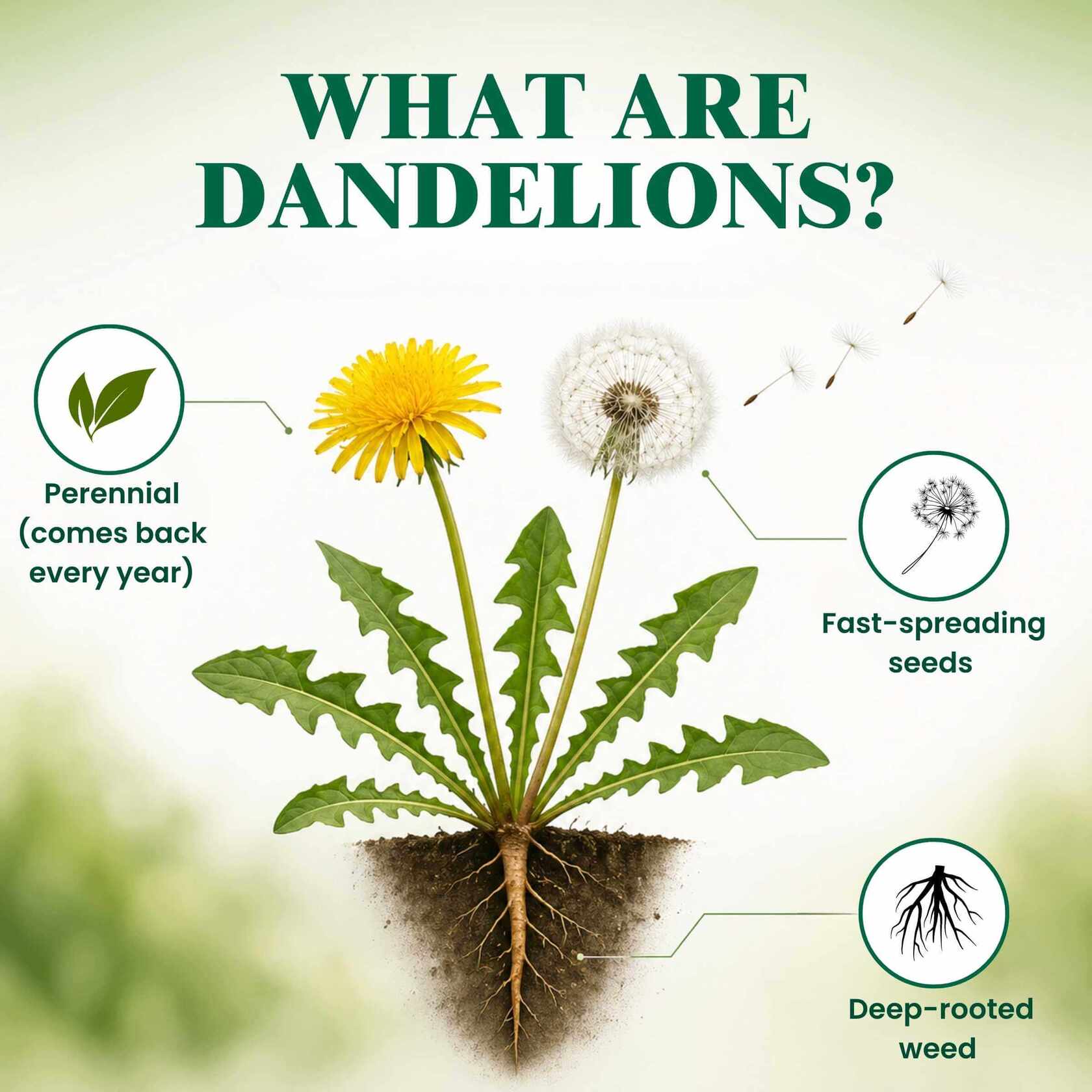
Dandelions (Taraxacum officinale) are perennial plants that can return year after year when left uncontrolled. Some gardeners don’t mind these bright yellow flowers in the yard or garden, often enjoying their edible benefits and cheery color.
On the other hand, not everyone wants this fast-spreading, invasive weed blemishing their pristine lawn. Dandelions, also known as lion’s tooth, were brought to North America by early European settlers for their medicinal and edible benefits, and have since spread aggressively across lawns and landscapes.
How to Get Rid of Dandelions in 5 Steps
Dandelions are tough to control thanks to their deep taproot and seed-spreading puffballs. Even a small fragment of the 6- to 18-inch taproot can regenerate into a new plant, and a single dandelion can produce thousands of seeds per year. That’s a lot of firepower for one small plant.
That’s why it’s important to act early and remain persistent. Here’s your best defense against dandelions:
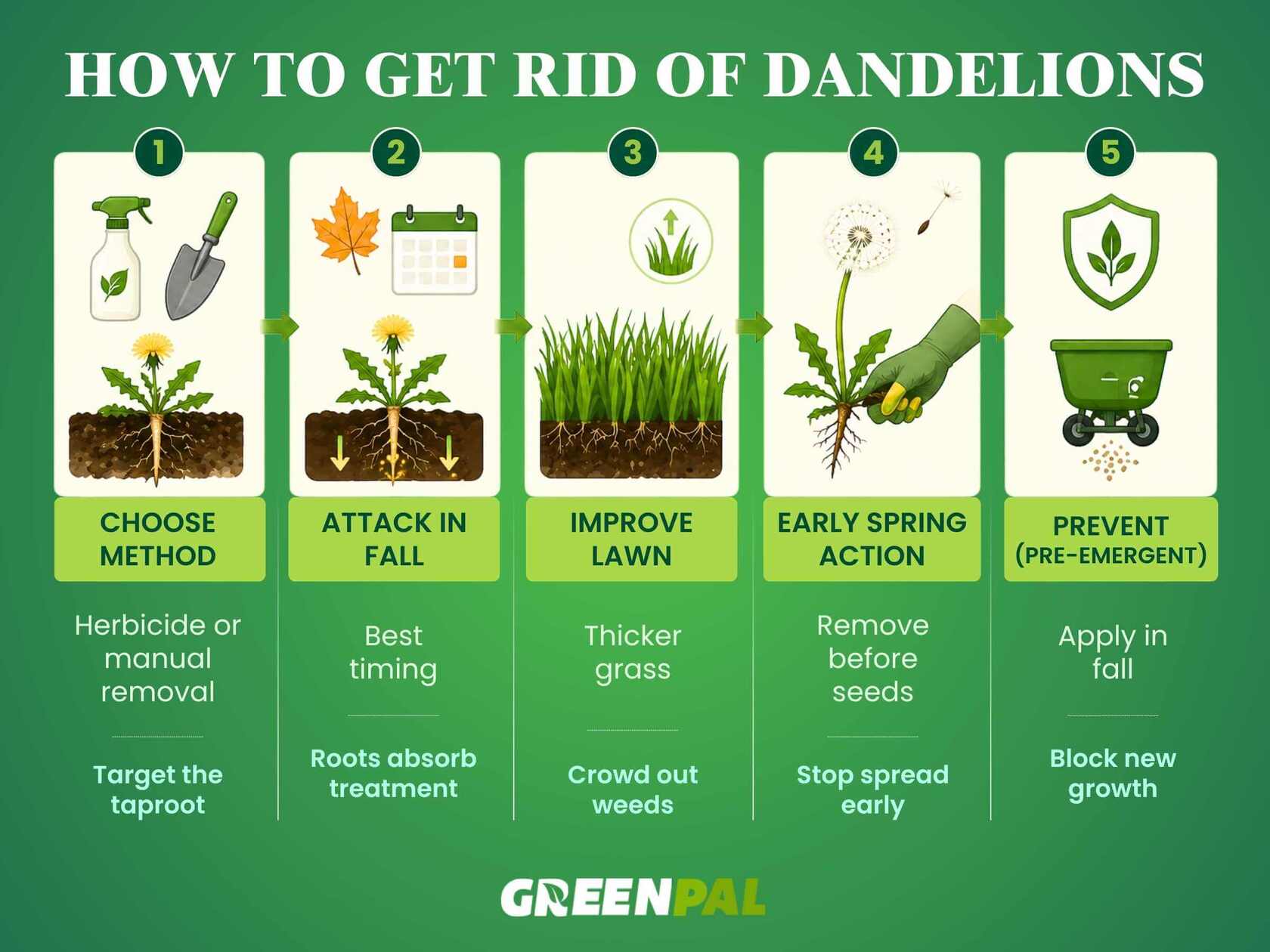
Step 1: Choose Your Control Method
The most effective way to eliminate the dandelion’s taproot is with a systemic post-emergent herbicide or manual removal.
While repeated applications of horticultural vinegar and boiling water may kill the foliage, their damage won’t travel down to the taproot.
To learn more about removal options, jump to the section Common Dandelion Removal Methods.
Step 2: Attack in Fall
According to university extension research, fall is the most effective time to control dandelions with post-emergent herbicide.
Here’s why:
As the plant moves nutrients into its roots for winter, systemic herbicides are carried down into the taproot. In spring, this downward movement slows, making herbicides less effective and often requiring repeated applications.
The best time to manually remove dandelions is when the plants are young with shallow taproots and the soil is moist.
While the yellow flowers don’t appear until spring, you can identify young dandelions in fall by their low-growing rosette — a cluster of jagged leaves radiating from a central point.
Step 3: Improve Lawn Density
Weeds thrive in thin turf. Strengthen your lawn care routine to promote thicker, healthier grass. Dense growth helps block sunlight from reaching the dandelion, reducing its ability to germinate or regenerate.
Improving lawn density isn’t a one-time fix. Consistent, year-round care is essential to prevent dandelions from returning. For guidance on how to improve your lawn care routine, check out our Beginner’s Guide to Lawn Care and Month-by-Month Lawn Care Calendar.
Step 4: Act Early in Spring
Even with thorough fall control, some dandelions will return from surviving taproots.
Before these plants flower and produce seeds, spot-treat them with a post-emergent herbicide or manually remove the entire taproot to prevent further spread.
If any have already flowered, remove the flower before it turns into a puffball (also known as the seed head). These puffballs, often associated with childhood wishes, can contain up to 200 seeds, which can quickly spread and start new plants across your lawn.
Step 5: Apply Pre-Emergent Herbicide in Early Fall
Now that you’ve controlled existing dandelions and improved lawn density, the next step is to prevent new seeds from germinating.
Apply a pre-emergent herbicide in early fall as soil temperatures begin to drop and approach 70°F, then water in the product to activate the barrier.
Always follow labeled instructions to ensure safe and proper application of herbicides.
Note: After applying pre-emergent, follow the product label's recommended waiting period before overseeding.
Common Dandelion Removal Methods
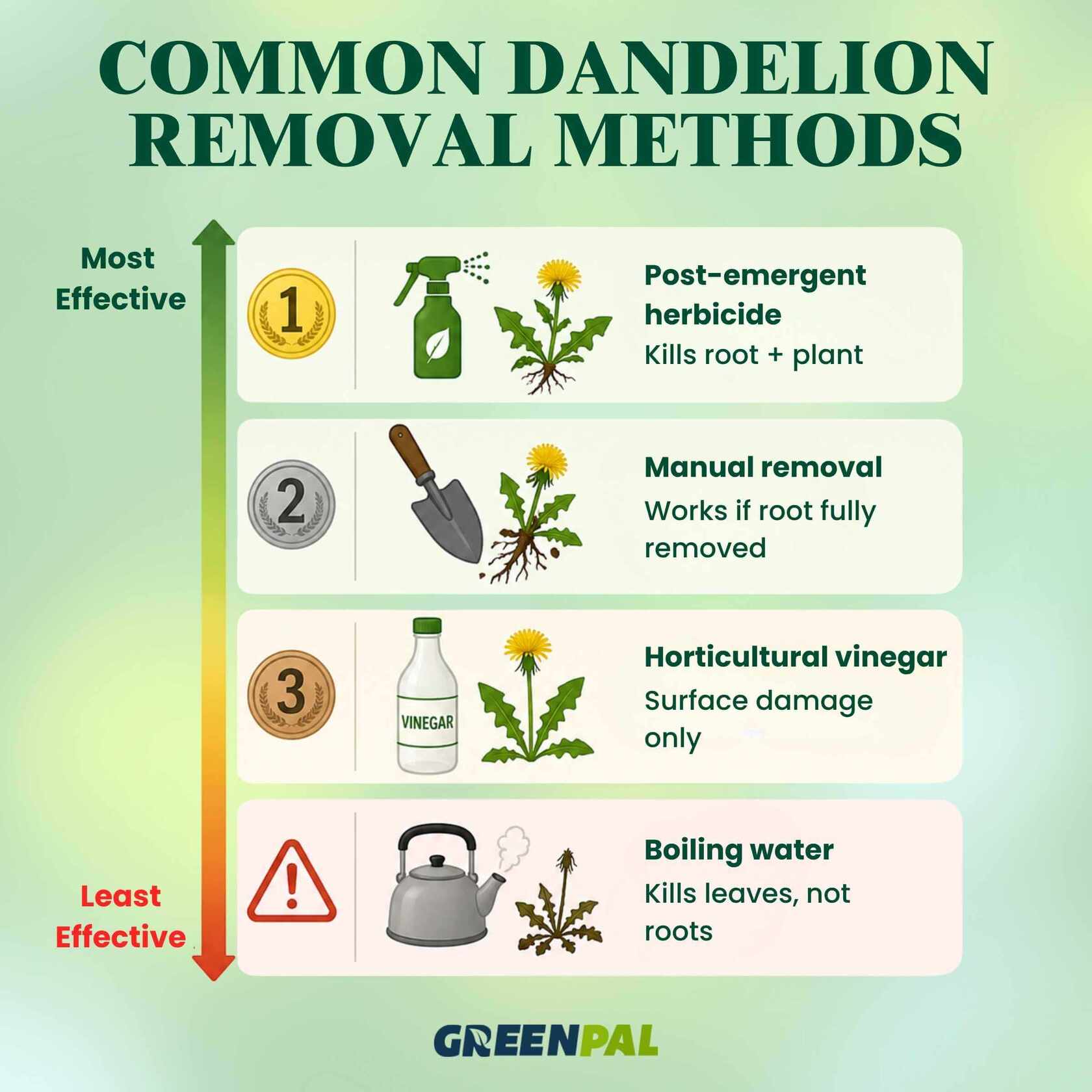
Post-Emergent Herbicides
Unlike pre-emergent herbicides, which prevent seeds from germinating, post-emergent herbicides kill existing dandelion weeds.
Broadleaf herbicides, such as 2,4-D and triclopyr, are highly effective at controlling dandelions because they damage all parts of the plant, including the resilient taproot.
Manual Removal
If you prefer to avoid herbicides, you can manually remove dandelions by hand-pulling, digging, or using a long-handled weeding tool designed to pull the taproot from the soil. While this method is chemical-free, it often leaves behind small root fragments that can lead to regrowth.
Horticultural Vinegar
Household vinegar is generally too weak to kill dandelions. Horticultural vinegar is much stronger, usually containing 20 to 30% acetic acid, but is less effective than synthetic herbicides.
According to the University of Illinois Urbana-Champaign, horticultural vinegar can be somewhat effective against young seedlings and annuals, but acetic acid does not translocate to other plant parts. This means perennial weeds (such as dandelions) or weeds with a well-established root system can regrow.
For persistent perennial weeds like dandelions, a systemic post-emergent herbicide or manual taproot removal will be more effective.
Note: Horticultural vinegar is non-selective, meaning it damages all plants it comes in contact with.
Boiling Water
Like horticultural vinegar, boiling water may kill the above-ground foliage, but damage does not travel down to the dandelion’s taproot. It can also harm desirable plants and is extremely dangerous if mishandled.
Common Mistakes When Removing Dandelions
Dandelions are difficult to control, and these common mistakes can make controlling them even harder:
Hand pulling when the soil is dry: Dandelions are easier to remove when the soil is moist.
Leaving behind fragments of taproot: Even just an inch of taproot left in the soil can regenerate a new dandelion plant.
Misusing herbicides: Always read the product’s instructions to ensure proper application. Non-selective herbicides kill all plants they come in contact with, including turfgrass.
Neglecting lawn health: Weak lawns with thin turf are more susceptible to weed growth than thick, healthy lawns.
How to Prevent Dandelions With Good Lawn Care
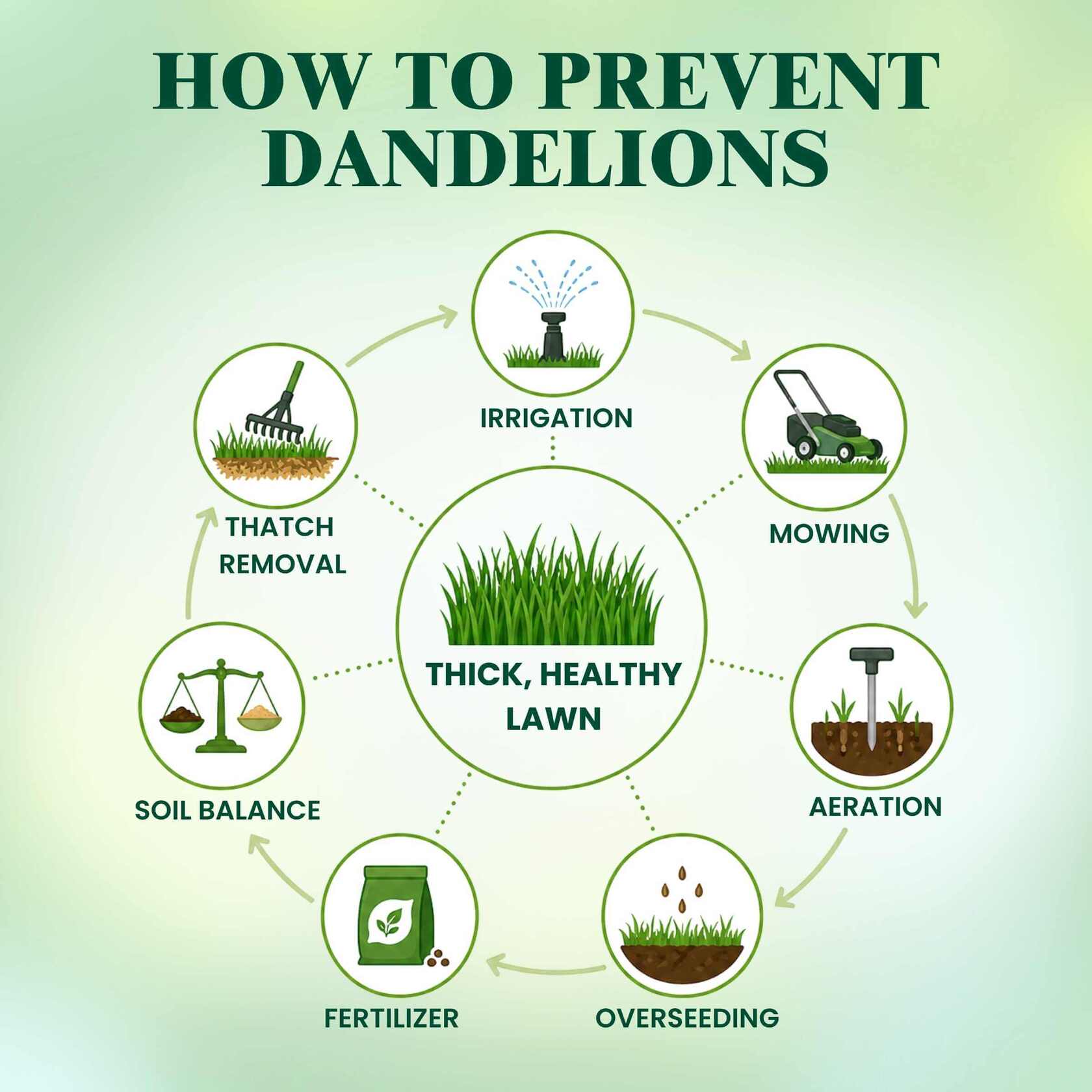
The best way to stop dandelions from coming back is to combine pre-emergent herbicides with a good lawn care routine. Dandelions and other weeds can easily outcompete thinning grass, so adopt the following lawn care treatments to promote thick growth:
Proper irrigation: Ensure your lawn receives 1 to 1.5 inches of water per week during the growing season.
Proper mowing: Avoid common mowing mistakes, such as using dull blades, cutting wet grass, or mowing too short.
-
Core aeration: Aerate the lawn to relieve soil compaction. Dandelions are less affected by compacted soil than turfgrass because their deep taproot is able to break through the dense soil.
( GreenPal Marketplace )Get 5 free bids from local lawn prosTop-rated pros near you send real quotes in minutes — no contracts, no haggling.Get My Free BidsNo credit card required. Get matched in 60 seconds. Thatch removal: Thick thatch blocks water and nutrients from reaching the soil surface, causing grass to thin.
Fertilizer: Test your soil to determine how much fertilizer your lawn needs for healthy growth. Too much fertilizer is just as bad as too little fertilizer.
Soil amendments: An imbalanced soil pH can prevent your grass from absorbing available nutrients. Test your soil and add the recommended soil amendment to adjust the pH level.
Overseeding: Plant new grass seed over your existing lawn to help thicken the growth and repair bare patches.
Tip: Aeration followed up with overseeding is an effective way to encourage new growth and improve your lawn’s thickness to block out weeds. If you live in an area with heavy clay soil, such as San Antonio, consider scheduling professional aeration services.
How to Choose Herbicides for Dandelion Control
The wrong herbicide can be ineffective or harmful for desirable plants, so familiarize yourself with these terms before spraying dandelions:
Selective herbicides are formulated to kill specific plants. Broadleaf herbicides, such as 2,4-D and triclopyr, are highly effective at controlling dandelions and won’t harm your turfgrass — making them the best choice if you want to kill dandelions without damaging your lawn.
Non-selective herbicides kill any plants they come in contact with, including desirable plants.
Post-emergent herbicides eliminate existing weeds.
Pre-emergent herbicides prevent seedlings from germinating.
Contact herbicides, such as horticultural vinegar or boiling water, only damage parts of the plant they come in contact with and do not travel into the root system.
Systemic herbicides, which includes most synthetic products, travel down into the root system and kill the entire plant.
When using herbicides, keep these safety precautions in mind:
Combine herbicides with proper lawn care to help reduce the need for herbicides.
Always read and follow application instructions to ensure the safety of yourself, the environment, and animals.
Always wear the proper safety gear.
Target specific areas to avoid overuse, especially if you are using a non-selective herbicide.
Frequently Asked Questions
How Long Do Dandelions Live?
Dandelions are perennials, which means they can come back year after year from the same root system. They’re unlike annuals, which die after one season.
Are Dandelions Edible?
Yes, dandelions are edible and highly nutritious, and have a long history of medicinal uses. The flowers are often tossed in salads and the taproots are widely used to make tea or a coffee substitute.
Caution: Do not eat dandelions that have been treated with herbicides or pesticides, or are harvested from heavily polluted areas, such as busy roadsides.
Are Dandelions Good For Pollinators?
Dandelions can provide a convenient early food source for pollinators, but they don’t offer the same nutritional value as many native flowering plants.
Defeat Your Dandelion Foe With a Lawn Care Pro
The key to winning the war against dandelions includes acting early and targeting young plants before they develop deep taproots and seed-bearing puffballs. To stop them from coming back, improve your lawn care routine and apply pre-emergent herbicides.
No matter how hard you try to battle dandelions, these perennial weeds can persist year after year. When your control methods aren’t going as planned, bring in a local lawn care professional for reinforcements.