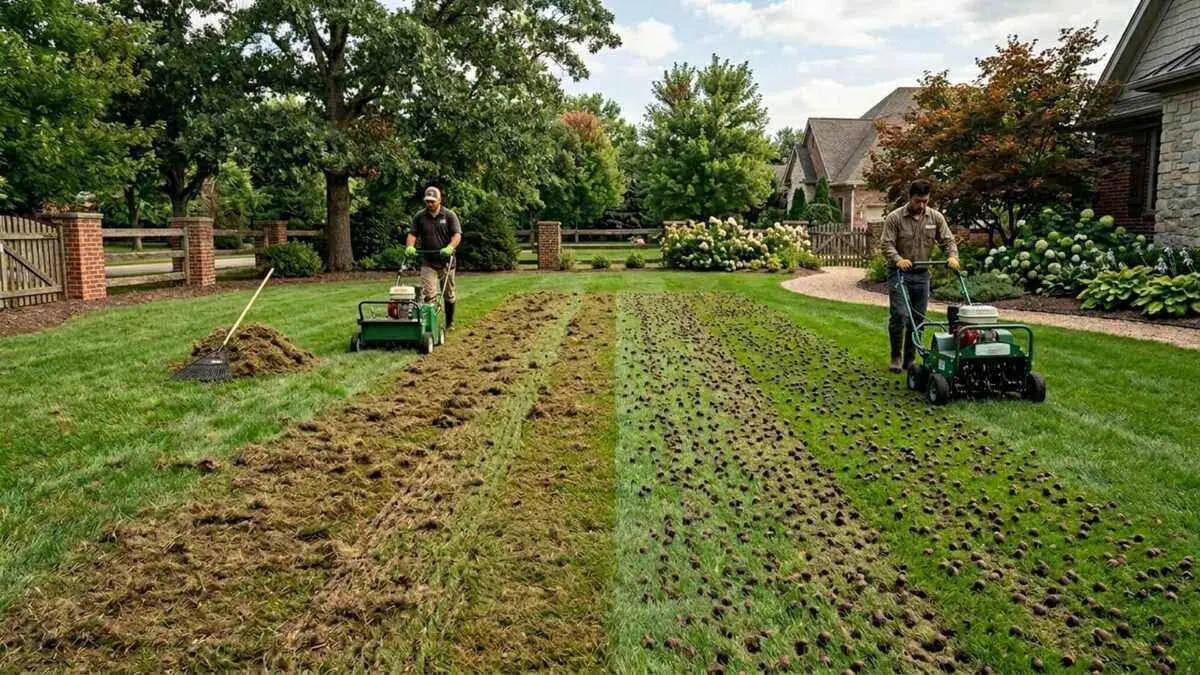
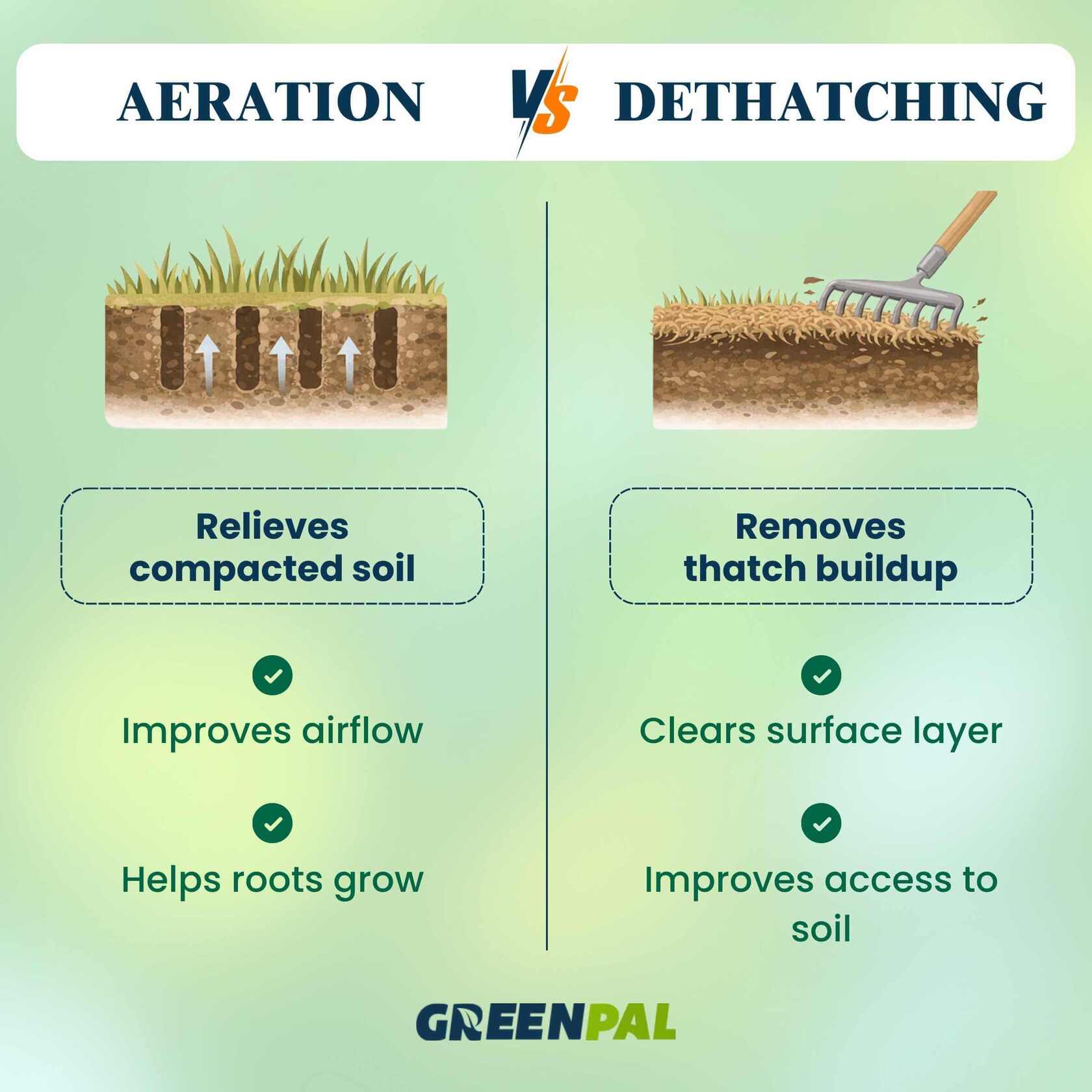
Aeration and dethatching both help manage thatch and improve lawn health, but they work in very different ways and solve different problems. So how do you know which one your lawn needs? In this guide, we’ll break down the key differences between aeration and dethatching and help you choose the right treatment.
|
Table of Contents |
Aeration vs. Dethatching at a Glance |
Aeration |
Dethatching |
|
What It Does |
Creates holes in the soil to relieve soil compaction. |
Removes excessive organic matter (known as thatch) from the lawn’s surface. |
Benefit |
Relieves the compacted soil that blocks water, oxygen, and nutrients from reaching grass roots. |
Removes the thick thatch that blocks water, oxygen, and nutrients from reaching the soil surface. |
Clearest Sign For Treatment |
Hard, dense soil. Difficult to insert a screwdriver into the soil. |
Spongy feeling underfoot. Thatch layer exceeds one-half inch thick. |
Frequency |
Many lawns benefit from annual aeration. |
Only remove thatch when the layer exceeds one-half inch thick, about once every 2 to 3 years. |
When to Treat Warm-Season Grasses |
Late spring to early summer. |
Late spring to early summer. |
When to Treat Cool-Season Grasses |
Early fall (early spring is the second-best time) |
Early fall (early spring is the second-best time) |
Order of Treatments |
If doing both, aerate second |
If doing both, dethatch first |
What Is Thatch?
Thatch is the brown layer of living and dead organic matter, including grass roots, stems, crowns, and shoots, that accumulates between the soil surface and grass blades.
A thin layer of thatch is actually healthy for the lawn and acts as a light mulch layer by retaining moisture, insulating the soil, reducing weeds, and protecting grass roots.
However, thatch exceeding one-half inch thick should be removed. Excessive thatch can block nutrients, water, and oxygen from reaching the soil surface, and it provides inviting living conditions for pests and lawn diseases.
What’s the Difference Between Aeration and Dethatching?
Aeration
Aeration is the process of creating small holes in the ground to relieve compacted soil and allow grass roots to access water, oxygen, nutrients, and space to grow. By improving soil health, aeration also increases the number of earthworms, microbes, and other organisms that help break down and prevent thatch buildup.
The most effective aeration method is core aeration, which creates the holes by removing soil cores from the ground and leaving them on the lawn to decompose. These soil plugs contain compacted soil, thatch buildup, and grass.
To learn more, check out this Aeration Guide: Why, When & How to Aerate Your Lawn.
Dethatching
Dethatching, on the other hand, is the process of removing the thatch layer using a dethatching rake or motorized dethatcher. Unlike aeration, dethatching does not relieve soil compaction.
While core aeration can help break down the thatch layer over time, dethatching is the fastest and most effective way to remove a thick buildup. Think of core aeration as a method that helps manage thatch by encouraging decomposition, while dethatching is a more intensive treatment that removes excess thatch buildup.
How to Determine Whether Your Lawn Needs Aeration or Dethatching
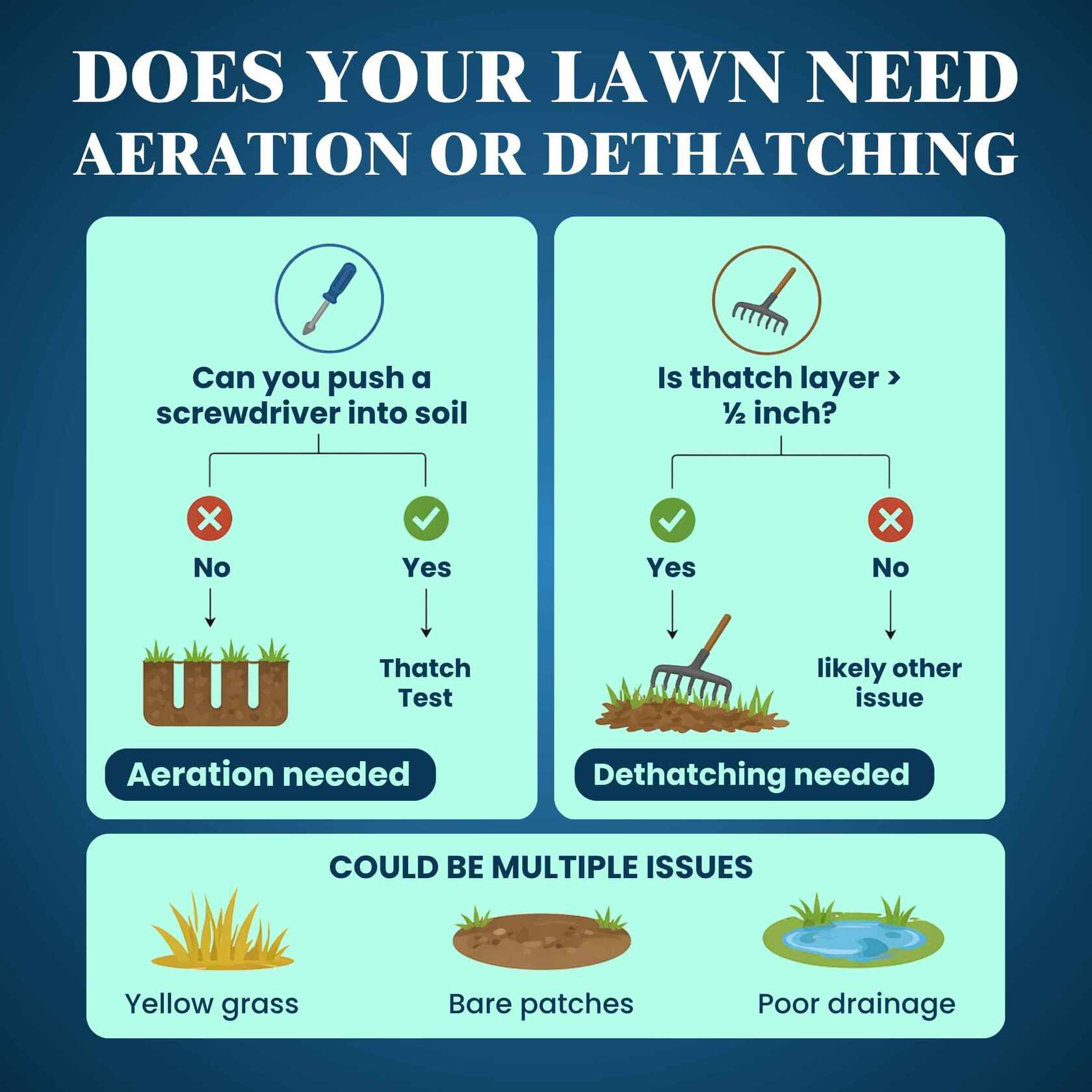
Aeration: If the soil feels hard and dense, perform a simple soil test. Try to insert a 4- to 6-inch screwdriver into moist soil. If it’s difficult to do, the soil is likely compacted and needs aeration.
Dethatching: If your lawn feels spongy or springy underfoot, dig and remove a 2- to 3-inch deep wedge of soil from the ground. Measure the brown thatch layer located between the soil’s surface and grass blades. If the layer exceeds one-half inch thick, your lawn needs to be dethatched.
Other signs your lawn needs aeration or dethatching can often overlap, and these symptoms may also signal other common lawn problems, such as low fertility, heat stress, or poor soil health:
Yellow or discolored grass
Thinning grass or bare patches
Poor drainage
Pest, weed, or disease issues
Slow growth
Fertilizer not taking effect
What Are the Benefits of Aeration?
Aeration is the best way to loosen the compacted soil affecting your lawn. Benefits of lawn aeration include:
Improved lawn health: Roots have increased access to water, nutrients, and oxygen needed for healthy growth.
New growth: The holes created by aeration encourage the grass roots to expand, leading to new growth and thicker grass density.
Improved drainage: Loosened soil improves water drainage.
Weed control: Many weeds thrive in stressed lawns with compacted soils.
Improved soil health: Aerated soil creates ideal living conditions for earthworms and other organisms that are necessary for decomposing organic matter (like thatch).
Increased fertilizer effectiveness: Relieving compacted soil allows fertilizer to access the grass roots and provide essential nutrients.
Less pests and diseases: Healthy lawns are less susceptible to pests and diseases.
Thatch management: Aeration creates holes in the thatch layer and increases the rate of decomposition.
Preps lawn for other treatments: Fertilizer, soil amendments, and grass seed are more likely to make contact with the soil after aeration.
What Are the Benefits of Dethatching?
Removing thick thatch with a dethatcher offers the following benefits:
Targets thatch buildup: Unlike an aerator, which breaks up thatch and promotes decomposition, a dethatcher removes excess thatch from the lawn’s surface.
Improved health: Removing a thick thatch layer allows nutrients, oxygen, and water to reach the soil, resulting in improved health, new growth, and greener grass.
Improved drainage: Thick thatch blocks water from draining into the soil.
Weed control: Thick thatch weakens grass growth, making it easier for weeds to invade.
Increased fertilizer effectiveness: Your fertilizer is more likely to make contact with the soil after thatch removal.
Less pests and diseases: Thick thatch provides attractive living conditions for pests and fungi.
Preps lawn for aeration: Removing thatch allows aerator tines to more effectively reach the soil surface.
How Often Should You Aerate or Dethatch Your Lawn?
How often you perform these treatments depends on how quickly your lawn develops thatch and compacted soil.
Aeration
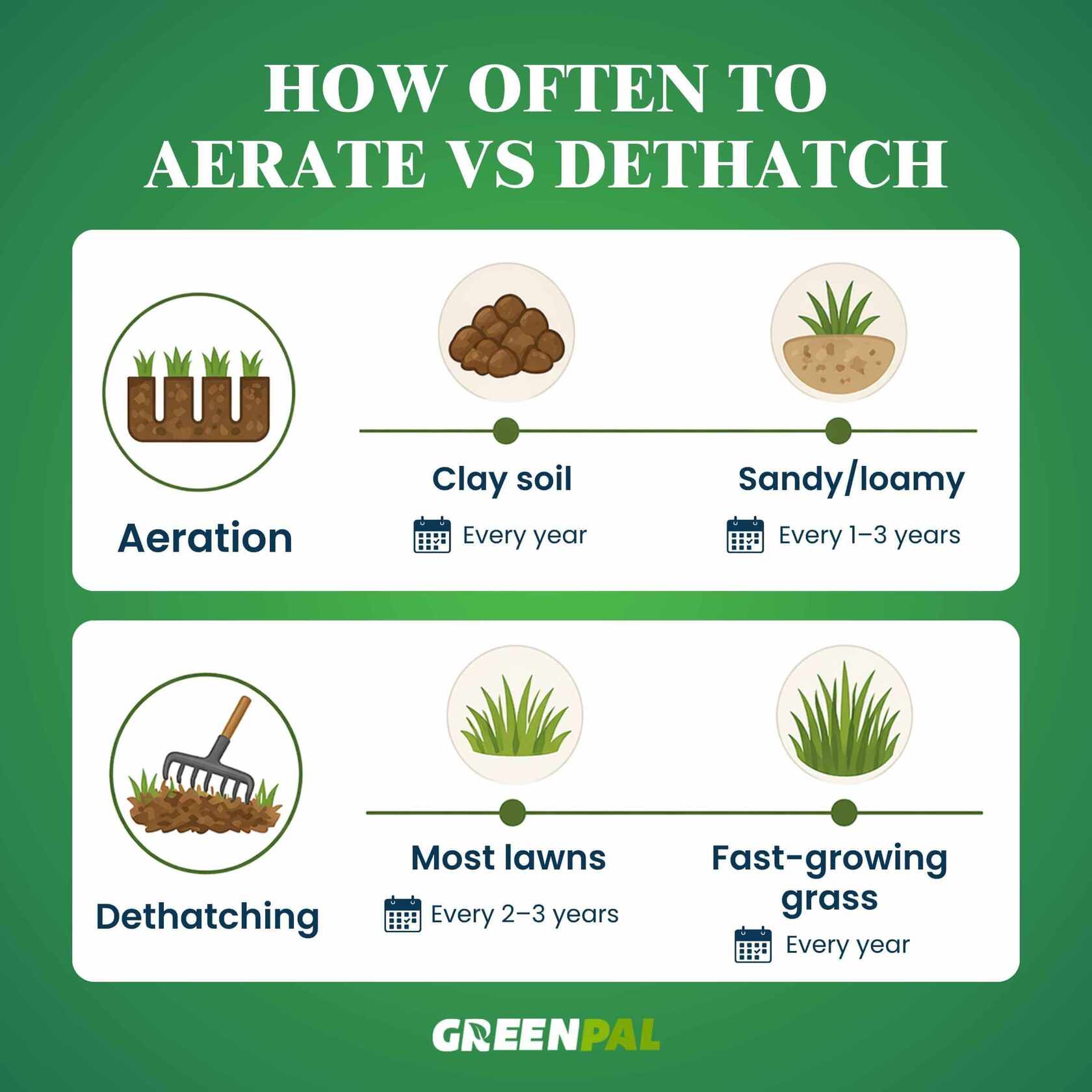
Lawns with heavy clay soils compact more easily than sandy or loamy soils, and usually require annual aeration. Aerate sandy or loamy soils every 1 to 3 years, depending on how quickly they become compacted.
If you live in an area with heavy clay soils, like Dallas, consider scheduling professional aeration services.
Dethatching
Only dethatch the lawn when the thatch layer exceeds one-half inch thick, usually every 2 to 3 years for most lawns. Fast-growing, high-maintenance grasses, like bermudagrass or Kentucky bluegrass, can develop thick thatch quickly and may benefit from annual thatch removal.
When Is the Best Time to Aerate or Dethatch Your Lawn?
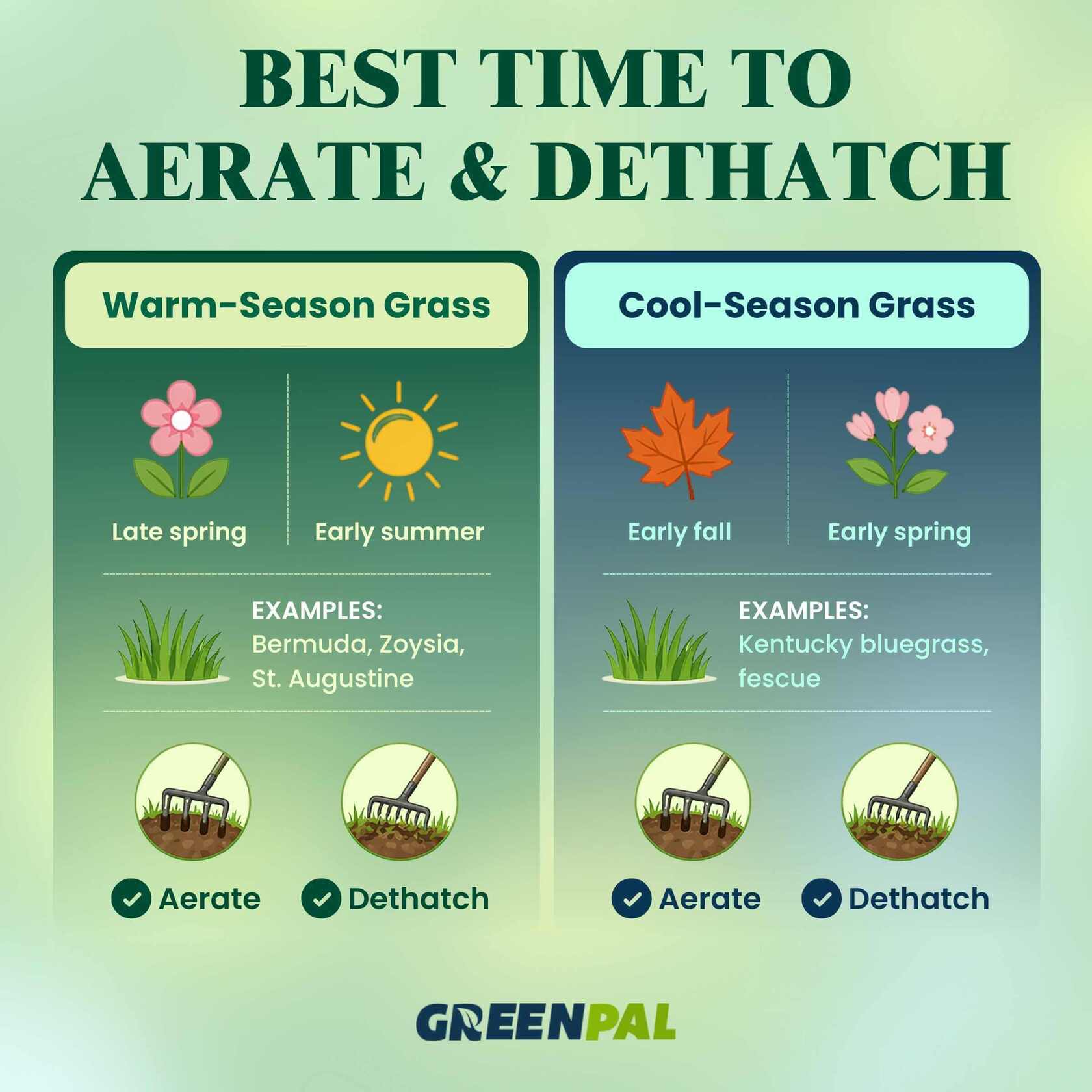
Aerate and dethatch the lawn during its active growing season so that the grass can successfully recover from these invasive treatments.
Pro Tip: Dethatch before you aerate.
Warm-Season Grasses
Aerate: Late spring to early summer
Dethatch: Late spring to early summer
Warm-season grasses: Bermudagrass, zoysiagrass, centipedegrass, buffalograss, St. Augustinegrass, and bahiagrass.
Cool-Season Grasses
Aerate: Early fall (or early spring, if you miss the fall window)
Dethatch: Early fall (or early spring, if you miss the fall window)
Cool-season grasses: Kentucky bluegrass, perennial ryegrass, tall fescue, and fine fescues.
Frequently Asked Questions
Should I Dethatch Before Aerating?
Yes, dethatch the lawn before you aerate if your grass requires both treatments. Removing the thick thatch layer allows the aerator tines to effectively reach the soil.
Pro Tip: Mow the lawn before you dethatch and aerate.
What Should I Do After Aeration and Dethatching?
After dethatching, rake up the loosened thatch so it doesn’t smother the grass. Then aerate the lawn, or water it immediately if you’re not planning to aerate.
After aeration, leave the soil plugs on the lawn to decompose and water within 48 hours. This is also a great time to fertilize, overseed, or apply soil amendments.
What Tools Can I Use to Dethatch the Lawn?
Common dethatcher tools include:
Manual dethatching rakes (ideal for small lawns)
Electric or gas-powered power rakes or verticutters (ideal for medium to large lawns)
Tow-behind dethatcher attachments for riding mowers or ATVs (ideal for medium to large lawns)
What Is the Difference Between Core Aeration and Spike Aeration?
Core aeration creates holes in the ground by removing plugs of soil.
Spike aeration creates holes by pushing the soil into the ground. Lawn professionals typically do not recommend spike aeration because it can further compact the surrounding soil.
Hire a Lawn Care Professional
Here’s the bottom line: Aeration is primarily used to relieve soil compaction, but it can also help manage and prevent thatch buildup in the process. Dethatching is performed to remove a thick thatch layer, and unlike aeration, does not target compacted soil.
Once your lawn has been dethatched and aerated, it can better absorb water, oxygen, and fertilizer. Consider hiring a lawn care professional to handle the increased maintenance that comes with new growth.