|
This guide covers: What Do Chinch Bugs Look Like? Chinch Bug Life Cycle & Seasonal Activity Signs of Chinch Bugs in the Lawn Step 1: Test For & Count Chinch Bugs Step 4: Improve Lawn Care Routine |
How to Get Rid of Chinch Bugs in Your Lawn
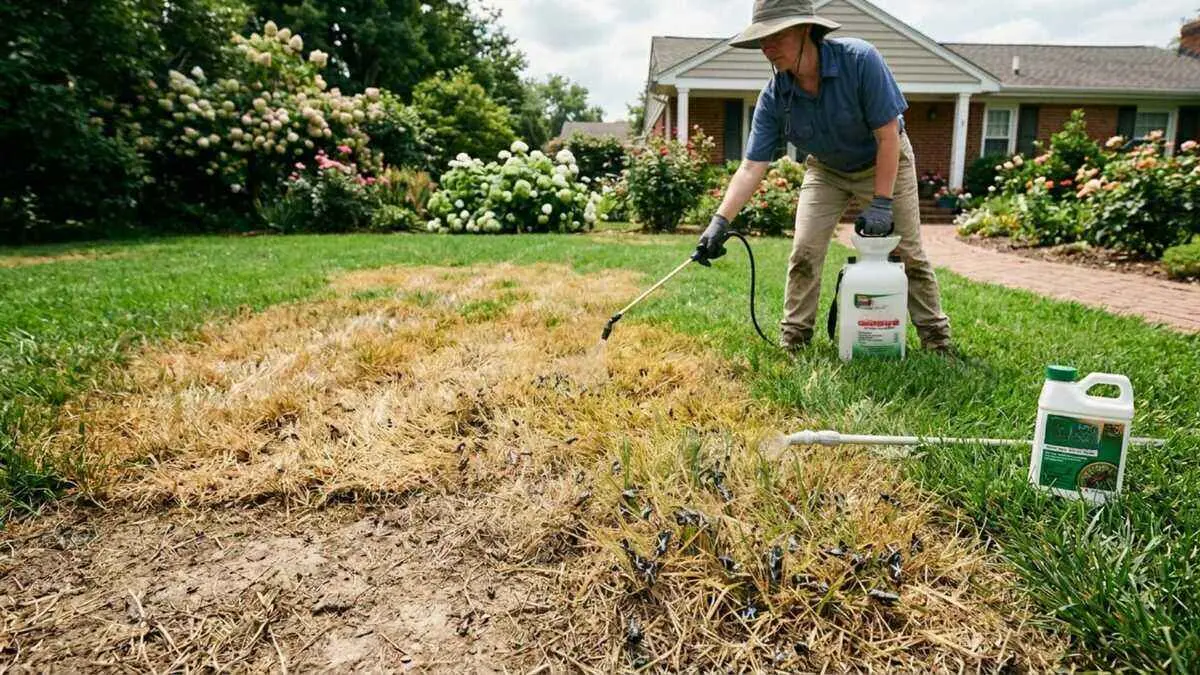
Chinch bugs are like vampires for the lawn. They suck the sap out of your grass, injecting the plant with toxic saliva as they feed. In this guide, we’ll show you how to get rid of chinch bugs before they drain your lawn dry.
Effective chinch bug control starts with an accurate diagnosis. Why? Because chinch bug damage can resemble many other lawn issues that need different control methods.
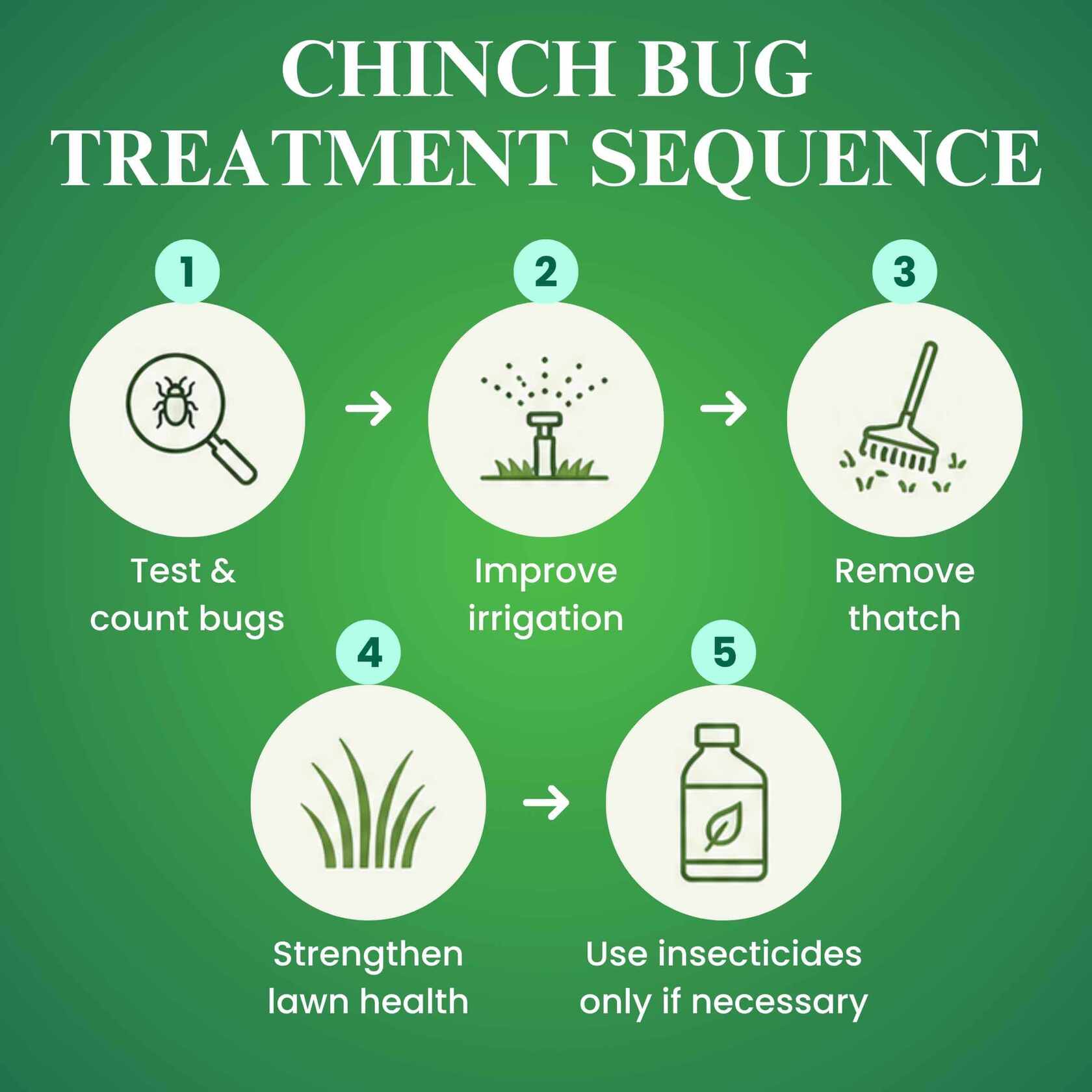
To control chinch bugs, adjust your irrigation routine, remove thatch, and practice proper lawn care habits before using powerful insecticides (which ought to be a last resort).
What Do Chinch Bugs Look Like?
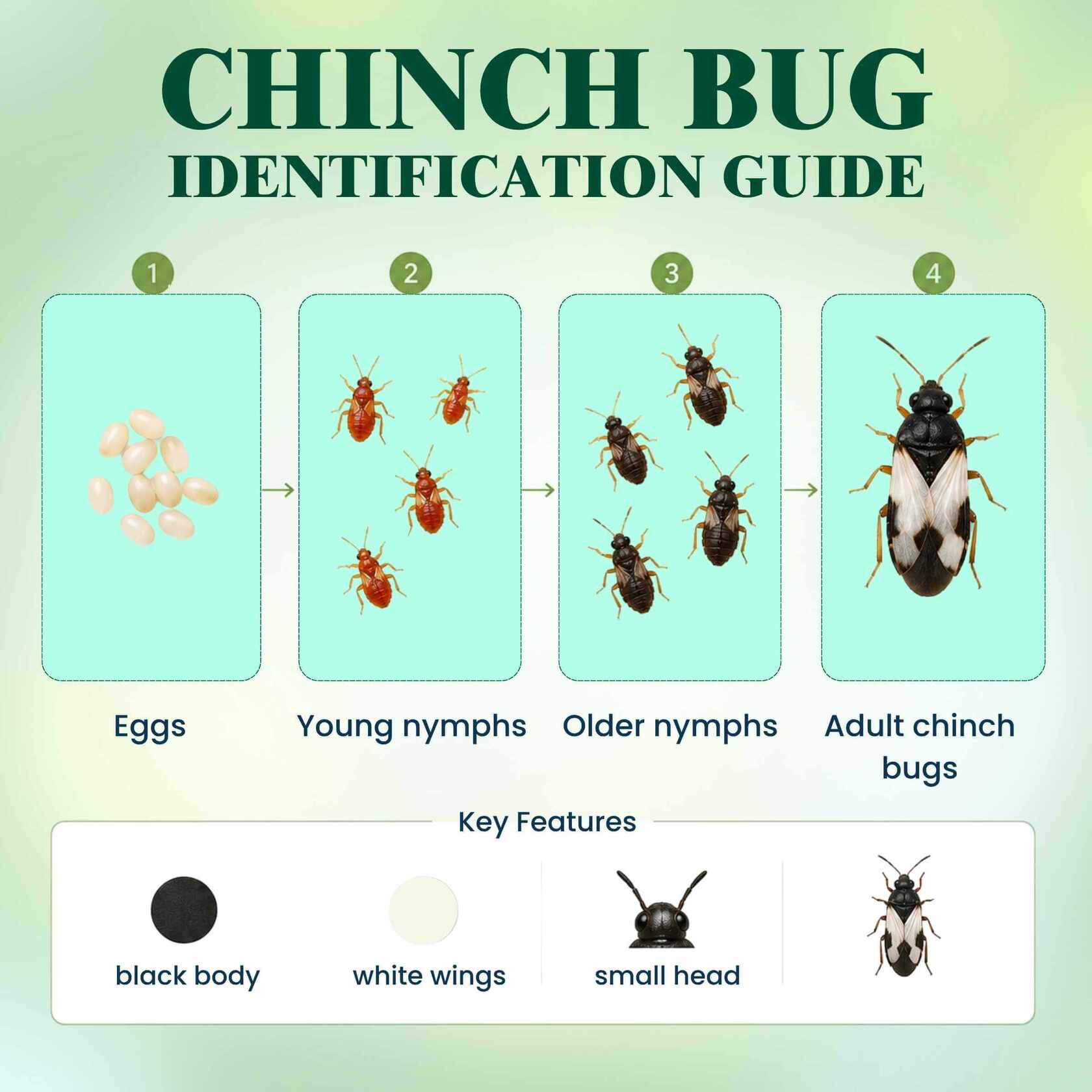
Chinch bugs are small insects approximately 1/8 to 3/16 inch long, and they look different at different stages:
The adults have black bodies with white wings crossed over their backs. Some chinch bug species have two small black triangle marks on their white wings.
Young nymphs are red-brick colored. Some varieties have a white stripe on their back.
Older nymphs are dark-colored, but without wings.
Adult chinch bugs have small heads compared to their bodies and are commonly mistaken for big-eyed bugs, a similar-looking insect with larger heads and bulging eyes.
Chinch Bug Life Cycle & Seasonal Activity
Life stages of chinch bugs include eggs, nymphs (wingless), and adults (winged).
Winter: Adults overwinter in tall grasses and weeds.
Late spring and early summer: Adults emerge to mate and lay eggs in the lawn. The eggs hatch approximately 2 weeks later, with nymphs requiring 4 to 6 weeks to develop into the adult stage.
Mid summer through early fall: Damage becomes most noticeable during this period.
Chinch bug outbreaks are common during hot, dry weather. A single summer can see multiple generations of chinch bugs, depending on the region and local conditions.
Signs of Chinch Bugs in the Lawn
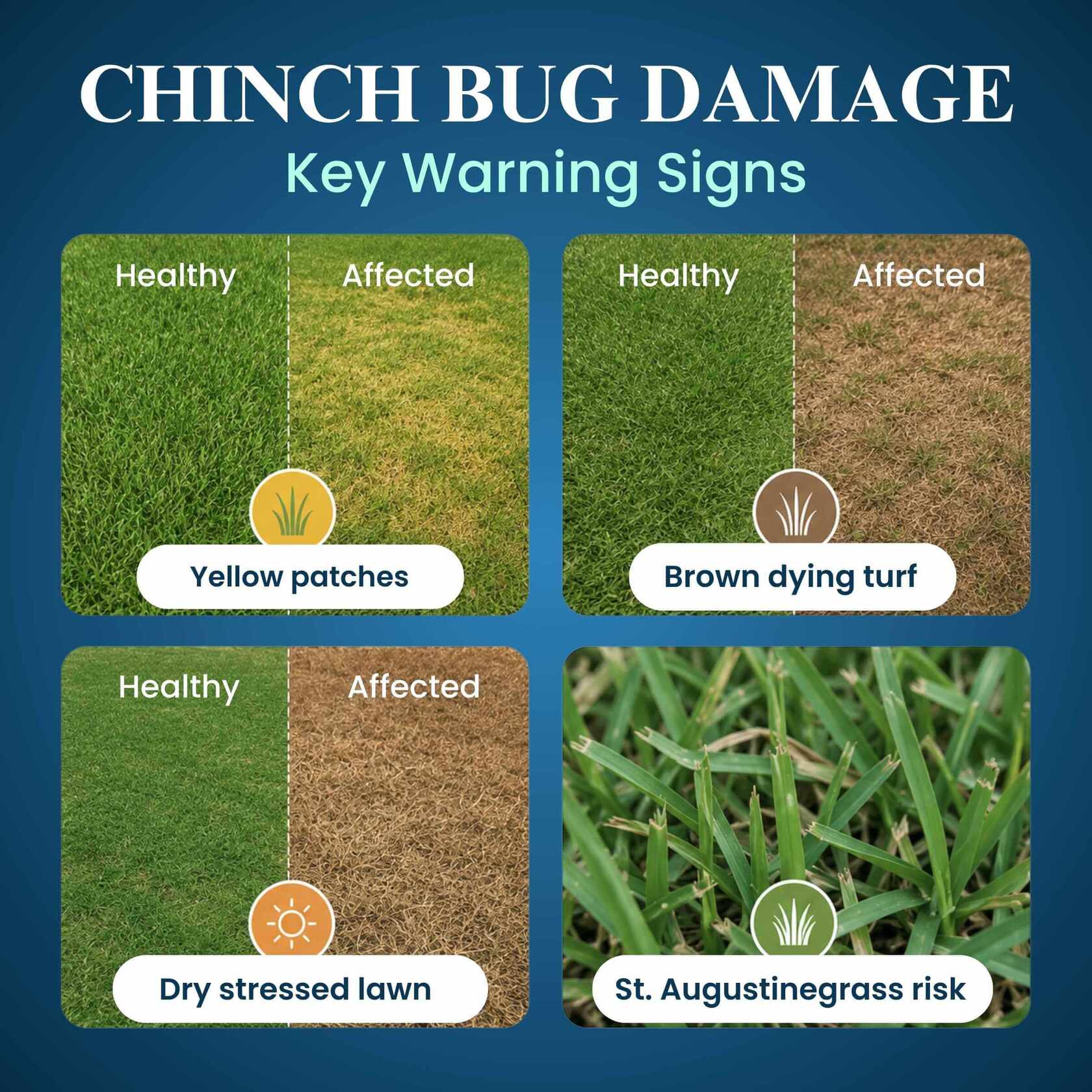
Lawn damage: A prominent chinch bug symptom is irregularly-shaped yellow patches of grass that turn brown and eventually die.
Lawn conditions: Chinch bugs are particularly drawn to dry lawns with thick thatch and drought stress. If your lawn reflects these conditions, you may be dealing with chinch bugs.
Grass type: While chinch bugs feed on a variety of turfgrasses, St. Augustinegrass is the most severely affected. If you grow this grass type, be on high alert for chinch bugs.
How to Get Rid of Chinch Bugs
Step 1: Test For & Count Chinch Bugs
Yellow and brown patches of grass can signal many common lawn issues, so identifying the culprit before starting chinch bug control is essential.
Here are five different methods to test whether your lawn has chinch bugs. Perform these tests in 5 to 6 damaged areas of the lawn and count how many chinch bugs you find in each spot. Approximately 15 to 20 chinch bugs per square foot signals a serious infestation.
Part the thatch: Push aside the grass blades and thatch to get a close look at the chinch bugs and count how many you see.
Plastic bag: Place and seal a large wedge of turf in a sealable, clear plastic bag. Place the bag under the hot sun for several minutes. As the bag heats, various insects will escape the turf and collect inside the bag where they can be counted and identified.
White paper: Cut and remove a square piece of turf. Hold it over a white sheet of paper and shake or scratch the turf so that insects fall out onto the paper. The chinch bugs’ dark colored bodies should be easily seen on the paper.
Can or PVC: Push a large can (such as a coffee can) with the bottom removed or a PVC pipe into the ground. Fill it with water, and chinch bugs should float to the surface after several minutes.
Flush test: Mix 1 tbsp of lemon-scented dish soap into 1 gallon of water and pour it slowly over the damaged areas. After several minutes, chinch bugs should rise to the lawn’s surface.
Step 2: Adjust Irrigation
Chinch bugs prefer hot, dry conditions because moist, well-watered lawns are more susceptible to the diseases that infect nymphs and eggs.
Ensure your lawn is receiving enough water, especially during summer when the lawn is susceptible to drought damage. St. Augustine lawns, which is the grass type that chinch bugs most commonly infest, performs best with 0.75 to 1 inch of water per week during the active growing season.
Learn More: How to Water Your Lawn: Tips and Schedule
Step 3: Remove Thatch
Thick thatch provides shelter and protection for chinch bugs, and disrupting their habitat can help get rid of them. Remove the thatch layer with a dethatching rake, power rake, or verticutter.
Learn More: Why, When, and How to Dethatch Your Lawn
Step 4: Improve Lawn Care Routine
Cultural control refers to changes in how you maintain your lawn that make it less hospitable to pests.
Adjusting irrigation, removing thatch, and improving your overall lawn care routine are all examples of cultural control. With this approach, you can help reduce chinch bug populations without the need for harmful chemicals.
Visit the following guides on aeration, fertilization, lawn mowing, and overseeding to learn more about how to practice good lawn care:
Florida is no stranger to chinch bug damage. St. Augustinegrass, a common lawn grass in cities like Orlando and Tampa, is particularly vulnerable to infestations. Local landscaping professionals can help homeowners keep chinch bugs at bay by maintaining strong turf health year-round.
Step 5: Apply Insecticides (Last Resort)
Insecticides can harm beneficial insects, especially natural predators that provide biological control against chinch bugs. Only apply insecticides when absolutely necessary and cultural control alone isn't cutting it.
Approximately 15 to 20 chinch bugs per square foot signals a severe infestation that may warrant insecticides. To control chinch bugs, spray the lawn with a liquid insecticide containing one of the following active ingredients:
Bifenthrin
Cyfluthrin
Lambda-cyhalothrin
Permethrin
Always read and follow the product’s application instructions to protect the safety of yourself, animals, the environment, and others.
Frequently Asked Questions
What Are Natural Predators of Chinch Bugs?
Natural enemies in the lawn can help provide pest control against a chinch bug infestation. That’s why it’s important not to rely on chemicals that can harm these beneficial predators.
Natural predators of chinch bugs include:
Big-eyed bugs ((which can look similar to chinch bugs but have distinctively larger heads and bulging eyes)
Ants
Ground beetles
Earwigs
The fungal insect pathogen Beauveria bassiana
Do Chinch Bugs Fly?
Yes, chinch bugs can fly, though they tend to crawl or jump.
How Do I Tell If My Lawn Has Chinch Bugs?
There are many tests that can help you tell whether your lawn has chinch bugs, such as the flood, white paper, and coffee can tests.
To learn more about the test methods, jump to Step 1: Test For & Count Chinch Bugs
How Do Chinch Bugs Damage The Lawn?
Chinch bugs damage the lawn by using their piercing-sucking mouthparts to consume turfgrass sap. Surprisingly, it’s not the loss of sap that turns the turf yellow and brown, but rather the toxin the chinch bug injects into the grass.
Hire a Lawn Care Pro In a Pinch
If managing your lawn feels overwhelming, a local lawn care professional can handle the regular maintenance that keeps chinch bugs at bay. And whether you go the DIY route or hire help, remember that the best long-term defenseis a well-maintained lawn — proper irrigation, regular thatch removal, and consistent care go a long way.