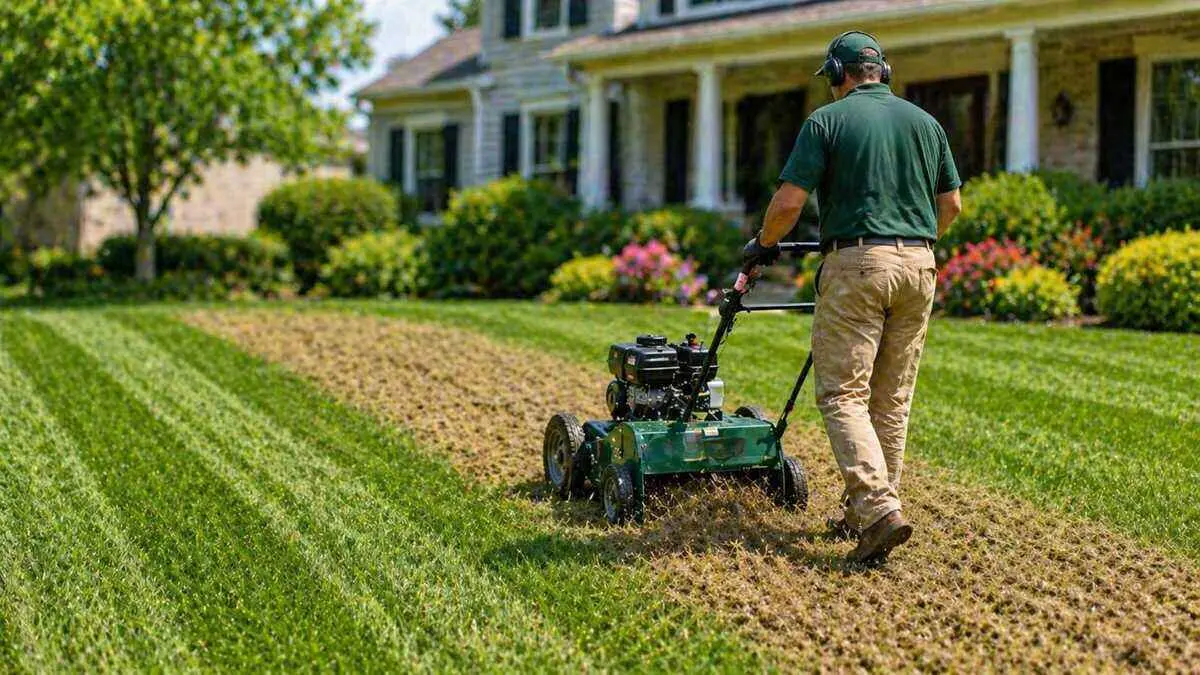
Not every lawn requires thatch removal, but when thatch buildup is a problem, removing it can be highly beneficial when done the right way. In this guide, we’ll show you why, when, and how to dethatch your lawn.
|
In this guide, we’ll cover: How Do Liquid Dethatchers Work? |
What Is Thatch?
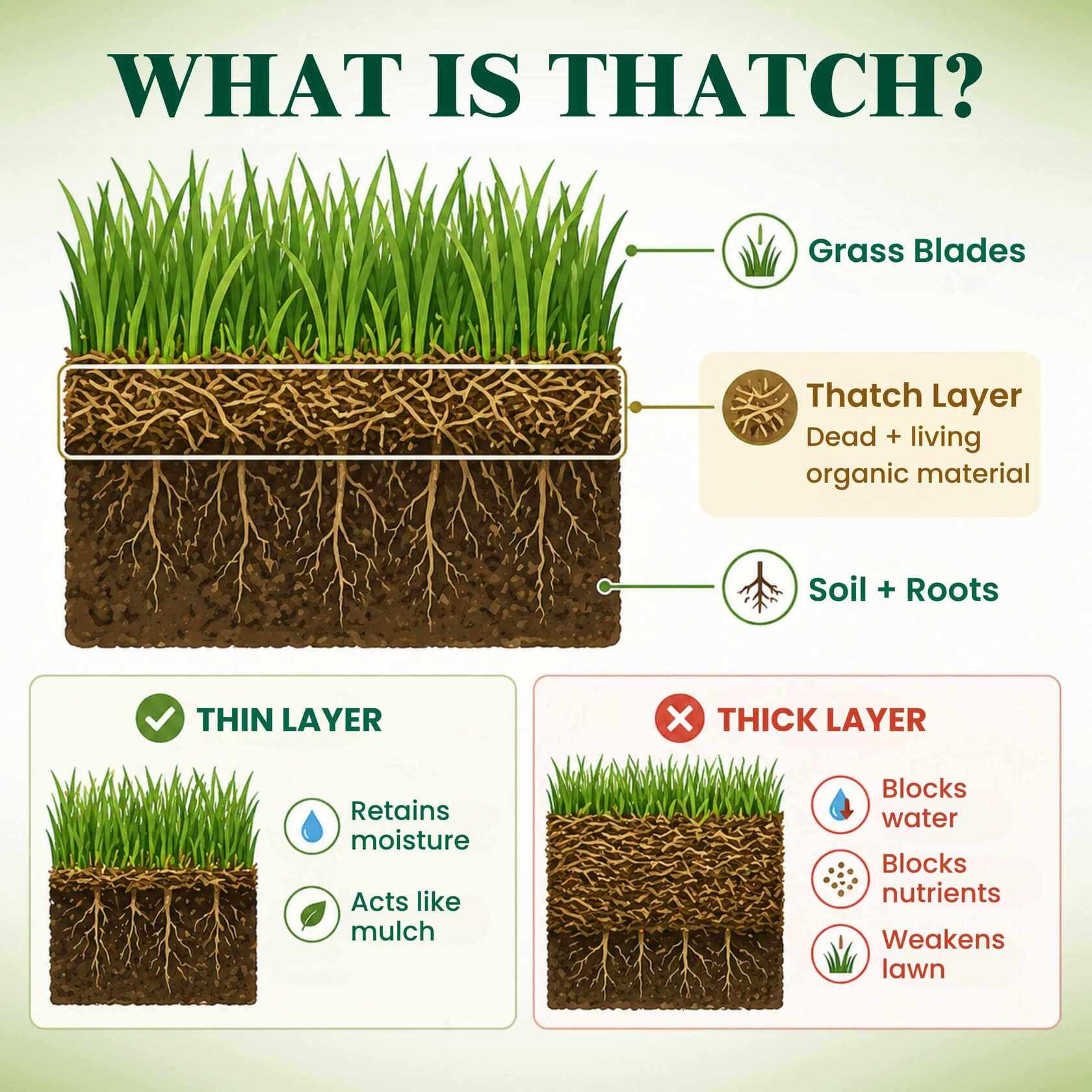
Thatch is the layer of dead and living organic material, such as stems, stolons, roots, and rhizomes, that builds up between the grass blades and the soil surface.
It often gives the lawn a spongy feel, which you can see for yourself by digging up a wedge of soil and examining the brown layer near the surface.
In small amounts, thatch is actually beneficial. A thin layer acts like natural mulch, helping the soil retain moisture, suppress weeds, and regulate temperature.
Thatch buildup develops when the lawn produces organic debris faster than soil organisms, such as microbes and earthworms, can decompose it.
Why Remove Thatch?
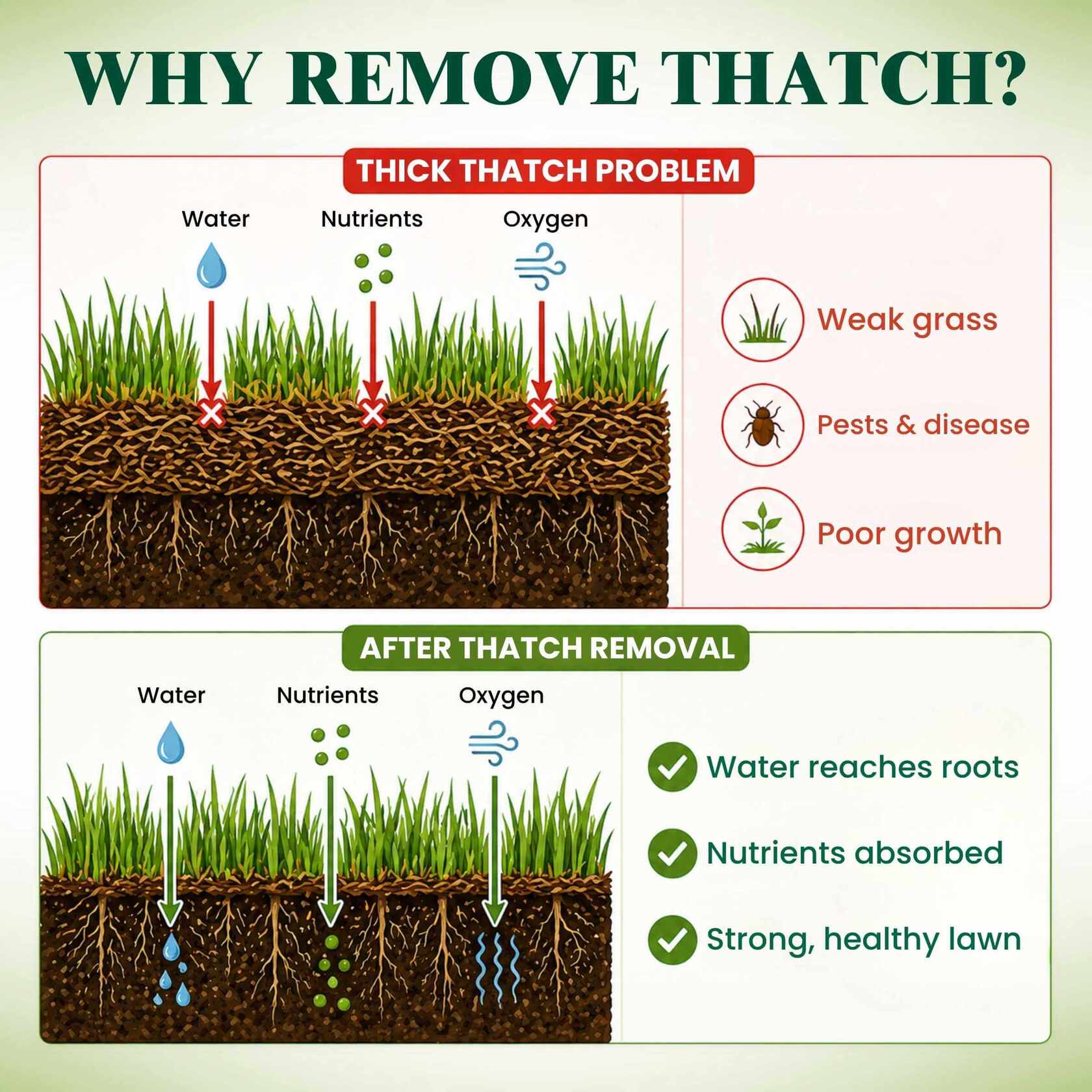
Problems begin when thatch grows too thick. Once it exceeds half an inch, it can block water, oxygen, and nutrients from reaching the soil. Over time, this leads to a weaker lawn that’s more vulnerable to stress, weeds, and damage.
Excess thatch can also create an ideal environment for pests and lawn diseases to thrive.
Removing excess thatch helps:
Improve overall lawn health and appearance
Reduce the risk of pests, disease, and weeds
Improve drainage
Increase the effectiveness of fertilizers
How to Dethatch the Lawn
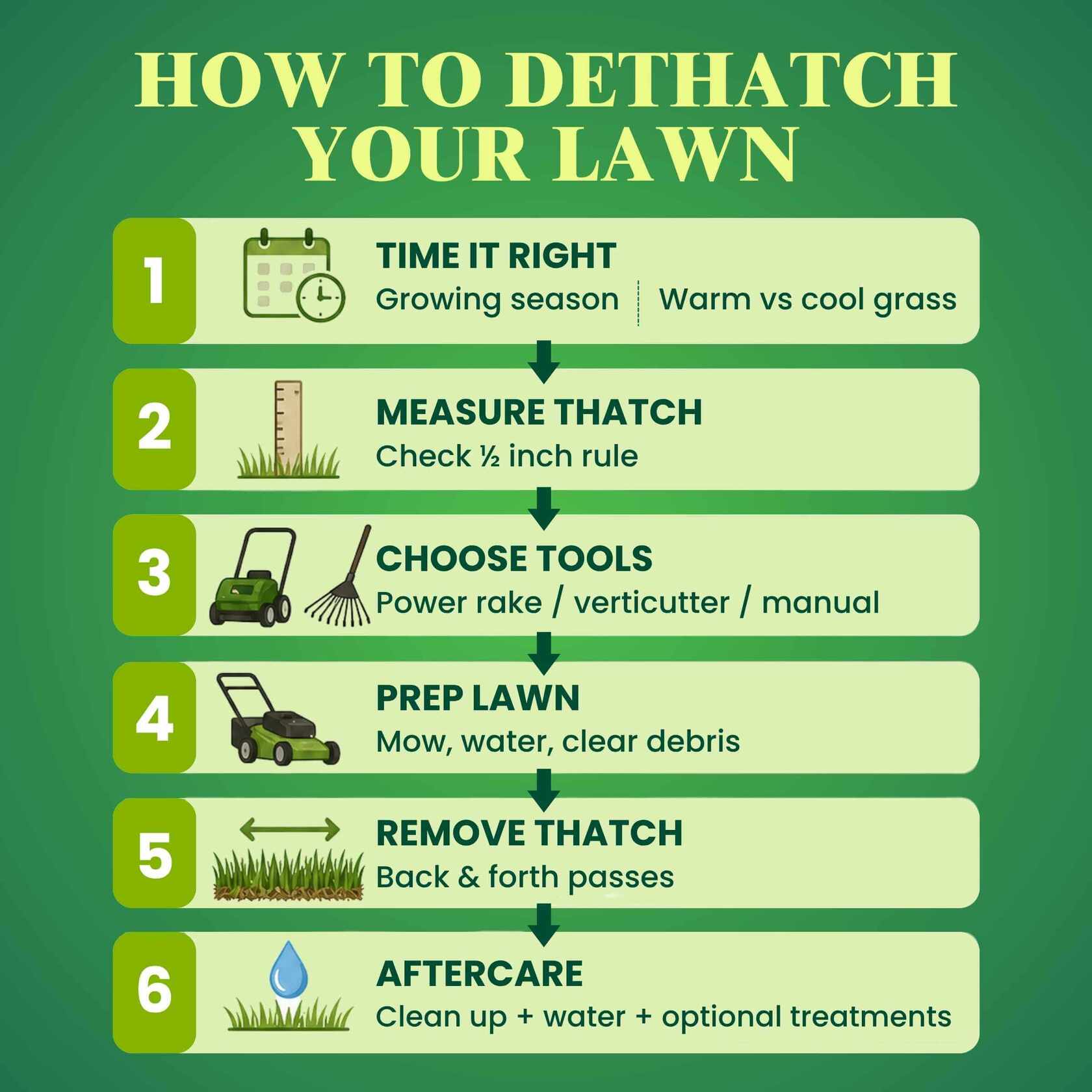
Step 1: Time Right
Thatch removal is an invasive treatment, so it’s important to dethatch during your lawn’s active growing season so that it has enough time to recover.
Warm-season grasses: Remove thatch in late spring to early summer.
Cool-season grasses: Remove thatch in early fall (early spring is the second-best time).
Step 2: Measure Thatch
Remove a 2- to 3-inch deep wedge of soil and measure the thatch layer. If it measures less than one-half inch, your lawn may not need thatch removal at this time.
Step 3: Choose Your Thatch Removal Method
You have several tool options for thatch removal:
Power rakes are best for medium to large lawns with moderate to heavy thatch buildup.
Verticutters are best for dense, creeping grasses like bermudagrass and zoysiagrass. By slicing through stolons, verticutting removes thatch while also thinning the lawn’s density and encouraging more upright growth.
Manual dethatching rakes are a convenient option for small or hard-to-reach areas with light thatch buildup.
Step 4: Prep the Lawn Before Dethatching
Flag sprinkler heads and shallow utility lines.
Water the lawn 1 to 2 days before dethatching.
Clear debris, such as leaves, branches, twigs, or small toys.
Mow the lawn short (without removing more than one-third of the grass blade) to help the dethatching tool make contact with the ground.
Remove grass clippings after mowing.
Step 5: Remove Thatch
Operate your dethatching tool in a back and forth pattern across the lawn, similar to lawn mowing. Then, make an additional pass over the lawn in a perpendicular pattern to increase coverage.
If using a dethatching rake, use a push-pull motion while applying moderate pressure. Pulling the tool towards you removes the debris, and pushing it away from you clears the tines.
Step 6: Provide Aftercare
After dethatching, bag and remove the loosened debris to prevent it from smothering the grass.
If you’re not planning any additional treatments, water the lawn thoroughly. Otherwise, follow up with aeration, overseeding, and fertilizer, and finish by watering the lawn to help everything settle in.
Frequently Asked Questions
Does Aeration Remove Thatch?
Aeration won’t remove a thick thatch layer. However, core aeration can help manage and prevent thatch buildup by removing small amounts of thatch along with soil cores.
Homeowners in areas with heavy clay soils can benefit from annual lawn aeration services to help minimize thatch buildup. If you live in a city like Kansas City or Houston, your lawn may be especially prone to compaction and thatch accumulation.
How Do Liquid Dethatchers Work?
Liquid dethatchers help decompose thatch by increasing microbial activity in the soil. Liquid dethatchers work best on thin thatch layers and are most effective as a preventive tool.
How Often Do I Need to Dethatch the Lawn?
Only dethatch the lawn when the thatch layer exceeds one-half inch thick. For some lawns, that might be once per year, and for others that might be once every three years.
Hire a Lawn Care Professional
After dethatching, your lawn will have greater access to nutrients, water, and oxygen. To manage the new, lush growth that results from dethatching, hire a local lawn care professional to keep your lawn in shape.