Lawn mowing plays a key role in your lawn’s health and beauty, but only when done correctly. Make a mistake, and you risk damaging your grass and creating more work for yourself. Follow these professional lawn mowing tips to keep your lawn healthy while reducing stress on both you and your turf.
Here’s how to mow your lawn the right way:
Follow the Rule of One-Third
Lawn professionals avoid removing more than one-third of the grass blade’s height in a single mowing. Cutting too much at once can shock the grass, leaving it more susceptible to damage.
To apply this rule, never cut more than one-third of the blade height at a time. For example, if your lawn is 3 inches tall, remove no more than 1 inch.
It can be tempting to ignore the rule of one-third and cut too much when your lawn is growing quickly. That’s why homeowners in areas like Atlanta and Fort Worth, where fast-growing bermudagrass is common, often rely on routine lawn mowing services.
Don’t Mow Too Short
Mowing the grass short may seem like a great way to mow less often. But this approach risks breaking the rule of one-third and cutting too close to the soil’s surface, also known as scalping.
Scalping reduces photosynthesis, increases water loss, and makes the lawn vulnerable to pests, diseases, and weeds.
Know Your Grass’s Mowing Height
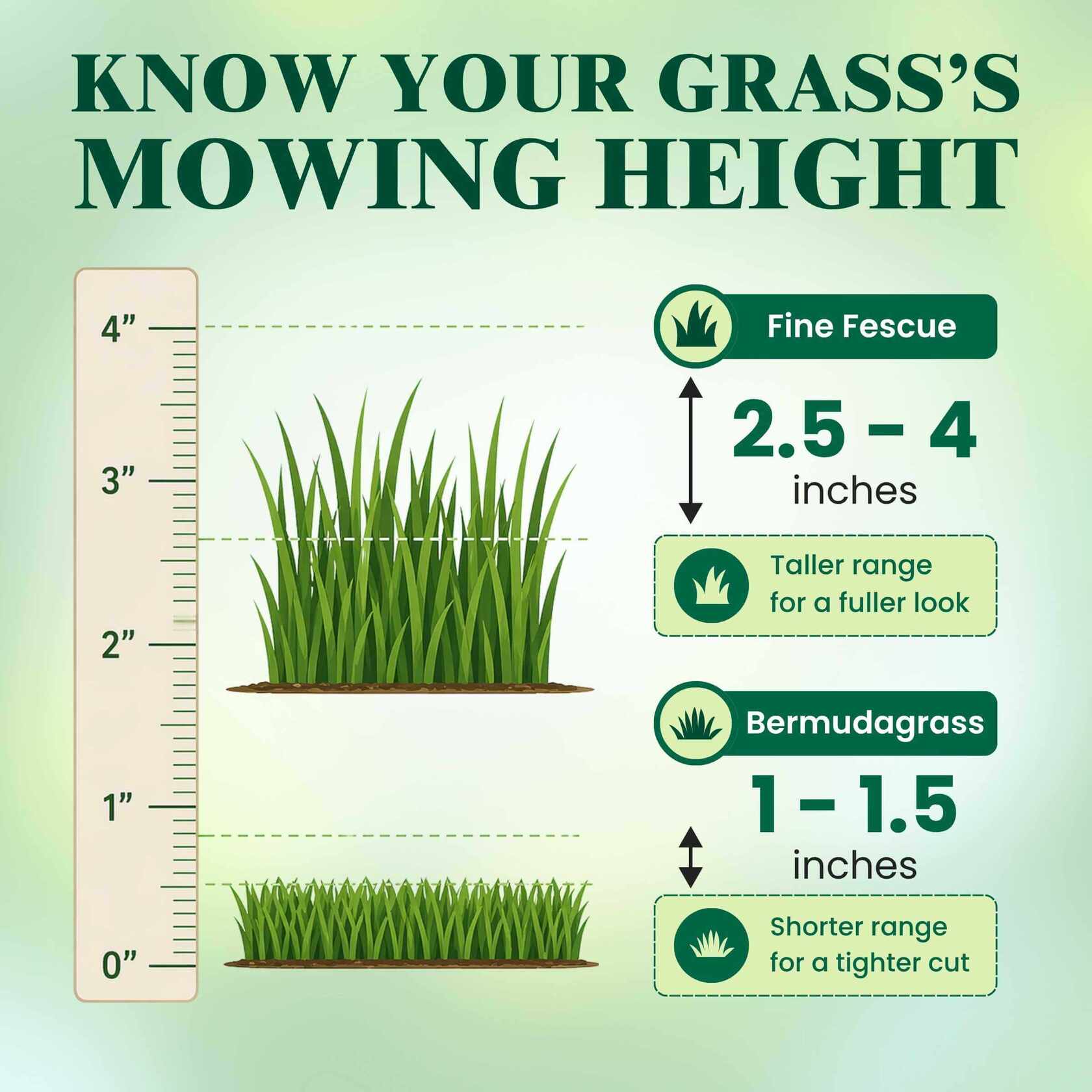
Different grass types have different preferred mowing heights due to their varying drought and heat tolerances. For example, fine fescue grasses grow best at heights between 2.5 and 4 inches, while bermudagrass prefers shorter heights between 1 and 1.5 inches.
Sharpen Your Mower Blades
Cutting the grass with sharp mower blades ensures a clean, professional-looking cut. Dull mower blades rip and tear the grass blades, causing the tips to turn yellow, heal slowly, and lose moisture.
Don’t Mow Wet Grass
Like mowing with dull mower blades, cutting wet grass rips and tugs the turf, resulting in an uneven cut. Wet grass clippings can also develop clumps that can suffocate underlying turf and clog the machine, leading to frequent interruptions as you mow.
Mow in Mid-Morning
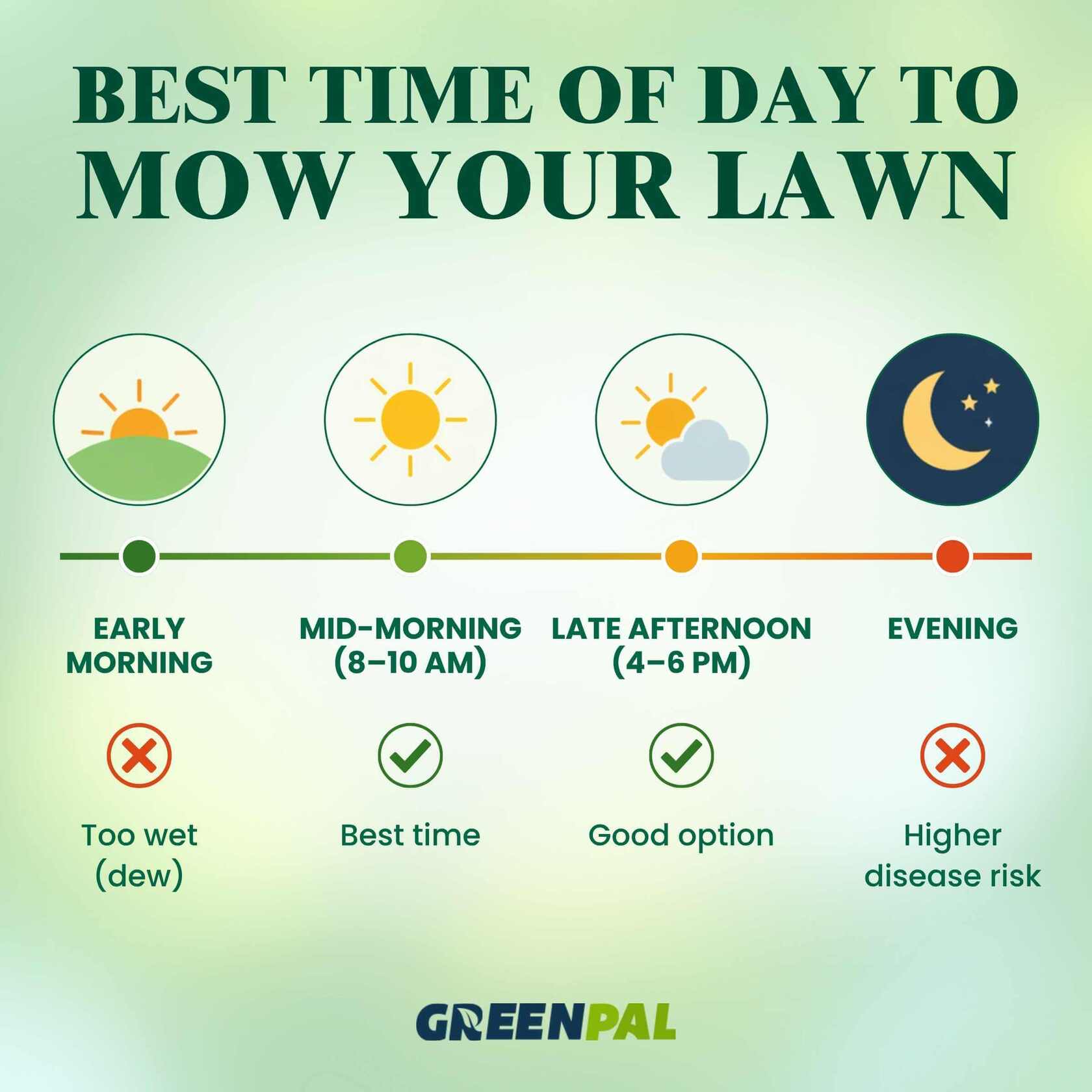
The best time to mow is in the mid-morning, after the early-morning dew has dried. Late afternoon (between 4 p.m. and 6 p.m.) is another good option, giving the grass enough time to heal before evening. Otherwise, freshly cut blades are more vulnerable to the cool, moist conditions at night that attract pests and disease.
Leave Behind Grass Clippings
It may be tempting to bag your lawn clippings to achieve a manicured look, but leaving them behind can benefit your lawn’s long-term health. Grass clippings return nutrients to the soil, help the lawn retain moisture, and provide a light mulch layer.
If you prefer to remove your grass clippings, consider composting them as an eco-friendly alternative to bagging.
Vary Your Mowing Pattern
Change your mowing pattern each time you mow to help grass grow more upright and achieve a more even cut. For example, if you mowed north to south, mow east to west next time. Other mowing patterns include spirals, waves, or diagonal cuts.
Varying your mowing pattern also helps prevent the grass from leaning, soil compaction, and excessive wear on the lawn.
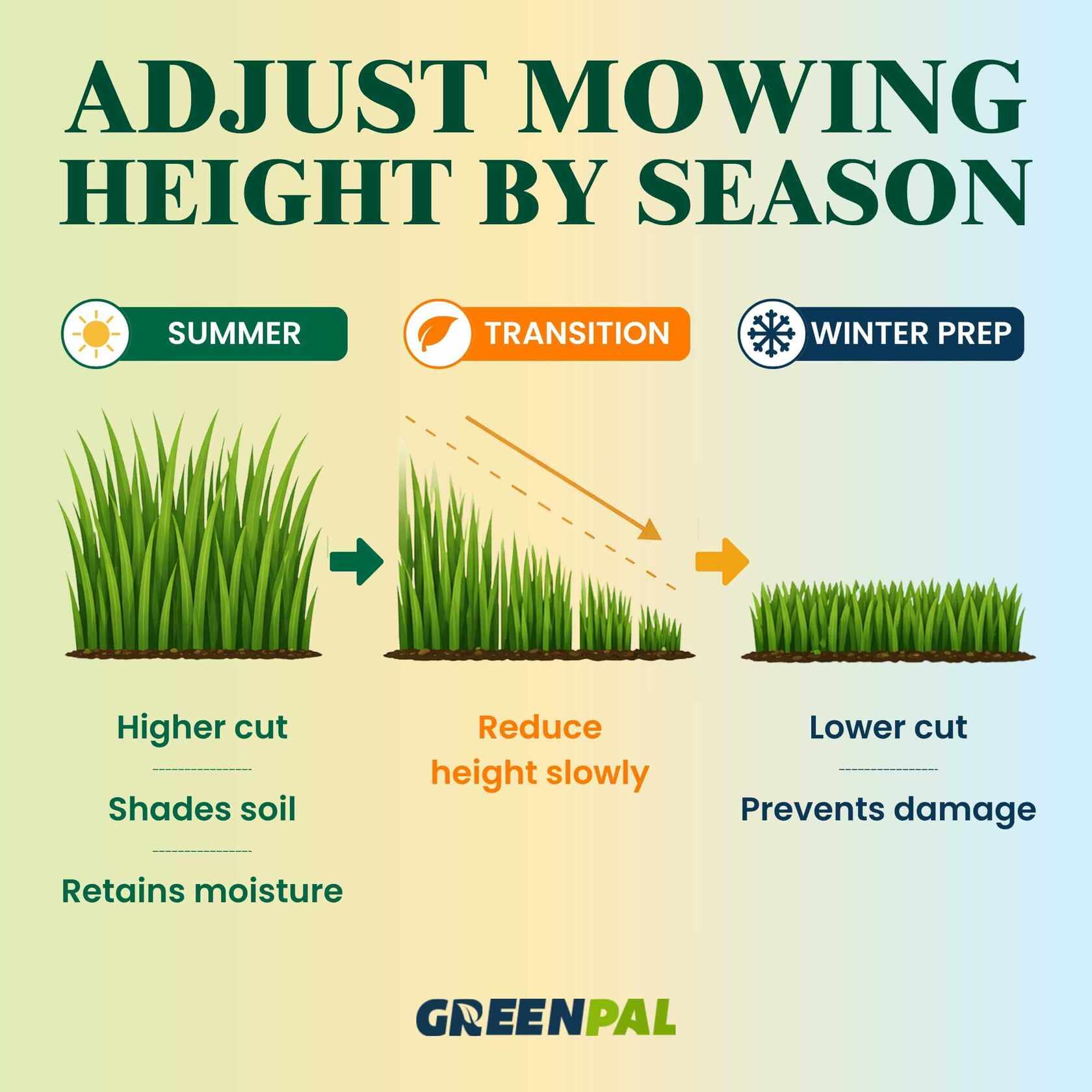
Adjust Height for the Season
Your grass benefits from different mowing heights throughout the year.
Mow at the higher end of your grass’s recommended height during summer. Taller grass helps shade the soil, retain moisture, and block sunlight from reaching young weeds.
As winter approaches, mow at the lower end of the recommended height. Shorter grass is less susceptible to snow mold, winter damage, and matting.
Frequently Asked Questions
How Frequently Should I Mow?
Rather than mow your lawn on a set schedule, base your mowing frequency on your grass’s growth rate and height. During the active growing season, most lawns need mowing once every 5 to 7 days. Fast-growing grasses, such as bermudagrass, may benefit from mowing every 3 to 5 days.
What Is the Best Mowing Speed?
The ideal mowing speed is between 3 and 5 mph. Mowing the lawn too fast can result in an uneven cut because the grass doesn’t have enough time to spring back up and make contact with the mower blades.
Should I Mow Before Fertilizing?
Yes, mowing is a great way to expose the lawn’s soil surface to fertilizer and other lawn care treatments, including aeration, thatch removal, and overseeding.
Skip the Mow and Hire a Pro
Achieving a pristine, manicured cut is as easy as following the above lawn mowing best practices. However, like all lawn care chores, weekly mowing breaks a sweat. Consider skipping the hassle and hiring a lawn care professional for the job, so you can focus more on enjoying your yard.