15 Common Lawn Problems and How to Fix Them
Bare patches, poor drainage, yellow grass — the state of your lawn has you scratching your head. To help you diagnose what’s wrong with your lawn, we’ve gathered a list of 15 common lawn problems and explained how to fix them in this one-stop troubleshooting guide.
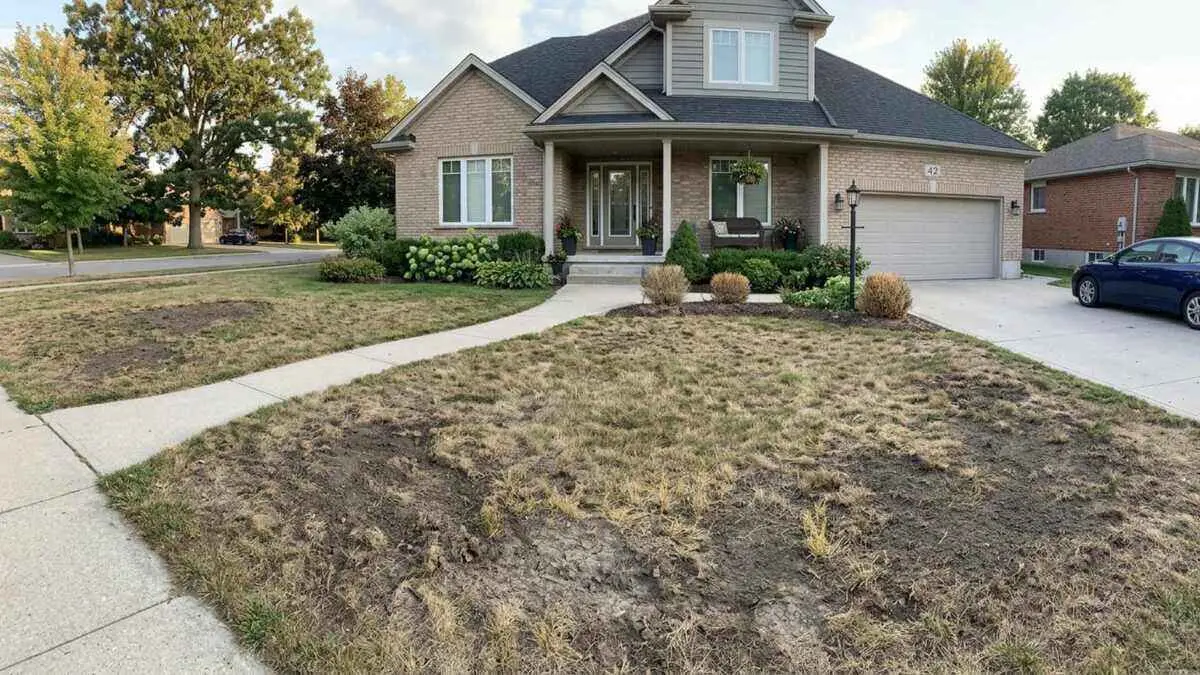
Most lawn problems can be fixed with an improved lawn care routine. You can learn how to care for your lawn yourself, or hire a local lawn care professional for peace of mind.
1. Thinning or Bare Patches
Thinning, dead grass, and bare patches can develop for many different reasons, which often require a bit of detective work. To identify the cause, monitor your lawn for additional symptoms, like putting together pieces of a puzzle.
For example, if bald spots are paired with poor drainage, the soil may be compacted and restricting root growth. If the grass has a web-like substance (mycelium) in the early morning, a fungal disease may be to blame.
Common causes:
Compacted soil
Poor soil quality or pH imbalance
Thatch buildup
Improper watering or fertilization
Poor mowing practices
Heavy foot traffic
Pests and fungal disease
Weeds
Seasonal stress or winter damage
How to fix it:
Overseeding after core aeration is one of the most effective ways to thicken a thin lawn or bare patch. However, lasting results depend on addressing the underlying issue first. Once you identify the cause, follow the appropriate treatment.
2. Compacted Soil
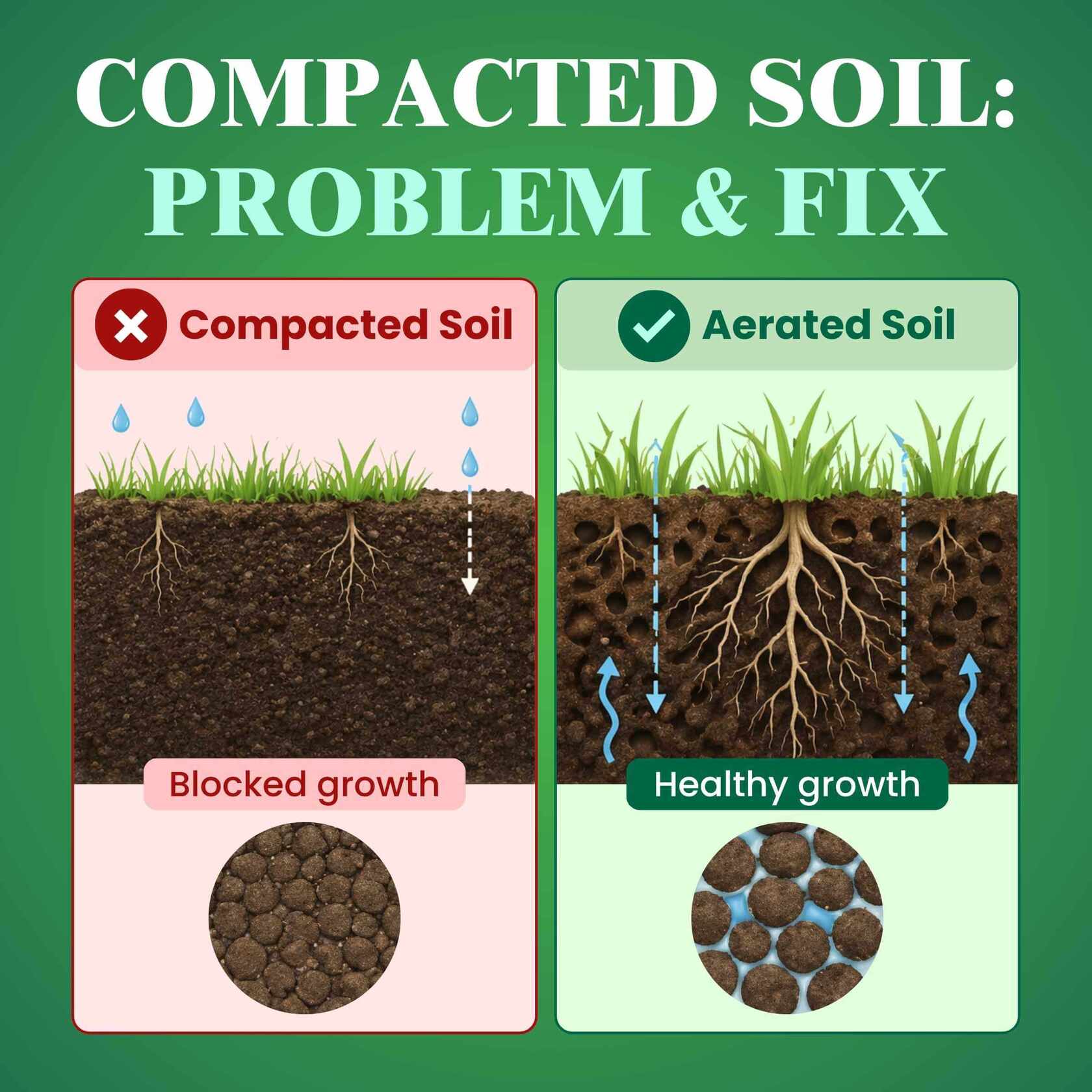
Soil compaction is a common lawn issue that prevents grass roots from accessing water, oxygen, nutrients, and the space needed for healthy growth.
To test whether your lawn is suffering from compacted soil, try to insert a 4- to 6-inch screwdriver into the soil. If it’s difficult to insert, the soil is likely compacted and needs relief.
Common symptoms:
Dense, hard soil
Bare patches
Thinning
Yellowing or discolored grass
Slow growth
Poor drainage
Thatch buildup
Common causes:
Heavy clay soils
Repeated pressure from heavy foot traffic, vehicles, and lawn equipment
Overwatering
How to fix it:
The best way to relieve compacted soil is with core aeration, which removes small plugs of soil to create holes that allow water, nutrients, and oxygen to reach the root zone. These openings also give roots room to expand and help the soil loosen over time.
3. White Grubs
White grubs are the larval stage of various scarab beetles, such as Japanese beetles and June beetles. These C-shaped insect pests live in the soil, feeding on grass roots and causing the turf to die.
Although all turfgrasses are susceptible, Kentucky bluegrass is among the most vulnerable to white grub damage. That’s why many homeowners in regions where Kentucky bluegrass is common, such as Denver and Boston, rely on local lawn care professionals to keep their lawns healthy and grub-free.
Common symptoms:
Bare patches or discoloration in irregular and isolated spots
The turfgrass rolls off the ground like a carpet
Lawn feels spongy underfoot
Dug-up soil caused by raccoons or opossums feeding on grubs
Common causes:
Scarab beetles laying eggs in the soil
Thatch buildup
Well-irrigated lawns in summer
How to fix it:
Apply milky spore bacterium (this method only targets Japanese beetle grubs).
Use Bacillus thuringiensis galleriae to control a wide range of common white grubs.
In lawns with a history of white grub activity, apply preventative insecticides in early summer to mid-summer before eggs hatch.
Apply curative treatments in late summer or early fall when larvae are actively feeding.
4. Moles
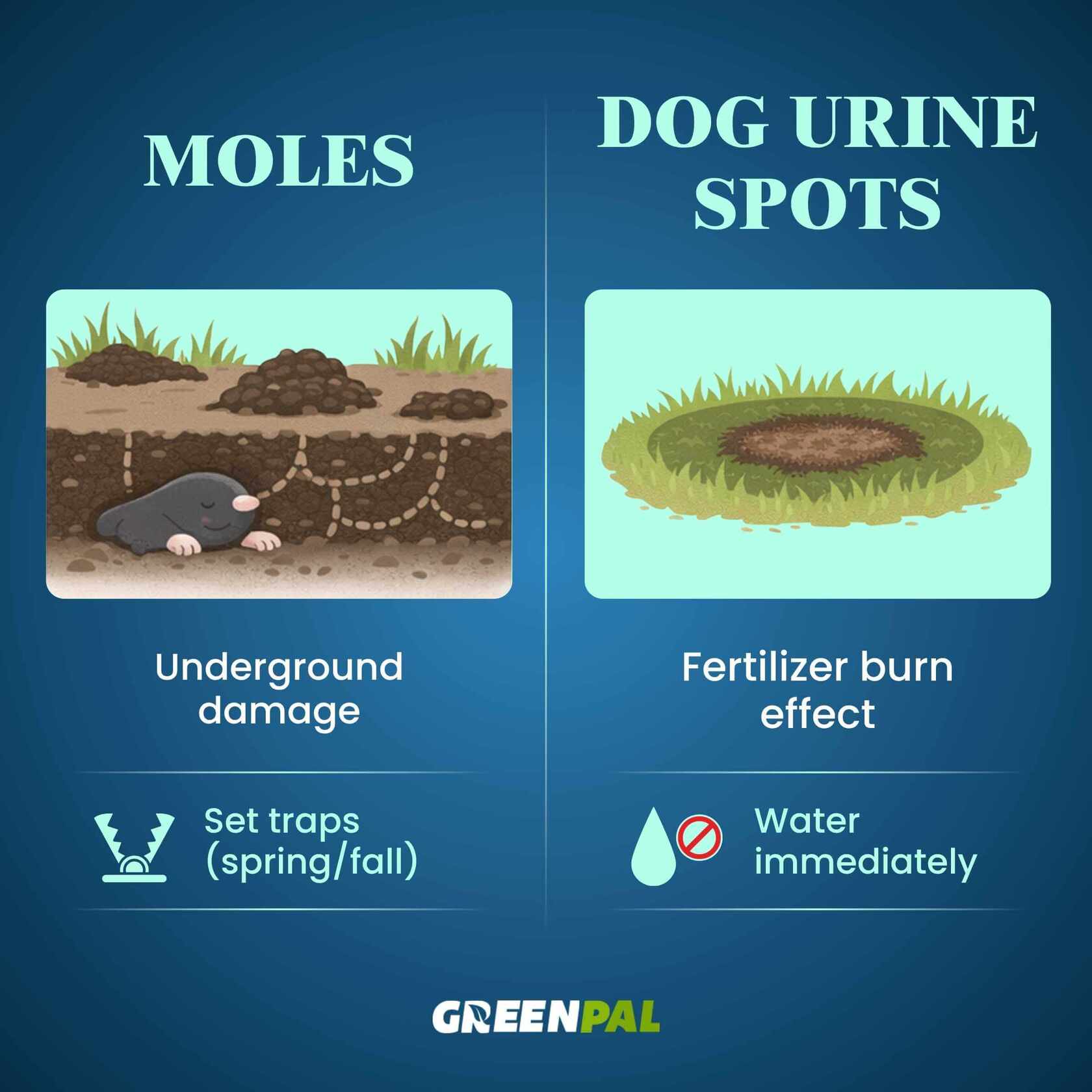
Moles damage lawns by creating raised ridges, soil mounds, and dead patches of grass. As they tunnel, their digging severs grass roots and leaves uneven ground that can become a tripping hazard or damage lawn equipment.
Common causes:
Moist, loose soil with an abundant food source of grubs, earthworms, and other invertebrates.
How to fix it:
Trapping is the most effective way to remove moles from the yard. Mole traps are readily available from most hardware and garden stores. Always read and follow trap instructions to keep yourself, pets, and other animals safe. Set the traps in spring or fall when moles are most active near the surface.
5. Dog Urine Spots
Dog urine can create discolored or dead patches because its high concentration of nitrogen and salts causes “fertilizer burn,” essentially acting like an overapplication of fertilizer.
Identification:
These burned spots, typically brown or tan, are often surrounded by a dark green outer ring of fertilized grass, creating a distinct donut shape.
How to fix it:
Train your dog to do their business in non-turf areas, such as mulch or gravel.
Water down the affected area right after your dog uses it. Diluting the urine helps to reduce burning, but the grass will still develop a dark green patch from the extra nitrogen.
6. Nutrient Deficiencies
When your turfgrass isn’t receiving enough nutrients, it struggles to grow, stay green, and withstand stress. This may result from a general lack of nutrients in the soil or from conditions that prevent the roots from absorbing available nutrients.
Common symptoms:
Yellowing or discolored grass
Slow or stunted growth
Thin or patchy turf
Common causes:
Underfertilizing
Imbalanced soil pH
Compacted soil
Excessive thatch
How to fix it:
Follow a fertilizer regimen tailored to your soil and grass type.
Test the soil to determine whether the pH is imbalanced and correct it with the appropriate soil amendment.
If the soil is compacted, relieve it with lawn aeration.
Remove thatch exceeding one-half inch thick.
7. Crabgrass
Crabgrass is a common summer annual weed that thrives in hot, dry, compacted soils and stressed lawns. The yellowish-green weed is named for its low-growing habit and long stems that spread out like crab legs. Weeds like crabgrass compete with your turfgrass for water, sunlight, oxygen, and space.
Common causes:
Poor lawn maintenance
Compacted soil
How to fix it:
Improve your lawn maintenance routine. Lush, healthy lawns are less susceptible to weed growth.
Aerate compacted soil.
Spot-treat existing weeds with a post-emergent selective herbicide.
In lawns with a history of crabgrass problems, apply pre-emergent herbicide in spring when soil temperatures are 50 to 55 degrees Fahrenheit for several consecutive days.
8. Nutsedge
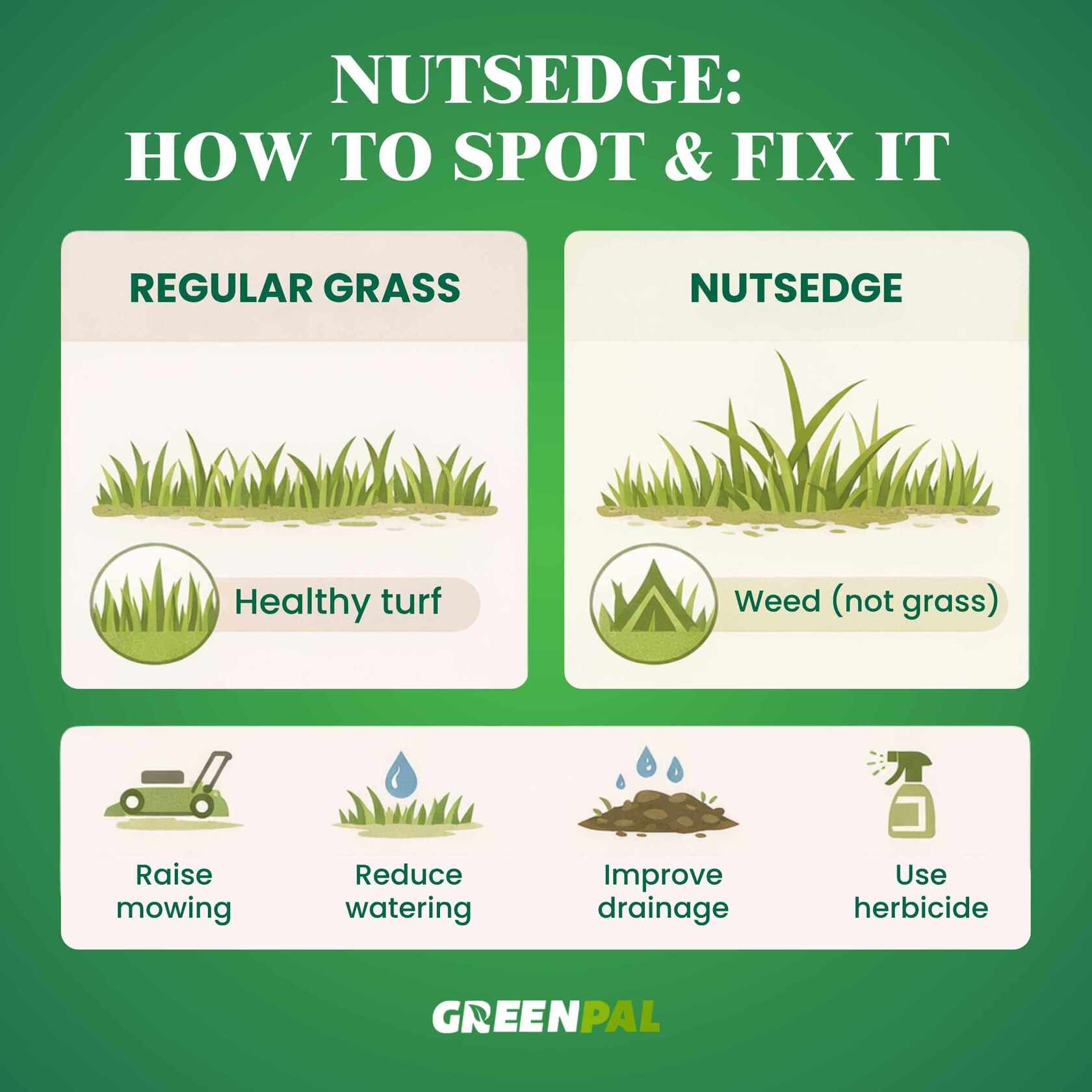
If you notice leaf blades growing taller than the surrounding turf, it may be nutsedge. This weed looks like grass, but is really a sedge with a triangular stem.
Manual control often makes the problem worse. Why? Because hand-pulling the weed activates its underground, dormant tubers that give rise to new plants. Your best course of action is to treat the weed with an herbicide.
Common causes:
Poor lawn maintenance
Nutsedge is often an issue in turf that is thin or cut too short
Moist soils either from poor drainage or overwatering
How to fix it:
Improve your lawn maintenance routine and encourage thick grass growth.
Adjust your mowing height to your grass type’s recommended mowing height.
Avoid over-watering the lawn.
Aerate the soil to improve drainage.
Spot-treat nutsedge with an herbicide that specifically targets sedges. Herbicides targeting broadleaf weeds and grasses will not work against nutsedge.
9. Dandelions
Dandelions may be a core childhood memory, but these bright flowers and fluffy puffballs are a nuisance for anyone trying to achieve a flawless lawn. This weed is difficult to control due to its efficient seed spreading and deep taproot that can regrow from small pieces left behind.
Common causes:
Poor lawn maintenance
How to fix it:
Improve your lawn care maintenance to help prevent new dandelion seeds from germinating.
Hand-pull the dandelions, ensuring the whole taproot is removed.
Spot-treat the weed with a post-emergent herbicide.
10. Imbalanced Soil pH
When the lawn’s soil pH is too high or too low, the roots struggle to absorb available nutrients. Most lawns prefer a soil pH between 6.5 and 7.0, though some grass types prefer slightly more acidic or alkaline soils.
Common symptoms:
Turf shows signs of nutrient deficiency — such as thinning, yellowing, or slow growth — despite adding fertilizer.
Common causes:
Excessive rain removing basic nutrients from the soil
Excessive fertilizer
Excessive soil amendments
Organic matter decomposition
How to fix it:
Test your soil to determine its pH and which amendments to apply.
Add lime to the soil to raise pH, making it less acidic and more alkaline.
Add sulfur to the soil to lower pH, making it less alkaline and more acidic.
11. Thick Thatch
Thatch is the layer of dead and living organic matter that accumulates between the grass blades and soil surface.
While a thin layer of thatch is a beneficial mulch layer for the soil, thatch exceeding one-half-inch thick can attract pests and diseases and block nutrients, water, and oxygen from reaching the roots.
How to measure thatch:
Dig a 2- to 3-inch-deep wedge of soil and measure the brown layer of organic matter between the soil and grass blades.
Common symptoms:
Increased pest or disease problems in the lawn.
The lawn has a spongy feel underfoot.
Yellowing or patchiness that doesn’t improve with watering or fertilizer.
Common causes:
Excessive nitrogen fertilizer
Compacted soil
Soil conditions are unfavorable to organisms that help decompose thatch
How to fix it:
Remove thatch with a dethatching rake or motorized dethatcher.
Improve soil health via soil amendments and aeration to increase microbial activity.
12. Fertilizer Burn
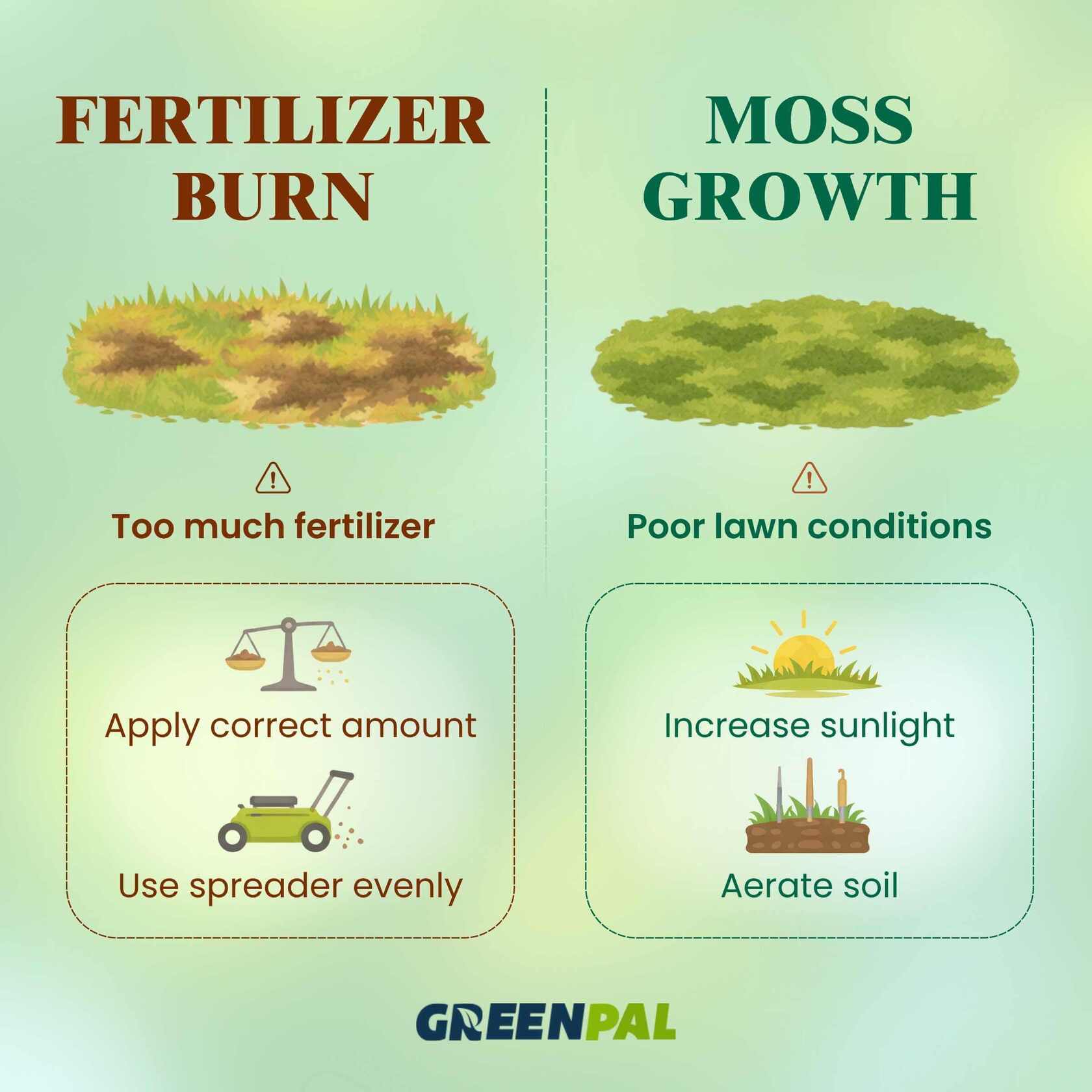
Fertilizer burn appears as brown or bright yellow, scorched patches of grass on the lawn. These patches are an eyesore and often signal improper fertilizer application.
Common cause:
Overapplication of fertilizer
How to fix it:
Test your soil to determine the right NPK ratio for your lawn.
Use a broadcast or drop spreader to ensure an even application of fertilizer across the lawn.
13. Moss
Although a popular turfgrass alternative, moss can affect your lawn’s aesthetics if unwanted. These soft green mats develop on the soil surface of lawns in poor growing conditions, and can be easily remedied with improved lawn maintenance.
Common causes:
Excessive shade
Low fertility
Poor drainage
Compacted soil
Improper watering
How to fix it:
Gently remove the moss with a rake and correct the underlying condition.
Test the soil to determine whether the lawn is receiving adequate nutrients.
Aerate compacted soil.
Trim surrounding vegetation to increase sunlight and airflow.
Adjust irrigation accordingly.
14. Pests
Common lawn pests, including fire ants, white grubs, moles, and chinch bugs, can wreak havoc on a lawn.
When dealing with an unwanted organism in the lawn, adopt a management approach targeted to that specific pest and address the underlying cause.
Common symptoms:
Holes or raised mounds in the yard (moles, gophers, and voles)
Irregular patches of grass
Chew marks on grass (sod webworms)
Grass lifts easily, like a carpet (white grubs)
Sticky grass blades (aphids)
Ant hills
Common causes:
Poor lawn maintenance
Moist conditions
How to fix it:
Address your lawn’s underlying maintenance issue.
Water the lawn in the early morning to avoid creating cool, moist conditions at night.
Turn to chemical pesticides as a last resort if improved lawn maintenance does not solve the infestation.
15. Lawn Disease
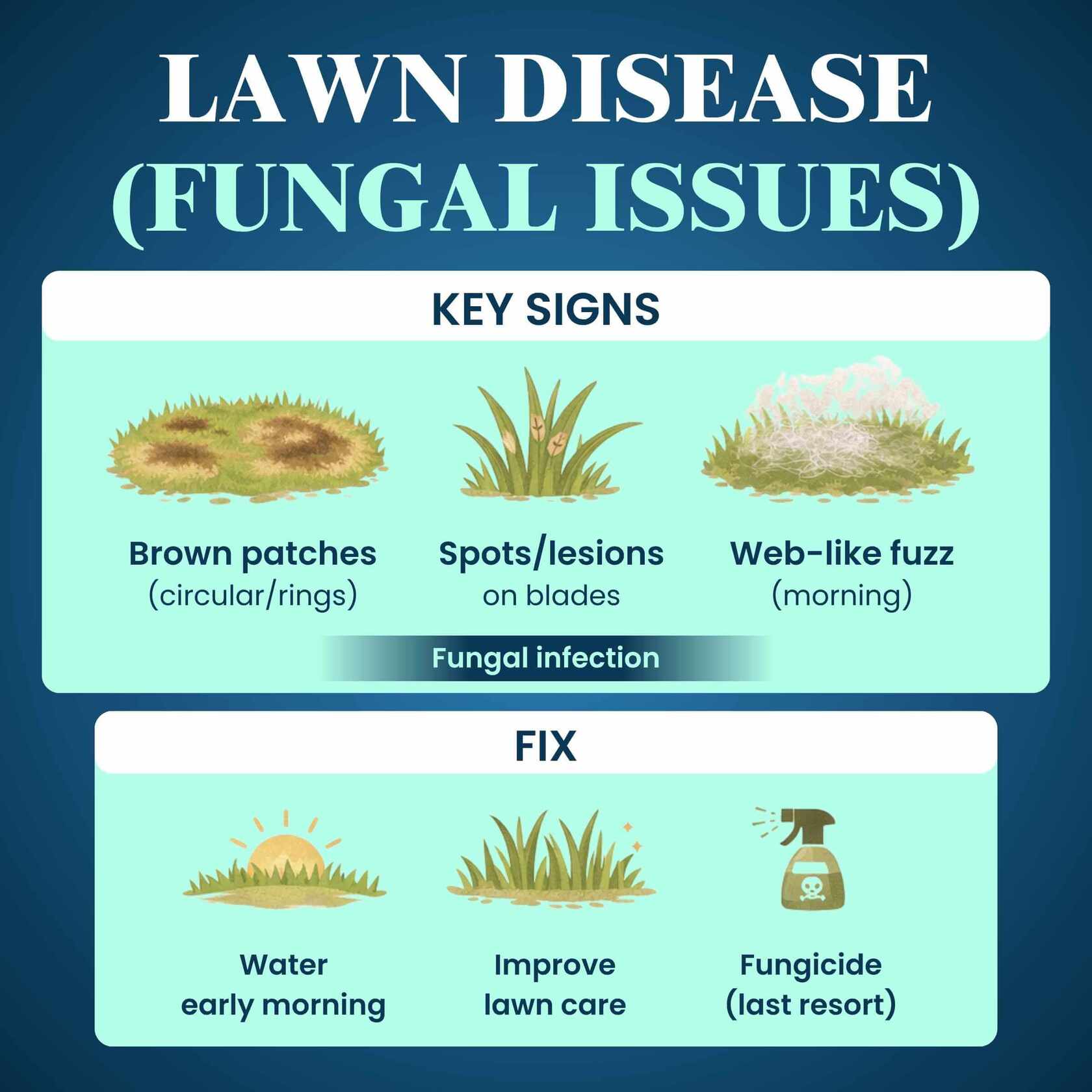
Lawn fungi are a common cause of lawn disease. Think of them like your turf catching a cold, weakening its overall health. There are many different types of lawn diseases, each one exhibiting unique symptoms.
Common symptoms:
Irregular lesions on the grass blades
Circular, ring-like, or donut-shaped brown patches in the lawn
Rotting leaf crowns
Web-like mycelium on the grass blades in the early morning
Spore pustules on grass blades
Common causes:
Poor lawn maintenance
Moist conditions
How to fix it:
Address your lawn’s underlying maintenance issue.
Water the lawn in the early morning to avoid creating cool, moist conditions at night
Turn to chemical fungicides as a last resort if improved lawn maintenance does not solve the problem.
Frequently Asked Questions
What Is the Best Way to Treat Most Lawn Problems?
Proper lawn maintenance is the best way to treat and prevent common lawn problems. Weak, poorly maintained lawns are more susceptible to damage from pests, lawn diseases, and extreme temperatures.
Check out our beginner’s guide to lawn care to learn more about various lawn treatments, such as aeration, thatch removal, and fertilizer.
What Are the Key Lawn Care Practices?
Incorporating the following practices into your lawn care routine is one of the most effective ways to prevent and fix common lawn problems:
Aerate compacted soil: Relieves hard, dense soil so water, nutrients, and oxygen can reach grass roots.
Remove thatch: Thick thatch can attract pests and diseases while blocking water, nutrients, and oxygen from reaching the soil.
Overseed: Planting new grass seed into an existing lawn helps thicken turf and repair bare patches.
Mow properly: Use sharp mower blades, follow your grass type’s recommended mowing height, and avoid cutting wet grass.
Water deeply: Irrigate deeply and infrequently to encourage strong, deep root growth.
Test your soil: Check soil conditions before fertilizing to prevent pH imbalances and overfertilization.
Fertilize: Provide essential nutrients to support healthy, resilient grass growth.
Why Do Lawn Weeds Keep Coming Back?
Most lawn weeds are persistent due to their resilient underground roots and efficient seed-spreading mechanisms.
Removing weeds does not guarantee they won’t return the following year. While proper lawn care and control methods may not eliminate weeds entirely, these interventions can reduce their growth considerably.
Why Should Pesticides Be Used as a Last Resort?
Pesticides should be used as a last resort because they may cause unintended harm to humans, wildlife, and the environment, including your lawn’s sensitive ecosystem of essential microorganisms. Pests and fungal diseases can also develop resistance when repeatedly exposed to pesticides.
Hire a Lawn Care Professional
Most lawn issues can be remedied with aeration, thatch removal, improved irrigation, and regular lawn maintenance. However, sometimes it takes a trained eye to diagnose, fix, and prevent various lawn issues. Consider hiring a local lawn care professional to maintain your lawn year-round so you can spend less time fixing it and more time enjoying it.