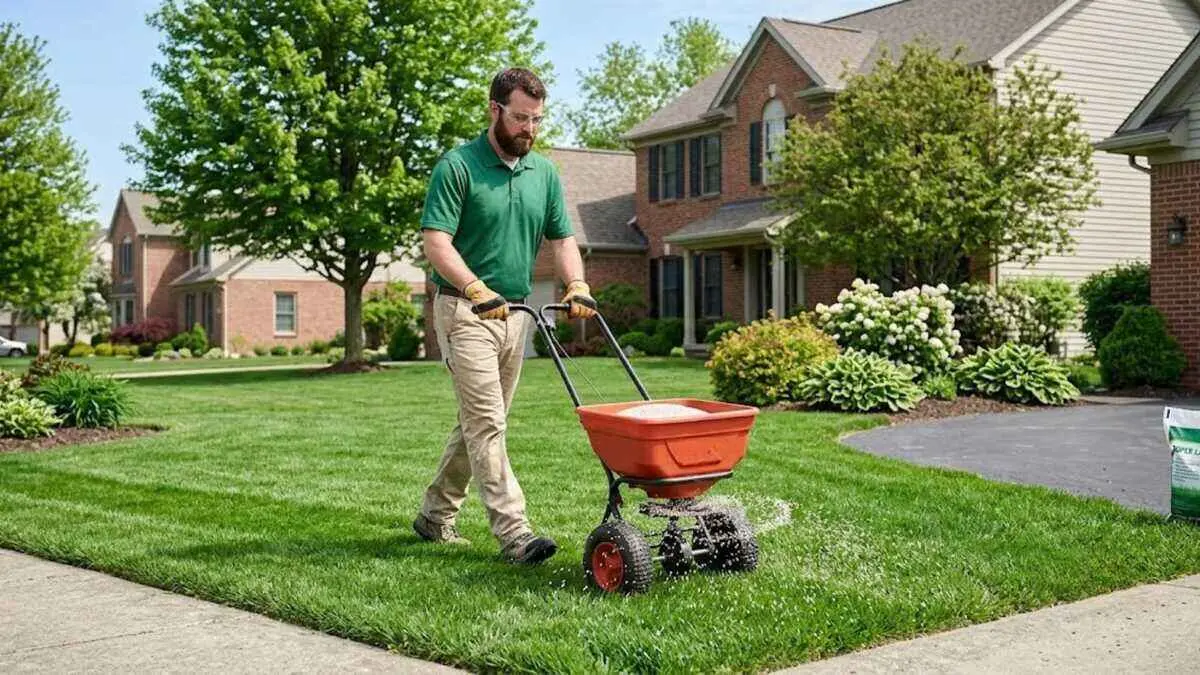
How to Choose the Right Lawn Fertilizer
With so many fertilizer options on the shelf, it's hard to know where to start. The right choice depends on several factors — your grass type, your soil, and what you want your lawn to look like, among others. This guide walks through each one, so you can pick a fertilizer that actually fits your lawn.
Identify Your Grass Type
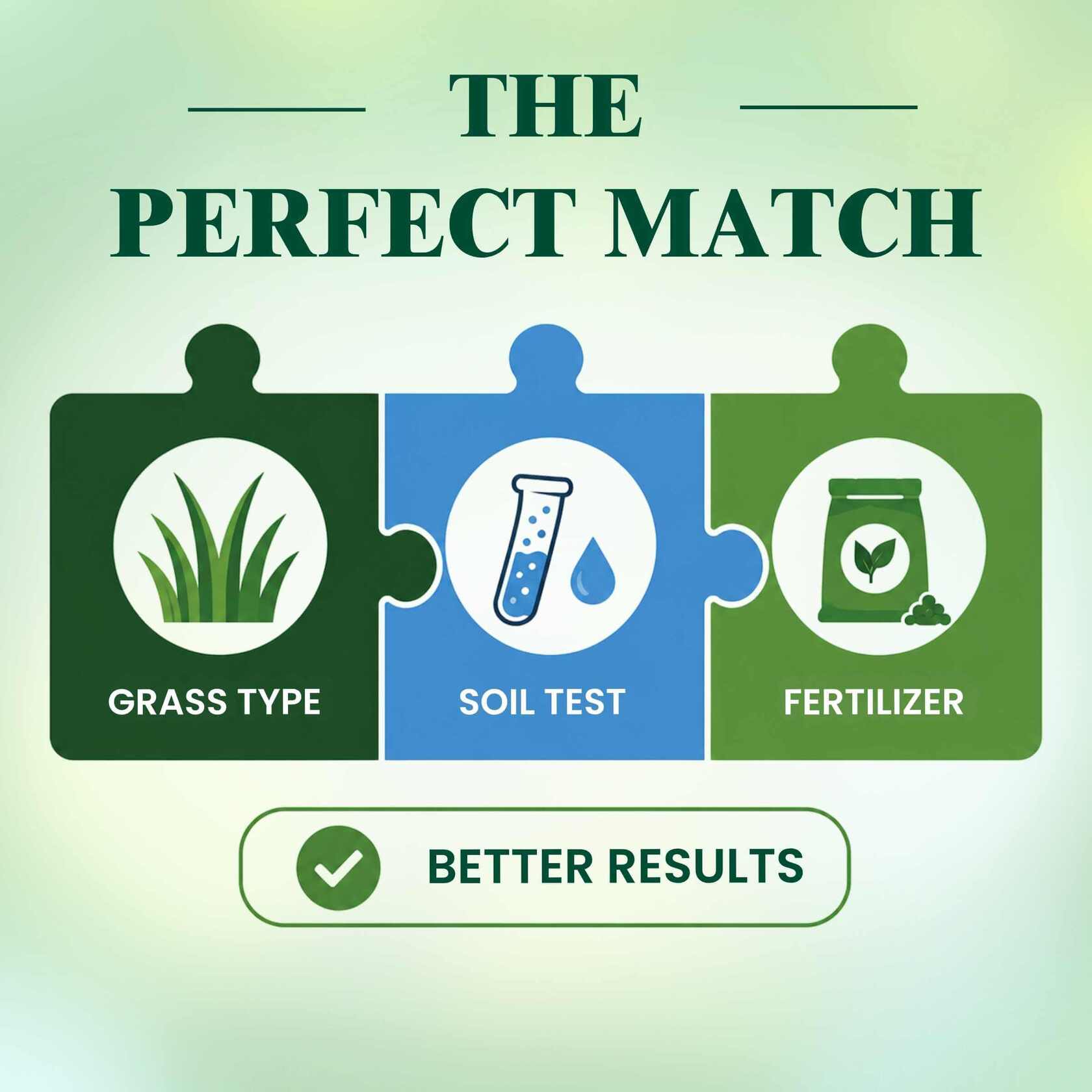
There are many different types of lawn turfgrasses. Each grass species has different nutrient requirements, which influence the fertilizer that's best for your lawn.
For example, centipedegrass doesn’t tolerate soils high in phosphorus. That means you’ll want to stay away from phosphorus-rich fertilizers, like bone meal or rock phosphate.
And when you submit a soil test, you'll typically need to specify your grass type. That's because labs calibrate their nutrient recommendations to how each species responds to fertility. The same soil sample could return a different recommended nutrient ratio depending on whether you list centipedegrass or bermudagrass.
Understand the Three-Number Ratio
The three-number ratio listed on fertilizer bags is among the most important factors influencing which fertilizer you choose.
This is known as the NPK ratio, and it shows the percentage by weight of nitrogen (N), phosphorus (P), and potassium (K) in the bag. For example, a fertilizer labeled 30-0-10 contains 30% nitrogen, 0% phosphorus, and 10% potassium.
So, how do you know which ratio your lawn actually needs? That's what a soil test tells you.
Test Your Soil
A soil test reveals the ratio of nitrogen, phosphorus, and potassium your lawn needs, as well as other micronutrients.
DIY soil test kits can identify nutrient levels, but they generally don't provide fertilizer recommendations tailored to your grass type and local conditions.
Instead, send a soil sample to your local cooperative extension for laboratory testing. You should then receive detailed recommendations on what NPK ratio to choose, whether your soil needs additional micronutrients, and at what rate to apply the fertilizer.
Decide on Your Lawn Goals
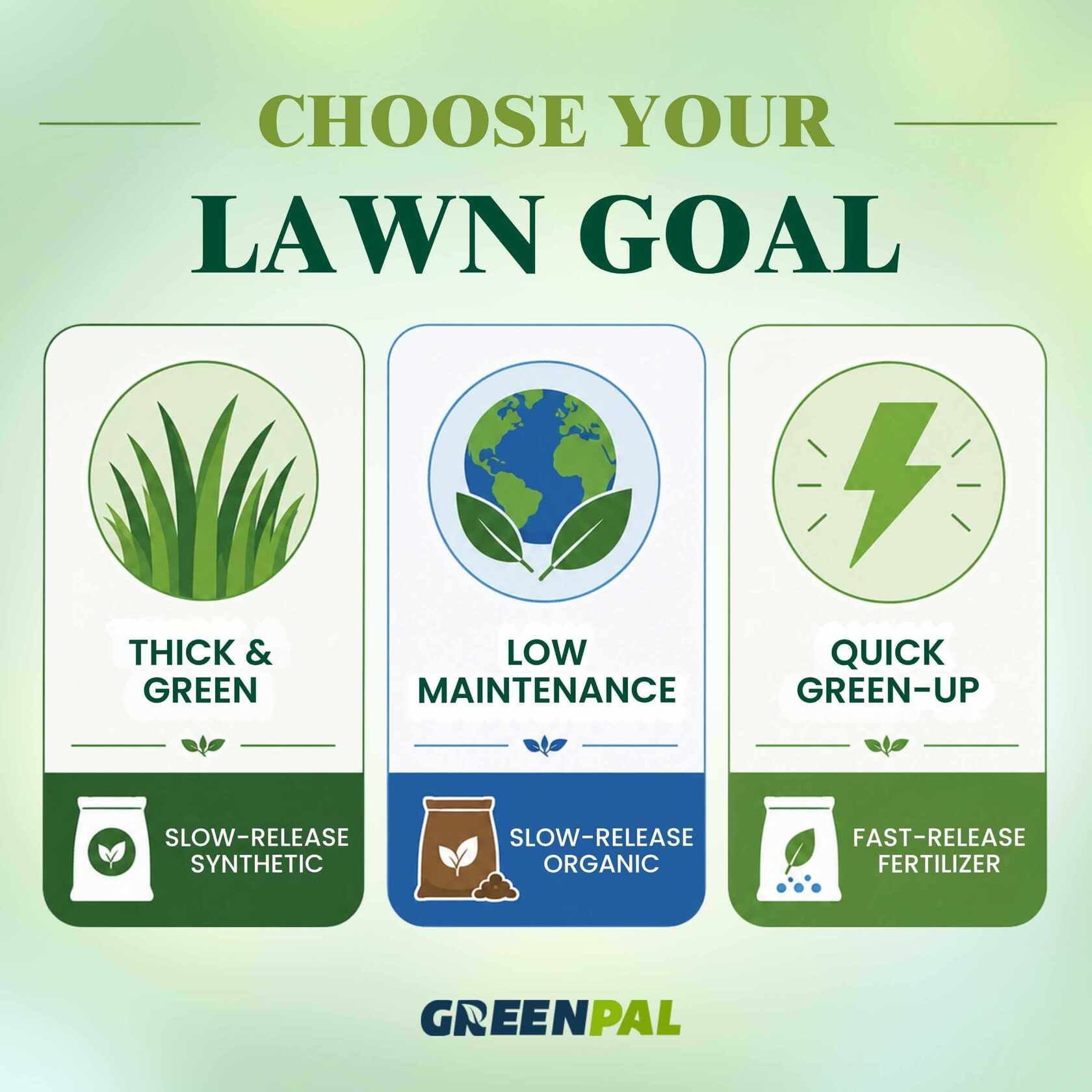
Before picking a fertilizer, think about what you actually want from your lawn and how much upkeep you're willing to commit to. Here are a few examples of how your lawn goals influence the fertilizer that's best for your lawn.
A vigorous, dark green lawn that crowds out weeds. This look usually requires a high dosage of nutrients delivered slowly over time. A slow-release synthetic fertilizer steadily delivers a precise ratio of nutrients, supporting the dense growth that helps choke out weeds. The tradeoff is that these fertilizers come from non-renewable resources, unlike most organic options.
A low-maintenance, eco-friendly lawn with slightly less vigorous growth. If you prefer a lawn that grows a little slower and you'd rather use a fertilizer made from renewable resources, a slow-release organic fertilizer may be a good choice. These fertilizers are derived from plants and animals. However, nutrient amounts often vary and aren’t as high as those in synthetic fertilizers.
A fast green-up before a specific date. If you need visible results quickly, before hosting an event, for instance, reach for a fast-release fertilizer. Liquid formulas tend to act fastest, though fast-release granular options exist too. However, fast-release formulas contribute to leaching and polluted runoff.
Different Types of Fertilizers
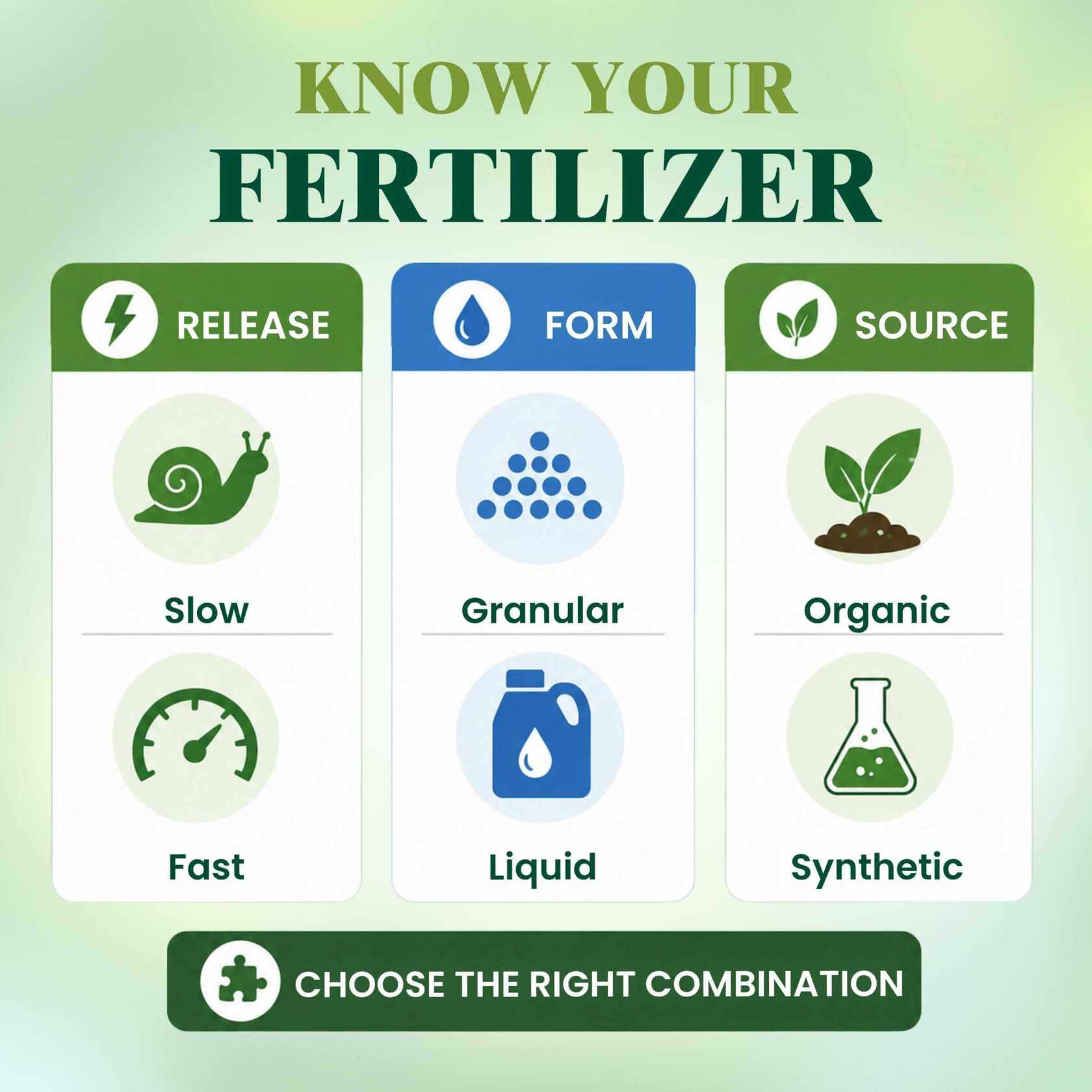
Fertilizer is often described by three separate categories:
Nutrient availability (slow- vs. fast-release)
Physical form (granular vs. liquid)
Organic status (organic vs. synthetic)
Each category is independent, and a variety of combinations exist, such as fast-release organic liquid fertilizers, slow-release organic granular fertilizers, or fast-release synthetic granular fertilizers.
Slow- vs. Fast-Release Fertilizer
Slow-release fertilizers release nutrients slowly over a period of weeks or months, while fast-release fertilizers provide a burst of nutrients that are immediately available to the turfgrass.
%20(1).jpg "Effective lawn watering and irrigation tips")
Slow-Release Fertilizer |
Fast-Release Fertilizer |
|
Nutrient Availability |
Release nutrients slowly over a long period.
Ideal for lawns that need a steady and consistent supply of nutrients throughout the growing season.
|
Nutrients are released quickly and immediately available for the turfgrass to absorb.
Ideal for lawns that need a quick green-up or swift recovery.
|
Physical Form |
Most slow-release fertilizers are granular.
Slow-release liquid fertilizers are also available, though relatively uncommon.
|
Most fast-release fertilizers are liquid.
Fast-release granular fertilizers are available and very common.
|
Organic Status |
Most organic fertilizers are slow-release; however, synthetic slow-release fertilizers are also available and very common. |
Most fast-release fertilizers are synthetic.
Organic fast-release fertilizers are also available, though relatively uncommon.
|
Environmental Safety |
Slow-release fertilizers are less likely to leach nutrients into the groundwater or pollute runoff. |
Fast-release fertilizers are likely to leach nutrients into the groundwater or pollute runoff. |
Granular vs. Liquid Fertilizer
Granular fertilizers are available as dry pellets or granules.
Liquid fertilizers are available as a concentrate that dissolves easily in water and is applied via a garden hose attachment or pump sprayer.
Learn More: Liquid vs. Granular Fertilizer: Which Is Right For Your Lawn
Granular Fertilizer |
Liquid Fertilizer |
|
Nutrient Availability |
Most granular fertilizers release nutrients slowly over a long period. Fast-release granular fertilizers are also available and are very common. These fertilizers dissolve quickly and provide an immediate supply of nutrients. |
Most liquid fertilizers are fast-release and the nutrients are immediately available for the turfgrass to absorb. Slow-release liquid fertilizers are available, though relatively uncommon. |
Organic Status |
Granular fertilizers are split relatively evenly between organic and synthetic. |
Most liquid fertilizers are synthetic. Organic liquid fertilizers are also available, though relatively uncommon. |
Environmental Safety |
Since most granular fertilizers are slow-release, they are less likely to leach nutrients into the groundwater or pollute runoff. Fast-release granular fertilizers are very common, and these fertilizers are likely to leach nutrients into the groundwater or pollute runoff. |
Fast-release liquid fertilizers are likely to leach nutrients into the groundwater or pollute runoff. Slow-release liquid fertilizers are relatively uncommon, and these formulations are less likely to leach into groundwater or pollute runoff than their fast-release counterparts. |
Application Method |
Granular fertilizers are typically applied via a broadcast, drop, or handheld spreader. |
Liquid fertilizers are typically applied via a garden hose attachment or pump sprayer. |
Organic vs. Synthetic Fertilizer
Organic fertilizers are derived from plant or animal sources and are carbon-based.
Synthetic fertilizers are manufactured via industrial chemical processes that derive nutrients from mined mineral deposits, atmospheric gases, and fossil fuels.
Keep in mind that finely ground mineral fertilizers (such as rock phosphate or greensand) aren’t organic in the chemistry sense because they are not carbon-based. However, many organic gardening programs do permit their use.
Organic Fertilizer |
Synthetic Fertilizer |
|
Nutrient Availability |
|
|
Nutrient Concentration |
|
|
Nutrient Accuracy |
|
|
Soil Health |
|
|
Environmental Safety |
|
|
Frequently Asked Questions About Fertilizer
When Do I Apply Fertilizer?
The best time to apply fertilizer depends on your lawn’s growing season.
Warm-season grasses need fertilizer in late spring through early summer, while cool-season grasses need fertilizer in early to mid-spring and fall.
How Often Do I Apply Fertilizer?
How often you apply fertilizer depends on your grass type, soil health, and what kind of fertilizer you use. Here’s why:
Some grass types require as many as 4 fertilizer applications per year while others only need one application per year.
The results from a soil test may recommend more frequent applications in nutrient deficient lawns.
Fast-release fertilizers require more frequent reapplication than slow-release fertilizers, which last for several more weeks.
How Do I Apply Fertilizer?
Apply granular fertilizer with a broadcast or drop spreader. Handheld spreaders are also an option and ideal for small, hard-to-reach areas.
Liquid fertilizers often come with a garden hose attachment or can be added to a garden pump sprayer. Always dilute liquid concentrates with water before applying.
Learn More: How to Fertilize Your Lawn
What Is a Starter Fertilizer?
Starter fertilizer is high in phosphorus, which promotes root development in young seedlings. By contrast, general lawn fertilizers are high in nitrogen, which favors already-established grass and pushes it to crowd out new seedlings competing for light and space. That's why starter fertilizer, not a standard nitrogen-heavy blend, is the right choice at seeding.
What Is Weed & Feed?
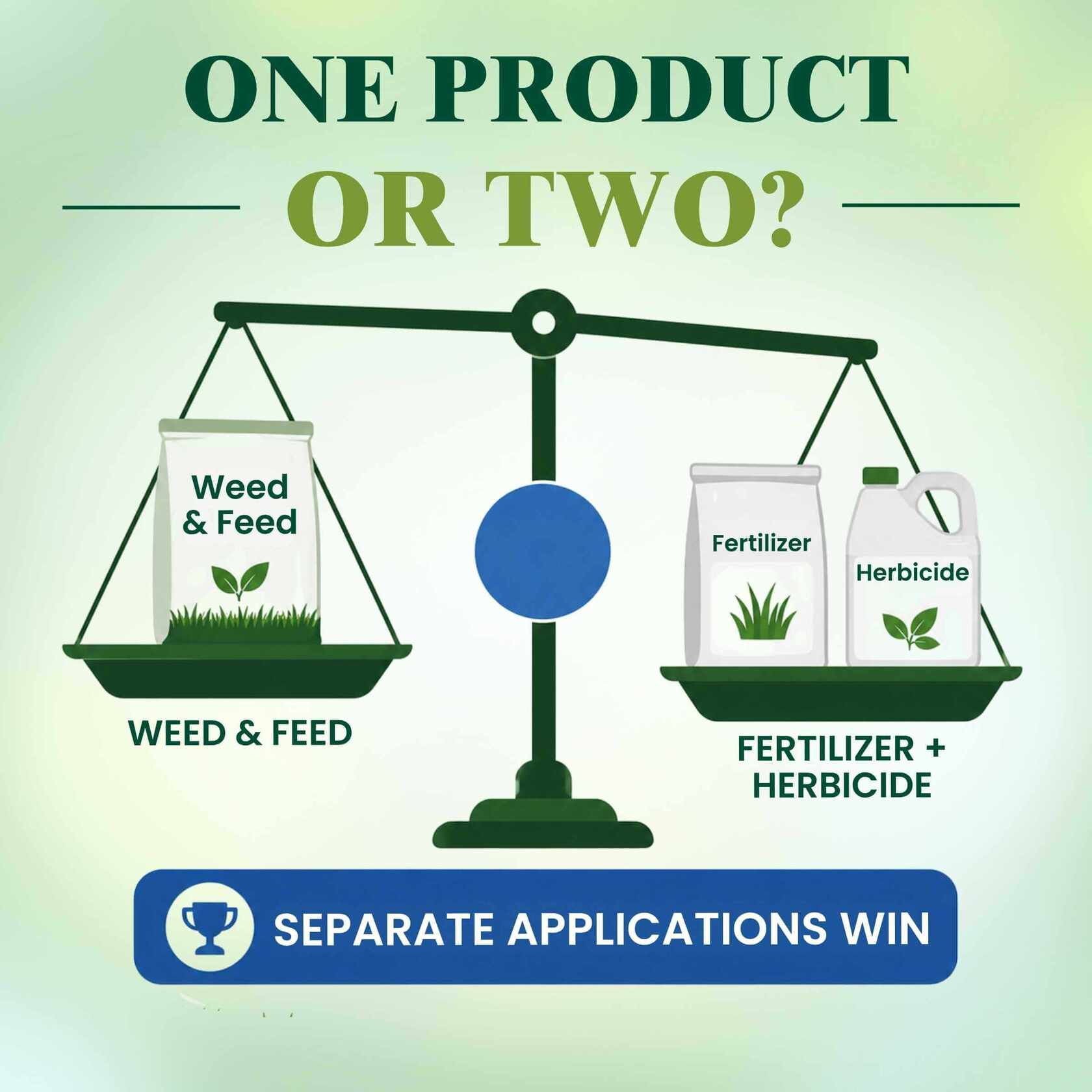
Weed & Feeds are fertilizers combined with herbicide, but applying the two separately is usually more effective. Here's why:
Preventative Weed & Feeds face a timing conflict: pre-emergent herbicide works best applied in early spring, but many grasses can't tolerate fertilizer that early. Delaying the application to suit the grass weakens the weed barrier.
Post-emergent Weed & Feeds force a tradeoff between treatments. Weeds need height for herbicide to contact their leaves, while grass needs to be kept short for fertilizer to reach the soil. Fertilizer also needs watering in, while herbicide shouldn't be watered, and treating the whole lawn with herbicide adds unnecessary chemical exposure where weeds aren't even present.
Find a Local Lawn Care Professional
Choosing the right fertilizer comes down to your grass type, the results of a soil test, and your personal lawn care goals.
If your goal is a vigorous lawn, for example, slow-release granular fertilizer that provides a steady supply of nutrients throughout the growing season may be the best fit, paired with aeration, proper mowing, and routine maintenance.
If you'd rather skip the legwork, local expertise matters. GreenPal connects homeowners with lawn care professionals across the country — including Spring Hill, TN and Jacksonville, FL — who already know the soil and grass types they're working with.