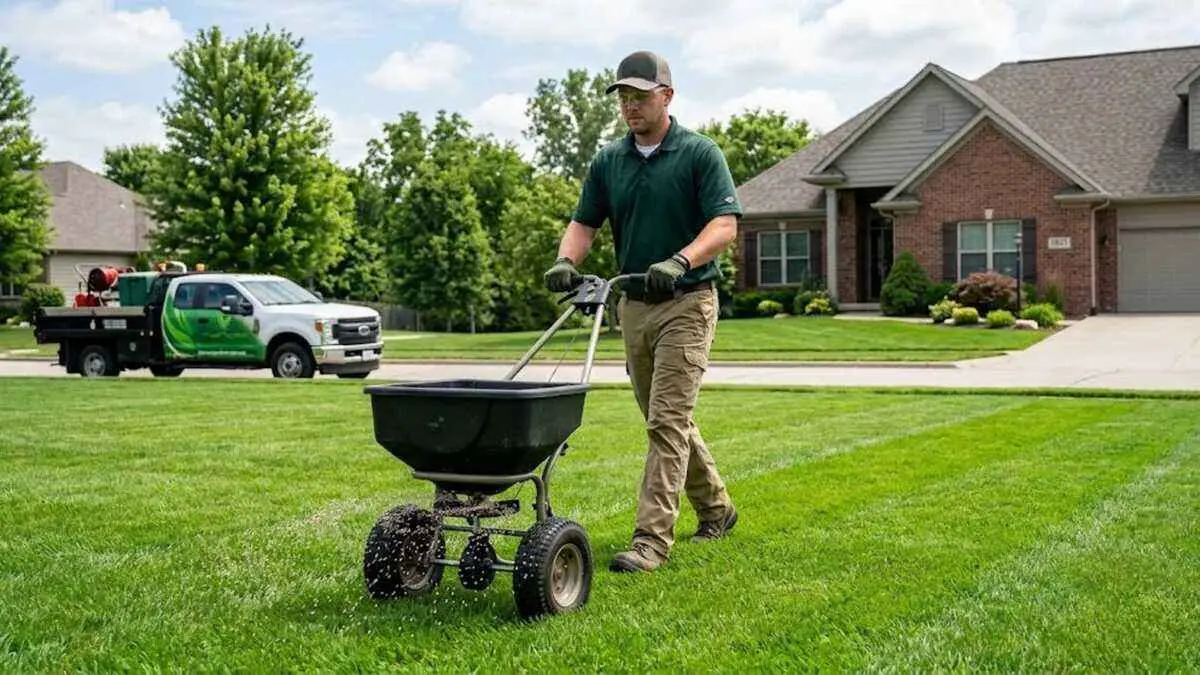
How to Fertilize Your Lawn: Beginner’s Guide
Overapplication, simply guessing what nutrients your lawn needs, and applying fertilizer at the wrong time of year are common mistakes when fertilizing your lawn for the first time. In this beginner’s guide, we’ll show you how to fertilize your lawn step by step.
Here’s the key: First, identify your grass type. Then, test your soil.
Identifying your grass type helps you determine when and how often to fertilize. A soil test reveals exactly what ratio of nutrients to use and how much to apply.
Let’s get to it.
Why Fertilize the Lawn?
Just like you need vitamins and nutrients, so do plants.
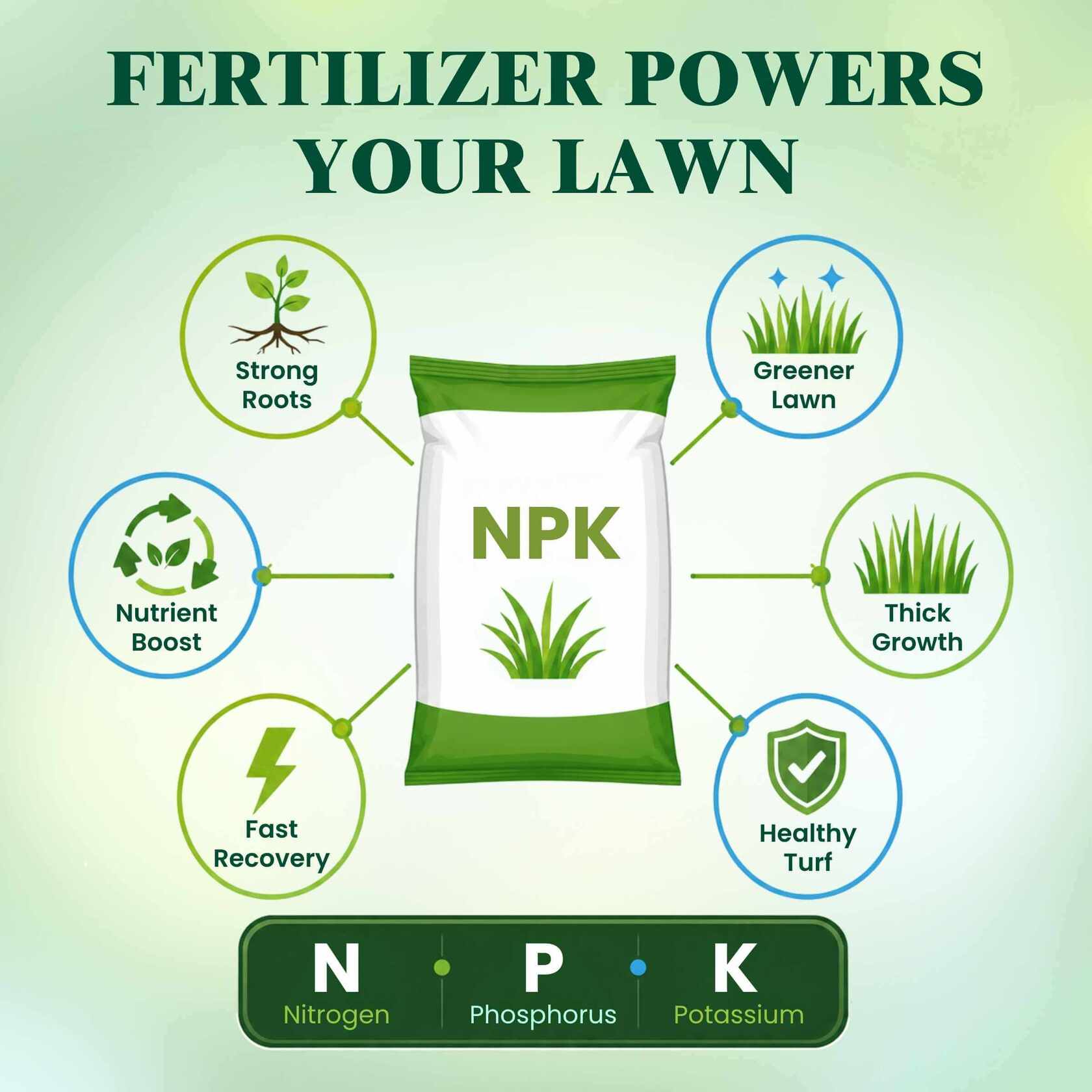
Soil provides your lawn with essential nutrients, but those nutrients deplete over time. That’s where fertilizer comes in — fertilizer provides supplemental nutrients to the soil so that your lawn can:
Develop a deep, drought-resistant root system.
Grow a thick grass canopy that crowds out weeds.
Tolerate minimal damage from pests and disease.
Recover faster from damage, wear, or injury.
Enhance its green color through photosynthesis.
Replace nutrients lost to leaching or grass clipping removal.
What Is In Fertilizer?
The three primary nutrients that the lawn needs are nitrogen (N), phosphorus (P), and potassium (K). It needs other nutrients as well, such as iron and magnesium, but in very small amounts.
These nutrients are usually displayed on fertilizer packages as a three numbered ratio known as the NPK ratio. For example, a fertilizer package with an NPK ratio of 25-0-5 contains 25% nitrogen, 0% phosphorus, and 5% potassium.
When to Fertilize Your Lawn
The best time to fertilize your lawn is when it’s actively growing. Your lawn’s growing season depends on many factors, including your region's climate and whether the lawn’s grass is a cool-season or warm-season variety.
Timing TIp: Avoid applying a heavy nitrogen fertilizer 4 to 6 weeks after overseeding. Nitrogen may cause the existing grass to outcompete the young seedlings.
When to Fertilize Cool-Season Grass
The best time to fertilize cool-season grass is in early to mid-spring and fall when the grass is actively growing. In spring, only fertilize after the grass has greened up and the threat of frost has passed. In summer, cool-season grass slows considerably and should not be fertilized.
When to Fertilize Warm-Season Grass
The best time to fertilize warm-season grass is in mid- to late spring through summer when it’s actively growing. In spring, only fertilize after the grass has greened up and the threat of frost has passed.
Before You Fertilize Your Lawn
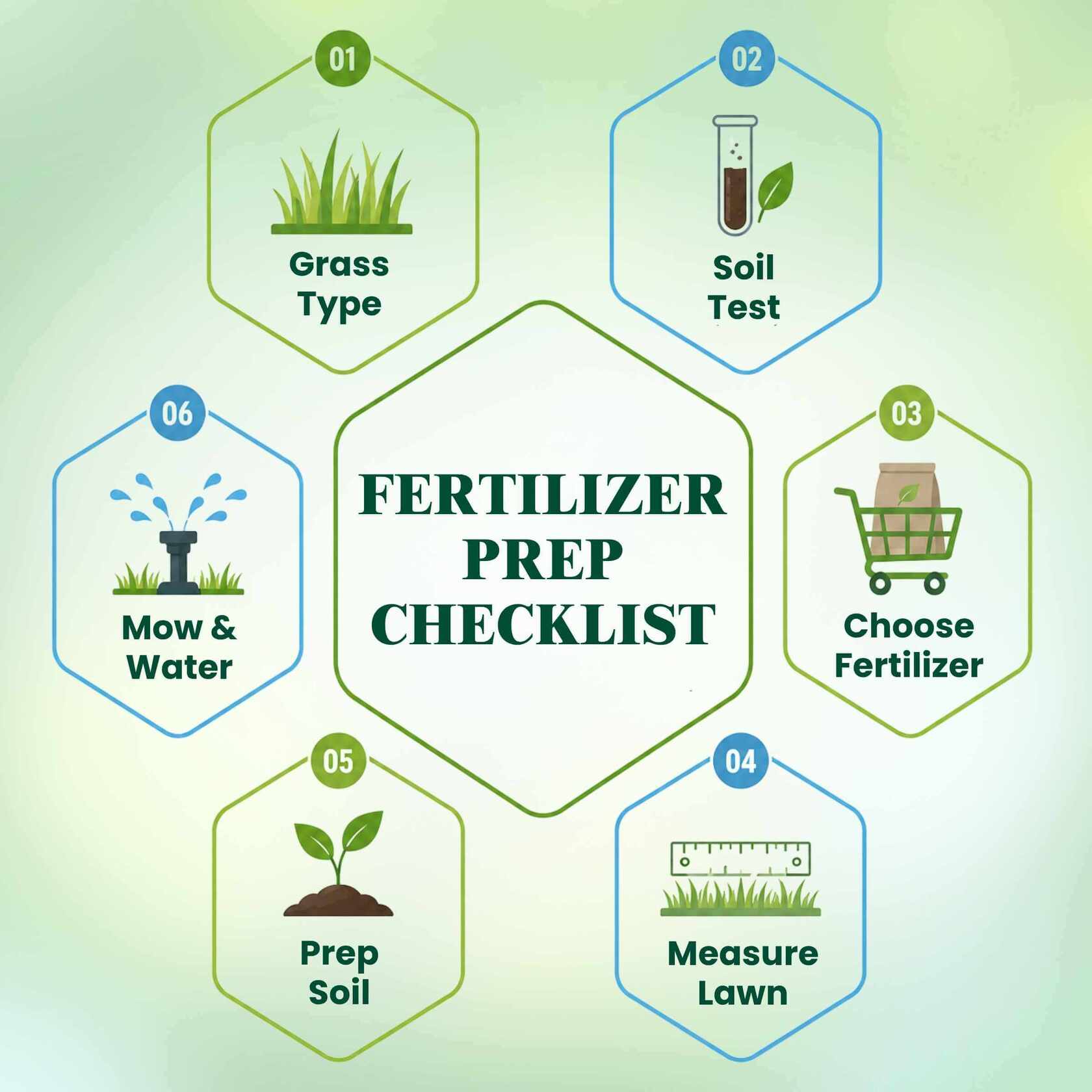
Step 1: Identify Grass Type
Identifying the lawn’s grass type can help you determine when, how much, and how often to fertilize.
Why? Because different grass types require different amounts of fertilizer.
For example, bahiagrass home lawns typically need 1 to 2 pounds of nitrogen per 1,000 square feet per year, while tall fescue lawns benefit from nearly twice as much nitrogen per year. These amounts are usually split over several applications throughout the year and not applied all at once.
Step 2: Test Soil
When you simply guess what fertilizer your lawn needs, you risk applying the wrong nutrients at the wrong rates.
To ensure your lawn receives just the right balance of nutrients, send a soil sample to your local cooperative extension for laboratory testing. In 1 to 2 weeks, you’ll receive detailed instructions on what NPK ratio to use, at what rate to apply the fertilizer, and how often to apply.
Step 3: Choose Lawn Fertilizer
Once you’ve identified your grass type and the NPK ratio it needs, you need to decide what fertilizer to purchase.
While there are many options on the market, the main difference lies between granular fertilizer and liquid fertilizer.
Granular fertilizers typically release nutrients slowly over a long period, and are applied via a broadcast or drop spreader. Granular fertilizers are ideal for established lawns that need a steady, consistent supply of nutrients throughout the growing seasons.
Liquid fertilizers are often fast-release formulas, meaning nutrients are immediately available for the grass to absorb. This makes them a good choice for lawns that need a quick recovery or swift green-up before a special event. They're typically applied with a hose-end attachment or garden pump sprayer.
Step 4: Measure Your Lawn’s Size
In order to determine how much fertilizer to buy, you’ll need to measure your lawn’s size. Fertilizer is usually sold by the amount necessary to cover a certain square footage.
For example, a bag of granular fertilizer may list that it covers 10,000 square feet, while a bottle of liquid fertilizer may only cover 2,000 square feet.
To determine the size of the areas you want to fertilize, multiply each area’s length by its width in feet, and then add the amounts together to receive the total square footage.
For example, your calculations may look something like this:
Front Yard: 50 feet (length) x 25 feet (width) = 1,250 square feet
Back Yard: 75 feet (length) x 50 feet (width) = 3,750 square feet
Side Yard: 50 feet (length) x 15 feet (width) = 750 square feet
Total = 5,750 square feet.
Step 5: Remove Thatch, Then Aerate
Dethatching and aeration aren't required before every fertilizer application. However, it’s important to perform these occasional lawn care tasks when needed, as thick thatch and compacted soil can make it difficult for fertilizer to penetrate the soil surface.
If your lawn’s thatch layer exceeds half an inch thick, consider removing it via a dethatching rake, power rake, or verticutter. If the soil is hard and compacted, loosen the soil with a core aerator after removing thatch.
Step 6: Mow & Irrigate
Mow and water the lawn a few days before you fertilize. Avoid fertilizing immediately after mowing — the stress of mowing can make grass more vulnerable to fertilizer burn.
On the day of fertilizing, the soil should be moist (not waterlogged) and the grass blades should be dry.
How to Spread Granular Fertilizer
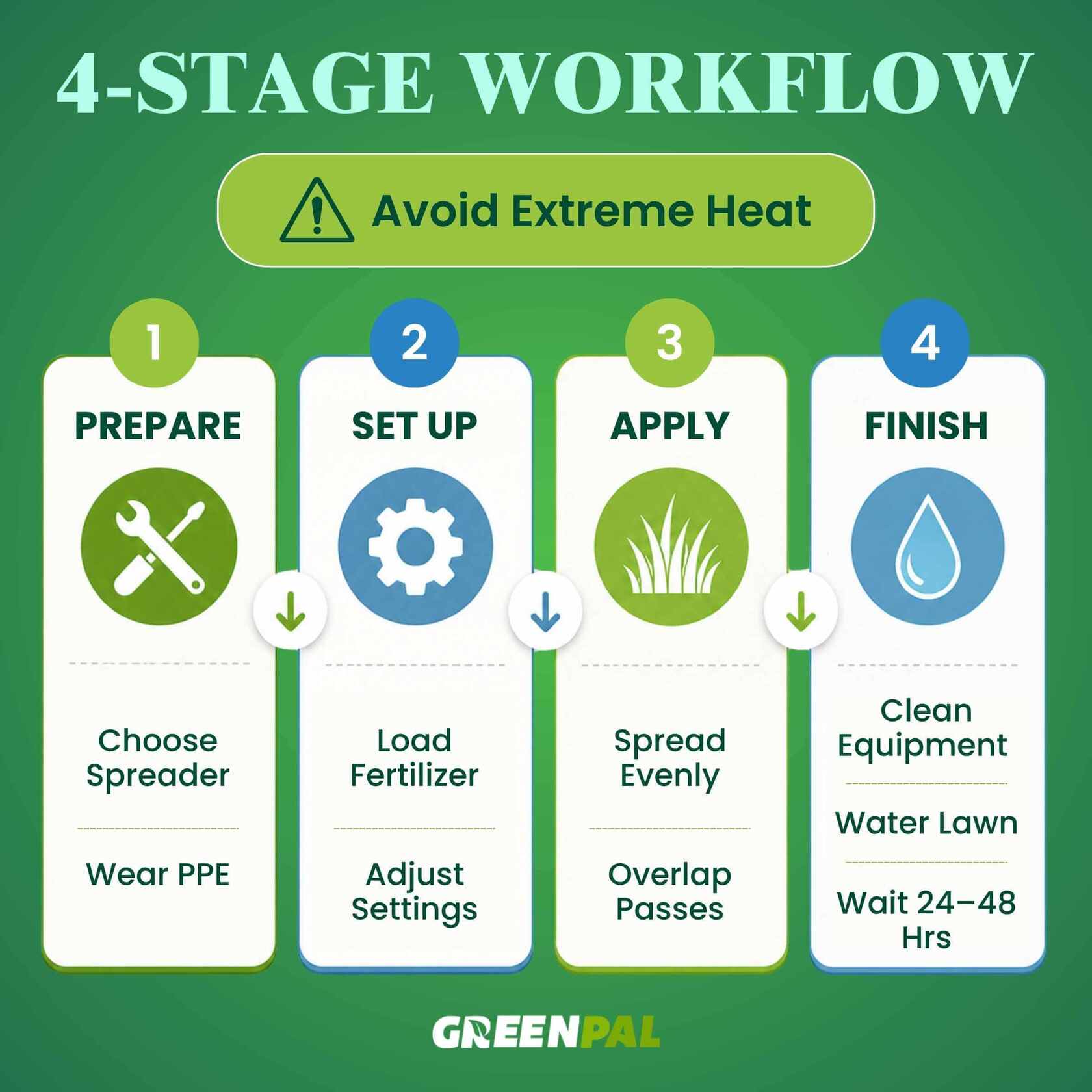
Tip: To avoid fertilizer burn, do not fertilize during extreme heat.
Step 1: Choose Your Spreader
Granular fertilizers are usually spread via drop spreaders, broadcast spreaders, or handheld spreaders. Avoid spreading granular fertilizer by hand, as this can result in an uneven application.
Drop spreaders drop the fertilizer granules directly beneath it, allowing for more precise coverage. However, this requires more frequent passes than using a broadcast spreader.
Broadcast spreaders disperse granules over a wide area, allowing you to cover large areas quickly and make fewer passes. However, the fertilizer amount tends to thin out in the outermost portions of the spreader’s path, resulting in a less precise application.
Handheld spreaders are ideal for small areas where a broadcast or drop spreader won’t fit.
Step 2: Wear Protective Gear
To minimize skin, eye, and lung exposure to dust and chemicals, wear the personal protective equipment (PPE) recommended on the product label. This includes:
Unlined, chemical-resistant gloves
Safety glasses or goggles
Long-sleeved shirt, long pants, socks, and closed-toe shoes
Dust mask
Step 3: Check & Load the Spreader
Before loading in the fertilizer, confirm all mechanical parts are working, especially the hopper door. Discovering a problem after loading means you’ll need to empty the spreader to fix it, which is a hassle you don't need.
Once the spreader checks out, load it with fertilizer and set the flow rate according to the package instructions.
Step 4: Apply the Fertilizer
Start by pushing the spreader around the lawn's perimeter. Then, work your way across the lawn in straight, slightly overlapping passes.
Maintain a steady, consistent pace.
Broadcast spreaders cast fertilizer in a wide arc, so passes can be spaced farther apart. Drop spreaders release fertilizer straight down, so passes should overlap closely, similar to how you would mow the lawn.
Tip: For the most even results, make two passes in a crisscross pattern. If your first pass ran north to south, run the second pass east to west. When doing this, set the spreader to half the recommended flow rate for each pass, so you don't end up applying double the fertilizer.
Step 5: Clean Perimeter
If you used a broadcast spreader, fertilizer granules likely landed on the sidewalk, driveway, or patio as you passed the perimeter. Sweep or blow these granules back onto the yard, or use a shop vacuum to collect them.
Step 6: Clean Equipment
Once you've finished applying, rinse down your spreader thoroughly. Fertilizer residue is corrosive and can damage metal parts over time, eventually leading to uneven distribution or equipment failure.
Step 7: Water the Lawn
Water the lawn immediately after applying granular fertilizer. This helps to dissolve the granules, move nutrients into the soil, and prevent fertilizer burn.
Step 8: Wait to Mow
Wait 24 to 48 hours before mowing the lawn. This allows the nutrients time to settle into the soil without being disrupted by the lawn mower.
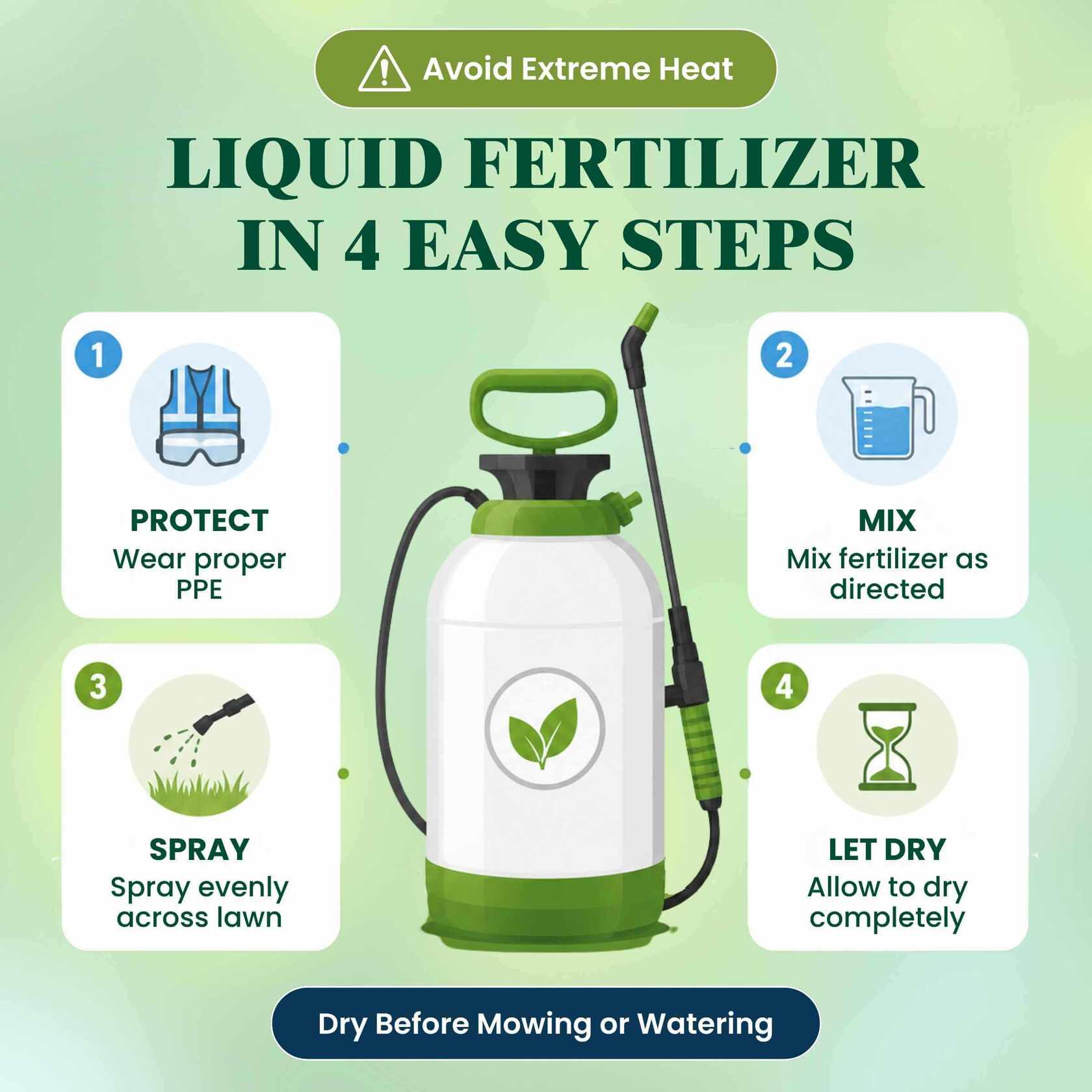
How to Spread Liquid Fertilizer
Tip: To avoid fertilizer burn, do not fertilize during extreme heat.
Step 1: Wear Protective Gear
To minimize skin, eye, and lung exposure to chemical splashes and mist, wear the personal protective equipment (PPE) recommended on the product label. This includes:
Unlined, chemical-resistant gloves
Chemical splash goggles
Long-sleeved shirt, long pants, and socks
Closed-toe, chemical-resistant boots
Chemical-resistant apron
Step 2: Dilute the Fertilizer
If you are using a garden pump sprayer, you may need to dilute the fertilizer concentrate with water.
For liquid concentrates:
Read the instructions for the dilution ratio. When measuring the concentrate, do not use measuring cups used for food.
Fill the garden pump sprayer with water, then add the concentrate.
Add an indicator dye, if needed. An indicator dye allows you to spot where the liquid has been applied on the lawn.
Close the garden pump sprayer and then shake well to mix the solution.
For hose-attachments: Some liquid fertilizers come as a hose-attachment. Simply attach it to the hose and you’re ready to go. No mixing needed.
Never apply undiluted concentrate, as it will cause fertilizer burn.
Step 3: Apply the Fertilizer
Starting at the perimeter, spray the lawn in parallel passes, working your way toward the center (the same pattern you'd follow when mowing). Slightly overlap each pass to avoid gaps in coverage, and maintain a steady, consistent pace so the liquid distributes evenly.
Step 4: Wait to Mow or Irrigate
Allow the liquid fertilizer to dry on the grass blades before mowing or irrigating, which can take between 4 and 24 hours.
Frequently Asked Questions About Fertilizer
When Can Pets and Children Return to the Lawn After Fertilizing?
Always follow the product label's instructions on when it's safe to let kids and pets back onto the lawn. This is the most reliable guidance, since wait times vary by product and formulation.
As a general baseline, granular fertilizers typically require a wait of 24 hours after the fertilizer has been watered in. Liquid fertilizers generally need to dry completely before re-entry, which can take anywhere from a few hours to 24 hours depending on conditions. When in doubt, waiting longer is always the safer choice.
How Often Do I Need to Fertilize My Lawn?
How often you fertilize depends on several factors, including the lawn’s grass type, age, and pest and disease history. Whether you use slow-release or fast-release fertilizer also determines frequency.
Should I Apply Liquid or Granular Fertilizer?
It depends on what you’re trying to achieve. Granular fertilizer is ideal for established lawns that need a steady supply of nutrients throughout the growing season. Liquid fertilizer is ideal for lawns that need immediate rescuing or a swift greenup before a special event.
Find a Lawn Care Professional Near You
Fertilizer is just one of many lawn care treatments your lawn needs to remain healthy, green, and strong. A year-round lawn routine consists of aeration, routine mowing, disease and pest management, and overseeding.
When keeping up with your lawn proves burdensome, find help from someone who understands your region’s climate, common grass types, and soil conditions. GreenPal makes this easy by connecting homeowners with local lawn care professionals in various cities throughout the country, including Boise, ID, Laredo, TX, and Middletown, CT.