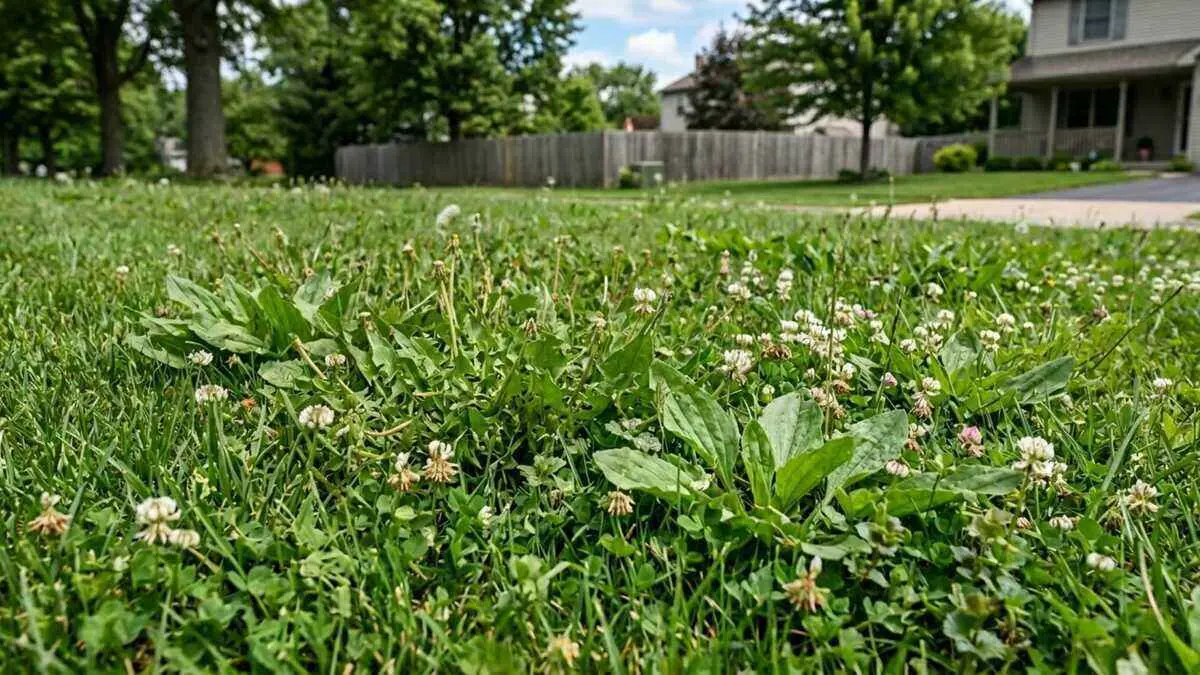
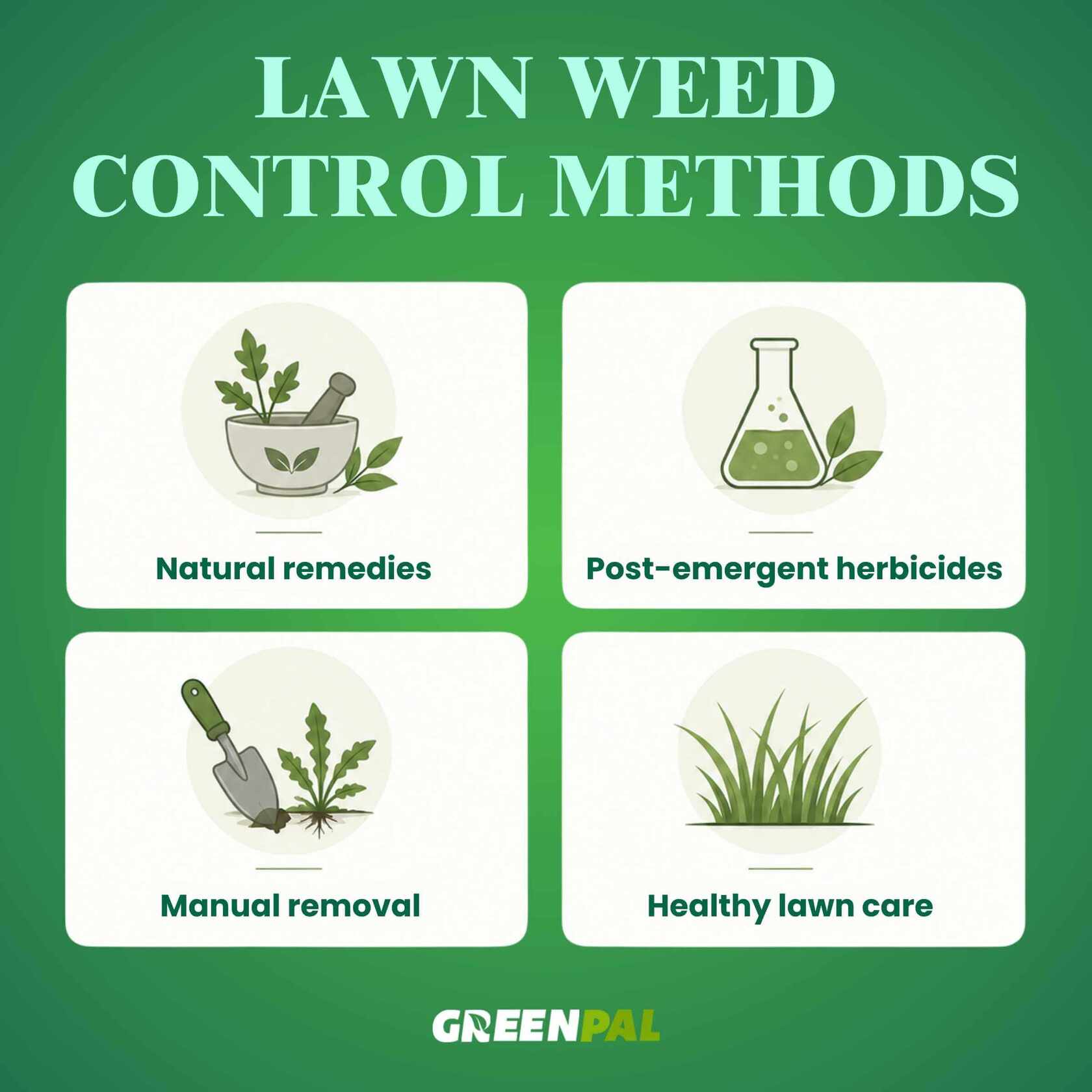
Weeds are persistent, often reappearing despite your best efforts. But with the right approach, you can win the battle. In this guide, we'll show you how to get rid of lawn weeds using a range of methods, from natural solutions to conventional herbicides.
Home remedies like boiling water and vinegar may help spot-treat problem areas with consistent use. For larger infestations or stubborn species, pairing post-emergent herbicides with a healthy lawn care routine will give you the best long-term results.
|
What this guide covers: 5 Steps to Controlling Lawn Weeds How to Kill Weeds Without Killing Grass? Do Soap and Vinegar Kill Weeds? |
5 Steps to Controlling Lawn Weeds
Step 1: Identify the Weeds
Some weeds are more stubborn than others, often requiring a plan of attack tailored to that specific weed type.
For example, not all selective herbicides that kill crabgrass will kill nutsedge. And some weeds have complicated root systems that require special weeding tools or digging instead of hand pulling.
Once you’ve identified the weed, check out the following comprehensive weed control guides:
Step 2: Choose a Control Method
You have several options when it comes to weed control methods. However, some are more effective than others.
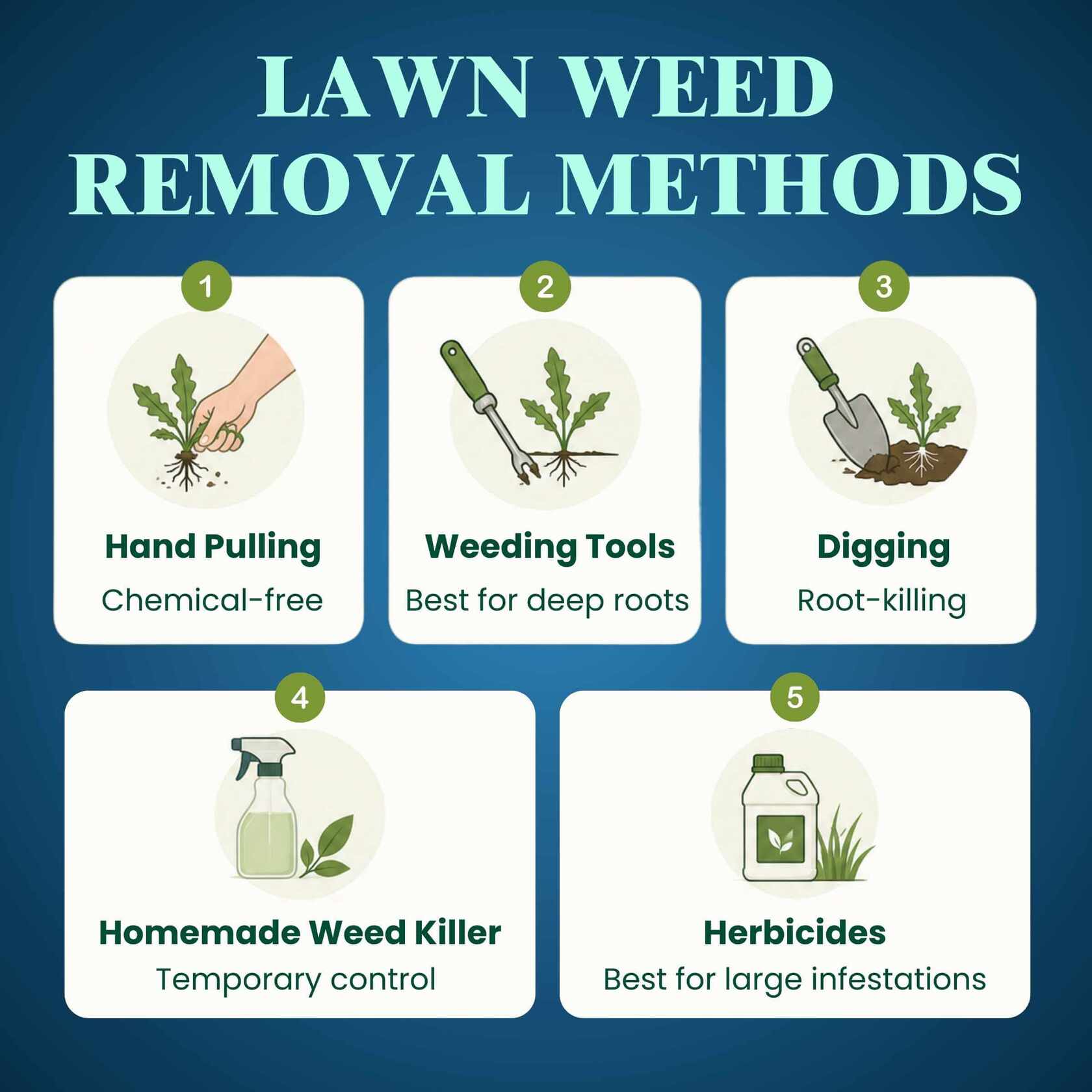
Hand pulling: A chemical-free method, repeated hand pulling is a convenient solution for small infestations. Keep in mind that some weeds may resprout when hand-pulled, such as dandelions or nutsedge.
Weeding tools: Many long-handled weeders are designed to remove weeds with deep taproots, such as dandelions.
Digging: When manually removing weeds, digging is necessary for weeds with vast root systems prone to resprouting, like nutsedge.
Homemade weed killer: DIY methods, such as dish soap or vinegar, dehydrate and kill weeds after repeated application, however they do not kill the weed’s root system.
Synthetic herbicides: Synthetic post-emergent herbicides are an effective solution due to their ability to kill the weed’s root system and prevent regrowth.
To learn more about the different control methods, jump to Weed Control Methods
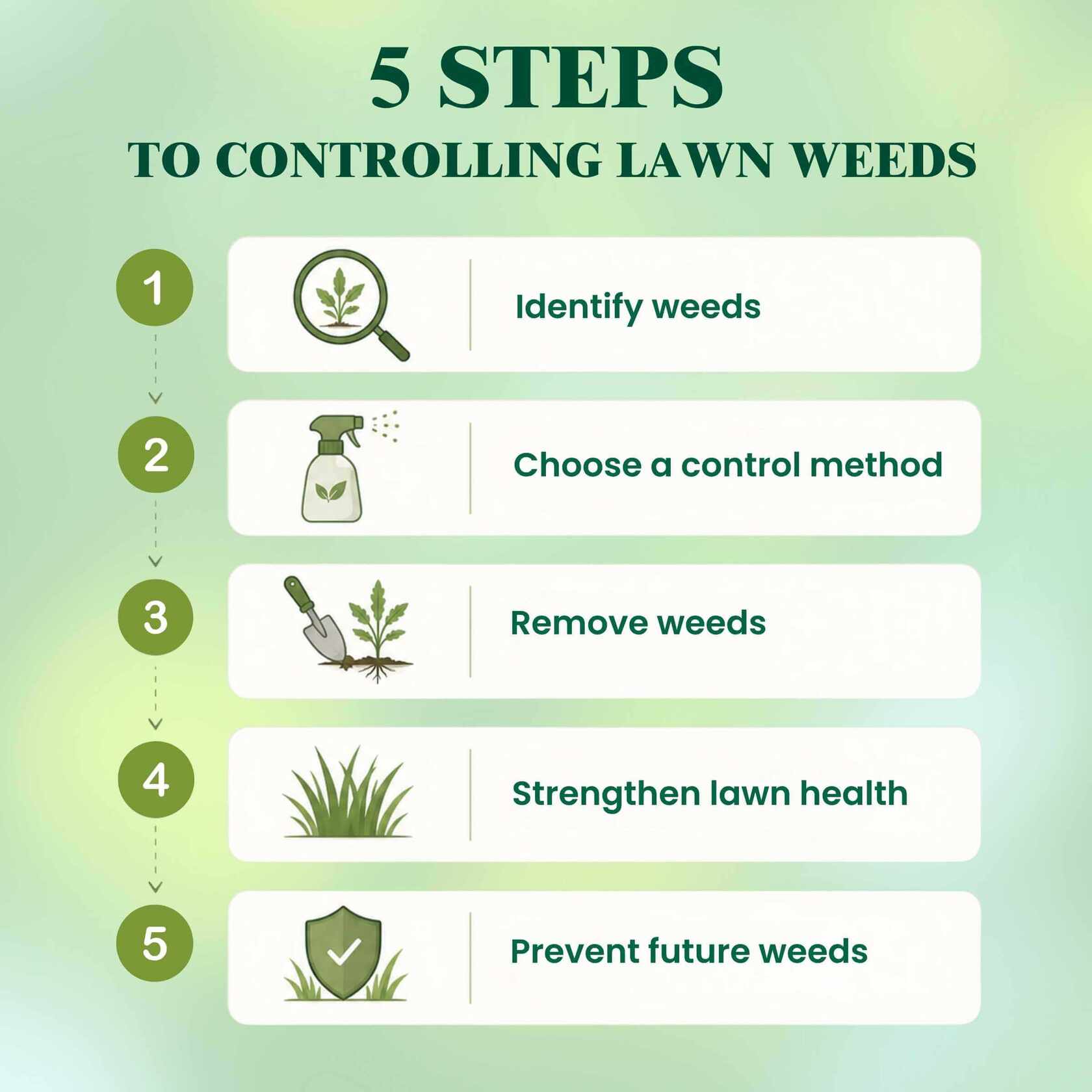
Step 3: Remove the Weeds
Once you’ve chosen your control method, it’s time to act. For best results, remove weeds when they’re young, before they’ve developed a deep root system. Waiting too long may result in the weeds spreading via seeds or roots.
If applying an herbicide product, always read the labeled application instructions to ensure the safety of yourself, pets, the environment, and others.
If applying a non-selective herbicide, only treat the desired weed. Non-selective herbicides kill any plant they come in contact with, including your turfgrass. Apply non-selective herbicides on a day with no wind to ensure the chemicals don’t reach desired plants.
Step 4: Practice Proper Lawn Care
A healthy, vigorous lawn crowds out weeds by blocking the sunlight and space that weeds need to grow. After treating the weeds, practice proper lawn care to help prevent weeds from coming back.
Visit the following lawn care guides to learn about the various ways you can achieve a healthy, thick lawn:
Weeds like crabgrass and dandelions tolerate compacted soil much better than turfgrass. If you live in an area with clay soil prone to compaction, such as St. Louis or Riverside, including professional aeration services in your lawn care routine is an excellent way to relieve soil and boost dense grass growth.
Step 5: Apply Pre-Emergent Herbicide
If your lawn has a history of serious weed invasions and is still establishing, apply a pre-emergent herbicide to prevent the next generation of weeds.
To prevent summer weeds, like crabgrass and nutsedge, apply pre-emergent herbicide in spring when soil temperatures are consistently between 50 and 55°F.
To prevent winter weeds, like dandelions, apply pre-emergent herbicide in fall when soil temperatures begin dropping and approach 70°F.
Learn More: When to Apply Pre-Emergent Herbicide
Tip: Pre-emergent herbicides can prevent grass seed from sprouting, so avoid overseeding at the same time. Check the product label for guidance on when it is safe to overseed.
Weed Control Methods
Hand Pulling
Hand pulling is a chemical-free, budget-friendly option for tackling small weed infestations. For best results, remove the entire weed along with its root system. Though this is easier said than done with certain species.
Nutsedge, for example, produces small underground tubers, called nutlets, that actually sprout new growth when disturbed. That said, repeated hand pulling can eventually bring it under control by forcing the tuber to burn through its energy reserves each time it regrows a new plant.
Weeding Tools
Long-handled weeding tools are a good alternative to hand pulling when controlling weeds with deep taproots, such as dandelions.
Deep taproots are notoriously difficult to fully extract by hand. Even a small fragment left in the soil can regenerate into a new plant. These weed tools penetrate deeply into the soil, grab onto the taproot, and pry it out of the ground.
Digging
For weeds with vast root systems that spread when disturbed, such as nutsedge, digging is an effective chemical-free approach.
For nutsedge, dig at least 8 to 14 inches deep and 8 to 10 inches beyond the infested area to remove the entire plant.
When refilling the hole with soil, ensure the soil is not contaminated with tubers or other weeds.
Homemade Weed Killer
DIY weed control methods — such as dish soap, boiling water, and vinegar — can dehydrate and kill weed foliage with repeated use. However, these methods only affect the parts of the plant they directly contact, leaving the underground roots intact and allowing weeds to regrow.
Note: Horticultural vinegar has a much higher acetic acid percentage than household vinegar, and is much more effective at weed control. If using horticultural vinegar (and boiling water for that matter), be extremely careful not to get it on your skin or eyes.
Synthetic Herbicides
Unlike homemade weed killers, conventional systemic herbicides travel down to the roots, killing the entire plant and preventing it from resprouting.
Herbicides include selective and non-selective herbicides:
Selective herbicides are formulated to target specific weeds, and generally do not harm other plants. Non-selective herbicides are designed to kill all plants they come in contact with, including turfgrass, so only apply the product to the weed you’re trying to get rid of.
Frequently Asked Questions
How to Kill Weeds Without Killing Grass?
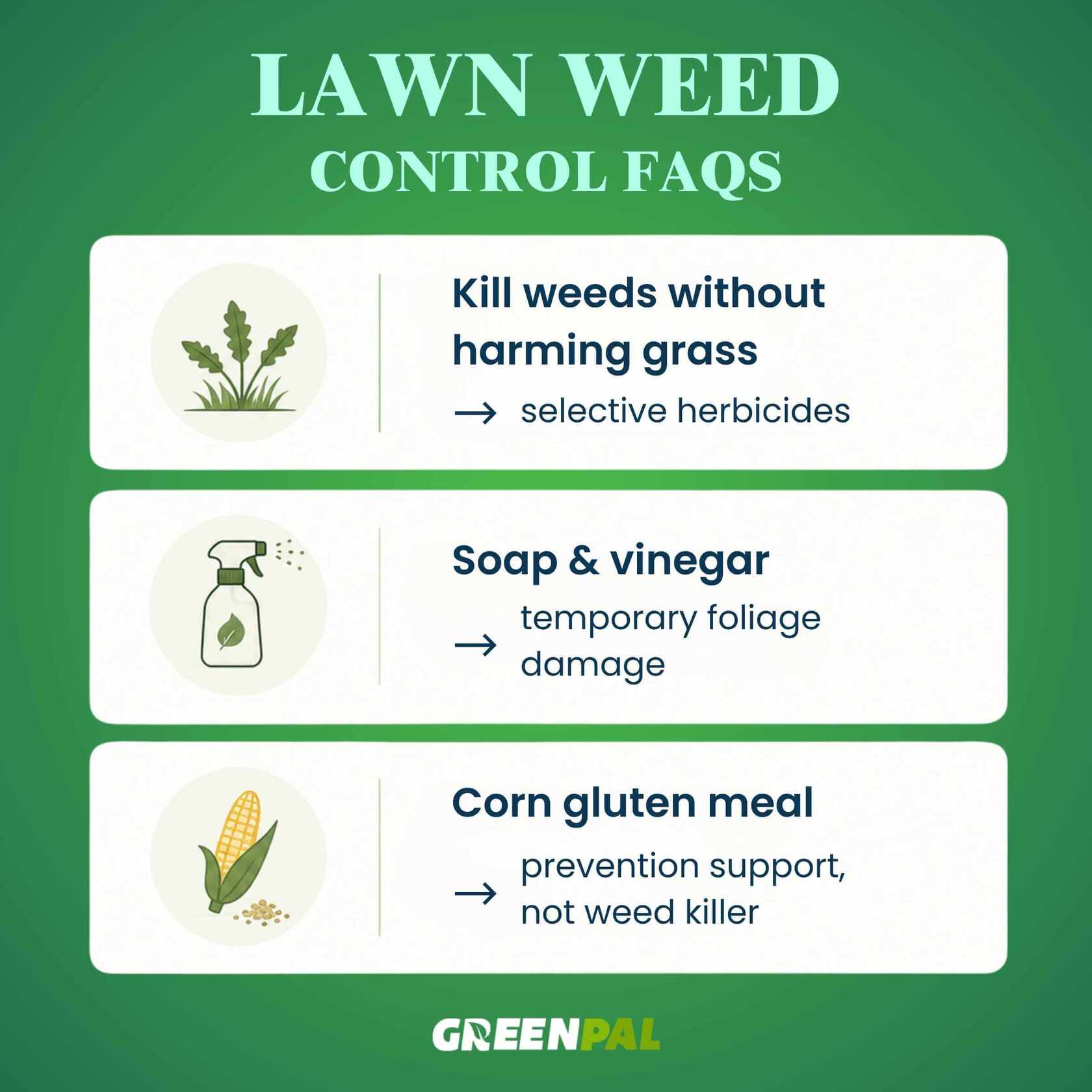
The best way to kill weeds without killing your grass is to use a selective herbicide that is formulated to kill the specific weed. If you are using a non-selective herbicide (which will kill grass), apply the herbicide directly on the weed on a day with no wind.
Do Soap and Vinegar Kill Weeds?
Homemade weed killer with ingredients like soap and vinegar (particularly horticultural vinegar) can dehydrate and kill parts of the plant they come in contact with. Since these remedies do not kill the root system, repeated application is often necessary to control regrowth.
Does Corn Gluten Meal Kill Weeds?
Corn gluten meal does not kill existing weeds, but it may help prevent weeds.
However, according to the University of Maine Cooperative Extension, research on the effectiveness of corn gluten meal as a preventative herbicide is inconclusive, and some studies have found it does not work well against crabgrass.
Corn gluten meal acts more as an organic fertilizer that promotes thick grass growth to suppress weeds. The extension also notes that applying corn gluten at the rate required for weed suppression — 20 pounds per 1,000 square feet — adds approximately 2 pounds of nitrogen to the lawn, which may exceed local fertilizer regulations and contribute to water contamination.
Fight Weeds With a Lawn Care Pro
Weeds are difficult to control given their vast root systems and efficient seed spreading. The best way to keep weeds at bay is to practice a proper lawn care routine that promotes turf health and density. When weeds keep returning despite your best efforts, consider hiring a local lawn care professional who can give your lawn the attention it needs.