How to Treat Brown Patch Disease in the Lawn
Brown patch disease is a fungus that commonly infects cool-season lawns. Its symptoms are, well… in the name.
We’ll show you how to treat brown patch disease in the lawn so your yard can get back to normal. The key is to minimize prolonged leaf wetness and practice proper lawn care. Fungicides can be used on a preventative or curative basis, but should be a last resort.
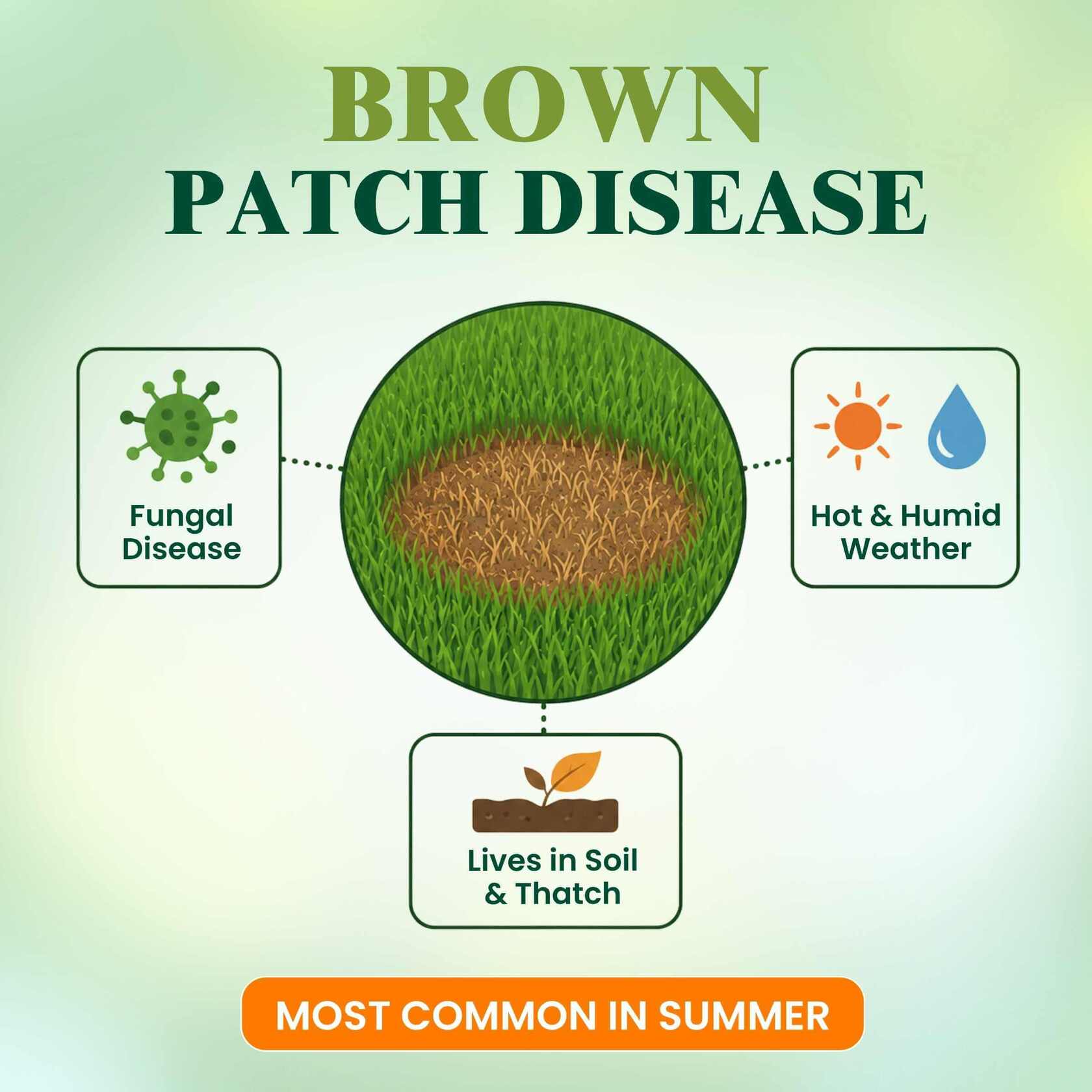
Brown patch is a lawn disease caused by a strain of the fungus Rhizoctonia solani. Symptoms peak in midsummer during long periods of hot weather, humidity, and leaf wetness. It can survive for years in soil, thatch, and infected plant debris even when no susceptible turfgrasses are present.
Grass Types Commonly Affected By Brown Patch
Brown patch fungus primarily affects cool-season grasses. The most susceptible grasses are:
Tall fescue
Bentgrass
Perennial ryegrass
Brown patch is often confused with large patch disease, which is actually caused by a different strain of Rhizoctonia solani, affects warm-season grasses, and occurs at different times of the year.
Symptoms of Brown Patch
Brown patch may appear from late spring through summer, with symptoms typically peaking in midsummer when conditions are hot and humid.
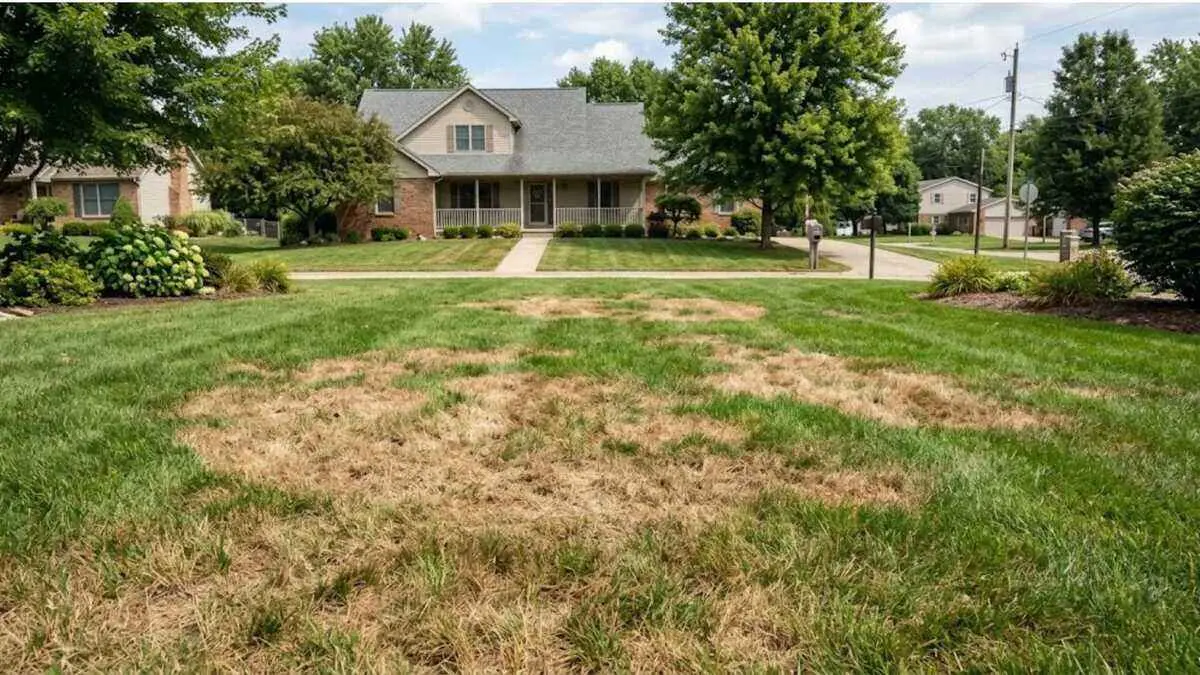
Circular patches: On high-cut lawns, brown patch symptoms usually appear as light brown, circular patches of grass ranging from a few inches to several feet in diameter.
Web-like growth: White, web-like mycelium may be visible on dew-covered grass blades in the early morning.
Discolored lesions: Symptoms may appear on tall fescue as irregular tan or brown lesions on individual grass blades.
What Causes Brown Patch?
Brown patch disease develops in midsummer when nighttime temperatures exceed 60°F and daytime temperatures average 80°F or above.
Rainy weather, heat, and high humidity accelerate the disease’s development.
Lawns that are maintained with high amounts of nitrogen are more susceptible to the fungus than lawns fertilized with moderate nitrogen amounts.
Turfgrass that remains wet for long periods is also highly susceptible to disease. Factors that can contribute to these prolonged moist conditions include:
Poor drainage
Thick thatch
Poor air circulation
Overwatering
Watering in the evening
Shade
How to Control Brown Patch Disease
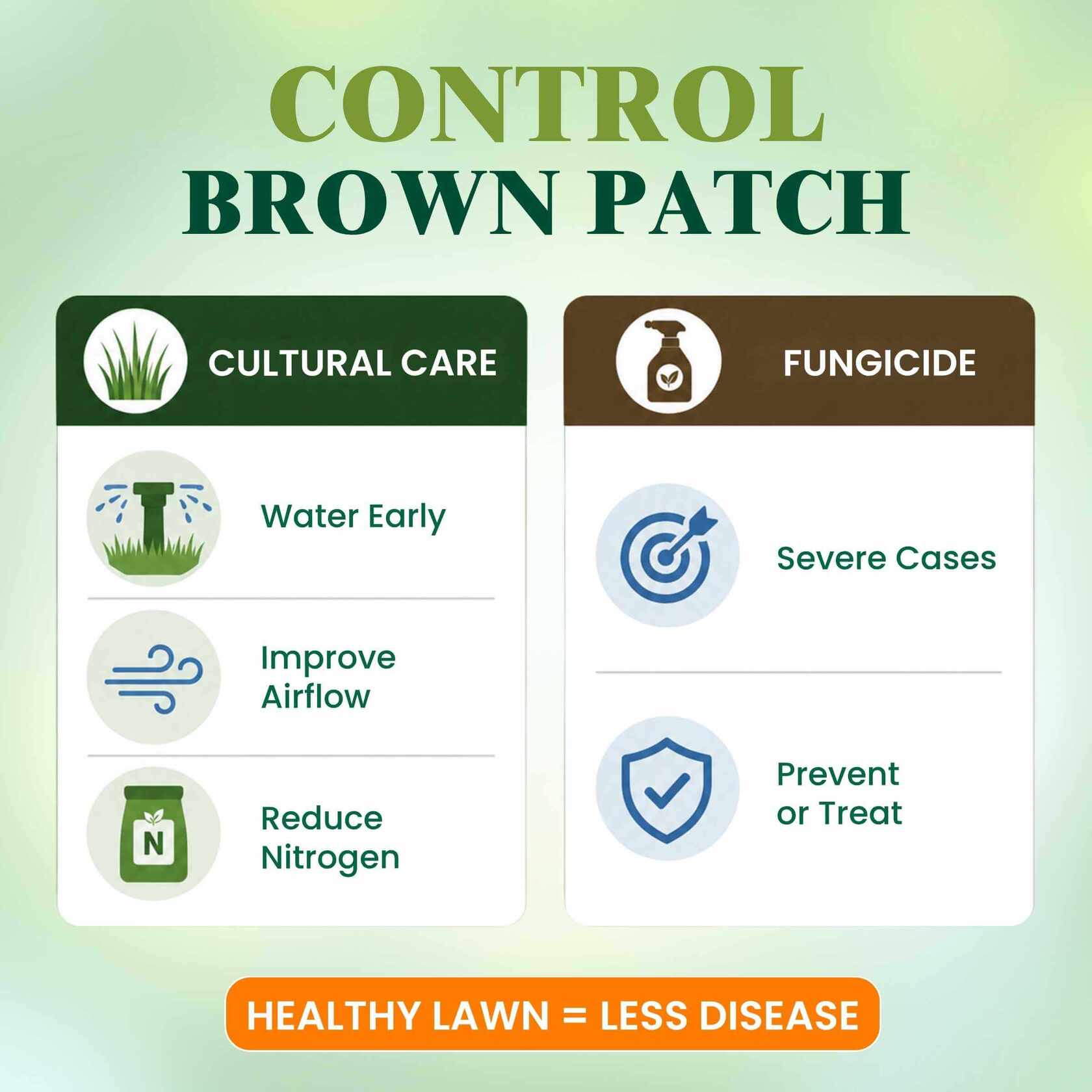
Brown patch disease can be prevented and treated by cultural control and, when necessary, fungicides. Fungicides should be reserved for severe cases or when the lawn has a known history of the disease.
Cultural Control
Brown patch develops in lawns that are fertilized with high amounts of nitrogen and have prolonged leaf wetness. By adjusting your lawn care routine, you can help make your lawn less favorable to the disease. Here’s how:
Reduce nitrogen fertilizer to moderate or light amounts.
Remove thatch that exceeds one-half inch thick. Thick thatch prevents air circulation and slows evaporation.
Aerate the soil to relieve compaction and improve drainage.
Do not overwater. Check out our watering guide for irrigation tips.
Water in the early mornings. Watering in the late afternoon or evening does not allow enough time for excess moisture to evaporate. As a result, the lawn remains wet overnight.
Avoid mowing wet grass. Wet grass blades tear rather than cut cleanly, and torn tissue heals more slowly than a clean cut. This leaves the grass vulnerable to moisture loss and fungal infection.
-
Reseed or overseed with turf species or cultivars that are more resistant to the disease. Kentucky bluegrass and the fine fescues are less likely to develop symptoms. Tall fescue, bentgrasses, and perennial ryegrass are the most susceptible, but brown patch tolerant cultivars are available.
( GreenPal Marketplace )Get 5 free bids from local lawn prosTop-rated pros near you send real quotes in minutes — no contracts, no haggling.Get My Free BidsNo credit card required. Get matched in 60 seconds. Plant shade-tolerant turfgrass species in shaded areas, such as hard fescue, chewings fescue, or strong creeping red fescue. Grasses that struggle in shade become thin and stressed, making them more vulnerable to infection.
Chemical Control
Fungicides can be applied to prevent or treat brown patch disease in lawns. Pair fungicides with cultural control for best results.
Treatment: Apply curative fungicide immediately after symptoms appear, especially if prolonged heat and humidity are expected.
Prevention: Apply preventative fungicide in late spring or early summer when nighttime temperatures consistently exceed 60°F.
How to Repair Lawn Damage
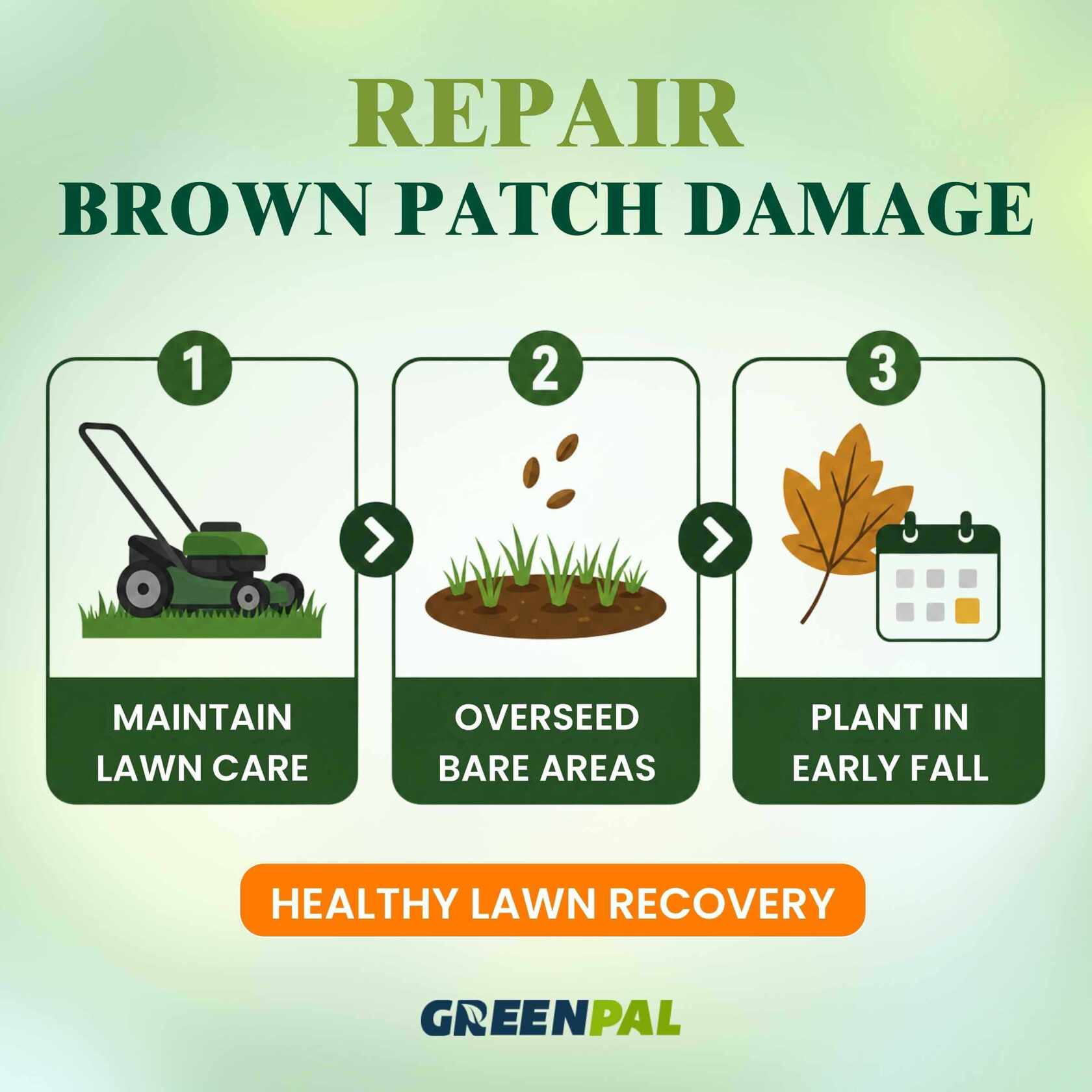
To help your lawn heal from brown patch damage, continue to practice proper lawn care techniques.
Reseed or overseed damaged areas with turf species or cultivars that are more resistant to the disease. For most cool-season grasses, the best time to plant new grass seed is in early fall.
Turn to the Lawn Care Pros
Proper lawn maintenance is the best way to minimize conditions that favor brown patch disease. Control measures include mowing the lawn properly, improving drainage via lawn aeration, and watering in the early morning instead of at night.
Homeowners in the transition zone — such as Raleigh, NC or St. Louis, MO — may find themselves working overtime to keep heat and high humidity from encouraging brown patch. Consider hiring a local lawn care professional who can ease the burden by handling the mowing, aeration, and other cultural control measures for you.