
What Do NPK Numbers Mean on Lawn Fertilizer?
If you've ever picked up a bag of fertilizer, you've probably noticed three numbers printed on the front. Those numbers make up the NPK ratio, and understanding what they mean can help you choose the right fertilizer for your lawn.
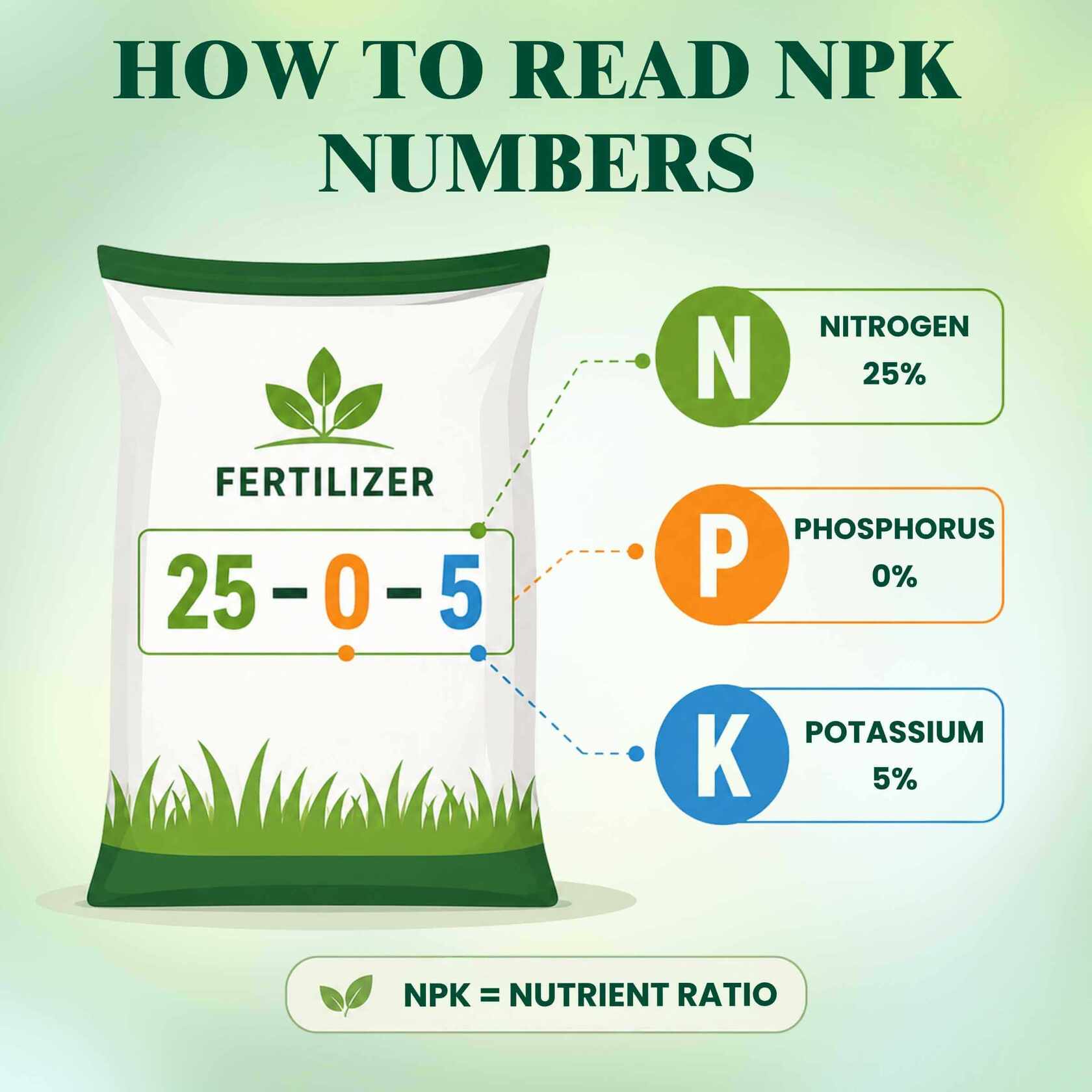
What Does NPK Mean on Fertilizer?
NPK stands for nitrogen (N), phosphorus (P), and potassium (K). You may recognize these symbols from the periodic table that hung in your high school classroom.
How to Read NPK Numbers on Fertilizer
The NPK ratio shows the percentage by weight of each nutrient in the bag. A fertilizer labeled 25-0-5, for example, contains 25% nitrogen, 0% phosphorus, and 5% potassium.
Why Are Nitrogen, Phosphorus, and Potassium Important?
Nitrogen, phosphorus, and potassium are the three nutrients your lawn needs in the greatest amounts.
Nitrogen
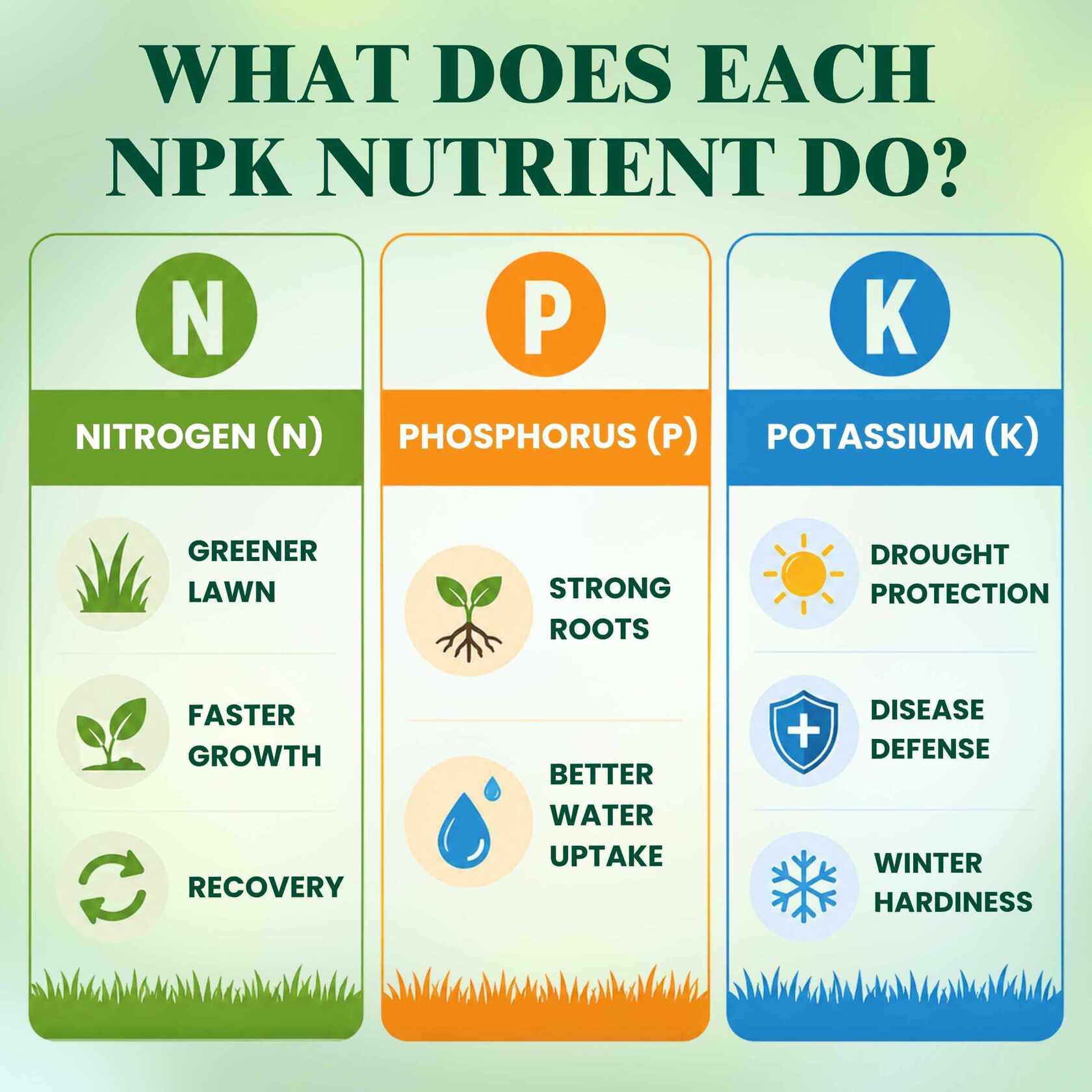
Nitrogen is the element your lawn needs the most of. Here’s what it does:
Deepens green color: Nitrogen is critical for chlorophyll production, the pigment that drives photosynthesis and gives grass its green color.
Increases growth: Promotes new leaf and shoot growth, helping to thicken the lawn and crowd out weeds.
Aids in recovery: Helps the grass heal from stresses such as pests, disease, foot traffic, mowing, and heat.
Phosphorus
Phosphorus is necessary for deep root growth, which allows the lawn to develop a greater tolerance of stress and absorb water more efficiently.
Potassium
Commonly referred to as potash, potassium regulates:
Drought tolerance: Potassium manages water use by controlling the opening and closing of the tiny pores on grass blades known as stomata. This allows the grass to retain moisture during periods of drought and extreme heat.
Disease resistance: Potassium thickens cell walls, making it more difficult for fungal pathogens to penetrate the leaf blade.
Winter hardiness: Potassium prepares the lawn for winter by boosting root growth and minimizing winter injury.
Other Nutrients Your Lawn Needs
Turfgrass requires several essential nutrients, all of which play an important role in the lawn’s health. A deficiency in any nutrient can impact the lawn’s growth, even if only a small amount of that nutrient is needed.
These nutrients are made up of macronutrients and micronutrients. Here’s a breakdown:
Macronutrients
Nitrogen, phosphorus, and potassium are the macronutrients needed in the largest amounts. They’re known as the primary nutrients, and they’re applied to the lawn most frequently.
The secondary nutrients include calcium, magnesium, and sulfur, which are needed only occasionally via fertilizer or agricultural lime.
Macronutrients also include hydrogen, carbon, and oxygen. They are not provided to the lawn via fertilizer, but are derived from carbon dioxide and water.
Here’s a list of macronutrients:
Calcium
Carbon
Hydrogen
Magnesium
Nitrogen
Oxygen
Phosphorus
Potassium
Sulfur
Micronutrients
The remaining nutrients are known as micronutrients. Although they are required in much smaller amounts than macronutrients, they are still essential for the lawn’s health.
Most micronutrients are rarely applied via fertilizer. Here’s a complete list:
Boron
Chlorine
Copper
Iron
Manganese
Molybdenum
Nickel
Zinc
The Risks of Choosing the Wrong NPK Ratio
Before grabbing a fertilizer off the shelf, make sure the NPK ratio matches what your lawn actually needs. Choosing the wrong one can:
Create or worsen nutrient deficiencies.
Add excess nutrients your lawn can't use, contributing to polluted runoff in local waterways.
Cause fertilizer burn from high nitrogen concentrations.
What NPK Ratio Does Your Lawn Need?
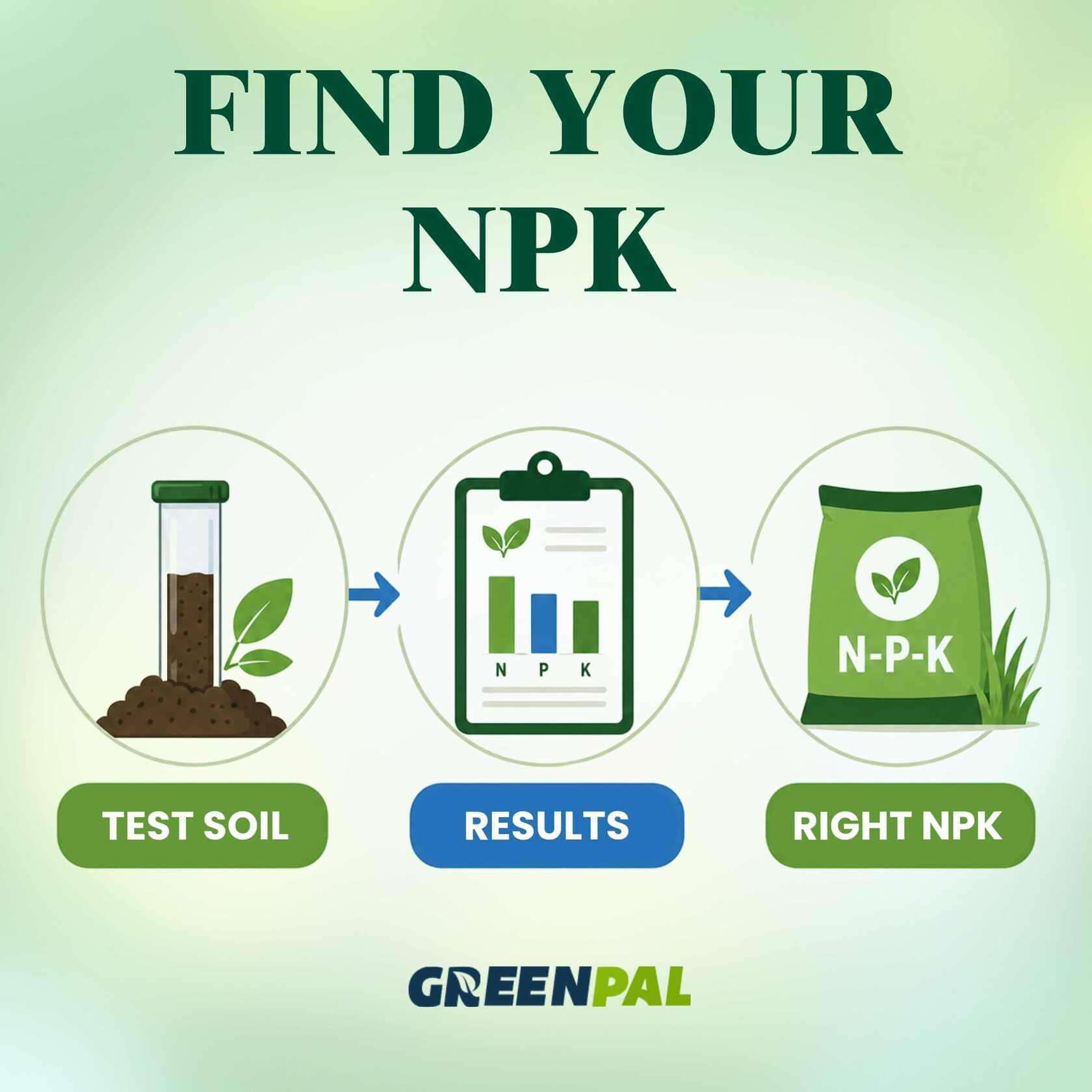
Testing your soil is the best way to determine what NPK ratio your lawn needs. A soil test also reveals nutrient deficiencies, the soil’s ph level, and how to correct various imbalances.
Send a soil sample to your local cooperative extension for laboratory testing to receive detailed instructions on how to fertilize and amend your soil.
The results of a soil test explain the best NPK ratio for your lawn’s turf and soil type, how often to apply the fertilizer and at what rate, and when to fertilize.
Learn More:
Find a Local Lawn Care Pro
Just as you choose an NPK ratio based on your lawn's specific needs, other lawn care practices vary too. Grass type affects ideal mowing height, and soil composition determines how often you should aerate — two tasks a local lawn care pro can handle for you.
GreenPal makes it easy for homeowners to find trusted lawn care professionals in cities across the country, including Huntsville, AL, Wichita, KS, and Los Angeles, CA.