


GreenPal vs Thumbtack for Lawn Care: What Homeowners Should Know in 2026
If you're deciding between GreenPal and Thumbtack to get your lawn mowed, here's the short version. Both are legitimate ways to find help, but they're built on different business models, and that difference is what shapes your experience as a homeowner. Thumbtack is a general home-services marketplace that works well for big, custom projects a pro has to see in person before quoting. GreenPal is a lawn-care-only platform where local pros bid on your actual job using satellite images of your yard, so you compare quotes on your own time without a single phone call. For recurring mowing, that lawn-specific model removes cost and hassle that don't need to be there.
We're a bit biased, since connecting homeowners with lawn pros is all we do. GreenPal has been running since 2012, we serve over 1 million homeowners across all 50 states, and our founders came out of the lawn care industry themselves before building the platform. So instead of talking you into anything, we'll lay out how each option actually works and let the details make the case. If you want a wider view of every option in this category, we compare the full field in our guide to the best lawn care apps for homeowners.
GreenPal vs Thumbtack at a Glance
What you care about |
Thumbtack |
GreenPal |
How you get matched |
You submit a request, then several pros who paid for your contact info reach out to you |
Local lawn pros bid on your specific job; you compare quotes when it suits you |
Cost to use |
Free for homeowners |
Free for homeowners |
How pricing gets set |
Pros quote after contacting you, often after an in-person visit |
Lawn pros bid using a satellite measurement of your yard, priced upfront |
Day-of-service contact |
Expect calls and texts from multiple pros; you coordinate estimates |
No calls needed; once you pick a pro, service can happen while you're away |
Provider vetting |
Optional background checks through Checkr; you verify licensing and insurance yourself |
Equipment check, customer references, business credit check, identity and banking verification |
Reviews |
Open marketplace reviews |
Only from verified, paid GreenPal jobs |
If something goes wrong |
Thumbtack Guarantee covers property damage and incomplete work, with conditions |
The lawn company sends photo proof, and you pay only after you approve the finished work |
How Thumbtack and GreenPal Make Money, and Why It Affects Your Price
Almost everything you'll notice as a homeowner comes down to how each platform makes money.
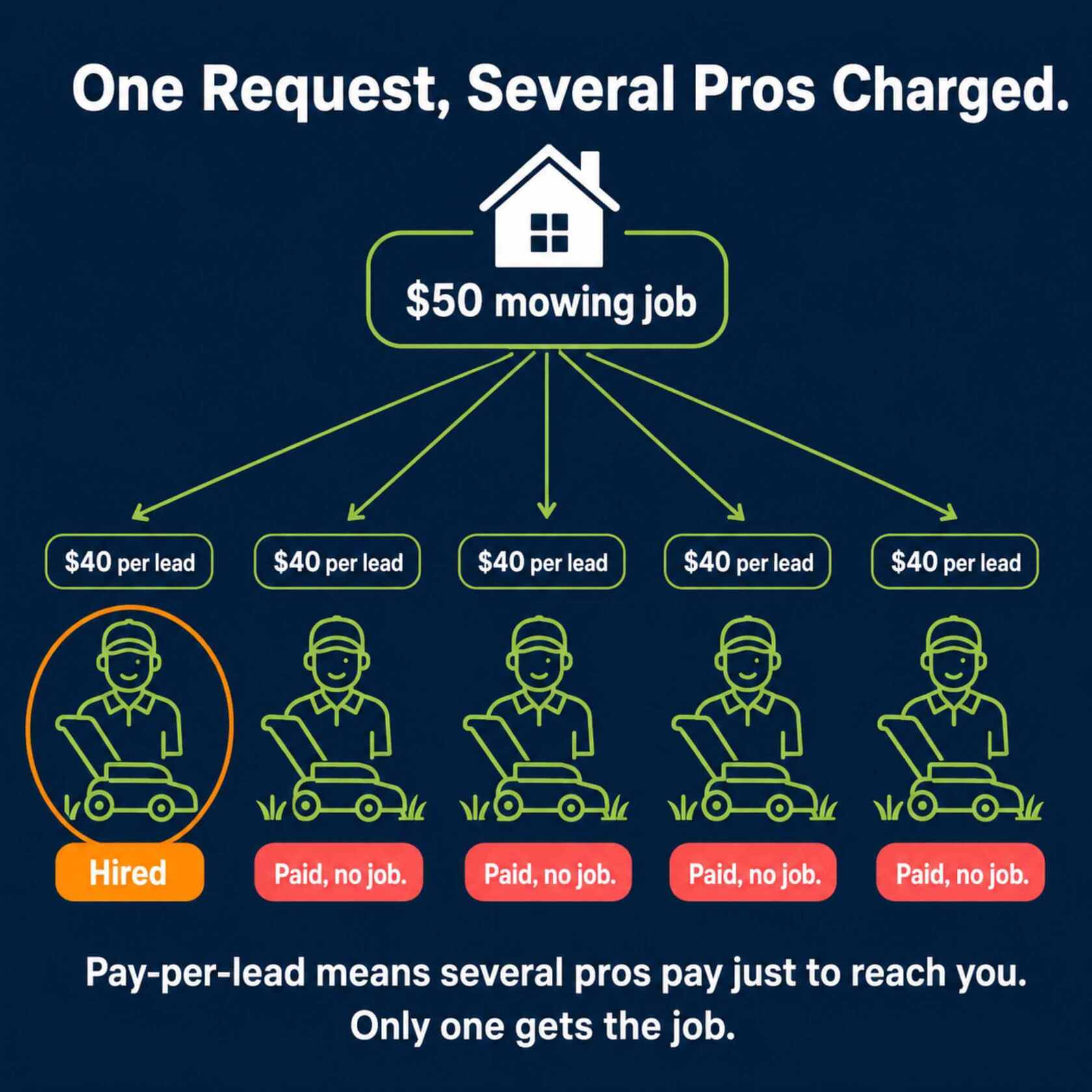
Thumbtack runs on a pay-per-lead model. When you submit a request, Thumbtack sells your contact information to local pros, and each pro pays a fee just for the chance to reach you. Lead costs commonly run from about $10 to well over $200 depending on the job, with routine home-service leads often landing somewhere in the $35 to $60 range. The catch that surprises most homeowners is that the same request usually goes to more than one pro. A single request often gets sold to several pros at once, in some cases more than a dozen. Only one of them wins the job.
GreenPal works the opposite way. It costs a lawn pro nothing to join, nothing to see your job, and nothing to bid on it. The lawn company pays a small marketing fee of roughly 5% only when the job is done and they've actually been paid. There's no upfront lead cost hanging over the quote you receive. You can see the full mechanics on our how GreenPal works page, but the core idea is simple. Pros compete for your business by bidding, and the platform earns something only when the work is completed.
That distinction has real consequences for you:
Phone calls. On a lead model, several pros paid to reach you, so several pros call and text, often within minutes, all trying to win the job before their competitors do. On a bidding model, quotes come to you and you review them on your schedule.
What ends up in your quote. A pro who paid $40 for a lead they only had a one-in-five chance of winning has to make that math work somewhere. Often it works its way into higher pricing. When the pro pays nothing to bid, that pressure isn't in the quote to begin with.
Who's chasing whom. Lead models tend to produce urgency and sales pressure to lock in a long contract, because the pro needs to recoup that acquisition cost. Bidding lets the pricing reflect the actual work.
How You Get Matched With a Lawn Pro
On Thumbtack, you fill out a project request, and the platform shows you a list of local pros with profiles, ratings, and reviews. From there, the pros reach out to you. Because they've been charged for the lead, they tend to respond fast and push to schedule an in-person estimate. The scoping, pricing, and scheduling mostly happen off the platform, directly between you and each pro. In practice, you become the project manager, fielding calls, comparing estimates that come in different formats, and coordinating who stops by when.
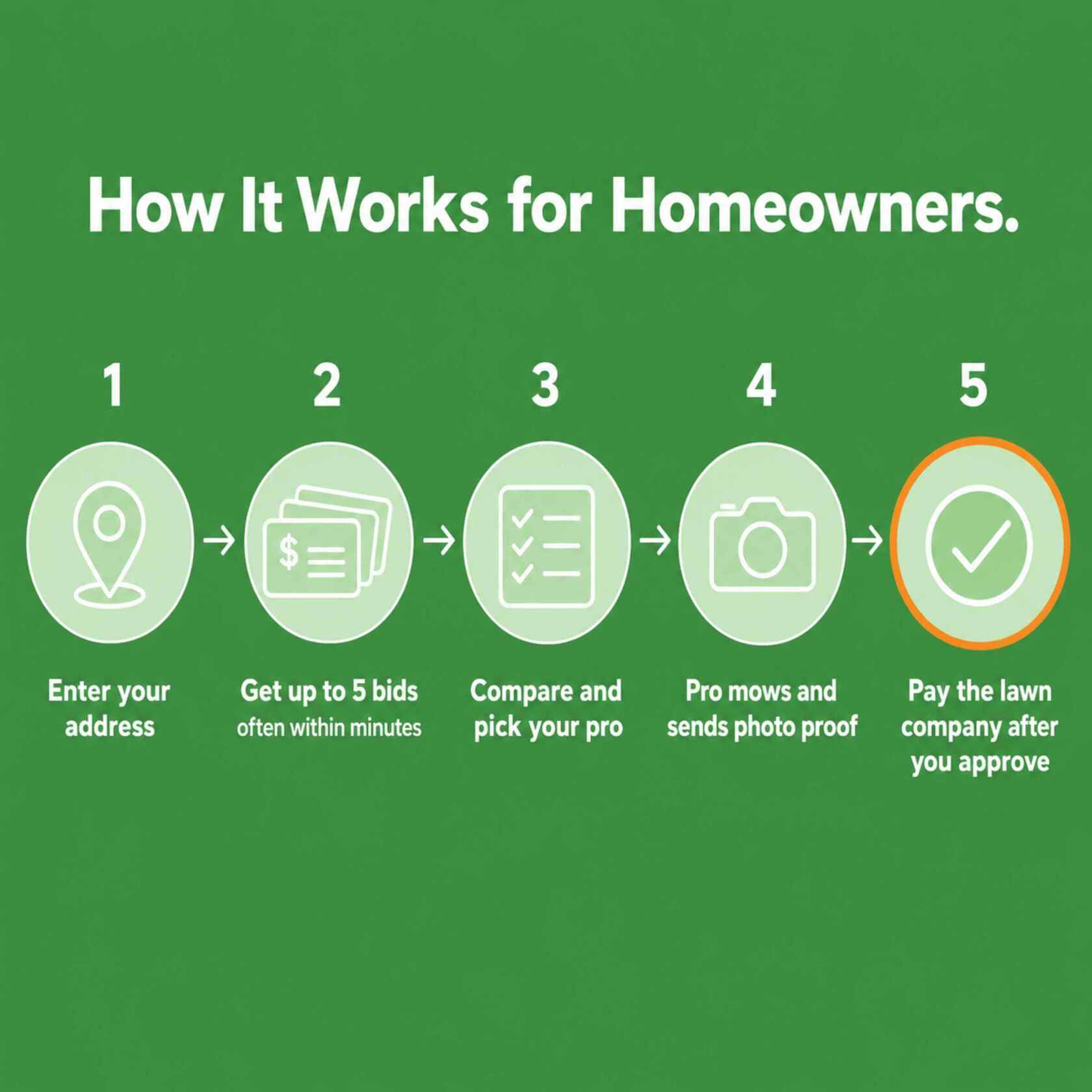
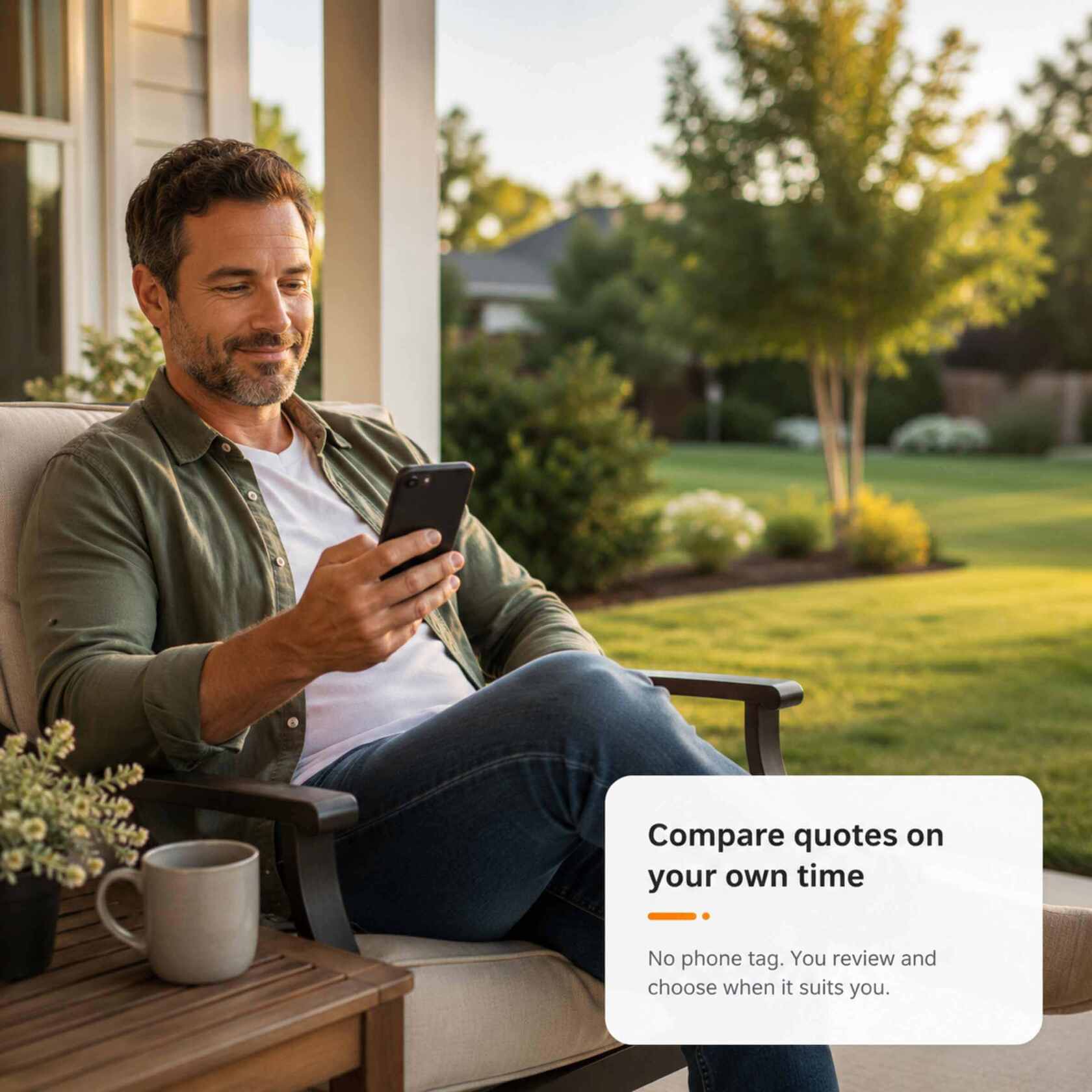
On GreenPal, you enter your address, and we pull satellite and aerial imagery to measure your actual lawn. That measurement, along with details like gate access, pets, and how you like your grass cut, goes out to vetted local lawn pros in your area. They bid on the job remotely, without a truck ever pulling up to size it. Quotes typically start arriving within minutes, and you'll usually see up to five within about a day. You compare flat-rate prices and verified reviews in one place, pick the pro you want, and you're done. No phone tag, no walking the yard with a salesperson.
For a lot of our customers, that hands-off experience is the whole point. More than 30% of the homeowners we serve are 60 or older, and many value being able to arrange reliable service without in-person meetings. Busy households like it for the same reason, since the job gets handled while they're at work.
If you want to meet a pro face to face and build rapport before hiring, though, the automated approach can feel impersonal, and some people prefer the handshake.
What It Costs You, and Why Lawn Care Fits Bidding So Well
Both platforms are free for homeowners, so the cost question is really about the quote you end up paying the lawn company, and whether the platform's model inflates it.
Local pricing is set by the providers, not by us, and it's driven mostly by the size of your yard. Based on current national mowing cost data, here's roughly what homeowners around the country pay per visit for standard mowing:
Small lots (under about 1/4 acre): typically $30 to $60 per visit
Medium lots (1/4 to 1/2 acre): typically $45 to $85 per visit
Large lots (1/2 to 1 acre): typically $50 to $150 per visit, depending on terrain and access
Estate lots (1+ acres): usually $150 and up
A standard visit generally covers mowing, edging along driveways and walkways, trimming around obstacles, and blowing clippings off hard surfaces. Two common factors push the price up. Grass that's badly overgrown, over roughly 10 inches, often needs a heavier initial cut, and less frequent schedules like monthly service cost more per visit than weekly because there's more growth to deal with each time.
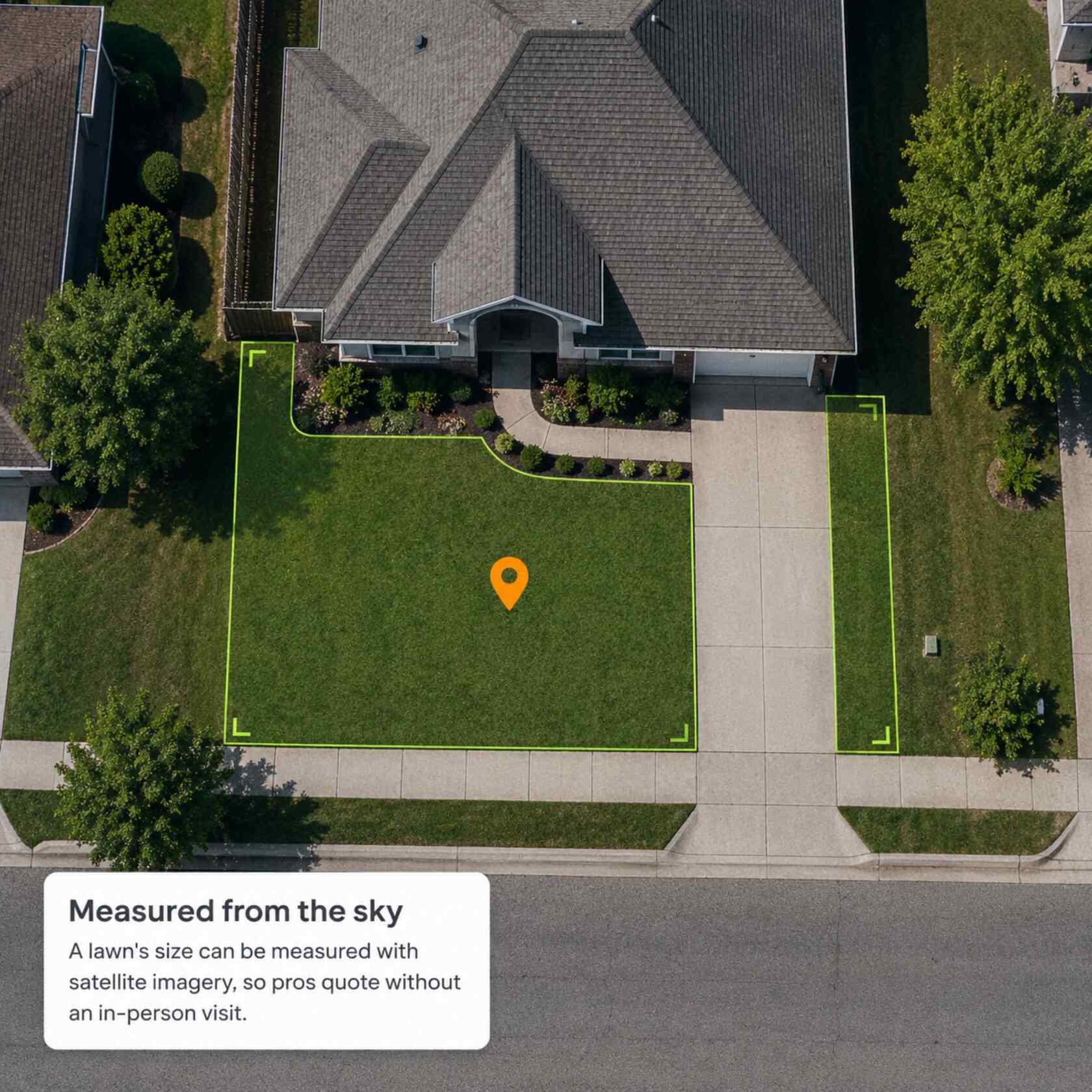
Recurring mowing is predictable and standardized. The biggest variable, the square footage of your yard, can be measured accurately from the sky, so there's nothing a pro needs to come out and inspect before they can quote it. When a platform charges a pro $40 just to contact you about a $50 mow, the math breaks. The pro either raises the price to cover that lead cost or leaves the platform, and neither one helps you.
Trust, Vetting, and Reviews
You're inviting someone onto your property, so how each platform handles trust matters.
Thumbtack offers background checks through Checkr, a national screening company, and shows a badge on the profiles of pros who pass. Those checks aren't required in every category, and Thumbtack is clear in its own guidance that it doesn't verify pros' statements for you. It advises homeowners to confirm licensing and insurance on their own before hiring. To back up transactions, Thumbtack offers the Thumbtack Guarantee, which covers property damage up to $100,000 and offers money back up to $2,500 if a job is left incomplete or materially differs from what was agreed. It's a real safety net, though it comes with conditions and doesn't cover ordinary poor workmanship.
Because we only do lawn care, our vetting is built specifically for it. Before a pro can see a single job, they go through an "auditioning" process. We inspect their equipment, check customer references, run a business credit check, and verify identity and banking through Stripe. Pros using homeowner-grade push mowers don't make the cut, because that equipment can't hold up to a commercial route. After they're approved, they have to keep their ratings up to keep getting jobs, so quality is enforced continuously rather than checked once.
Reviews are where the models differ most. On an open marketplace, reviews can come from a range of sources. On GreenPal, a review can only be left after a real, paid job clears the platform, so every rating you read is tied to an actual completed transaction. Combined with the photo proof a pro submits when they finish, you're deciding based on verified history and visual confirmation rather than claims alone.
When Thumbtack Is Actually the Better Choice
We'll be straight with you. For certain jobs, Thumbtack is the better fit, and the lead model makes sense for that kind of work.
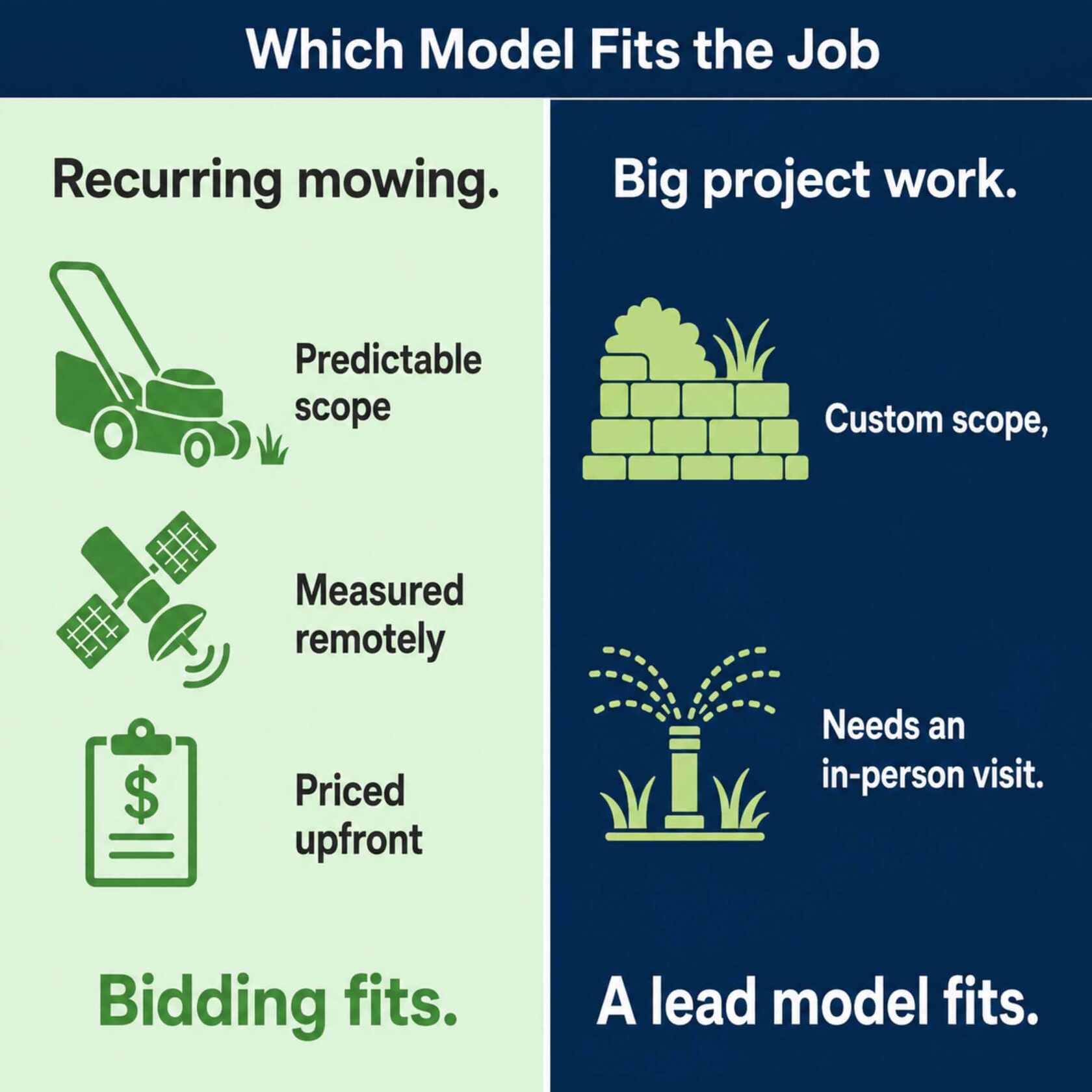
The dividing line is whether a pro needs to physically see your property before they can give you a real quote. Big, custom, high-ticket projects fall on that side of the line. Think full landscape design and installation, multi-zone irrigation systems, retaining walls, paver patios, and outdoor kitchens, the kind of work that often runs from a few thousand dollars to $25,000 or more. Those jobs can't be quoted from a satellite image. A pro has to walk the site, check grading and drainage, measure water pressure, and talk through what you want. For work like that, a pro is happy to pay a lead fee for the chance to win a large contract, and Thumbtack's directory of specialized tradespeople with detailed portfolios is well suited to it.
So the rule of thumb is straightforward. If the job needs an in-person visit to scope, Thumbtack connects you with serious pros who are invested enough to show up and bid seriously. If the job is recurring mowing and basic maintenance that can be measured and priced remotely, the lead model just adds cost and phone calls you don't need.
The Bottom Line
For big landscaping projects that require someone to see the property first, Thumbtack is a strong choice, and the model it runs on is the right fit. For recurring residential mowing and basic yard upkeep, the friction of paying for leads and fielding calls doesn't earn you anything, and a lawn-specific bidding model does. That's the case for using GreenPal for the mowing and Thumbtack for the occasional big build.
If you want to see how these two stack up against other options like HomeAdvisor, we break that down in our companion guide on whether to hire lawn care through HomeAdvisor, Thumbtack, or an app like GreenPal.
When you're ready to get your lawn handled without the phone tag, enter your address and see what local pros bid. It's free to get quotes, you choose who you want, and you pay the lawn company only after the work is done and you've approved it. You can start by finding lawn care near you and comparing quotes in a few minutes.


