How to Get Rid of Dollar Spot in the Lawn
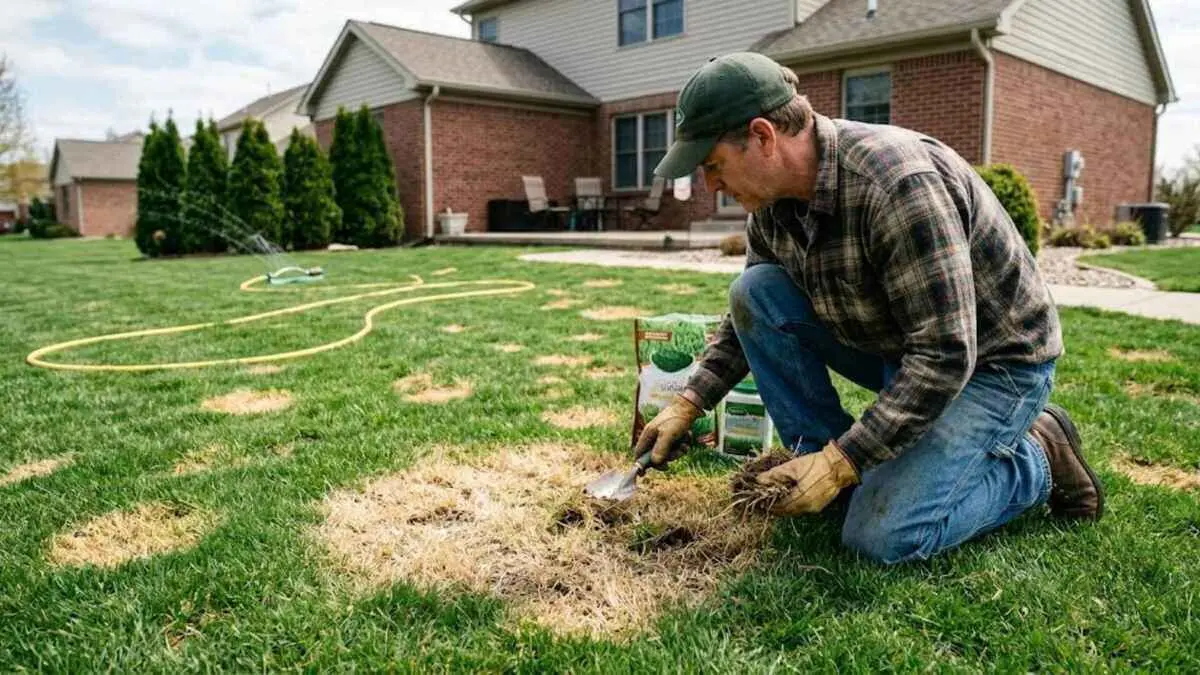
When your lawn looks like it has chickenpox, it’s likely suffering from dollar spot disease. The best way to get rid of dollar spot in the lawn is to reduce leaf wetness and correct nitrogen deficiencies.
Fungicides are available for residential lawns, but rarely necessary when treating dollar spot. Since this disease attacks the leaf tissue and doesn’t kill the roots or crowns, the grass is able to recover with the right lawn care routine.
What Is Dollar Spot?
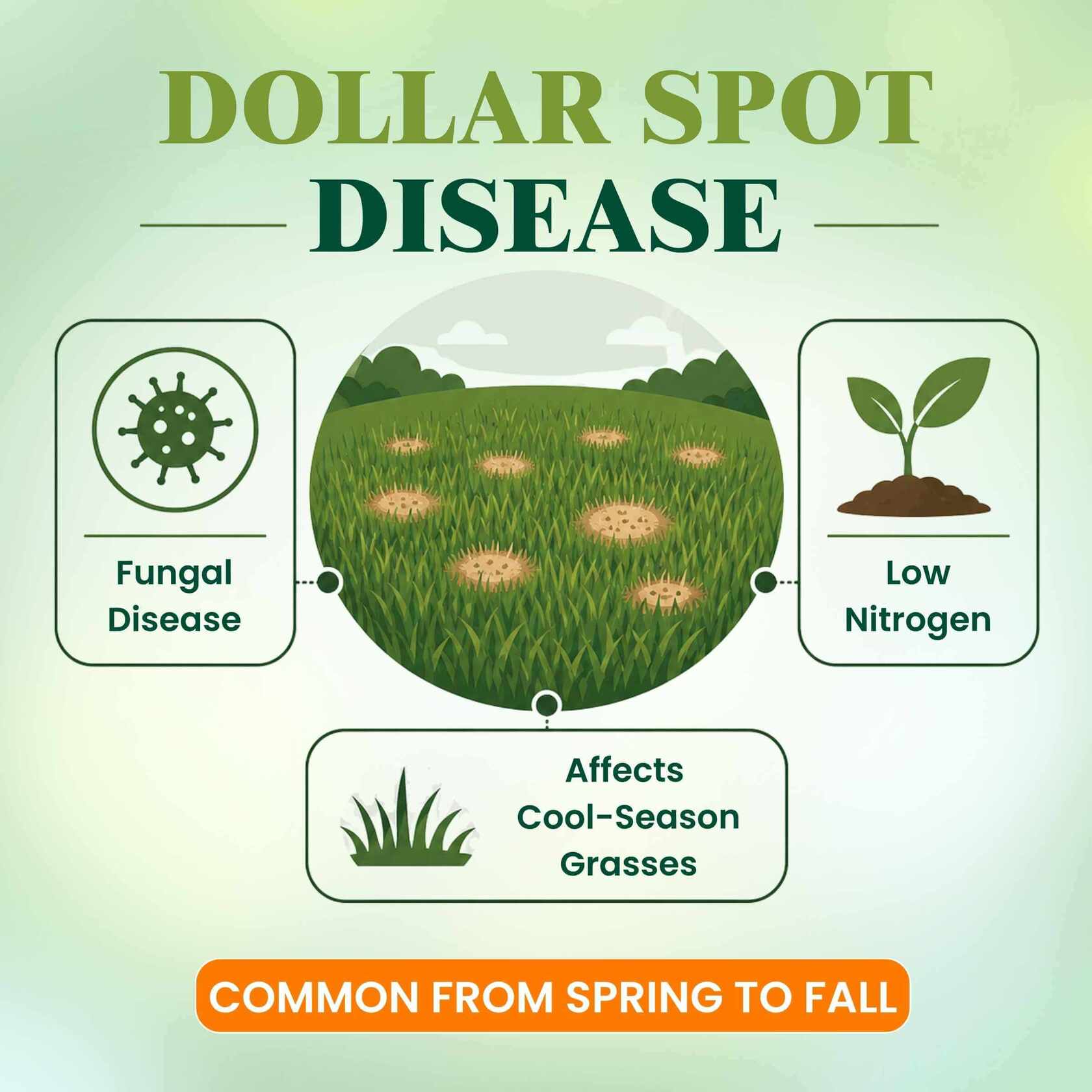
Dollar spot is a lawn disease caused by the fungal pathogen Clarireedia jacksonii. Symptoms can develop from early spring through late fall under favorable conditions.
Grass Types Commonly Affected By Dollar Spot
Dollar spot is a common disease that occurs on most turfgrasses. Creeping bentgrass, perennial ryegrass, and Kentucky bluegrass are highly susceptible to dollar spot.
This disease is most severe on grasses with low nitrogen levels, and is very common on home lawns and creeping bentgrass golf greens.
Symptoms of Dollar Spot
Dollar spot symptoms typically appear as white or light tan spots speckling the lawn. The size of these spots often varies depending on how the grass is maintained:
On residential lawns or grasses mowed above 0.5 inches, the spots may expand up to 6 inches or more in diameter.
On golf greens or grasses mowed below 0.5 inches, the spots are 1 to 3 inches in diameter, or roughly the size of a dollar coin.
As the disease progresses, the spots may eventually merge to create larger, irregular patches.
Other symptoms of dollar spot include the following:
Pale green, white, or yellow lesions with brown to reddish-brown borders on individual grass blades.
As the lesions expand, they may girdle and kill the upper part of the leaf blades.
Lesions may eventually extend across the entire leaf blade.
White, fuzzy, web-like mycelium on grass blades covered in morning dew.
What Causes Dollar Spot?
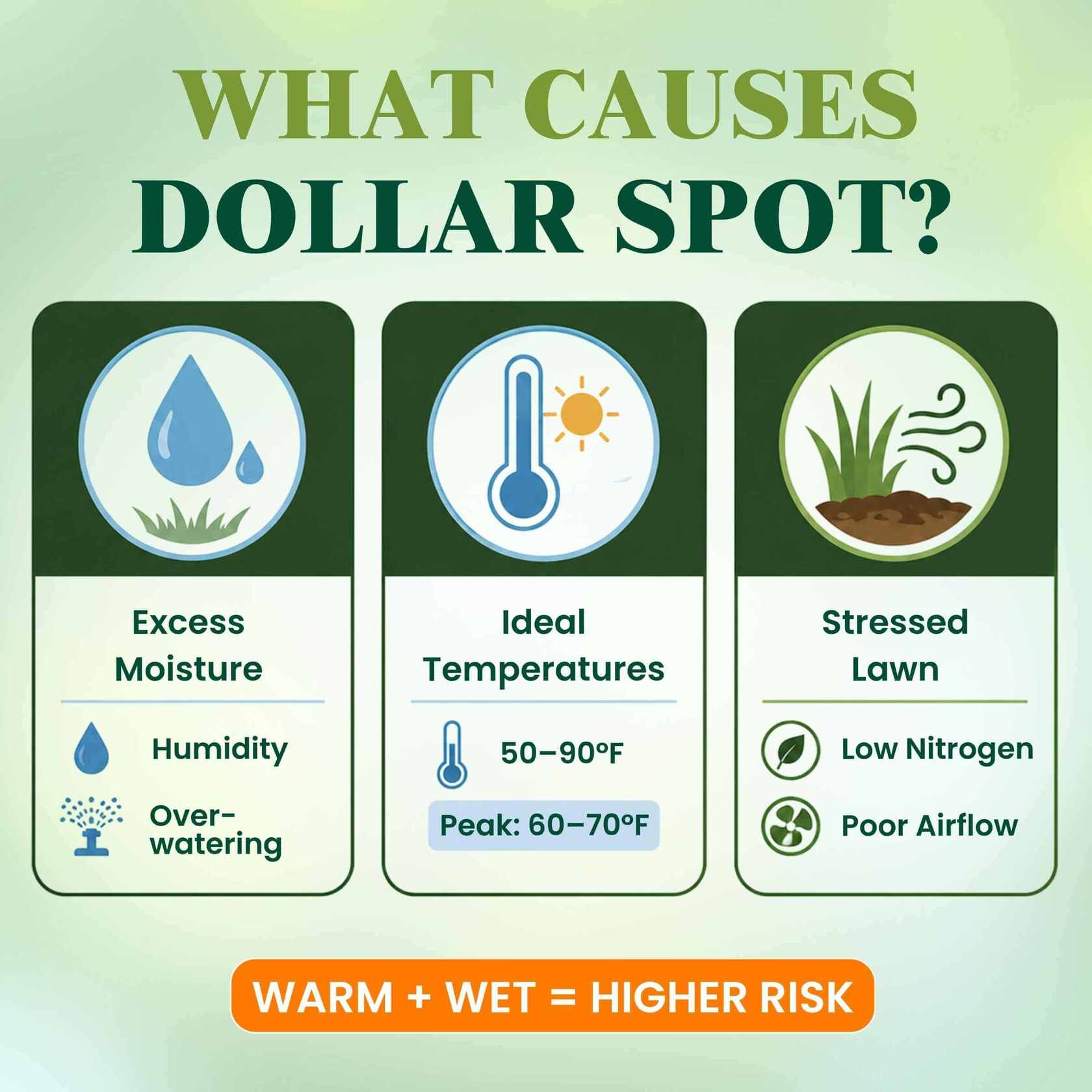
Favorable conditions for dollar spot include prolonged periods of leaf wetness and temperatures between 50 and 90°F, with peak activity occurring between 60 and 70°F.
Factors that contribute to excessive moisture in the lawn include:
Humid weather
Heavy morning dew
Overwatering
Irrigating in the late afternoon or evening
Poor drainage
Excessive thatch
Turfgrasses deficient in nitrogen are especially vulnerable to dollar spot. Lawns that are drought-stressed, mowed at low heights, or have low air movement are also prone to the disease.
How to Get Rid of Dollar Spot
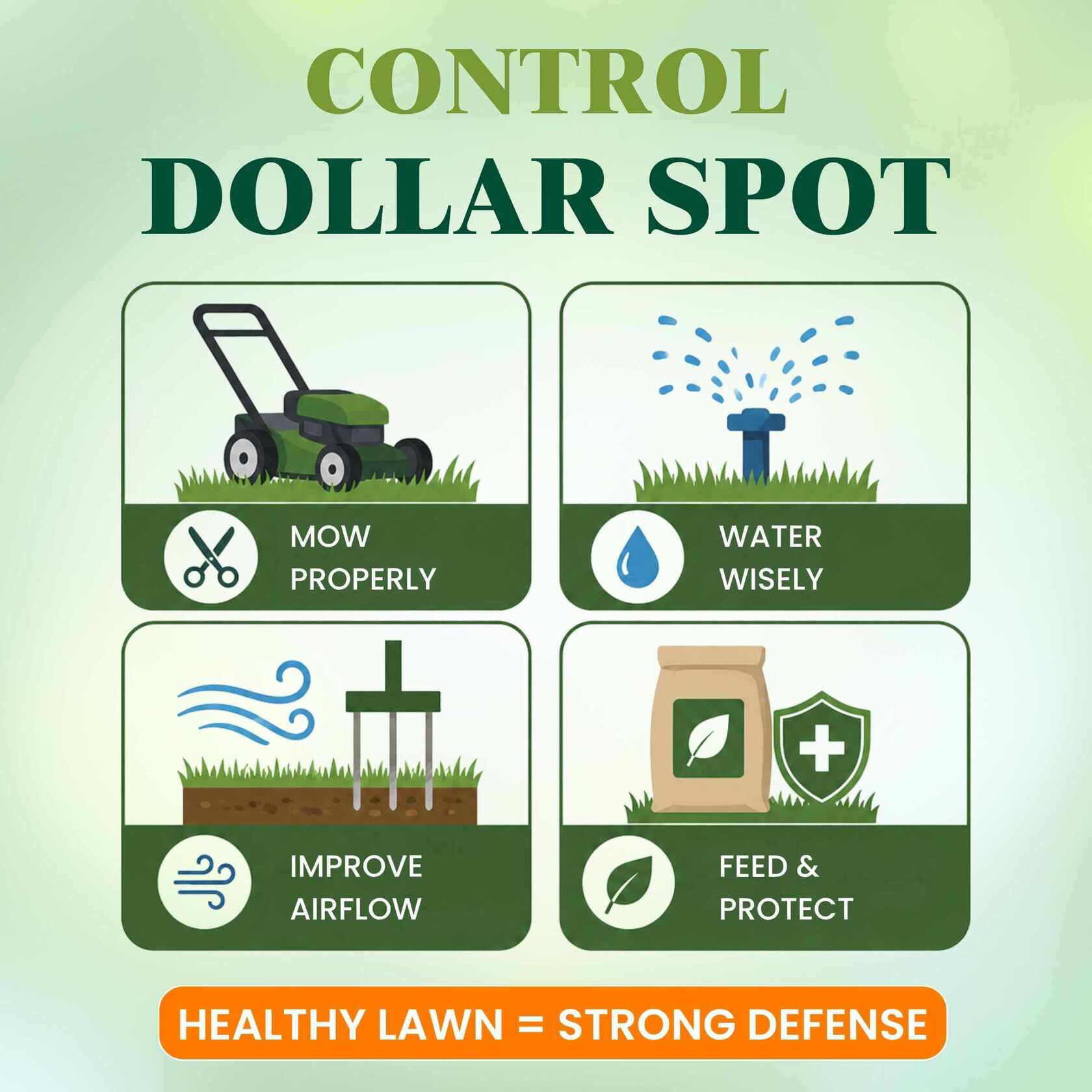
The best way to treat dollar spot in the lawn is with cultural control, a strategy that involves performing proper lawn management techniques to reduce the environmental conditions the disease favors.
The practices below target those specific conditions, and they're most effective when used together rather than in isolation. For example, if you reduce leaf wetness but the lawn remains deficient in nitrogen, dollar spot may still persist.
Fungicides are also available for home lawns, but they should not be a substitute for cultural control.
1. Adjust Mowing Technique
Give your lawn a healthy cut by following good mowing habits. Common mowing mistakes, like mowing with dull blades or mowing wet grass, can result in ripped grass that heals slowly and is more susceptible to infection.
To reduce lawn stress, always mow within your turf type’s recommended height range and never remove more than one-third of the grass blade’s height in a single mow.
2. Adjust Irrigation Routine
Overwatering and frequent exposure to leaf wetness are common causes of dollar spot and other fungal diseases. Following these watering tips can help reduce long periods of moisture:
Irrigate in the early morning. Watering in the late afternoon or evening won’t allow the lawn enough time to dry via evaporation, and the lawn may remain wet overnight.
Water deeply and infrequently. Watering too frequently increases the lawn’s exposure to moisture.
3. Remove Thatch
A thick layer of thatch limits air circulation and can prevent water and nutrients from reaching the soil’s surface. Remove the lawn’s thatch layer if it exceeds one-half inch thick.
If you grow warm-season grass, the best time to remove thatch is in late spring or early summer. If you grow cool-season grass, early fall is the best time to remove thatch, with early to mid-spring being the second-best time.
4. Aerate the Soil
When the soil is compacted, it struggles to breathe and drain water. To improve drainage and increase the movement of oxygen, aerate the soil with a core aerator.
If you grow warm-season grass, aerate in late spring or early summer. If you grow cool-season grass, aerate in early fall. If you miss the fall window, aerate cool-season grass in early to mid-spring.
Tip: Dethatch before aerating if performing both treatments.
5. Increase Air Circulation
In combination with thatch removal and aeration, you can increase the lawn’s air circulation by trimming overhanging tree branches and dense shrubs or removing other vegetation that restricts airflow.
6. Add Nitrogen
If your lawn is suffering from dollar spot, it might not be receiving enough nitrogen. Ensure your lawn receives enough nitrogen for its grass type, as some grass species require more nitrogen than others.
Before you spread nitrogen on the yard, make sure it’s the right time of year. If you grow warm-season grass, apply nitrogen in late spring through summer. If you grow cool-season grass, early to mid-spring and early fall are the best times to apply.
Learn More: How to Fertilize Your Lawn
7. Plant Different Grass
When it’s time to overseed or reseed the lawn, plant cultivars and seed mixtures that are resistant to dollar spot. This is especially important for lawns that have a highly susceptible turf type, like creeping bentgrass, perennial ryegrass, or Kentucky bluegrass.
If you grow warm-season grass, plant new seeds in late spring or early summer. If you grow cool-season grass, plant seeds in early fall.
8. Apply Fungicide, If Necessary
Fungicide is available as curative and preventive treatments against dollar spot; however, it’s rarely needed to control the disease on home lawns. Dollar spot also develops fungicide resistance quickly, which is another reason not to rely on it too heavily.
However, prolonged periods of high humidity and heavy morning dew may allow dollar spot to persist despite proper lawn care. During severe infestations, fungicides may be warranted.
There are many fungicides available to control dollar spot on home lawns, including:
Azoxystrobin + propiconazole (Headway)
Propiconazole (Banner Maxx)
Myclobutanil (Eagle)
Depending on the fungicide, curative treatments must be made once every one to four weeks. For preventative fungicide, apply in early spring when nighttime temperatures consistently exceed 50°F and conditions favor disease development. Always read and follow the product’s instructions.
How to Repair Lawn Damage
When dollar spot is allowed to persist, its spots can merge to form larger patches. Also, its lesions may eventually girdle and kill leaf tissue.
To help your lawn recover from the damage, continue to practice cultural control measures. The same lawn care strategies that help control the disease will also help the lawn recover.
In damaged areas, plant grass seed cultivars that are resistant to dollar spot to help encourage new growth.
Find a Lawn Care Pro Near You
Proper lawn maintenance is the best way to prevent and control dollar spot in the lawn. Maintaining proper nitrogen levels, removing thatch, aerating soil, mowing routinely, and watering wisely are among the best ways to reduce the conditions that favor the disease.
Dollar spot occurs nationwide, but it's especially common in humid regions where morning dew lingers on the grass, such as Atlanta and Houston. If preventing dollar spot is forcing you to work overtime, GreenPal can connect you with a local lawn care professional who understands your region's conditions and can maintain the lawn via mowing and aeration.