So you want to start a new vegetable garden from scratch?
Now you want to know, how do I make sure my vegetable garden will work?!
Get this, whether you are new to gardening or gardening is a lifelong profession.
These 5 steps will help you install a vegetable garden that works.
Let’s jump into the guide for gardening at home!
Preparing Your Garden Bed the Right Way
Sure, you could just put some seeds into the garden and wait for them to sprout.
But that won’t be enough if you want a vegetable garden bed that works.
It’s true; there is a lot more that needs to be done. Especially if you want to make a proper vegetable garden.
We have talked a lot about lawns at Your GreenPal, but today we are going to talk about gardens.
Let’s jump into step number one!
Garden Bed Installation Step 1: Group Plants By Watering Needs
This is vegetable garden installation 101: when you are planting your rows of vegetables. Make sure you group the plants based on their watering needs.
Most people don’t think about this while installing their vegetable garden bed.
Here’s why, plants that need less water don’t need to be as close to the sprinkler, or watering source. This can make watering easier and help you save water too.
Pro Tip! If any of the plants need shade, you can plant it behind a row of taller plants. Or even up against the house.
More about watering properly in step 4.
Garden Bed Installation Step 2: Weed Regularly
This one is crucial. Make sure you weed your garden on a regular basis!
Pay attention to the weeds. They may appear small at first, but they can quickly spring up and overwhelm your garden.
Here’s the deal; this may seem obvious. But so many gardeners let the weeds get ahead of them. Next thing you know, your fresh new garden bed is looking more like a jungle than a vegetable garden.
Worst of all, your vegetables will begin to get choked out and will be more likely to succumb to illness. Fortunately, there are several ways to handle weeds in your vegetable garden. For example, you can check out this guide to weeding for some of those solutions.
But, if you don’t want to go to a different article, don’t worry; step 3 will also help you manage weeds in your garden.

Garden Bed Installation Step 3: Mulch your Garden
This step will help you manage weeds.
This is just as important as mulching the beds in your landscape.
Why? Well, most importantly, mulching will help keep weeds away. And as you may know, weeding is one of the most labor-intensive tasks when maintaining a vegetable garden.
But it gets better; a thick layer of mulch will also help to retain water in the soil, and mulch will also release nutrients into the soil over time.
Use any of these materials for mulching your vegetable garden:
Newspaper
Straw (not hay, “hay is for horses”)
Wood chips
Pro tip! Don’t forget to add your homemade compost mix! Especially as a soil amendment when you first make your garden bed. Additionally, you can apply a top dressing of compost about once a month.
Garden Bed Installation Step 4: Don’t Over Water
This one is just as important as anything else.
You don't want to overwater your garden.
This means paying attention to the weather and skipping watering when rain is coming in.
Here's why it's important: too much water can lead to root rot, mold and fungus outbreaks, and, of course, is a waste of water.
Go the extra mile, and look into installing drip irrigation in your vegetable garden. Drip irrigation is the most efficient form of watering for your garden. It puts the water exactly where your plant needs it.

Garden Bed Installation Step 5: Enjoy it!
The last thing to remember when you are putting in a garden is simple.
Enjoy it!
It’s true, working outside in the dirt and sun can be enjoyable after a long day of work. Gardening can be a blast, and you can look forward to enjoying the tasty vegetables that come out of the garden into the late fall.
Consider journaling your garden. If you really want to get into it, why not take photos and write about your vegetable garden's progress? This will help you improve your gardening skills year after year, and show the progress you have made.
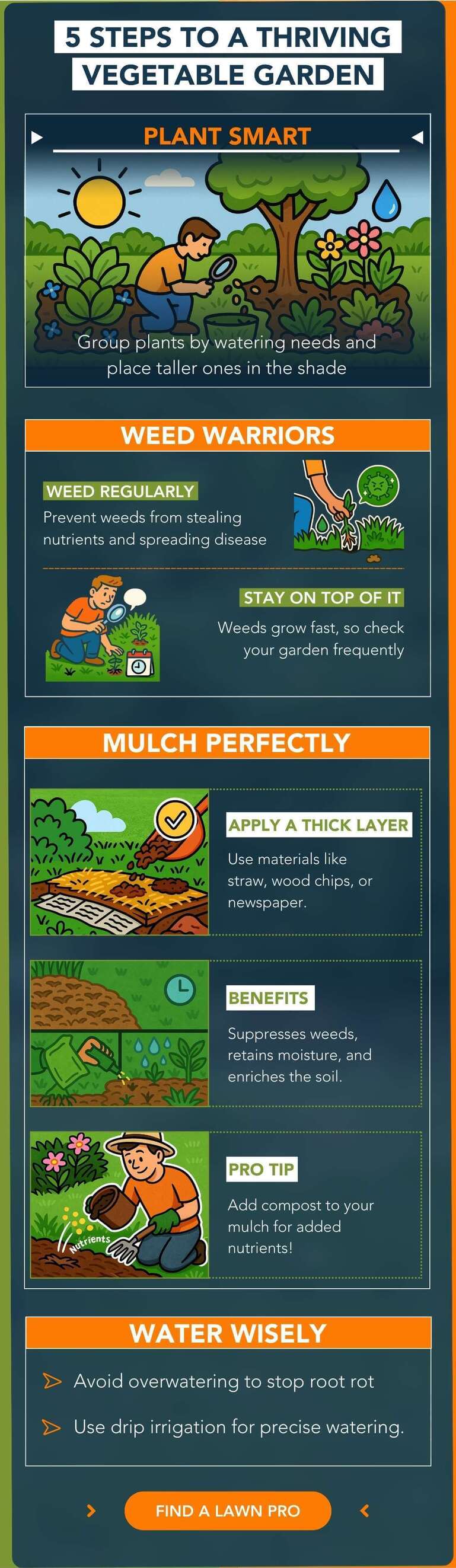
TL;DR Essential Steps to Installing a Successful Vegetable Garden
5 Steps to Installing a Successful Vegetable Garden:
1. Plant Smart: Group plants by watering needs & utilize shade strategically.
2. Weed Warriors: Regularly remove weeds to prevent nutrient theft and disease.
3. Mulch Perfectly: Apply a thick layer to suppress weeds, retain moisture, & enrich soil.
4. Water Wisely: Avoid overwatering & consider drip irrigation for efficiency.
5. Harvest the Joy: Enjoy the process, track progress, & relish your homegrown bounty!
Using these 5 steps to install a successful vegetable garden can help you get the most out of your garden bed.
If you need help completing any of these steps or need more information. Why not consult with a lawn care professional in your area? GreenPal has the best lawn care providers near you.