


How Much Does a Fall Yard Cleanup Cost in 2026?
A professional fall yard cleanup costs about $390 on average, and most homeowners pay somewhere between $285 and $500. A small city yard with only a few trees can run as little as $65, while a large, heavily wooded lot can climb past $1,000. If all you need is a light end-of-season tidy-up and a final mow, expect something closer to $100 to $250.
Those are national averages, and your real price depends heavily on the qualities of your yard, like how big it is, how many trees drop leaves on it, whether those leaves are wet, and what you want done with the debris. At GreenPal, we've helped more than 1 million homeowners get their yards handled by local lawn care pros, and the most reliable way to learn what a fall cleanup costs for your property is to let local pros bid on it. Those prices are set by the lawn care providers competing for your business, not by us, so they reflect the real market rate for your specific yard instead of a one-size-fits-all number.
Here is where fall cleanup pricing generally lands nationally:
Fall cleanup service |
Typical price |
Light seasonal tidy-up (debris plus a final mow) |
$100 to $250 |
Standard leaf removal (national average $390) |
$285 to $500 |
Small urban or townhome yard |
$35 to $100 |
Large or heavily wooded lot |
up to $1,000 or more |
One-time end-of-season cleanup |
about $525 |
Leaf removal on a seasonal or recurring plan |
about $325 |
These ranges line up with our own leaf removal pricing research, which is based on what pros on our platform actually charge. We’ll break down what moves the number up or down, so you can read a quote and know whether it is fair.
What's Included in a Fall Yard Cleanup?
A fall cleanup is not one fixed package, and that is the first thing to understand before you read a quote. Most local pros treat a fall cleanup as leaf and debris removal plus a final cut for the season. Extras like fresh mulch, garden bed cleanup, and gutter clearing are usually priced separately.
Here is what typically falls into each bucket:
Usually included in a fall cleanup |
Common add-ons, priced separately |
Removing fallen leaves from the lawn |
Fresh mulch delivered and installed in beds |
A final mow and edging for the season |
Cutting back and cleaning up garden beds |
Clearing small fallen branches and yard debris |
Clearing leaves out of clogged gutters |
Blowing leaves and clippings off hard surfaces |
Trimming shrubs and hedges |
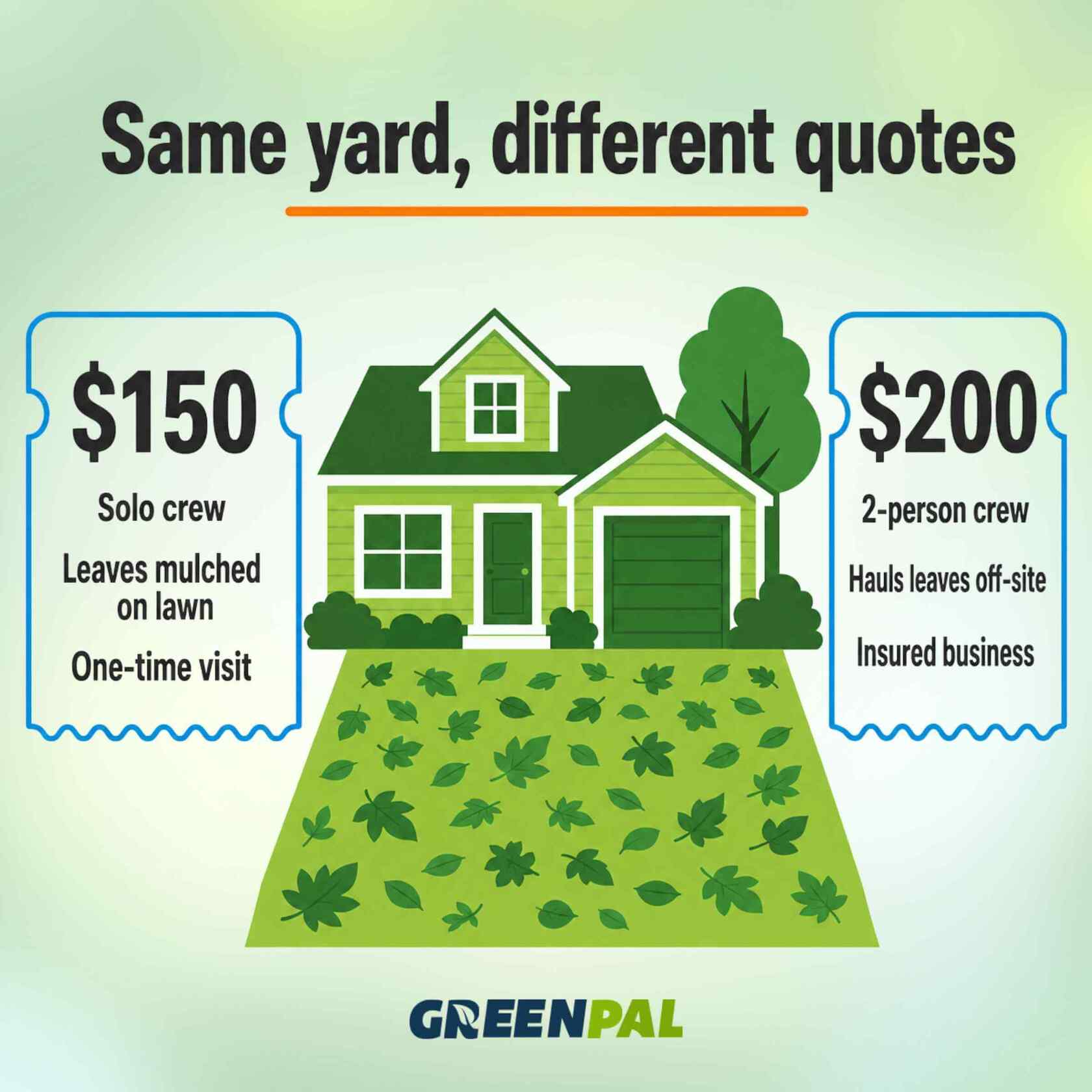
Because the definition varies, always confirm what a quote covers. A $200 quote that includes hauling every leaf off-site is not really more expensive than a $150 quote that leaves the mulched leaves on your lawn; they are two different jobs. For a fuller picture of what a thorough seasonal cleanup involves, see our yard cleanup tips.
Why Two Quotes for the Same Yard Can Be So Different
It is normal to get two very different prices for the same yard. A big gap between quotes usually means the jobs are not identical, not that anyone is overcharging you.
A solo operator with a rake and a pickup has different costs than a two-person crew running a commercial vacuum truck. One quote might include hauling the leaves to a disposal site, while another assumes the crew blows them into a wooded area on your property. A fully insured business with payroll and workers' compensation has to be priced higher than someone working without those protections, and that higher price buys you real coverage if something goes wrong. Whether the quote is for a single visit or part of a recurring plan changes the number too.
When you compare bids, look at what each one actually includes before you look at the bottom line. If a price comes in far below everything else, ask what is being left out. New homeowners often worry about being taken advantage of, and knowing what a fair quote looks like is the best defense. Our guide to spotting home service contractor scams covers the warning signs worth watching for.
Yard Size and Lot Acreage
The single biggest factor in a fall cleanup price is how much ground the crew has to cover. Leaf removal cost scales almost directly with lot size.
Lot size |
Typical leaf removal cost |
1/6 acre |
$65 to $150 |
1/4 acre |
$100 to $230 |
1/2 acre |
$210 to $430 |
1 acre |
$425 to $830 |
A quarter-acre suburban lot is the most common size, which is part of why the national average lands where it does. These figures come from Forbes' leaf removal cost data.
Leaf and Debris Volume
Two yards of the same size can cost different amounts if one is buried in leaves and the other has a light dusting. Volume is what the crew is actually moving, and it depends on your trees and on how long the leaves have been sitting.
Leaves that pile up over several weeks start to break down at the bottom, mat against the soil, and soak up water, which makes them heavier and much slower to clear. Clearing leaves in stages through the season is easier, and usually cheaper per visit, than one massive haul in late November.
Tree Density and Type
More trees means more leaves, so a lot ringed with mature oaks or maples costs more to clear than an open yard with a single small tree. The type of tree matters too. Fruit and ornamental trees drop fruit along with their leaves, and that dropped fruit has to be cleaned up as well, both to keep the yard tidy and to avoid attracting pests over the winter.
Why Wet Leaves Make Fall Cleanups Cost More Than Spring
Fall cleanups generally cost more than spring cleanups, and wet leaves are the main reason. Wet autumn leaves get much heavier, stick to the grass, and resist leaf blowers, so crews work slower and often build extra labor time into a fall quote.
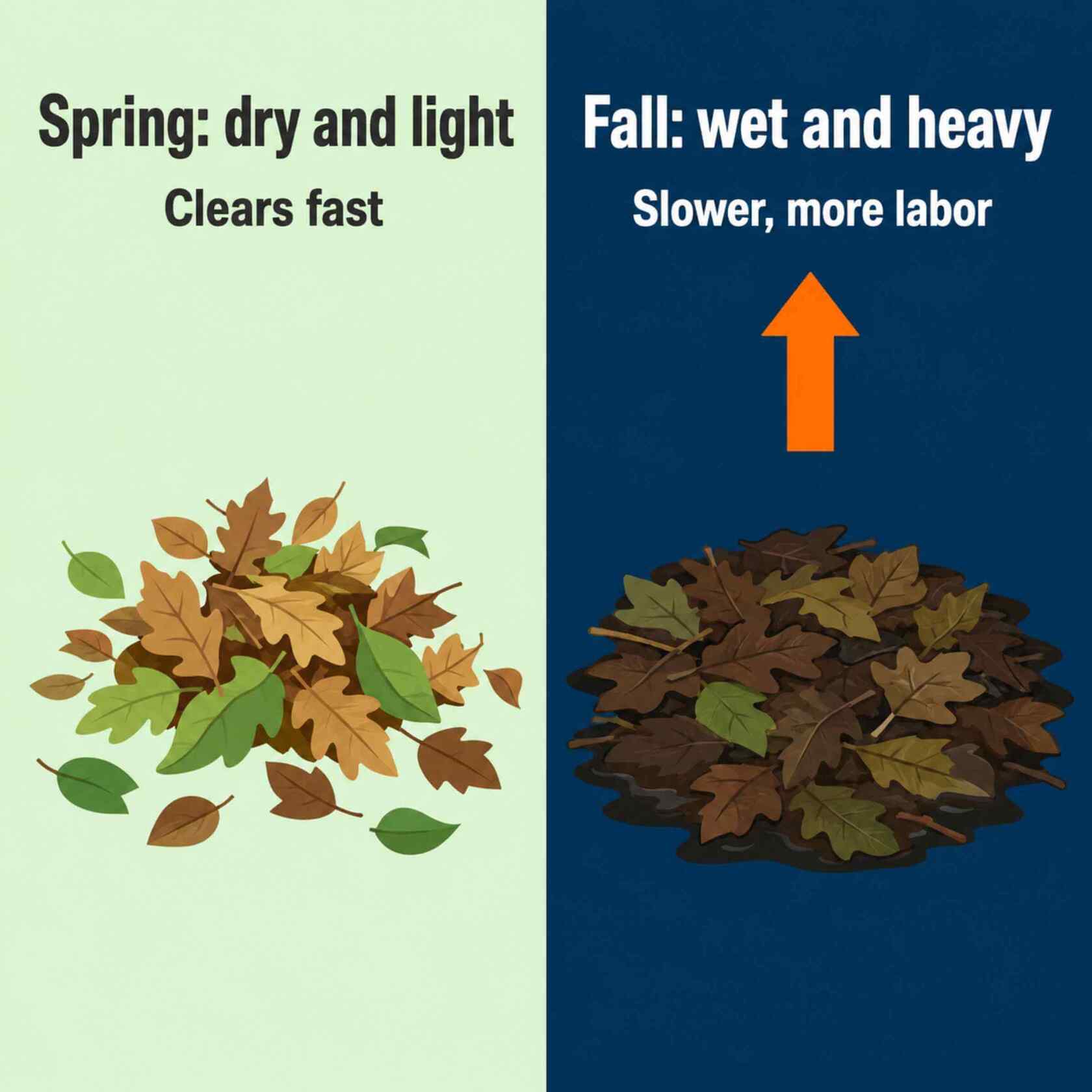
The National Association of Landscape Professionals points to wet leaves as a core reason fall cleanup work is harder and slower than spring work. Spring cleanups usually deal with dry, brittle winter debris that clears faster, which keeps those invoices lower.
Leaf Removal Method: Blowing, Raking, or Vacuuming
How a crew clears leaves affects both the hourly rate and how long the job takes. The lowest hourly rate does not always mean the lowest total bill.
Method |
Typical hourly rate |
Leaf blowing |
about $30 per hour |
Hand raking |
about $35 per hour ($25 to $50) |
Vacuuming with a commercial loader |
about $45 per hour |
A crew with a commercial vacuum might charge $45 an hour but finish your yard in one hour. A single worker raking by hand at $35 an hour might need three hours for the same yard, which costs you more in the end. When you compare quotes, the time estimate matters as much as the rate.
Disposal and Hauling Fees
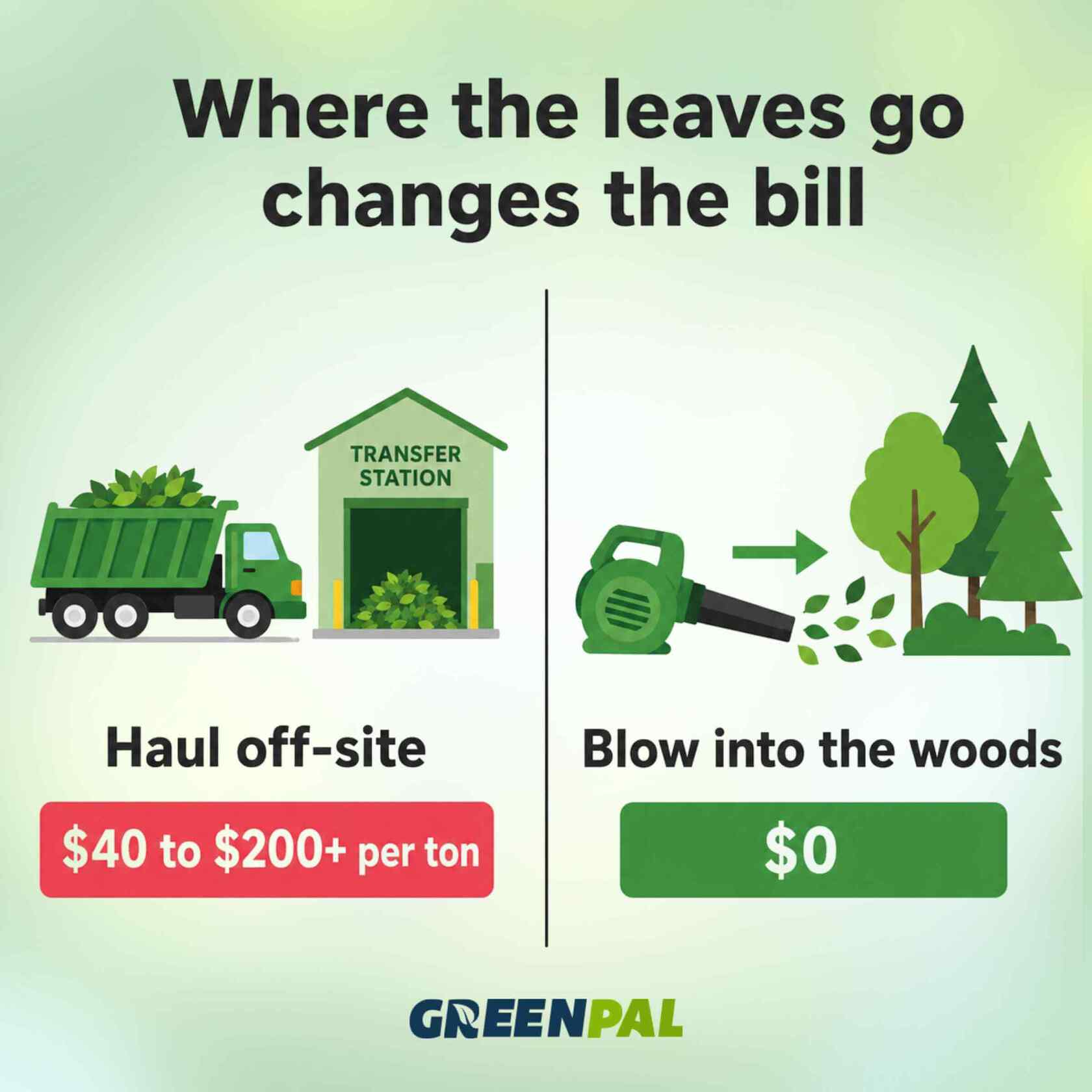
What happens to the leaves after they are cleared is one of the most variable costs, and it is largely set by your local dump or transfer station. If you want the leaves hauled completely off your property, the crew pays a weight-based tipping fee and passes it on to you.
Those fees swing widely by location. Some cities charge landscapers around $40 per ton to drop off yard waste, while remote areas can run well over $200 per ton. Curbside programs add their own costs, like a monthly yard-waste cart fee, or paper bags and tags that cost a few dollars each.
You can often lower this part of the bill by not hauling at all. If you have a wooded area or beds where leaves can be blown or mulched in place, ask the pro to do that instead of bagging and hauling. It cuts the disposal fee, saves labor time, and returns nutrients to the soil.
Add-On Services: Mulch, Gutters, Bed Cleanup, and Trimming
Fall is a natural time to bundle other yard work, and add-ons are where a cleanup bill can climb fast. Here are common ones and what they typically cost:
Add-on service |
Typical cost |
Mulch, delivered and installed |
about $75 per cubic yard; roughly $175 for a small-to-medium project |
Gutter cleaning |
$160 to $163 on average; $70 to $500 depending on the number of stories |
Shrub and hedge trimming |
$50 to $850 depending on size |
Lawn aeration |
about $140 ($200 for core aeration on a 10,000-square-foot lawn) |
Weed control application |
$40 to $120 per visit |
Mulching beds before the first freeze protects plant roots, and clearing leaf-clogged gutters keeps water from backing up against your roof and foundation. If you ask a crew to trim the bushes while they are already there, expect the price to jump, since trimming is priced on its own. Our guide to what a bag of mulch costs to install can help you budget the mulch portion. One note: large tree trimming or removal is a separate, specialized job and is not part of a standard cleanup, so budget for that on its own if you need it.
Regional Pricing and Local Equipment Rules
Location changes the price in two ways: labor costs and local equipment rules. Landscaping labor is more expensive in high-cost-of-living regions, and that flows straight into your quote. According to the Bureau of Labor Statistics, the median wage for landscaping and grounds workers is around $18 an hour, with experienced crew leaders earning well above that. Add payroll costs, insurance, and equipment, and roughly $150 is about the floor for a visit from a legitimate, insured company in 2026.
Local rules matter too. A growing number of places have restricted or banned gas-powered leaf blowers, including Montgomery County, Maryland (2025) and Portland, Oregon (2026). Battery-powered equipment runs cleaner but needs frequent recharging, so crews in those areas often work slower and price accordingly. If you live in one of these areas, expect that to show up in your quote.
One-Time vs. Seasonal Cleanups
You can pay for a fall cleanup as a single end-of-season job or spread it across the season as recurring visits, and the choice affects both the price and your lawn.
A one-time leaf removal averages around $525, because the crew is clearing weeks of piled-up, matted leaves in one heavy visit. Folding leaf removal into a recurring plan brings the leaf-removal portion down to about $325 on average, since the leaves never get a chance to pile up and the work goes faster each time.
We usually point first-time hirers toward a recurring plan if their yard fills up with leaves. It costs less per visit, and it is easier on the grass because leaves never sit long enough to smother it. Many homeowners pair fall cleanups with regular lawn mowing so the same pro stays familiar with the property year-round.
Is a Fall Yard Cleanup Worth Paying For?
If your budget is tight, it is fair to ask whether a fall cleanup is worth it or just cosmetic. For most lawns with real leaf cover, it is worth it, and the reason is biological.
Turf specialists at the University of Minnesota Extension note that once leaves cover more than about 10 to 20 percent of your lawn, they start doing damage.
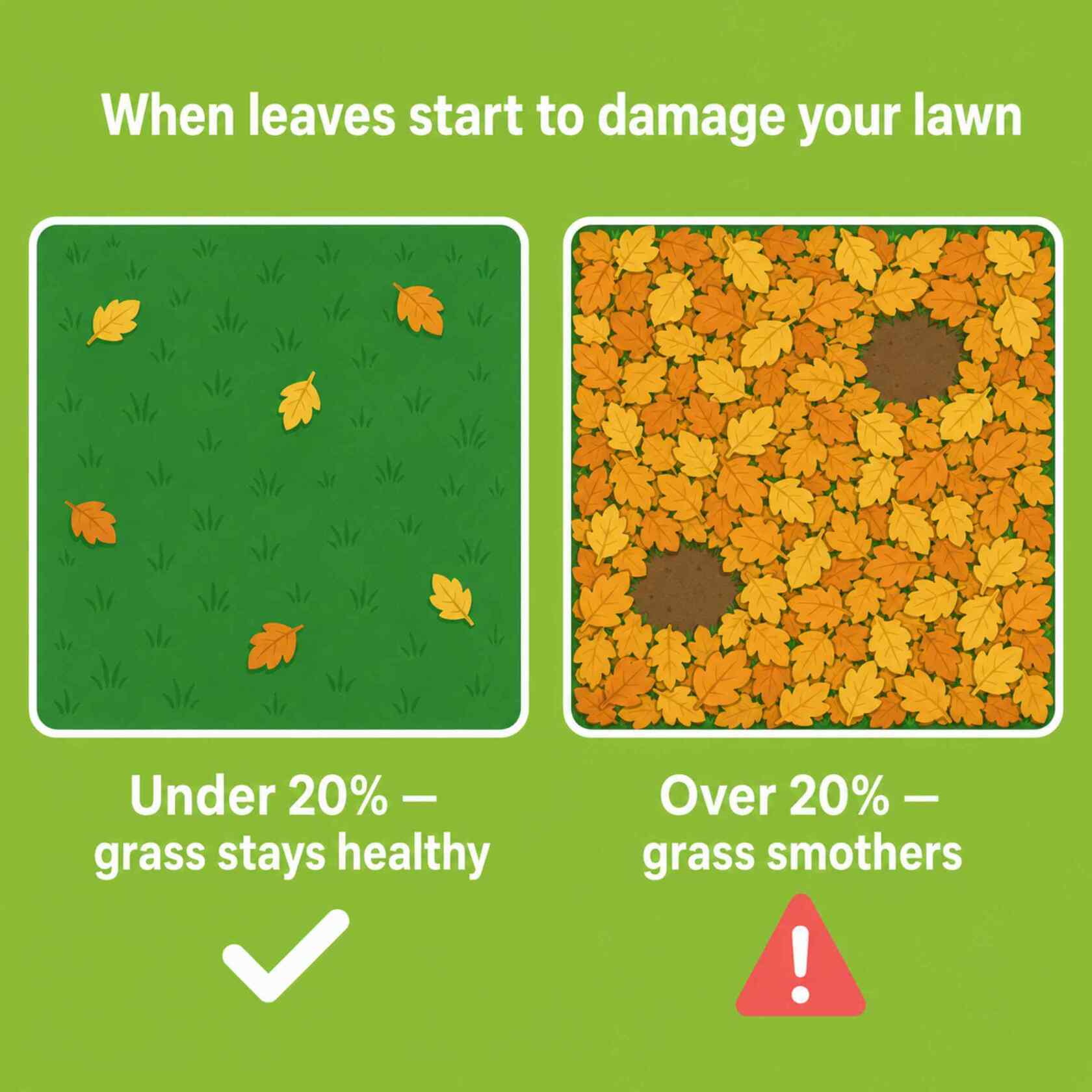
A thick, matted layer blocks the sunlight grass needs to store energy for winter, which leads to bare, dead patches in spring. Trapped moisture under wet leaves also invites fungal diseases like snow mold, and the debris gives mice and voles cover to tunnel through your lawn over the winter. Leaving a heavy leaf layer down can cost you far more in spring repair than the cleanup would have cost in fall.
There is a middle-ground option that is cheaper and good for the lawn: instead of bagging and hauling, have the leaves mulched. Running a mower over a light-to-moderate leaf layer chops it into small pieces that fall between the grass blades and break down, returning nutrients to the soil. Virginia Tech Extension recommends this approach for many lawns. Asking a pro to mulch the leaves rather than bag and haul them usually lowers the bill and skips disposal fees.
One exception: if you inherited a vegetable garden, do not mulch that debris back in. Diseased plant material should be removed, since home compost piles rarely get hot enough to kill the pathogens.
DIY vs. Hiring a Pro for a Fall Cleanup
Doing it yourself can save money, especially on a small yard, but the savings are smaller than they look once you add everything up. A heavily wooded half-acre can produce 30 to 50 bags of leaves, and the costs stack quickly:
Heavy-duty paper yard bags run about $0.61 each, so bags alone can cost $20 to $40.
If your town charges for disposal tags or special bags, that can add $80 or more.
A decent cordless leaf blower costs $159 to $299 to buy, or you can rent a commercial backpack blower for around $36 for four hours.
Your time is the biggest hidden cost. If a crew can clear your yard in two hours and it takes you a full weekend, that is a lot of hours you are not spending elsewhere.
For a small lot (under about an eighth of an acre) with only a few trees and a free yard-waste bin, DIY often makes the most sense. The leaves are light, the job is quick, and paying for a $390 average cleanup would be overkill. For a larger or leaf-heavy yard, the math usually favors hiring a pro once you count bags, disposal, equipment, and time.
How to Get a Fair Price for Your Fall Cleanup
If you have never hired yard work before, the tricky part is usually finding someone reliable and knowing whether the price is fair. This is the problem GreenPal was built to solve.
GreenPal is a lawn care marketplace, which means you describe your yard once and local pros compete to earn your business. You get up to five competitive quotes from vetted lawn care providers in your area, usually within a day and sometimes within minutes. Because the pros are bidding against each other, the prices reflect the real local market for your specific yard, and they are set by the providers, not by us. It is free for homeowners, with no signup fee, no membership, and no charge to get quotes. There is also no bait pricing like a cheap first-visit teaser; the number you see comes from real competitive bids.

A few things make this easier for a first-timer:
We use satellite and aerial imagery to measure your property, so pros can send an accurate quote without anyone coming out for an in-person estimate. Fall cleanups often require a site visit before a company will quote, so this saves a step.
Every pro is vetted before they can bid. Our screening includes an equipment check, calls to their existing customers, a business credit check, and identity and banking verification through Stripe. That is aimed squarely at the worry most new homeowners have about getting ripped off.
You pay the lawn company you hired only after the job is finished and you have approved it. The provider sends time-stamped photo proof of the completed work to your phone, and payment is not released until you are satisfied. You do not even need to be home, since a contactless option is available.
GreenPal is the platform that connects you with vetted local pros and helps you manage the request; the local pro does the actual work, sets the price, and gets paid once you are happy. More than 1 million homeowners and 45,000+ lawn care pros use GreenPal across 250+ markets in all 50 states, and the platform holds a 4.6 out of 5 average rating on Trustpilot. Our founders came out of the lawn care business, too; our CEO built and sold a landscaping company that did more than $10 million a year before starting the company. If you want help choosing among your bids, our guide on how to find the best lawn care professional walks through what to look for, and you can see the full process on our how GreenPal works page.
GreenPal is built around lawn service requests, so you will not find a separate one-click fall cleanup button. Instead, you request service, describe the cleanup you need (leaves, a final mow, bed cleanup, mulch, and so on), and the local pros who offer that work send their bids. Our pros handle leaf removal and general fall yard cleanups; heavier jobs like tree removal or large debris hauling are outside what the platform covers.
Get Free Quotes for Your Fall Cleanup
You do not need to already know what a fall cleanup should cost. The fastest way to find out is to see what local pros will bid for your yard. Enter your address to get free, no-obligation quotes from vetted lawn care pros near you, compare them side by side, and pick the one that fits your budget and your schedule.


