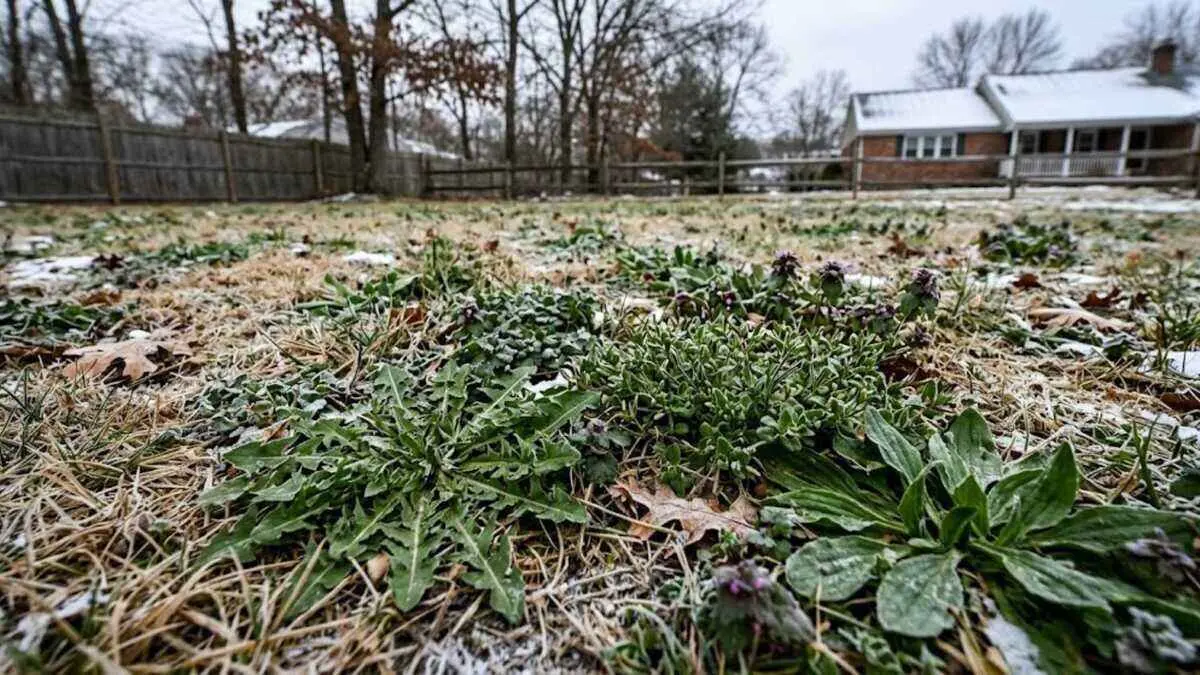
How to Get Rid of Winter Weeds in Your Lawn
To control weeds in your winter lawn, it’s important to act fast — and at the right time. If it’s already winter, it’s too late to apply pre-emergent herbicide. And if it’s freezing outside, it’s too cold to apply post-emergent herbicide. Here’s how to get rid of winter weeds the right way:
Start by applying a pre-emergent herbicide in early fall. Then control existing weeds while they’re still young, but only during warm weather. Finally, follow up with proper lawn care to help thicken turf and prevent weeds from coming back.
Common Winter Weeds in the Lawn
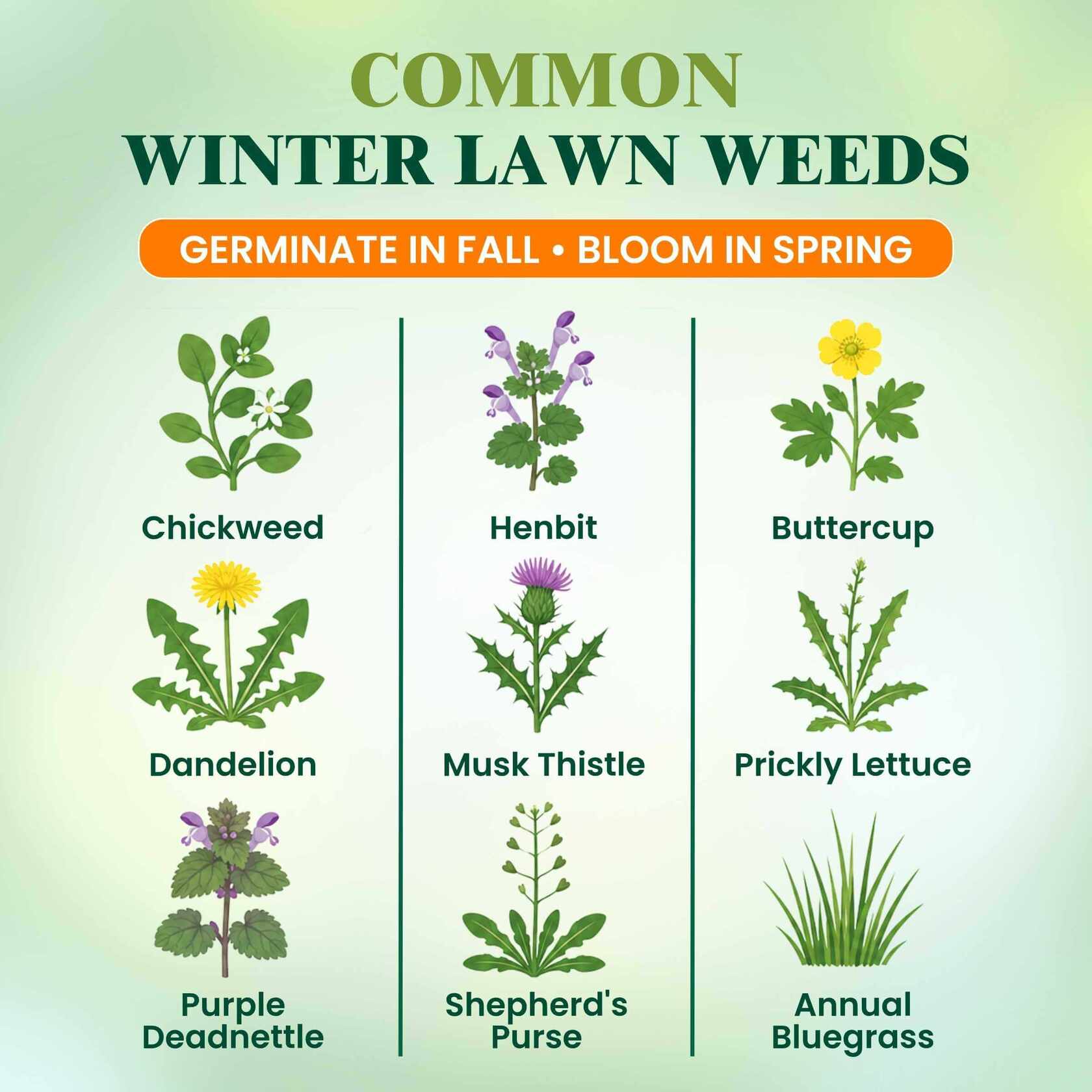
Winter weeds germinate in autumn or winter, survive through winter, and then bloom in late winter or early spring.
Common winter broadleaf weeds include:
Common chickweed
Henbit
Buttercup
Musk thistle
Prickly lettuce
Purple deadnettle
Shepherd's purse
Besides broadleaf weeds, winter weeds can also be grasses, such as annual bluegrass.
How to Remove Existing Winter Weeds
When winter weeds blanket the lawn, they can quickly ruin its appearance. We’ll show you how to get rid of them via post-emergent herbicide and manual removal.
Post-Emergent Herbicide
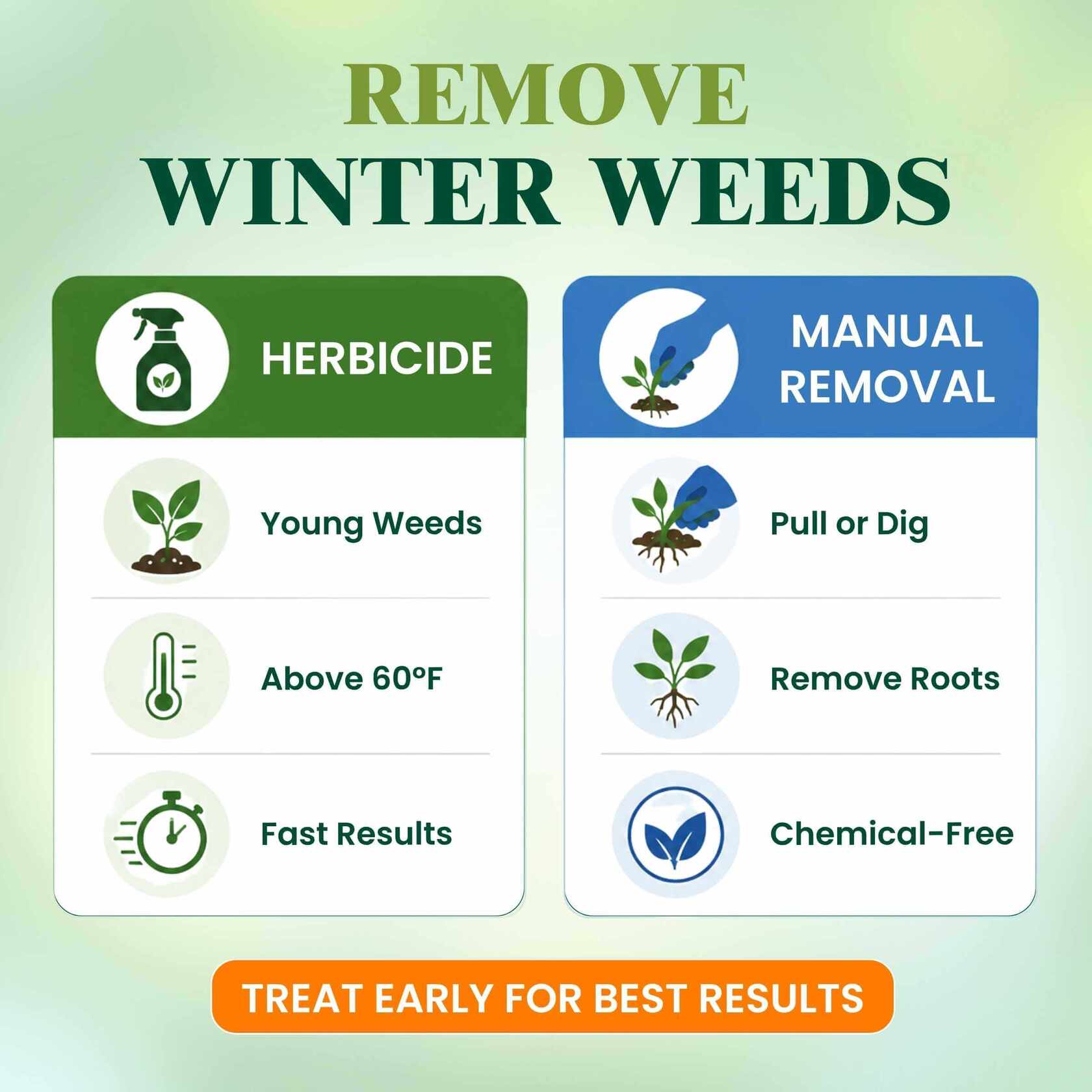
Herbicides containing the combination of 2,4-D, dicamba, and mecoprop are effective at killing a wide range of broadleaf weeds.
For best results, apply post-emergent herbicides when weeds are young and actively growing. Herbicides work best on young plants, and treating weeds early also minimizes seed spread.
Apply post-emergent herbicides on mild days when temperatures consistently exceed 60°F. Herbicides work less effectively when it’s too cold outside because they're unable to move throughout the plant as quickly. Always read the product's label for temperature recommendations, as some herbicides are more temperature-sensitive than others.
To learn more about different application methods (spot vs. broadcast treatment) and herbicide types (selective vs. nonselective), check out our guide on How to Apply Post-Emergent Herbicide.
Manual Removal
An eco-friendly alternative to post-emergent herbicides is manual removal methods, such as:
Handpulling
Digging
Weeding tools
When manually removing weeds from the lawn, the entire root system must be removed to prevent regrowth. For easier removal, remove the roots when the ground isn’t frozen.
Prevent Winter Weeds From Coming Back
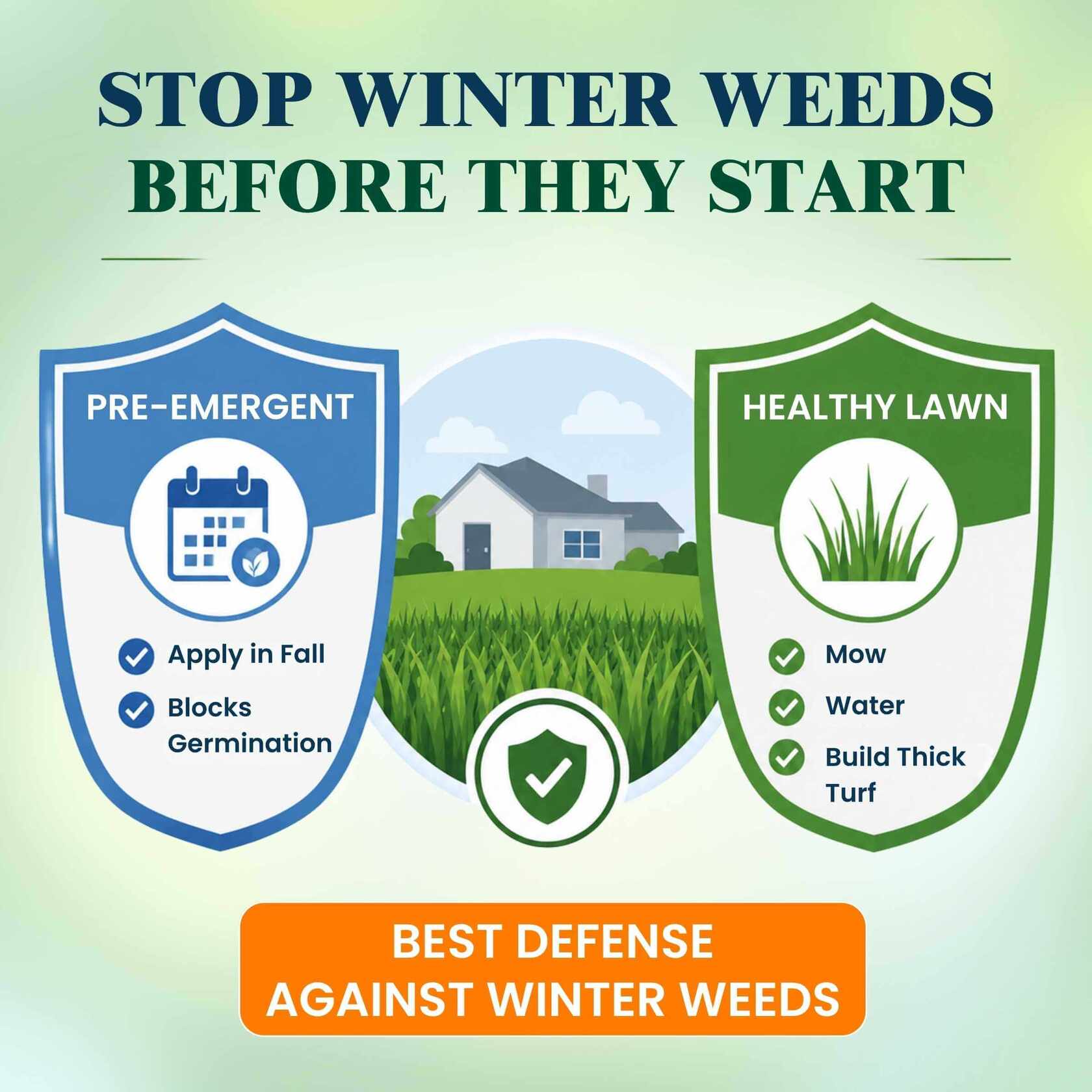
The most effective way to prevent winter weeds is to combine pre-emergent herbicide with proper lawn care. If you depend too much on pre-emergent herbicide without caring for your lawn, your lawn will become host to all sorts of issues, including pests and fungi.
Pre-Emergent Herbicide
Pre-emergent herbicide creates a chemical barrier that blocks weed seeds from germinating. Unlike post-emergent herbicides, pre-emergent herbicides do not kill existing weeds.
If it’s already late fall or winter, it’s too late to apply pre-emergent herbicide, because weeds have already germinated by this point.
Many winter weeds begin to germinate when fall soil temperatures are between 50 and 70°F. To get ahead of their growth, apply pre-emergent herbicide when soil temperatures start to drop and approach 70°F (typically around early fall).
Tip: If applying pre-emergent herbicide in fall, do not overseed. Pre-emergent herbicide’s chemical barrier blocks all seeds from growing, including grass seed.
Proper Lawn Care
Winter weeds are less likely to appear in well-maintained lawns with thick, dense growth.
A dense grass canopy blocks sunlight from reaching young weeds and reduces the available space for them to grow. On the other hand, thin and patchy lawns have more open space available for weeds to thrive.
Proper lawn care includes good mowing techniques, watering wisely, and caring for the soil’s health. If you’re not sure where to start, check out our Beginner’s Guide to Lawn Care for a comprehensive breakdown.
Is Your Pre-Emergent Herbicide Not Working?
Sometimes, despite your efforts to thicken the lawn and apply pre-emergent herbicide, weeds still manage to break through. But why? It likely has something to do with the herbicide.
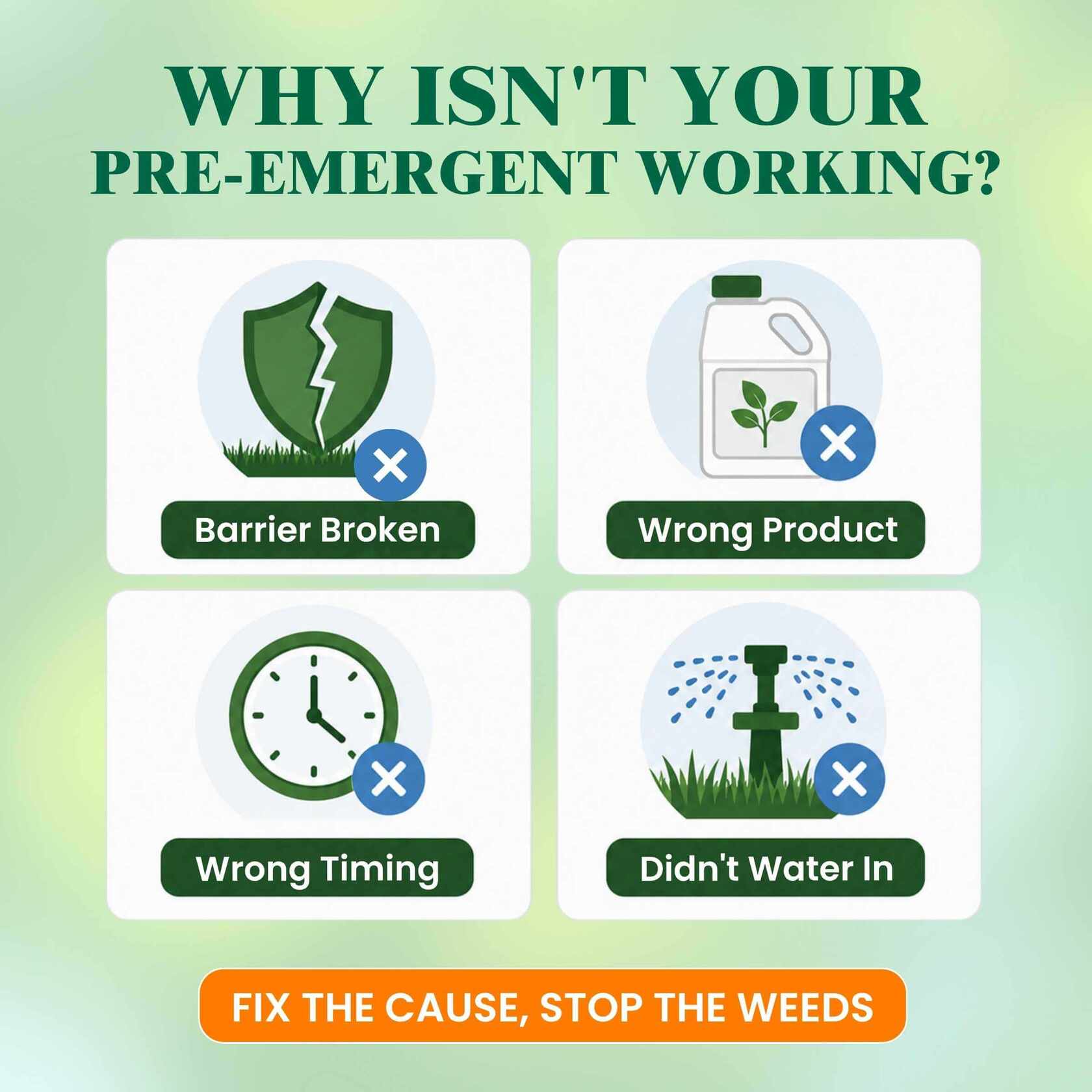
Here are 4 reasons why your pre-emergent herbicide may not be working. If the following explanations still don’t fix the problem, weeds may be growing in your lawn for another reason.
1. Chemical Barrier Was Disrupted
Pre-emergent herbicide creates a chemical barrier that prevents weed seeds from germinating. However, performing invasive treatments — like aeration or thatch removal — after applying the herbicide can break down this chemical barrier and make it less effective.
Solution: Apply pre-emergent herbicide after performing aggressive lawn treatments, if timing allows.
2. Wrong Herbicide Was Applied
There’s no single pre-emergent herbicide that prevents all weeds. In other words, pre-emergent herbicides are designed to target specific weeds. A product formulated to prevent common broadleaf weeds won’t necessarily prevent grassy weeds, like annual bluegrass.
Solution: Before applying pre-emergent herbicide, identify which winter weeds have historically grown in your yard.
3. Herbicide Was Applied at the Wrong Time
To prevent winter weeds, it may make logical sense to apply pre-emergent herbicide in early winter. However, this is not the right time. Winter weeds actually germinate throughout fall, so you need to act early and apply herbicide at the beginning of fall.
Solution: Apply pre-emergent herbicide in early fall when soil temperatures begin to drop and approach 70°F.
4. Herbicide Was Not Watered In
To activate pre-emergent herbicide, it must be watered into the soil immediately after application. If you skip this important step, the product won’t work effectively.
Post-emergent herbicides generally should not be watered after application because the product needs to remain on the weed.
Solution: Water in pre-emergent herbicide immediately after application and always read the product’s instructions.
Keep Weeds Away With a Lawn Care Pro
Winter annual weeds appear in many climates across the United States, whether it's the chilly winters of Manchester, New Hampshire or the mild winters of Tampa, Florida.
Regardless of where you live, growing a vigorous, healthy lawn is an effective way to prevent weeds in winter (and summer, too). GreenPal makes that part easy by connecting you with local lawn care professionals who can handle your lawn's mowing and aeration needs. They’ll keep your lawn thick and healthy, and winter weeds will have less opportunity to squeeze in.