


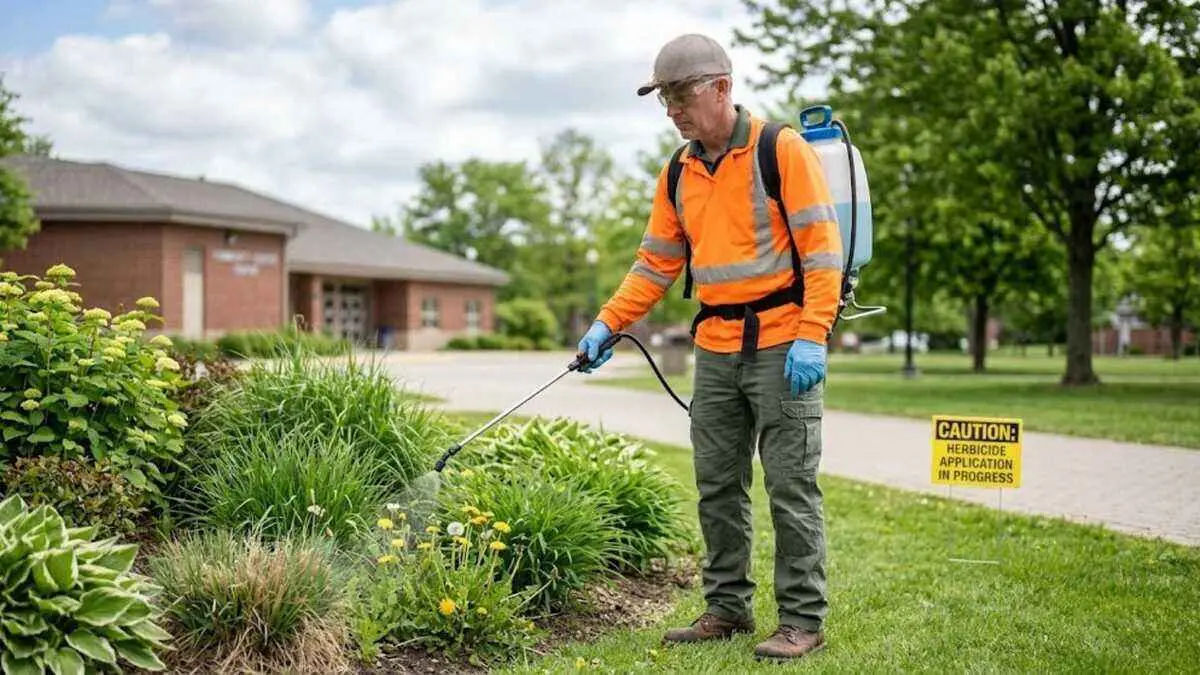
How to Apply Post-Emergent Herbicide
When done right, applying post-emergent herbicide is a straightforward and effective way to kill existing weeds. When done wrong, it could cost you the lawn. In this guide, we'll show you how to apply post-emergent herbicide to eliminate broadleaf weeds, grassy weeds, and sedges without harming your turfgrass.
How to Choose Your Post-Emergent Herbicide
Step 1: Identify the Weed
By identifying the weed you’re trying to control, you’ll be able to select the right herbicide for the job. Some herbicides are specially formulated to control specific weeds. If you don’t identify the weed, you risk applying an herbicide that won’t work.
Learn More:
Step 2: Decide Between Selective vs. Non-Selective Herbicide
The severity of your weed infestation can help you determine whether to apply a selective or non-selective herbicide.
Selective herbicides are formulated to control specific weeds, and won’t harm other plants. For example, Sedgehammer is designed to kill yellow and purple nutsedge, but it won’t kill other weeds, like crabgrass and dandelions. It also won’t harm your turfgrass.
Non-selective herbicides kill any plant they come in contact with. That’s why it’s important to apply non-selective herbicide with caution, because it can kill the grass, too. Even if you only apply it on the weed, the surrounding grass may die and leave behind a small bare spot.
So, which do you choose?
Choose selective post-emergent herbicide if you want to target specific weeds and protect turfgrass in the affected areas.
Choose non-selective herbicide if you need to control multiple, widespread weeds and you don’t mind eliminating turfgrass in the affected areas.
Step 3: Decide Between Broadcast vs. Spot Treatment
Once you’ve decided between selective vs. non-selective herbicide, determine the application method. Your options include broadcast treatment or spot treatment.
Broadcast treatment involves spreading the herbicide over the entire lawn or affected area. This method is ideal for widespread weed problems.
Spot treatment involves only treating isolated weeds.
Caution: Some grasses are sensitive to certain herbicides, particularly centipedegrass and St. Augustinegrass. Read the product label to see whether it’s safe for your grass, as this may influence the product you buy and how you apply it.
Step 4: Decide Between Liquid vs. Granular Products
Herbicide is available in liquid and granular forms. Liquid is usually preferred, because it provides better coverage and allows for more precision when applying it.
For liquid herbicides, you’ll need spraying tools, such as a handheld sprayer, pump sprayer, backpack sprayer, or boom sprayer.
For granular herbicides, you’ll need either a drop or broadcast spreader. Granular herbicides are usually intended for selective, broadcast treatment.
Before You Apply Post-Emergent Herbicide
Step 1: Read Instructions
Always read the product’s instructions to ensure a safe and responsible application.
For example, some herbicides can only be applied at certain temperatures or require a specific wait time before the yard is safe again for children and pets.
The instructions will also explain how much to apply. Overapplying the product could harm the lawn and the local environment.
Step 2: Mow the Lawn… Then Wait
It’s best not to apply herbicide immediately after mowing the lawn. That’s because the more weed foliage there is for the herbicide to contact, the better. Plus, fresh cut grass is more vulnerable to chemical burn.
Step 3: Check the Weather
Schedule your application on a calm, dry day that is within your product’s recommended temperature. Make sure no rain is expected for at least 24 to 48 hours after application.
If you’re applying liquid herbicide, choose a day with no wind. Wind causes herbicide spray droplets to drift away from the target area, resulting in wasted product or accidental damage to desired plants.
Step 4: Have the Right Gear
Herbicide is a type of pesticide, and applying pesticides is a hazardous activity. Always read the safety precautions listed on the product’s packaging and wear the recommended personal protective equipment (PPE), including unlined chemical-resistant gloves, eye and face protection, and chemical-resistant boots.
The University of Missouri Extension provides a comprehensive guide on personal protective equipment when applying pesticides.
How to Apply Liquid Post-Emergent Herbicide
Tip: Apply post-emergent herbicide when weeds are young and actively growing.
Step 1: Gear Up
Before you handle any herbicide, put on your personal protective equipment.
Step 2: Prepare the Solution
Read the Instructions: The product label should explain the exact ratio of water and liquid concentrate.
Gather Materials: You will need a clean backpack sprayer or hand-pump sprayer and measuring cups (which should never be used for food or drinks).
Fill With Water: Fill the sprayer with the recommended amount of water.
Add the Concentrate: Measure the correct amount of liquid herbicide based on the treatment area’s size. Add the liquid concentrate to the water.
Add Surfactants: Some product labels recommend adding surfactants (to help the liquid stick to weed leaves) or a spray indicator dye (to help you see your coverage and ensure even application). Add these now if recommended.
Shake: Seal the sprayer’s lid tightly and shake it vigorously to create a uniform mixture.
Step 3: Apply
For broadcast treatments, begin at the outer edge of the treatment area and spray the product in straight rows, working your way inward. Overlap the rows slightly to ensure even coverage.
For spot-treatments, spray the liquid directly onto the weed until the leaves are fully wet. If you are using a non-selective herbicide, be careful with the surrounding grass.
If the wind starts to pick up, pause the application and resume when the wind calms.
Step 4: Follow Re-Entry Instructions
Follow the product’s listed wait time to allow the product to dry. Most recommend a wait time between 24 and 72 hours before the yard is safe for pets and kids. Always refer to the product label for re-entry instructions.
Step 5: Wait to Water and Mow
For most post-emergent herbicides, wait at least 1 to 2 days before watering the lawn and at least 2 to 3 days before mowing. This allows enough time for the weeds to absorb the herbicide.
Step 6: Rinse and Store Equipment
Thoroughly clean your equipment to avoid cross contamination. Tightly seal the herbicide bottle and store it at room temperature. Keep the product out of reach of children and pets.
How to Apply Granular Post-Emergent Herbicide
Tip: Apply post-emergent herbicide when weeds are young and actively growing.
Step 1: Gear Up
Put on your protective gear, gather your broadcast or drop spreader, and set the spreader to half of the recommended application rate (you’ll be making 2 passes across the lawn).
Step 2: Apply
Tip: Apply the granules in the early morning when the lawn is slightly wet with morning dew, which helps the granules to stick to weeds.
Spread the granules as you would a granular fertilizer. Walk the spreader around the lawn’s perimeter and gradually work your way across the lawn. Slightly overlap the rows to ensure even coverage.
Make 2 passes with the spreader. Apply the first half of the application going North to South, then apply the second half going East to West.
Step 3: Wait to Water and Mow
For most granular post-emergent herbicides, wait at least 2 days before watering or mowing the lawn.
Step 4: Follow Re-Entry Instructions
For granular herbicides, it is generally safe for kids and pets to return to the yard once the granules are fully watered into the soil and the lawn has completely dried. Always consult the product label for re-entry instructions.
Step 5: Rinse and Store Equipment
Thoroughly clean your equipment to avoid cross contamination. Tightly seal the herbicide package and store it at room temperature. Keep the product out of reach of children and pets.
After Applying Post-Emergent Herbicide
Weed control starts with proper lawn care. A lush, vigorous lawn is more likely to block weed growth than a thin, weak lawn.
After applying post-emergent herbicide, revisit your lawn care routine. Is your lawn receiving the maintenance it deserves? Check out our lawn care articles for guidance:
Tip: Another way to prevent weeds is to figure out why weeds grow in your lawn in the first place.
Frequently Asked Questions About Herbicide
What Are Systemic vs. Contact Post-Emergent Herbicides?
A systemic herbicide is absorbed by the plant and kills the whole plant, including its roots.
A contact herbicide only kills parts of the plant it comes in contact with, and does not travel throughout the plant’s vascular system.
Most synthetic herbicides are systemic and kill the entire weed. On the other hand, most organic herbicides (including horticultural vinegar) are contact herbicides and only kill the weed leaves. Because contact herbicides don’t kill the roots, regrowth often occurs.
What Is the Best Post-Emergent Herbicide?
The best post-emergent herbicide depends on your specific grass type and the weed you need to control. Remember, some turf grasses are sensitive to certain herbicides. For instance, St. Augustinegrass and centipedegrass are sensitive to 2,4-D.
How Long Does Post-Emergent Herbicide Take to Work?
Depending on the product used, it can take 1 to 2 weeks to see the initial signs of damage. You should see full results from post-emergent herbicide within a month.
When Should I Apply Post-Emergent Herbicide?
Apply post-emergent herbicide when the weeds are young and actively growing. Summer weeds can start to grow as early as late spring, and winter weeds start to appear in late fall.
When Should I Apply Pre-Emergent Herbicide?
Apply pre-emergent herbicide to prevent weed seeds from germinating. To prevent summer weeds, apply pre-emergent herbicide in early spring when soil temperatures are between 50 and 55°F.
To prevent winter weeds, apply pre-emergent herbicide in early fall when summer soil temperatures start to drop and approach 70°F.
Hire a Lawn Care Professional
To remove weeds the right way, choose your herbicide with caution — spreading a non-selective herbicide across the lawn will kill your grass. And choosing a selective herbicide for one weed won’t necessarily control another.
One of the best ways to control weeds in the lawn is to prevent them with proper lawn care. GreenPal makes it easy for homeowners to connect with local lawn care professionals in many areas across the country, including Killeen, TX, Reno, NV, and Little Rock, AR.


