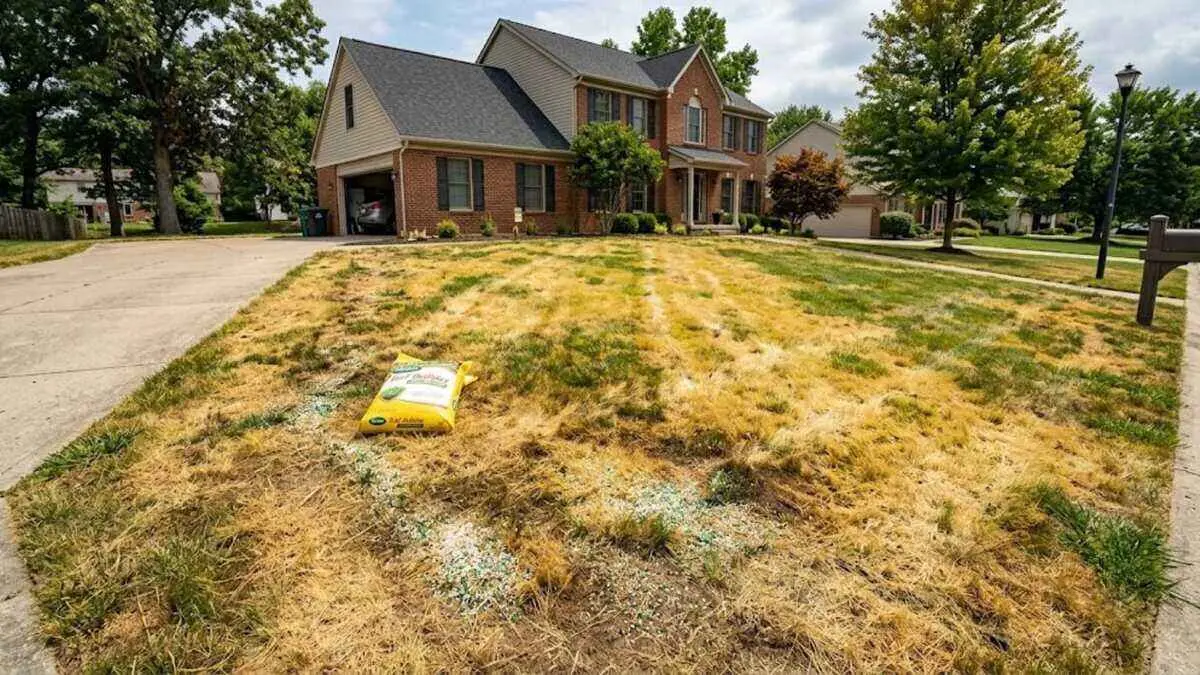
Why Is My Lawn Yellow After Fertilizing?
Fertilizer is meant to feed and green up the lawn. So when your lawn turns yellow instead, it’s no wonder you’re left scratching your head. There are 5 common reasons why the grass turns yellow after fertilizing, including misapplication, imbalanced soil pH, and stressful environmental conditions.
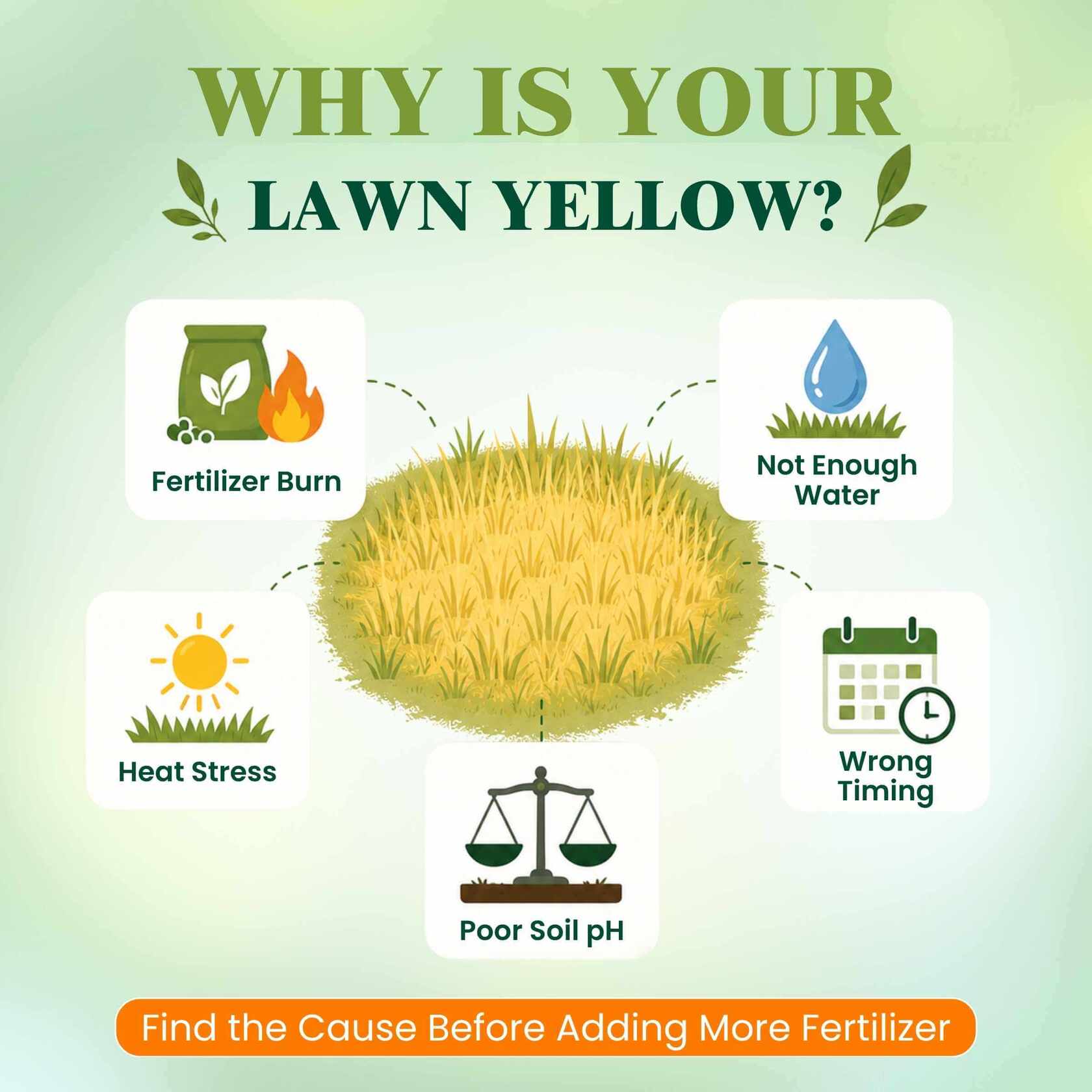
5 Reasons Why Your Lawn Is Yellow After Fertilizing
1. Fertilizer Burn
If your grass is yellow after fertilizer, it may be fertilizer burn. Fertilizer burn occurs when excess salts build up in the soil and pull moisture out of the leaf tissue and roots, leading to dehydration.
Fertilizer burn is often caused by applying too much fertilizer or applying it unevenly. When applied unevenly — which usually occurs when applied by hand — fertilizer burn may appear as streaks in the lawn in areas where the fertilizer was overapplied.
Solutions:
Identify your grass type and perform a soil test to determine the right amount of fertilizer your lawn needs.
Use a broadcast or drop spreader to ensure even application. Avoid applying fertilizer by hand.
If you’re passing over the lawn twice (which is a common application strategy), set the application rate to half the recommended rate. Otherwise, you’ll apply double the amount of fertilizer.
2. Lack of Irrigation
Fertilizer granules can scorch leaf tissue if they aren't watered in after application. Unlike the salt buildup from overapplication, this type of burn happens because dry granules sit directly on the grass blades and draw moisture out of the leaf tissue.
Solution: Water the lawn immediately after applying granular fertilizer. The water dissolves and washes the granules off the grass blades, allowing nutrients to move into the soil where roots can absorb them. Leaving granules unwatered for an extended period increases the risk of scorching.
3. Heat or Drought Stress
A lawn baking under the sun or suffering from drought stress is already struggling to retain moisture and cool itself. Applying fertilizer under these conditions adds salts to an already limited water supply, which can intensify the water loss described above and dehydrate the blades.
Solution: Avoid fertilizing during periods of extreme heat or drought, and wait until the lawn has recovered and is actively growing again. Check the fertilizer label for temperature guidance, since some products specify a maximum application temperature.
4. Wrong Time of Year
When the grass isn't actively growing, it doesn't take up water and nutrients at normal rates. That's why fertilizer should only be applied during the lawn's active growing season.
Fertilizing a lawn that isn't actively growing (whether due to drought, heat, or winter dormancy) can leave fertilizer salts concentrated around the root system instead of being absorbed by the lawn. These salts draw moisture away from the roots, which can cause fertilizer burn.
Solution:
If your lawn has warm-season grass, fertilize in late spring through summer.
If your lawn has cool-season grass, fertilize in early fall. Early to mid-spring is an acceptable time to fertilize cool-season grass; however, early fall is the best time.
5. Imbalanced Soil pH
You've applied the fertilizer correctly, yet the grass is still turning yellow.
Here's the thing:
The issue might not be the fertilizer at all. It could be your soil.
If the soil pH is imbalanced, the roots can't absorb the nutrients that are already present in the soil, even if you've applied fertilizer exactly right. Most lawns prefer a soil pH between 6.5 and 7.0, though some grasses tolerate slightly more acidic or alkaline soil.
When the pH becomes too high or too low, fertilizer won't work as intended, and the lawn may yellow as a result — not from burn, but from a nutrient deficiency the grass can't correct on its own.
Solutions:
Perform a soil test to learn its pH. Then, adjust the soil pH until it's back to the desired range.
If the soil pH is too high and you need to lower it, check out our guide How to Apply Sulfur to Your Lawn.
If the soil pH is too low and you need to raise it, check out our guide How to Apply Lime to Your Lawn.
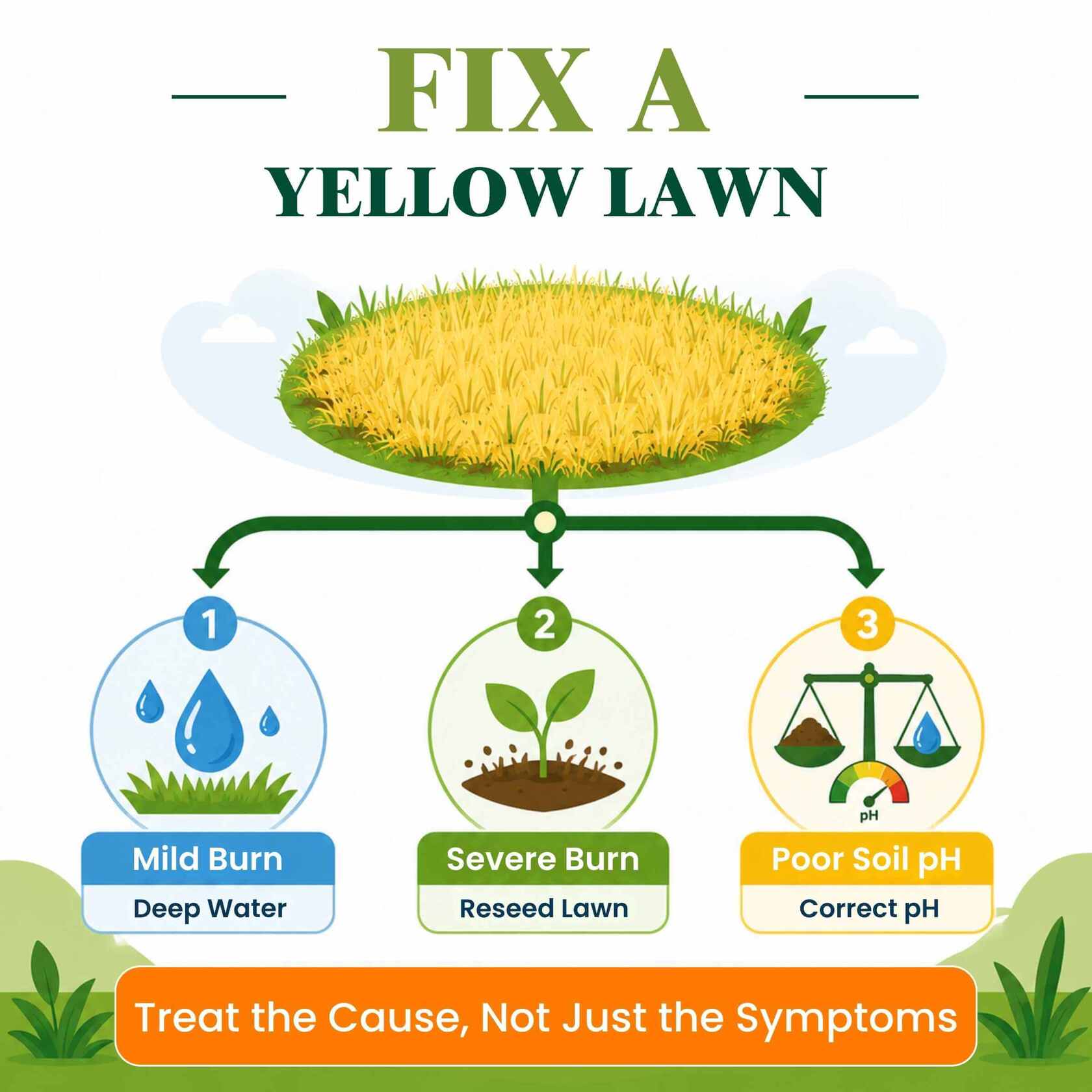
How to Fix Your Lawn When It Turns Yellow After Fertilizing
Mild Fertilizer Burn
Here’s the good news: In mild cases, grass can recover on its own from fertilizer burn in a few weeks. If you over-apply fertilizer, the University of Maryland Extension recommends soaking the affected area with 1 inch of water — repeated two or three times — to help leach excess salts from the soil.
Severe Fertilizer Burn
If the fertilizer burn was severe enough to kill the grass roots or crown, you'll need to reseed the affected areas. Plant warm-season grass seed in late spring or early summer, and plant cool-season grass seed in early fall or early spring (ideally early fall).
Yellowing From Soil pH
If the yellowing is caused by an imbalance in soil pH, the grass won’t heal on its own. You’ll need to apply the appropriate amendments (such as lime or sulfur) to adjust the soil pH. It can take months for soil amendments to take effect, so prepare to be patient.
Frequently Asked Questions About Yellowing and Fertilizer
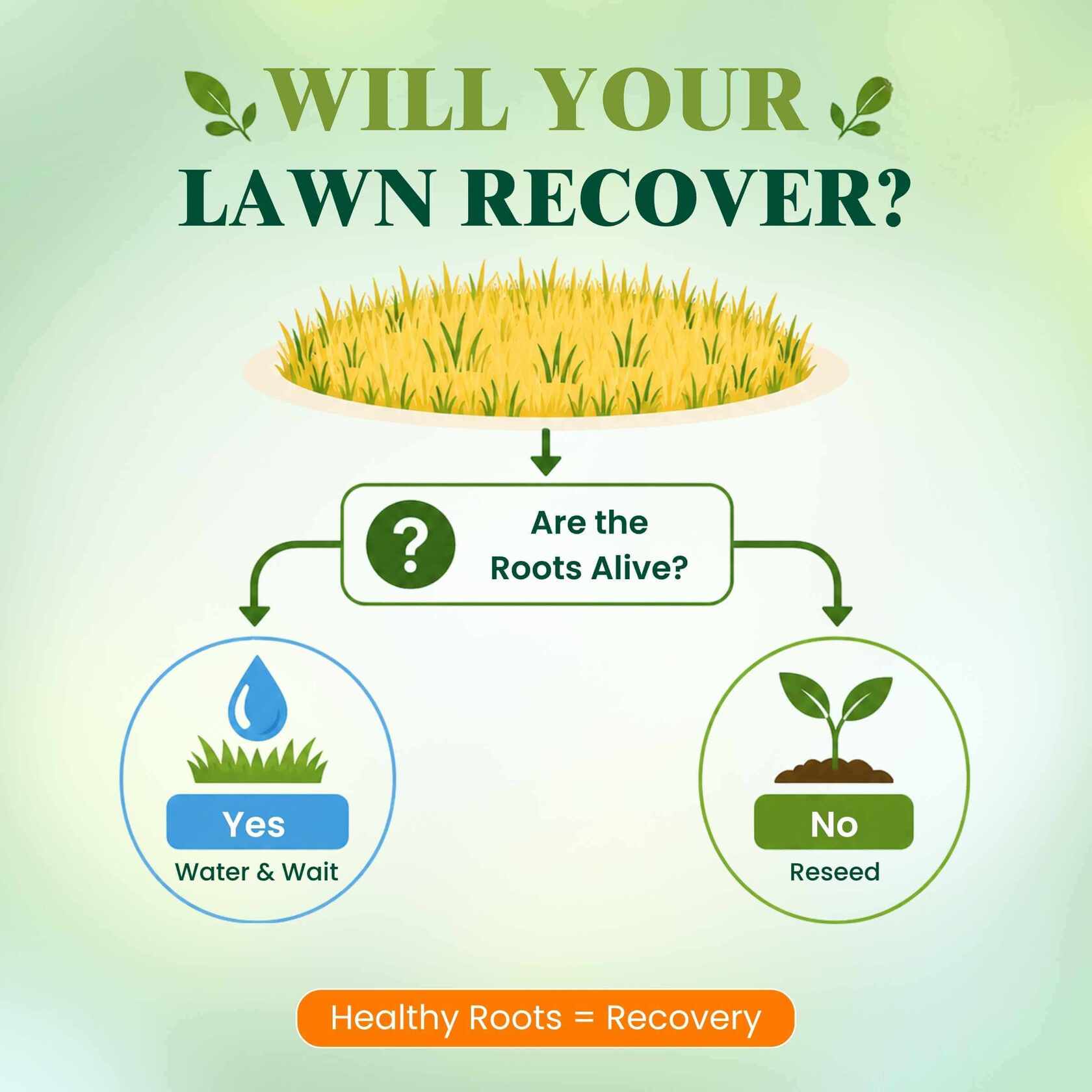
1. Will Grass Recover On Its Own From Fertilizer Burn?
If the fertilizer burn is mild and the excess fertilizer is diluted with water, the grass can resume regular growth and recover on its own. As the new growth comes in, mowing gradually removes the yellowed or scorched tips.
Mild fertilizer burn usually means the roots are alive and only the leaf blades were affected. If the fertilizer burn is severe and kills the roots, the affected area needs to be reseeded. You can test whether the roots are alive by gently tugging the grass. If the grass pulls up easily with little resistance, the roots or crown are likely dead.
2. Can Watering Fix Yellow Grass After Fertilizing?
Yes, if the fertilizer burn is mild, watering can fix yellowed grass by diluting and leaching the excess nutrients and salts.
3. How Can I Prevent My Lawn From Yellowing After Fertilizing?
To prevent the lawn from yellowing after fertilizing, here’s what to do:
Identify your grass and perform a soil test to determine the right amount of fertilizer your lawn needs.
Correct your lawn’s soil pH, if necessary.
Refer to your soil test results and fertilizer packaging to determine the application rate. Do not overapply.
Apply fertilizer with a broadcast or drop spreader to ensure even application.
Water in fertilizer granules after application.
Water the lawn deeply if fertilizer was overapplied or spilled.
Always apply at the right time of year.
Do not apply fertilizer during extreme heat.
Protect Your Lawn’s Green Color
Fertilizer may not be the only reason why your lawn turned yellow. Yellow grass is caused by many common lawn problems, including over or underwatering, improper mowing, grubs, and compacted soil.
That's why the best way to protect your lawn's green color is to practice proper lawn care. But keeping up with every task can be time-consuming, especially if you're already stretched thin.
Consider hiring a local lawn care professional for mowing and aeration, so you can get back to enjoying your green yard with peace of mind. GreenPal connects homeowners with trusted lawn care pros all throughout the country, including Jackson, MS, Tulsa, OK, and Honolulu, HI.