How to Get Rid of Cutworms in the Lawn
Pencil-sized holes, small circular patches of dead grass, and clipped leaf blades may signal a cutworm problem in the lawn. In this guide, we’ll show you how to get rid of cutworms in the lawn with a combination of cultural and biological methods.
Start by improving your lawn care routine and removing thatch. Kill cutworms in the early larval stage by applying soil-dwelling nematodes or microbial insecticide. Chemical control, which can harm the environment, should only be used as a last resort against a severe infestation.
What Do Cutworms Look Like?
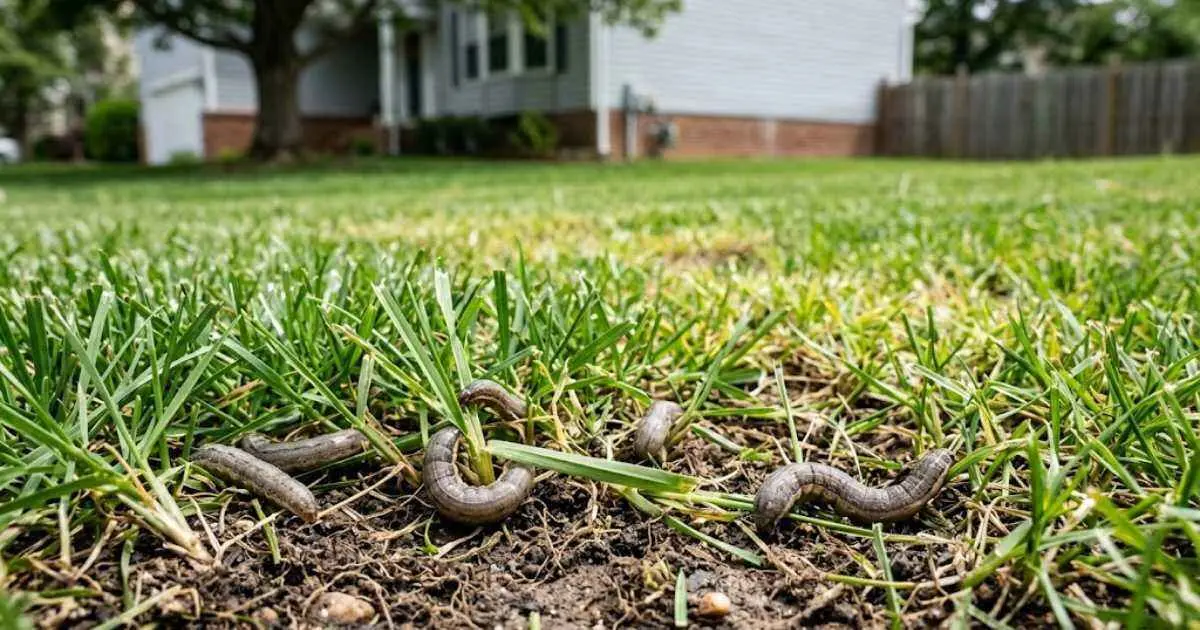
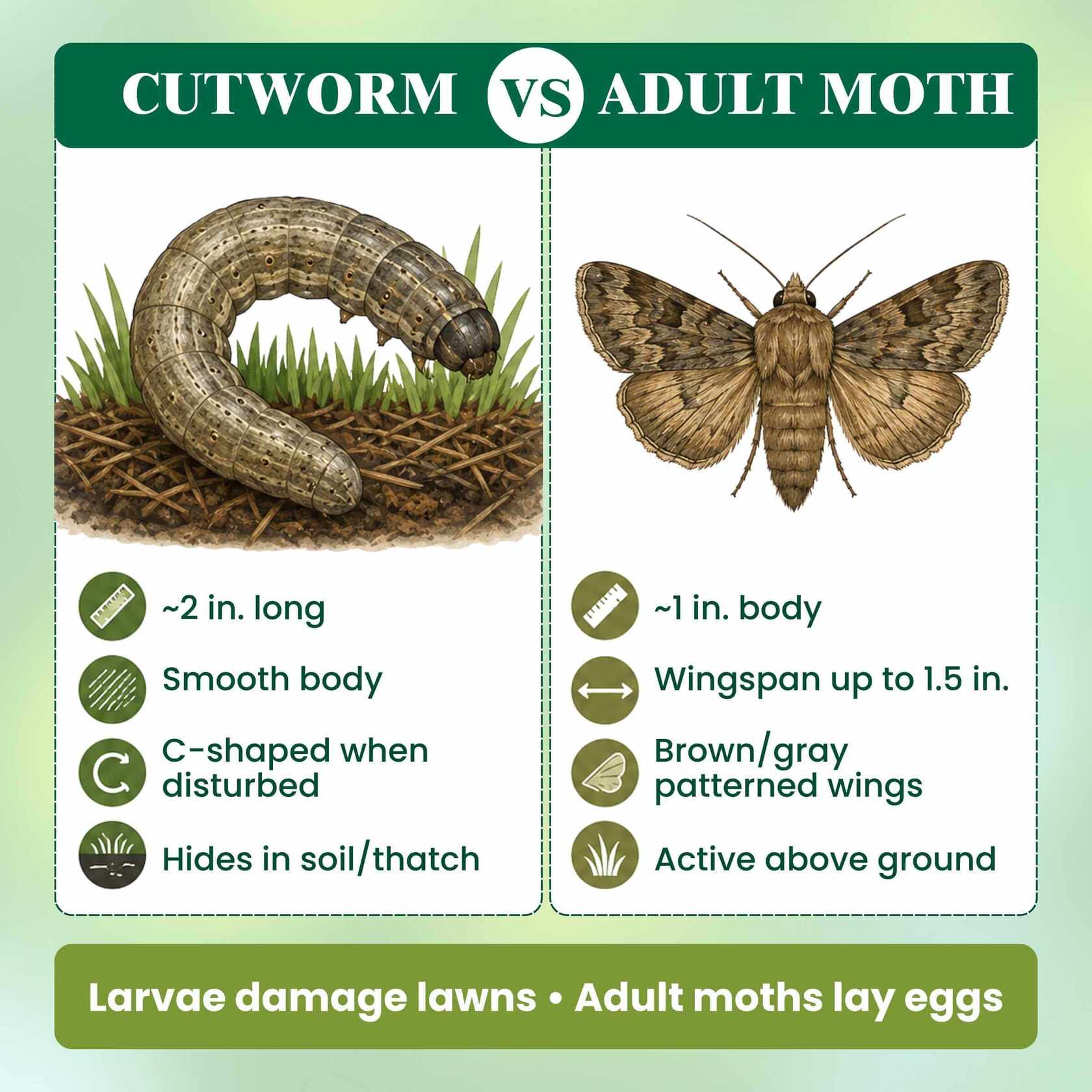
Cutworms are the caterpillar stage of multiple species of moths. They feed on the lawn at night and hide in the thatch layer or soil during the day. Here’s what they look like:
About 2 inches long when fully grown.
Bodies are smooth and hairless with a few small bristles.
Tightly curl into a ‘C’ shape and lie still when disturbed.
Depending on the species, they can range in colors from brown to tan, pink, green, gray, or black. Their patterns can also range from uniform to spotted or striped.
The adult lawn moths:
Have a 1-inch body length with wingspans up to 1.5 inches across.
Are brown or black with various splotches and stripes in shades of brown, black, white, or gray.
Have front wings that are typically darker than the hind wings.
Cutworm Life Cycle
Migration: The cutworm lifecycle begins with adult lawn moths emerging from winter dormancy. Some species — such as black and variegated cutworms — overwinter in southern climates as pupae and adult moths and then migrate up north in spring. Species that are local to northern climates — such as dingy, bronzed, and glassy cutworms — overwinter up north and do not migrate.
Mating: After emerging or migrating in spring, the adult moths mate and lay eggs. A single female moth can lay hundreds of eggs either singly or in small clusters on the tips of grass blades.
Hatching & Feeding: The eggs hatch into caterpillars a few days later and begin to feed on the grass at night, typically in early to mid-spring depending on the species and region. The larvae usually pupate in late spring and emerge as adult moths by mid-summer. Multiple generations of cutworms may soon follow, with damage lasting until fall.
Diagnose Cutworm Damage
Depending on the region and species, cutworm damage can appear as soon as early spring and last until late fall. Here are the signs to watch for:
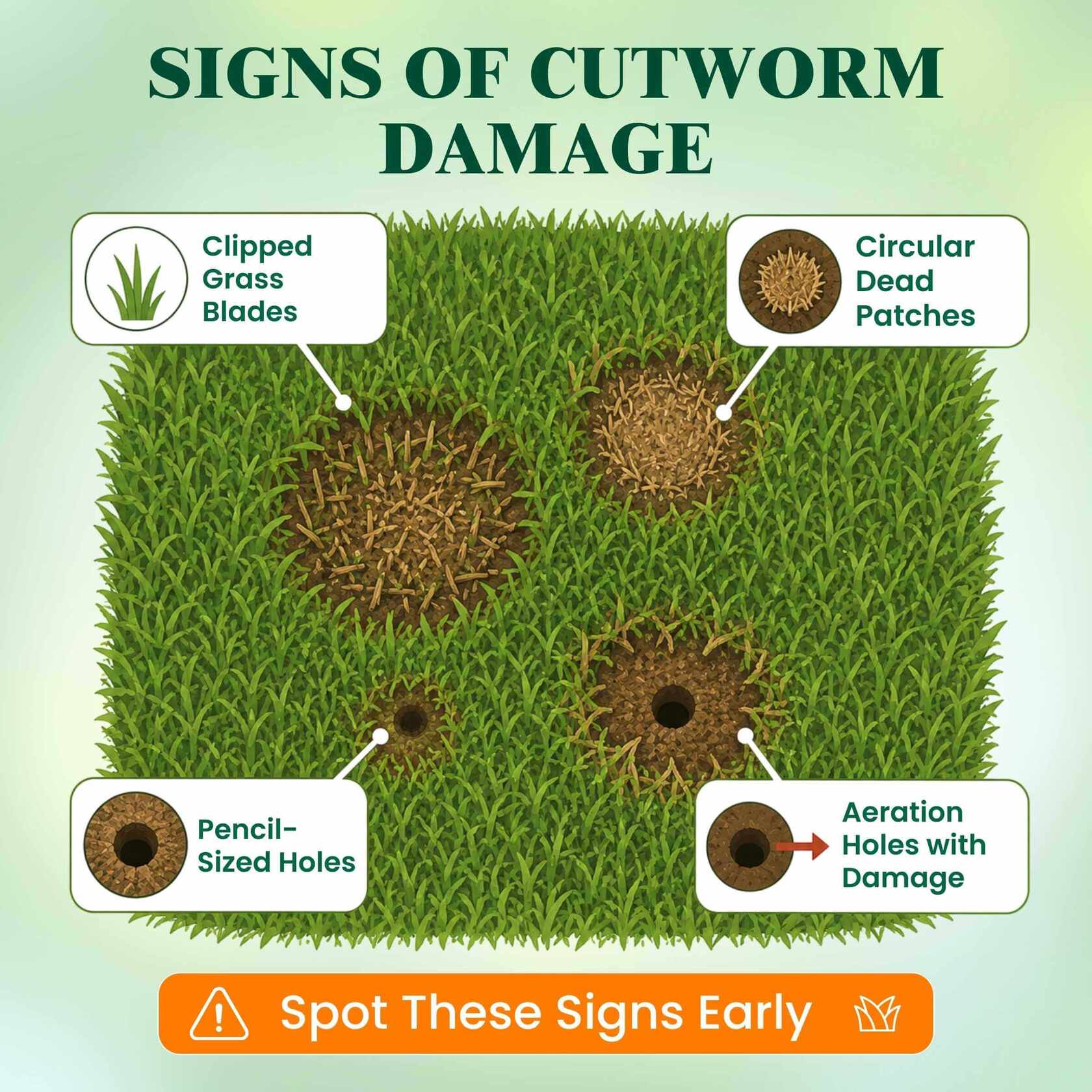
Cutworms feed on the leaves and crowns of turfgrass at night, and may clip off individual grass blades.
The damage may appear as circular spots of dead grass in the lawn.
Some cutworms, especially the black cutworm, create small pockmarks in the ground, which look like pencil-sized holes or ball marks on a golf course.
- Cutworms like to occupy aeration holes because the holes give them easy passage between the soil and the turf surface. If you recently aerated and notice turf damage around the holes, cutworms may be the culprit.
How to Test For Cutworms
Cutworms feed on the lawn at night and hide during the day, so it’s difficult to catch them red-handed. That’s where a drench test can help.
Pour a soapy water solution over one square yard of damaged, well-irrigated turf. The solution should contain:
2 tablespoons of lemon-scented liquid soap
- 2 gallons of water
Apply the solution in the morning when the larvae are still close to the surface after their nighttime feeding period. A few minutes later, larvae irritated by the soap will rise to the soil surface.
Control Methods for Cutworms
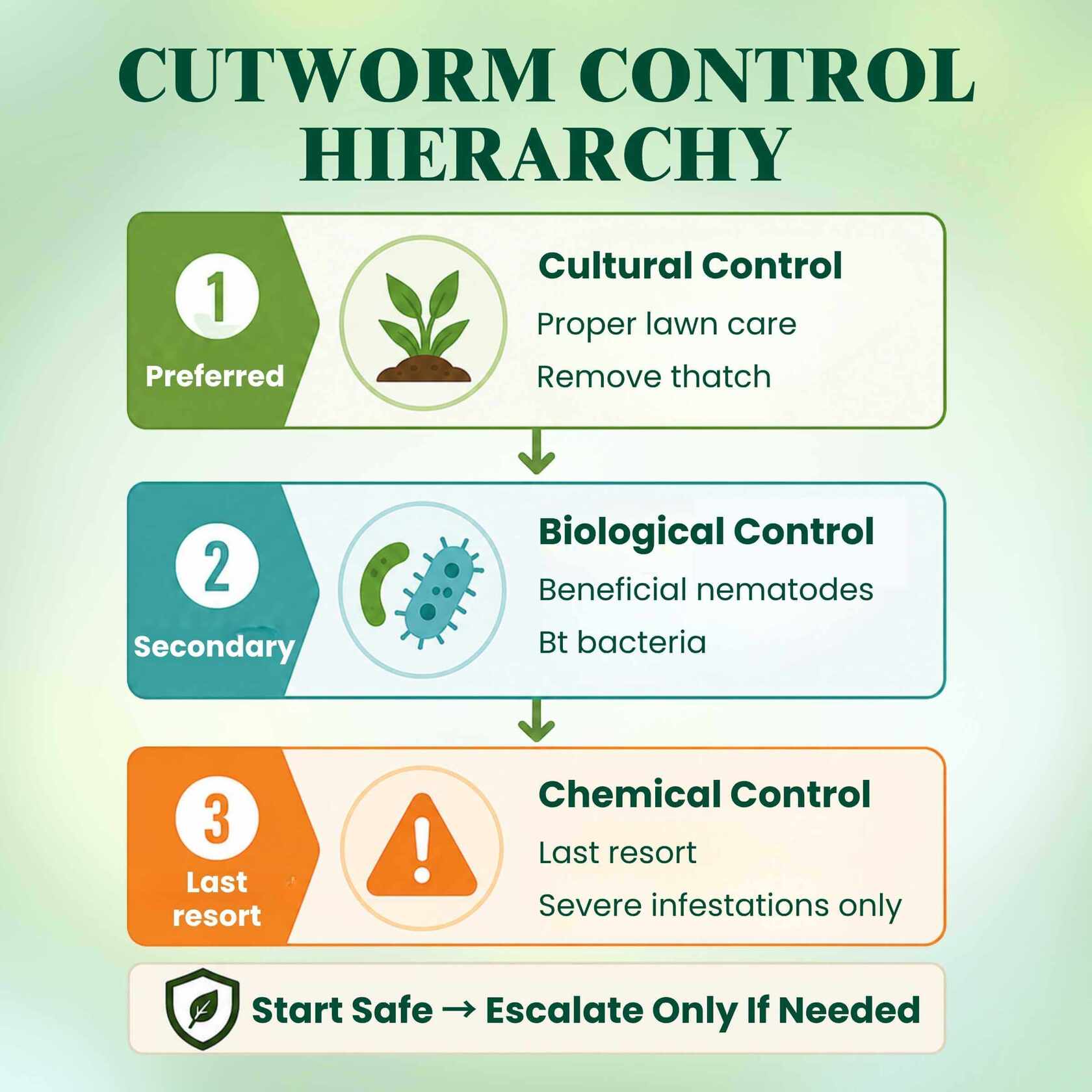
If a soap flush confirms an active infestation and damage is present, consider a combination of cultural and biological control. Chemical control is rarely necessary for cutworms in lawns unless the infestation is severe.
Cultural Control
To reduce the need for insecticides, start by making the lawn less attractive to cutworms and adult moths. Plus, a healthy lawn is more likely to tolerate minimal pest activity and show less damage.
Improve lawn care: An overmaintained lawn with lush growth and thick thatch can be an attractive place for adult females to lay their eggs. Adjust your lawn care routine so that you’re not overfertilizing, overwatering, or even overmowing.
-
Remove thatch: Cutworm larvae like to hide in thatch during the day. Removing their hiding spot can help deter future generations.
( GreenPal Marketplace )Get 5 free bids from local lawn prosTop-rated pros near you send real quotes in minutes — no contracts, no haggling.Get My Free BidsNo credit card required. Get matched in 60 seconds.
If maintaining these practices is difficult to manage on your own, consider hiring a local lawn care professional to maintain your lawn’s health and vigor for you.
Biological Control
Biological pest control is a method of managing pests by using other living organisms, such as fungi, parasites, viruses, bacteria, or predators. It’s generally considered safer for the environment than chemical insecticides.
Biological control methods for cutworms include the following soil-dwelling nematodes and microbial insecticide:
Insect-parasitic nematodes, such as Steinernema carpocapsae, can provide good control against cutworms when applied correctly. Apply nematodes in the evening onto moist (not soggy) soil and immediately follow with irrigation. Keep the soil moist for 2 weeks after application. Nematodes have a short shelf-life, so always check their expiration date, follow storage instructions, and apply as soon as possible.
- The microbial insecticide Bacillus thuringiensis ssp. kurstaki (Bt) can help control cutworms in the early larval stages. Repeat applications may be necessary, because the bacterium breaks down quickly in sunlight and easily washes off leaves. Do not irrigate for 2 days after application.
Chemical Control
Chemical control is rarely necessary for cutworms, and should be treated as a last resort. Insecticides can harm pollinators, the lawn’s ecosystem, and the natural predators that control cutworms.
However, when cutworms are persistent over multiple years and cultural and biological controls are not working, chemical control may be warranted.
The following insecticides can be used to control cutworms. For best results, apply the insecticide when the caterpillars are young and in the early instar larval stages:
Acephate
Bifenthrin
Carbaryl
Cyfluthrin
Lambda-cyhalothrin
Permethrin
- Spinosad
Tip: Always follow the product's labeled application instructions. In many cases, mowing and irrigating before treatment and holding off on both for at least 24 hours afterward can improve results. However, requirements vary, so defer to the label.
How to Recover the Lawn From Cutworm Damage
Overseeding the damaged areas and applying a balanced lawn care routine is the best way to help turf bounce back from cutworm damage.
If your lawn grows cool-season grass, overseed in early spring or early fall to repair damage. For warm-season lawns, the best time to overseed is in late spring or early summer.
Not sure how to improve your lawn care routine? Check out our comprehensive lawn care guides to help boost your lawn’s health, beauty, and recovery:
Frequently Asked Questions About Cutworms
Do Adult Lawn Moths Damage the Grass?
No, it is the cutworm larvae that damage the grass, not the adult lawn moths.
Does Mowing the Lawn Kill Cutworms?
No, mowing the lawn does not kill cutworms. However, good mowing habits are an effective cultural control strategy to deter cutworms, because tall grass and dense weeds create desirable egg-laying opportunities for female moths.
Do Cutworm Control Strategies Control Sod Webworms?
Yes, cutworm and sod webworm control strategies overlap significantly. If you’ve misidentified a sod webworm as a cutworm, cutworm control methods will still help treat the infestation.
Find a Lawn Care Pro Near You
The best way to prevent and treat caterpillar damage is with a balanced lawn care routine. Adult moths are attracted to overly fertilized lawns because of the lush growth and thick thatch available for the larvae.
Improve your lawn’s health and minimize its thatch build-up with balanced fertilizer, routine mowing, and aeration. Need some assistance? GreenPal makes it easy to find local grass cutting services and lawn maintenance companies in many areas across the country, including Sioux Falls, SD, Sacramento, CA, and Lafayette, LA.