Pre-Emergent vs. Post-Emergent Herbicide: What’s the Difference?
Weeds have no business invading your lawn, and applying herbicide is one way to keep them away.
In this article, we’ll cover the differences between pre-emergent and post-emergent herbicides. Pre-emergent herbicide is applied to prevent weeds, while post-emergent herbicide is applied to kill existing weeds. Both are important, but need to be applied at different times of year.
What Is Pre-Emergent Herbicide?
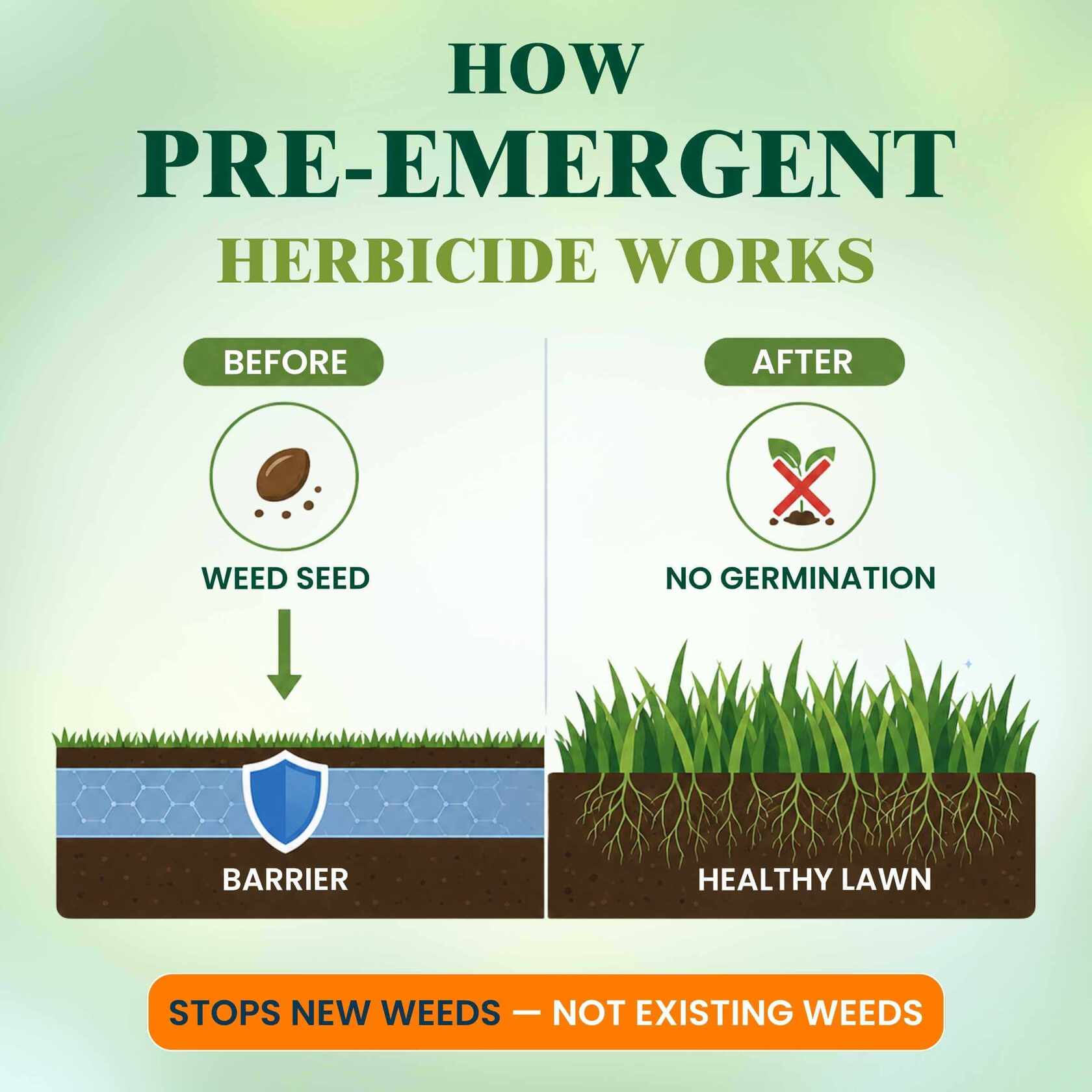
Pre-emergent herbicide creates a chemical barrier across the lawn that prevents new weed seeds from germinating. Unlike post-emergent herbicide, pre-emergent herbicide does not kill existing weeds.
Different pre-emergent herbicides target different weeds. For example, a product that prevents nutsedge won’t necessarily prevent crabgrass. That means you need to determine which weeds you want to prevent before applying pre-emergent herbicide.
When to Apply Pre-Emergent Herbicide
Apply pre-emergent herbicide in early spring to prevent summer weeds. Apply pre-emergent herbicide in early fall to prevent winter weeds.
Summer weeds start to germinate when soil temperatures consistently reach 55°F in spring. To get ahead of germination, apply pre-emergent herbicide when spring soil temperatures are between 50 and 55°F.
Winter weeds germinate as soil temperatures drop into the 50 to 70°F range. Apply pre-emergent herbicide in early fall when soil temperatures begin to drop and approach 70°F.
Learn More: When to Apply Pre-Emergent Herbicide
What Is Post-Emergent Herbicide?
Post-emergent herbicide kills weeds that have already sprouted and are actively growing. Unlike pre-emergent herbicides, it does not prevent weed growth.
There are many different types of post-emergent herbicides. Some kill nearly any plant they contact, while others are designed to target only specific weeds. Let’s take a look at the different types below.
Types of Post-Emergent Herbicide
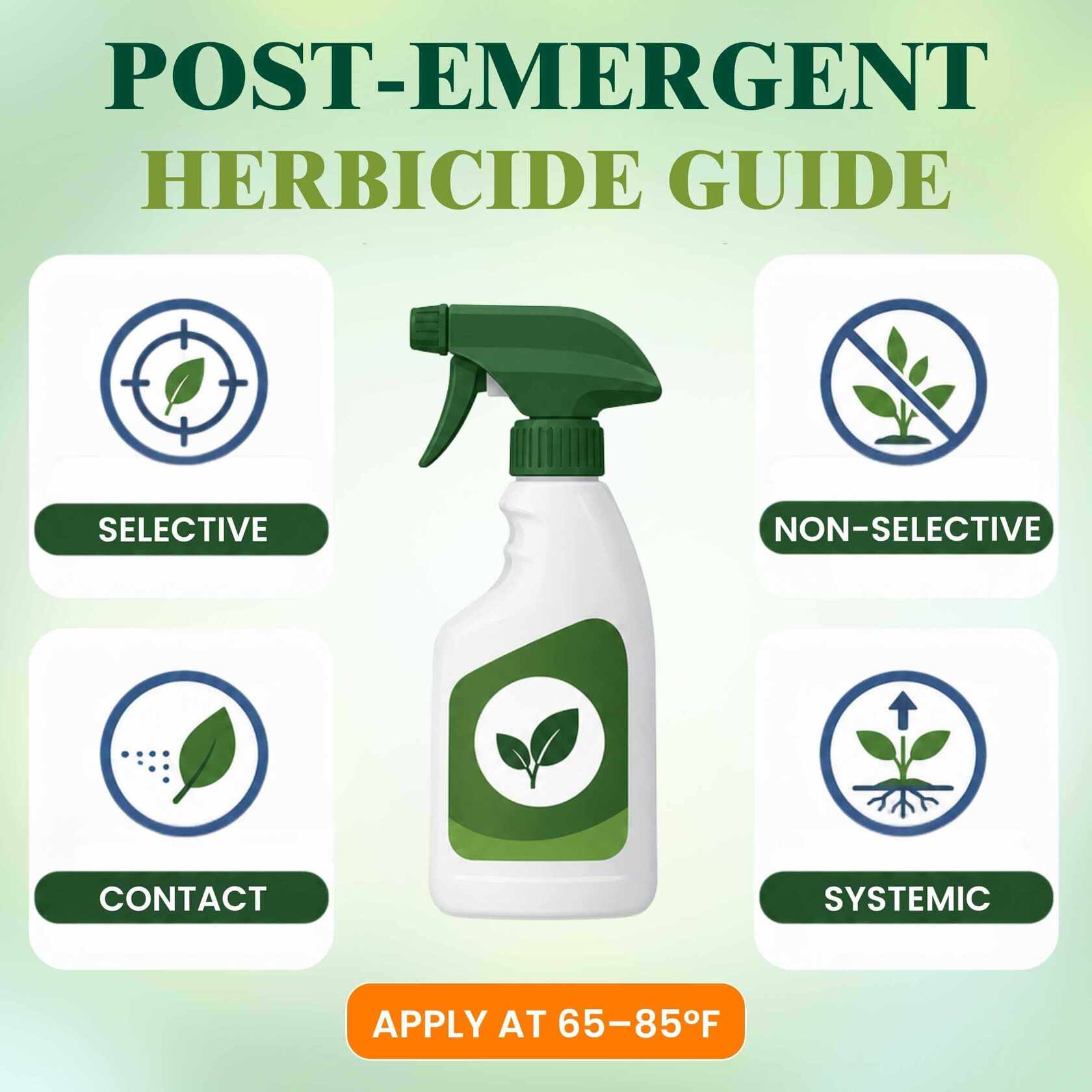
Post-emergent herbicides can be either selective or non-selective and either contact or systemic:
Selective herbicides are designed to kill specific weeds and won’t harm non-target plants. For example, SedgeHammer is a selective post-emergent herbicide that's specifically designed to kill purple and yellow nutsedge without harming established turfgrass or other weeds.
Non-selective herbicides kill any plant they come in contact with, including established turfgrass. These herbicides are typically reserved for spot treatments or when multiple weed types need to be controlled.
-
Contact herbicides kill only the plant parts they touch and do not travel through the plant's vascular system. This leaves the roots alive, often allowing the plant to regrow. Common homemade weed killers, such as boiling water or horticultural vinegar, act as contact treatments.
( GreenPal Marketplace )Get 5 free bids from local lawn prosTop-rated pros near you send real quotes in minutes — no contracts, no haggling.Get My Free BidsNo credit card required. Get matched in 60 seconds. Systemic herbicides are absorbed through the plant’s leaves, stem, or roots and travel through the plant’s vascular system. This helps the herbicide kill the entire plant, including the roots, reducing the chance of regrowth. Most commercial post-emergent herbicides are systemic.
When to Apply Post-Emergent Herbicide
Apply post-emergent herbicides when weeds are young and actively growing. The ideal air temperature for applying most post-emergent herbicides is between 65 and 85°F. When temperatures drop below 60°F, successful herbicide absorption and translocation are lower.
Learn More:
Weed Control Is More Than Just Herbicide
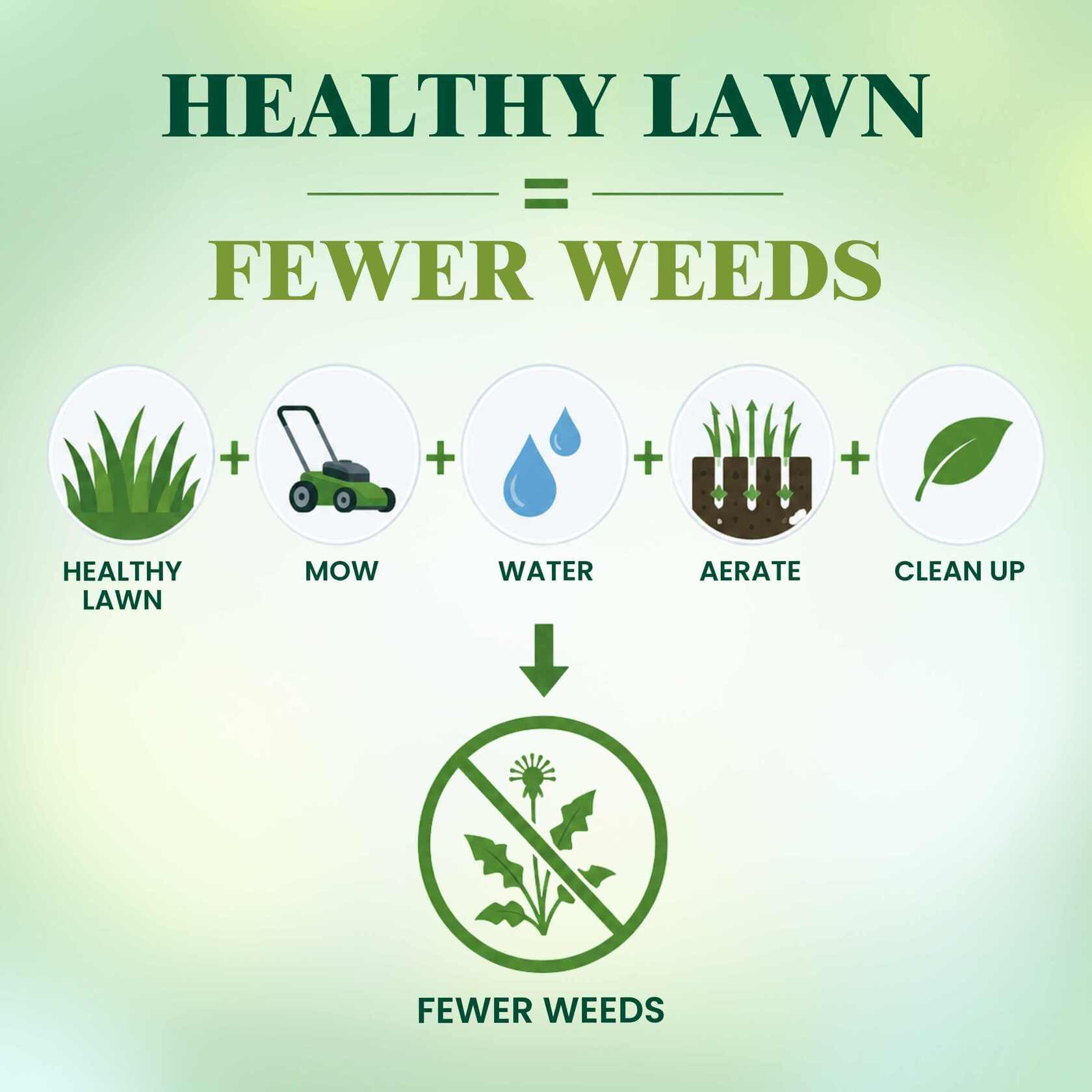
While pre-emergent and post-emergent herbicides are great to have in your arsenal, there's an even more effective tool — good lawn care.
Weed control starts with proper lawn management. The healthier and thicker your lawn, the harder it is for weeds to grow. That's because a vigorous, dense grass canopy blocks sunlight from weed seeds and leaves little available space for weeds to grow.
Proper lawn management includes routine mowing during the active growing season, soil aeration, and leaf removal in autumn. If your lawn is in need of some TLC and you don’t know where to start, check out our Beginner’s Guide to Lawn Care.
Or, hire a local lawn care professional to maintain the lawn for you. GreenPal helps homeowners in cities across the country — including Lake Tahoe, NV and Wichita, KS — find trusted lawn care professionals.