How To Get Rid of Armyworms in the Lawn
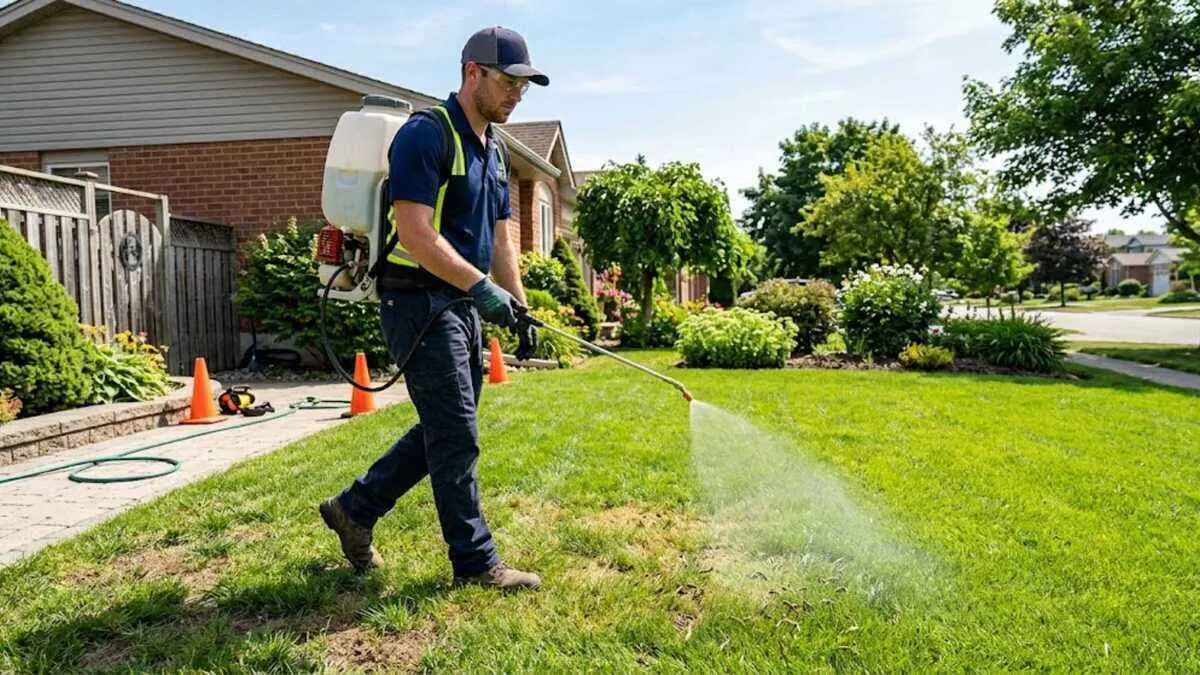
When armyworms march across the lawn, they can destroy the turfgrass within hours. That’s why, when you spot these hungry caterpillars setting up camp, it’s crucial to act fast. We’ll show you how to get rid of armyworms, recover your lawn, and win the battle against these destructive pests.
What Are Armyworms?
Armyworms are the larval stage of several moth species. They’re named for their habit of congregating and moving in large groups when looking for new food sources, rapidly destroying turfgrasses and crops in their wake.
There are many different species of armyworm, including:
Fall armyworm
True armyworm
Beet armyworm
Yellowstriped armyworm
Western yellowstriped armyworm
In this guide, we’ll focus on the fall armyworm, which is among the most common armyworms infesting home lawns.
What Do Fall Armyworms Look Like?
Caterpillars
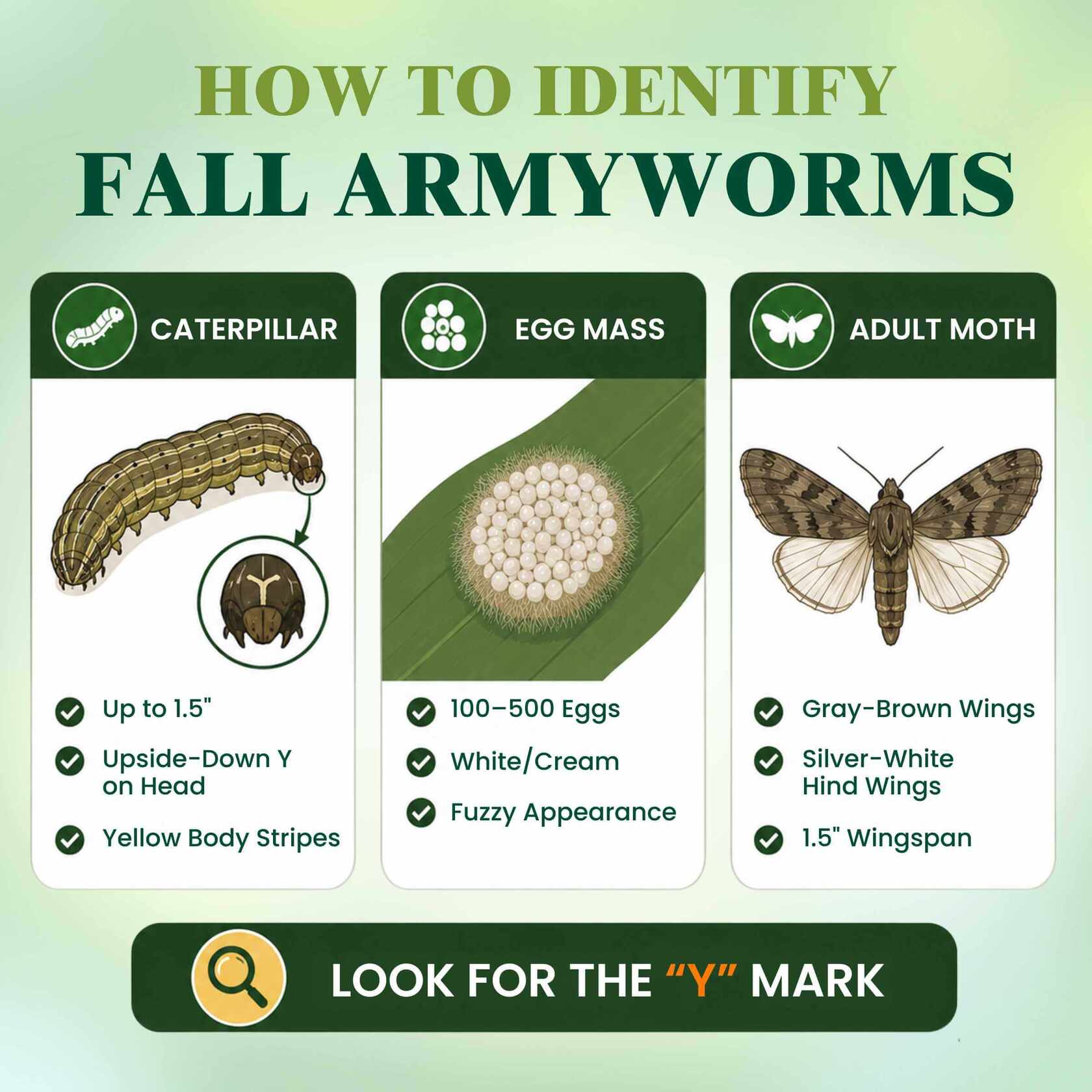
Fall armyworms can be easy to identify with the help of a magnifying glass. Here’s what the caterpillars look like:
Mature larval caterpillars can reach 1.5 inches long.
Body color ranges from green and yellow to brown and gray.
A distinguishing characteristic is the yellow-to-white upside-down "Y" shape on the head, surrounded by pale white dots.
They have three yellowish-white lines — one runs down the back, and the other two run along the sides from head to tail.
They have a broad, pale band running down the back, contrasted by dark bands along the sides.
Each abdominal segment contains 4 dots in the shape of a trapezoid.
The last abdominal segment contains 4 dots in the shape of a square.
Eggs
Egg masses are white to cream in color and contain 100 to 500 spherical eggs.
Eggs sometimes have a moldy or furry appearance.
Eggs can be found on many upright structures, including trees, birdhouses, leaf blades, fences, building siding, and playground equipment.
Adult Moths
The forewings of male moths are generally gray and brown, with white spots at the tip and center of the wings.
The forewings of females range from a uniform grayish brown to an irregular blend of gray and brown.
In both sexes, the hind wings are iridescent silver-white with a narrow brownish border.
Adult moths can reach up to 1 inch in length with a wingspan reaching 1.5 inches.
Armyworm Life Cycle & Seasonal Activity
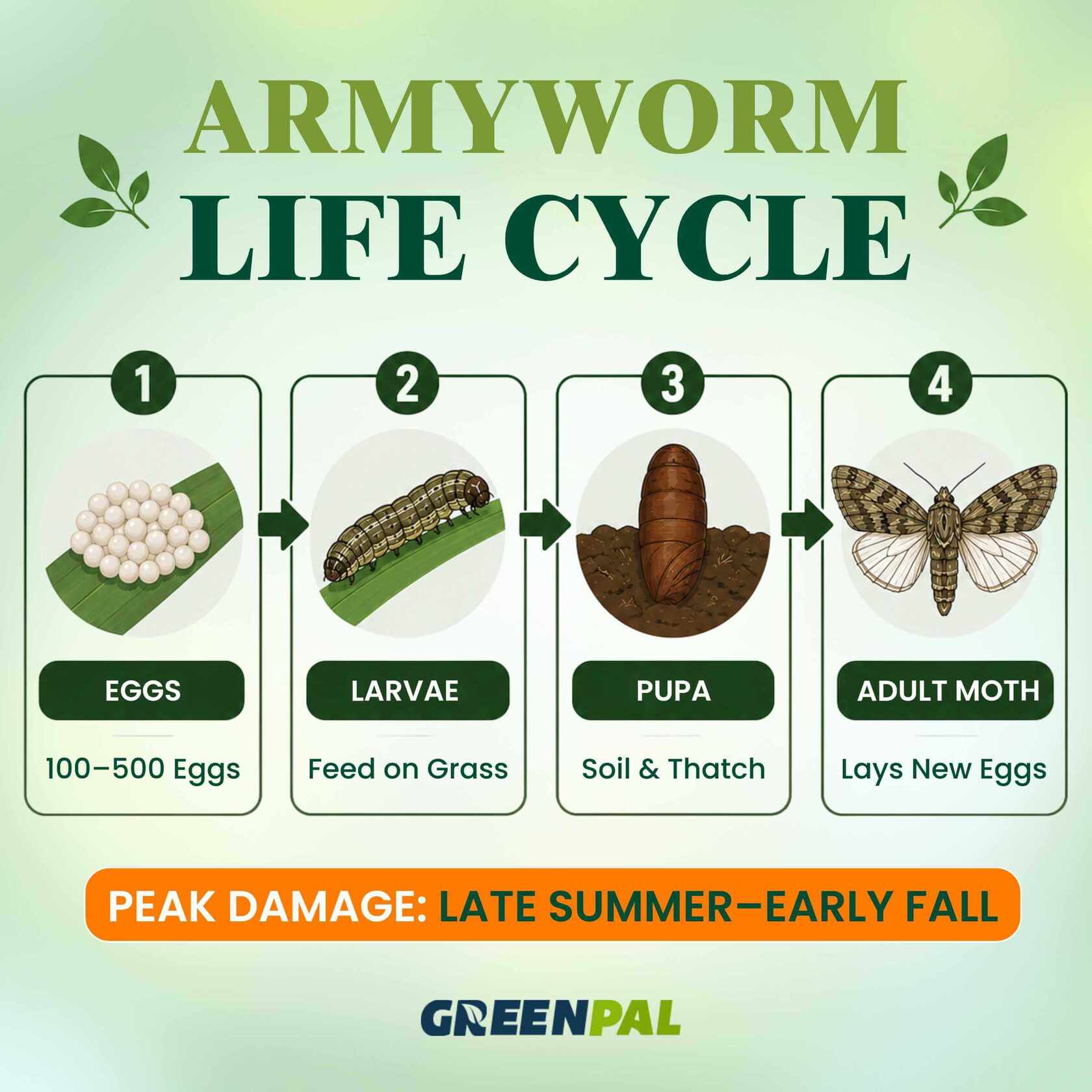
Understanding the fall armyworm life cycle can help you remain alert at the right time of year, with feeding activity typically occurring from late summer to early fall.
Moths deposit eggs: The female moth deposits egg masses between the blades and stems of grasses, or on other upright structures. Each egg mass can contain between 100 to 500 eggs, and a single female moth can produce approximately 1,000 eggs in her lifespan.
Eggs hatch: Depending on temperature, eggs hatch within 3 to 4 days.
Larval feeding: Minimal lawn damage occurs during the early larval stages. Most foliage consumption occurs after the 4th larval stage.
Pupation: By the 6th larval stage, caterpillars burrow into the thatch and soil layer to pupate and emerge as adult moths 10 to 20 days later.
Signs of Armyworms in the Lawn
Because armyworms feed so quickly, lawns can develop rapidly spreading brown patches that appear drought-stressed, heat-stressed, or scalped.
Symptoms can vary depending on the larval stage:
Young larvae do not eat through the leaf tissue, but scrape off the green tissue to reveal the clear membrane, creating a “windowpane” appearance.
Once the larvae reach the 4th instar stage, they can chew through the entire grass blade down to the crown or base.
How to Test for Armyworms
To determine whether the damage is caused by fall armyworms and not another common lawn problem, run a soap flush test. If it's not armyworms, the same test will help identify other common pests with similar symptoms, such as chinch bugs, cutworms, or sod webworms.
Here’s how to perform the soap flush test:
Mix 1 to 2 tablespoons of lemon-scented dish soap in 1 to 2 gallons of water.
Pour the solution over a 1-square-yard section of healthy grass adjacent to the damaged area. Because armyworms move quickly, they have likely abandoned the damaged area and relocated to the nearby healthy grass for more food.
Wait about 10 minutes for the armyworms to rise to the soil surface. The soap should irritate the larvae and force them from their hiding spots.
How to Get Rid of Armyworms
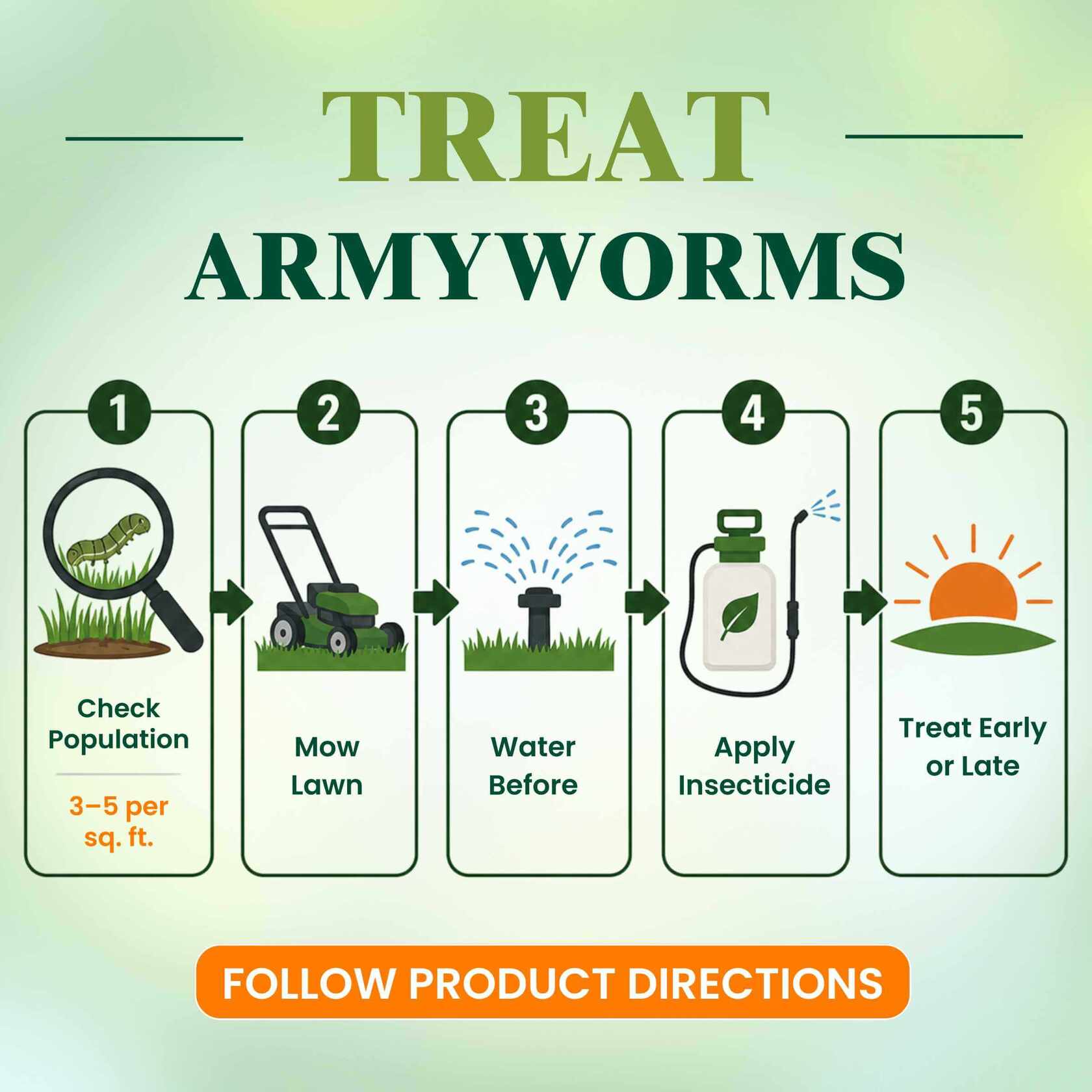
After performing a flush test, count how many armyworms rise to the surface. The University of Georgia Extension recommends treating the lawn when three to five caterpillars per square foot are present.
Insecticides containing the following active ingredients can be used to treat armyworms:
Acephate
Bifenthrin
Cyfluthrin
Cypermethrin
Lambda-cyhalothrin
Permethrin
Spinosad
Trichlorfon
Perform the following steps when applying insecticides:
Always read and follow the product’s application instructions.
Mow the lawn 1 or 2 days before application and remove grass clippings.
Irrigate several hours before application to increase armyworm activity.
Put on Personal Protective Equipment (PPE).
Apply insecticides early or late in the day when armyworms are most active.
If using a granular insecticide, water the lawn to activate it.
If using a liquid insecticide, do not water the lawn for at least 24 hours after application.
How to Get Rid of Armyworms Naturally
Several biological controls can be used to treat fall armyworms, including:
Bacillus thuringiensis var. kurstaki
Steinernema carpocapsae nematodes
Heterorhabditis bacteriophora nematodes
However, these methods only kill early-stage instars and are less effective against mature larvae. Since armyworms can cause extensive damage in a short amount of time, homeowners may prefer faster-acting conventional insecticides.
How to Recover the Lawn From Armyworm Damage
Turfgrass recovery is possible after armyworm damage. Resume irrigation to protect the surviving crowns from moisture loss, and follow up with proper lawn care to support recovery.
If you grow cool-season grass, plant new grass seed in the damaged areas in early fall. If you grow warm-season grass, wait to overseed the affected areas until late spring when temperatures are warmer.
New to lawn care? Check out our comprehensive lawn care guides to help boost your lawn’s health and recovery:
Frequently Asked Questions About Armyworms
Should I Use Granular or Liquid Insecticides Against Armyworms?
Both granular and liquid insecticides are effective against armyworms. However, according to the Oklahoma State University Extension, granular insecticides can be a bit slower acting.
Do Adult Lawn Moths Damage the Grass?
No, it is the larval caterpillars that feed on and damage turfgrass, not the adult lawn moths.
Do Armyworm Control Strategies Control Other Pests?
Yes, armyworm control strategies are effective against other pests, including cutworms and sod webworms. So if you've misidentified the caterpillar infesting your lawn, the armyworm insecticide you use may still control it.
What Turfgrasses Do Armyworms Attack Most?
Fall armyworms attack both warm- and cool-season grasses, with a preference for bermudagrass, St. Augustinegrass, and tall fescue.
Improve Turfgrass Recovery With a Lawn Care Pro
To help your lawn recover from and resist fall armyworms, stick to consistent lawn maintenance. This includes mowing at the right height and maintaining healthy soil. A well-maintained lawn tolerates armyworm damage better than a stressed one, even if armyworms return.
Keeping up with these chores regularly can be difficult with other commitments. GreenPal helps homeowners in cities across the country — including Des Moines, IA and New Orleans, LA — find trusted lawn care professionals for mowing and aeration, so your grass stays strong against armyworms and other lawn problems.