
How to Make Grass Greener: 13 Lawn Care Tips
A quick drive through the neighborhood may leave you wondering why your lawn isn’t as green as your neighbors’. Your lawn likely just needs some TLC, and this guide will show you how to make grass greener with 13 easy lawn care tips.
1. Test Your Soil
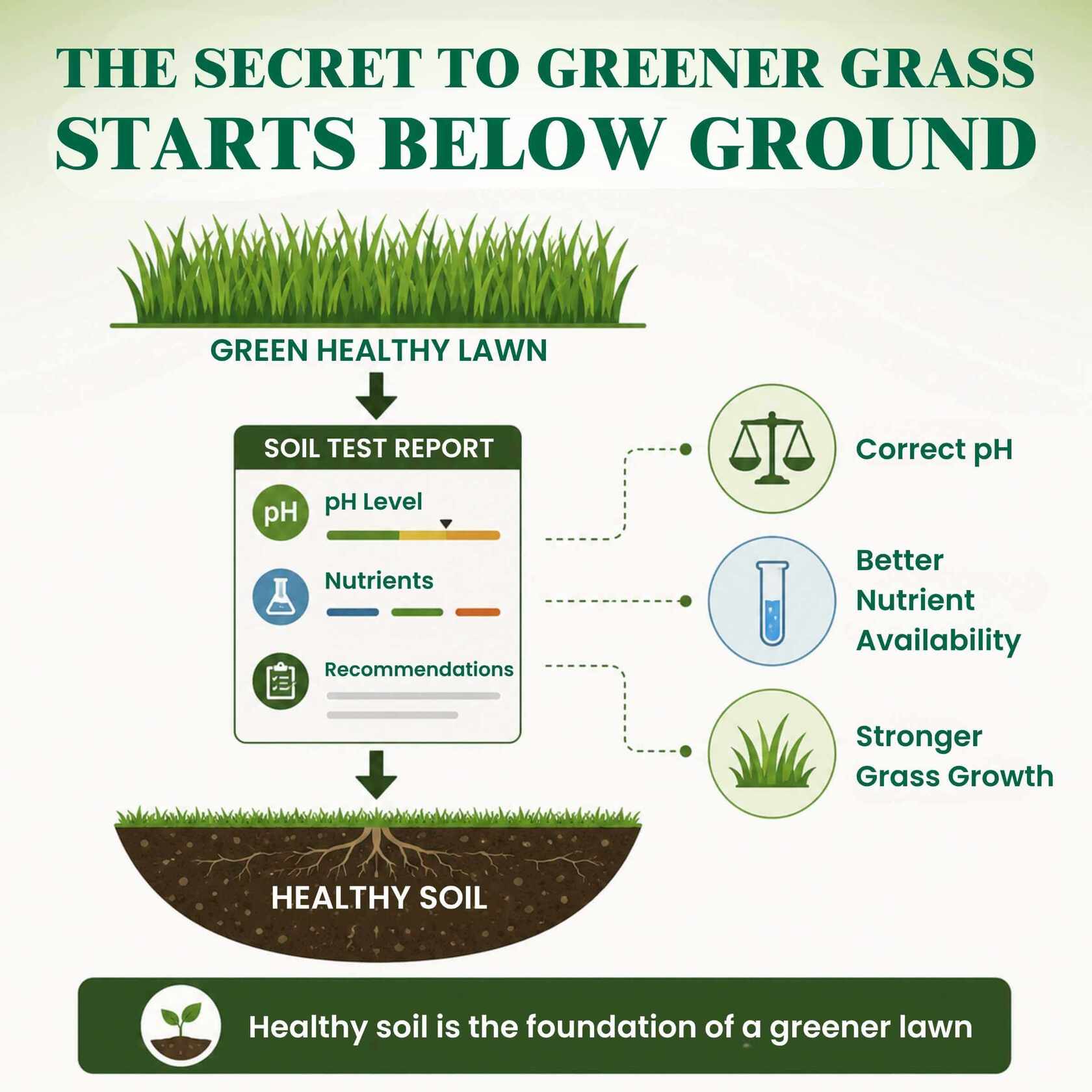
Soil is the foundation of your lawn. When the soil is healthy, so is your lawn.
Get to know your soil with a soil test. While DIY soil kits are available, they don’t provide comprehensive instructions on how to correct the soil. Instead, send a soil sample to your local cooperative extension to receive detailed recommendations on how to care for your soil and lawn.
For example, a soil test can reveal the soil’s pH level and how to correct it with lime or sulfur. When the soil pH is too high or low, certain nutrients in the soil become unavailable, making it difficult for your turfgrass to absorb the fertilizer it needs to grow strong and green.
Tip: If your soil is healthy, continue to test every 3 to 5 years. If you need to correct the pH, test the soil annually until the desired pH is reached.
2. Apply Chelated Iron
When soil pH becomes too high, iron and other nutrients become unavailable. This iron deficiency leads to iron chlorosis, which causes the grass to yellow.
Although sulfur can help lower the pH of alkaline soil, it can take several years to reach the desired level. That’s why a soil test may recommend applying chelated iron when the pH is high. Chelated iron enhances iron availability, helping your grass return to its green color.
3. Fertilize Your Grass
Fertilizer is food for your grass. However, there's such a thing as too much of a good thing. Too much fertilizer is just as harmful as too little.
Refer to your soil test results to determine the right nutrient ratio, application frequency, and application rate for your lawn. Otherwise, you’re just playing a guessing game.
Learn More:
4. Mow Down to the Right Height
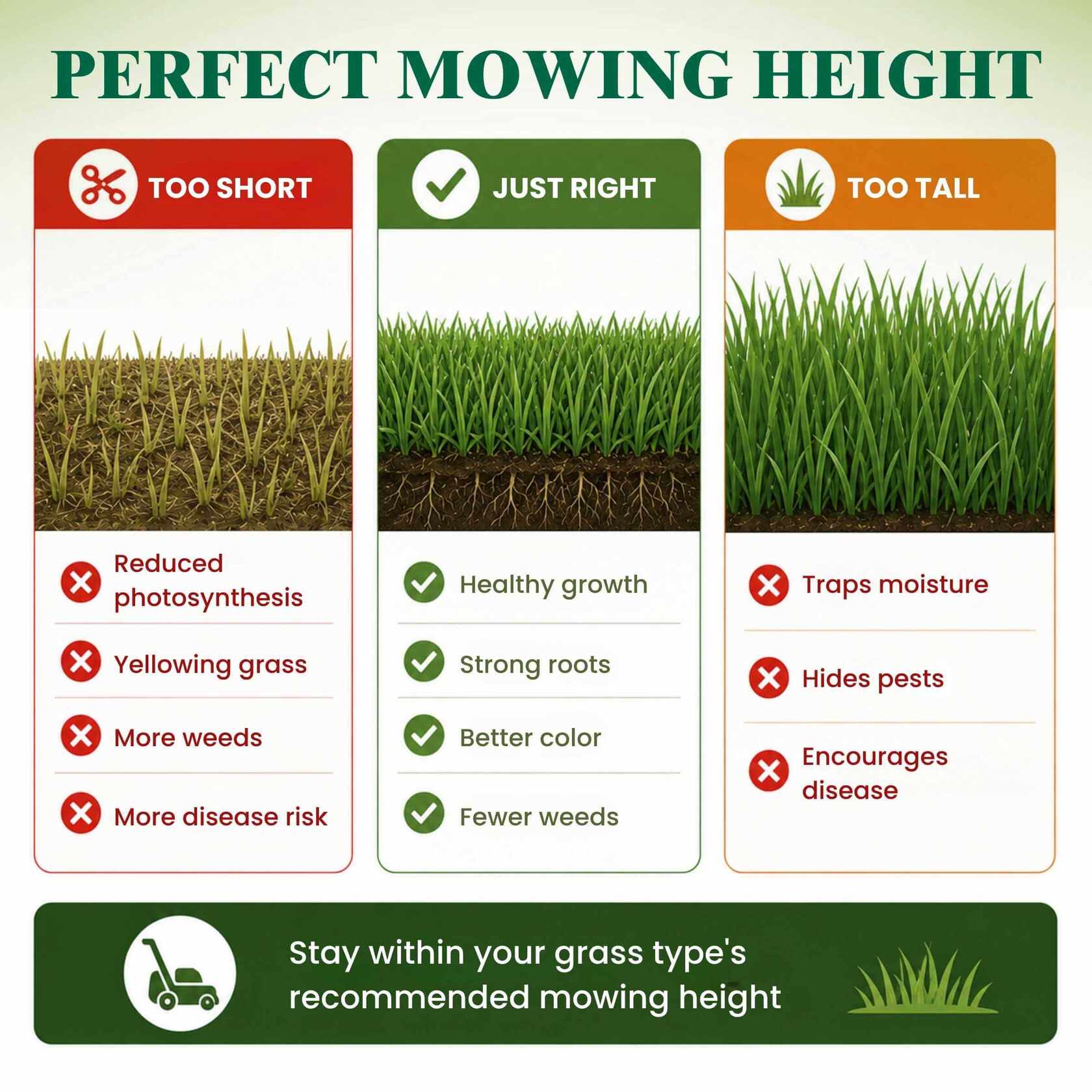
Mow down to your grass type’s recommended height range. Even when making seasonal adjustments — such as mowing low before winter — stay within your grass’ preferred range.
Mowing your grass too short may feel like a time-saver, but it creates more work in the long-run when you need to repair the damage. Cutting the lawn too short minimizes the grass blade’s surface area, which reduces photosynthesis and stresses the lawn. As a result, the lawn yellows and becomes more vulnerable to weeds, pests, and disease.
But don’t leave your grass too tall either. Severely overgrown grass provides shelter and moisture for pests and disease.
5. Use Sharp Mower Blades
Dull blades rip and tear the grass rather than cutting it cleanly, making it harder for the lawn to recover and retain moisture. Over time, this leaves the grass vulnerable to heat, pests, and disease, and dulls its green color.
Keeping your blades sharp ensures a clean cut that supports faster recovery and lasting color.
Bonus: Wait until the grass is dry before mowing. Wet grass tends to cut unevenly, while dry grass yields a cleaner, healthier result.
Learn More:
6. Mow Frequently
When you mow infrequently, you risk removing too much grass at once to get it back to the right height.
Removing more than one-third of the grass blade’s height in a single mow shocks the turf, leading to stress, thinning, and yellowing.
Stick to a consistent mowing schedule to avoid cutting too much at once — and to encourage the denser, healthier growth that keeps your lawn green.
7. Irrigate Deeply
The deeper your lawn’s root system, the better it’s able to access moisture and the greener it will be.
The key to achieving a deep root system is to water deeply and infrequently. Watering for frequent short periods encourages a shallow root system, which can lead to stress and yellow turf.
Most established lawns benefit from 1 to 1.5 inches of water per week. How often you water largely depends on your soil type.
For clay and loamy soils, watering once per week is sufficient. To prevent runoff in clay soil, (which absorbs water slowly) apply 0.5 to 0.75 inches of water, wait about an hour, then apply another 0.5 to 0.75 inches.
Sandy soils drain quickly, so irrigate the lawn two to three times per week until you reach the recommended 1 to 1.5 inches of total weekly water.
8. Water in the Morning
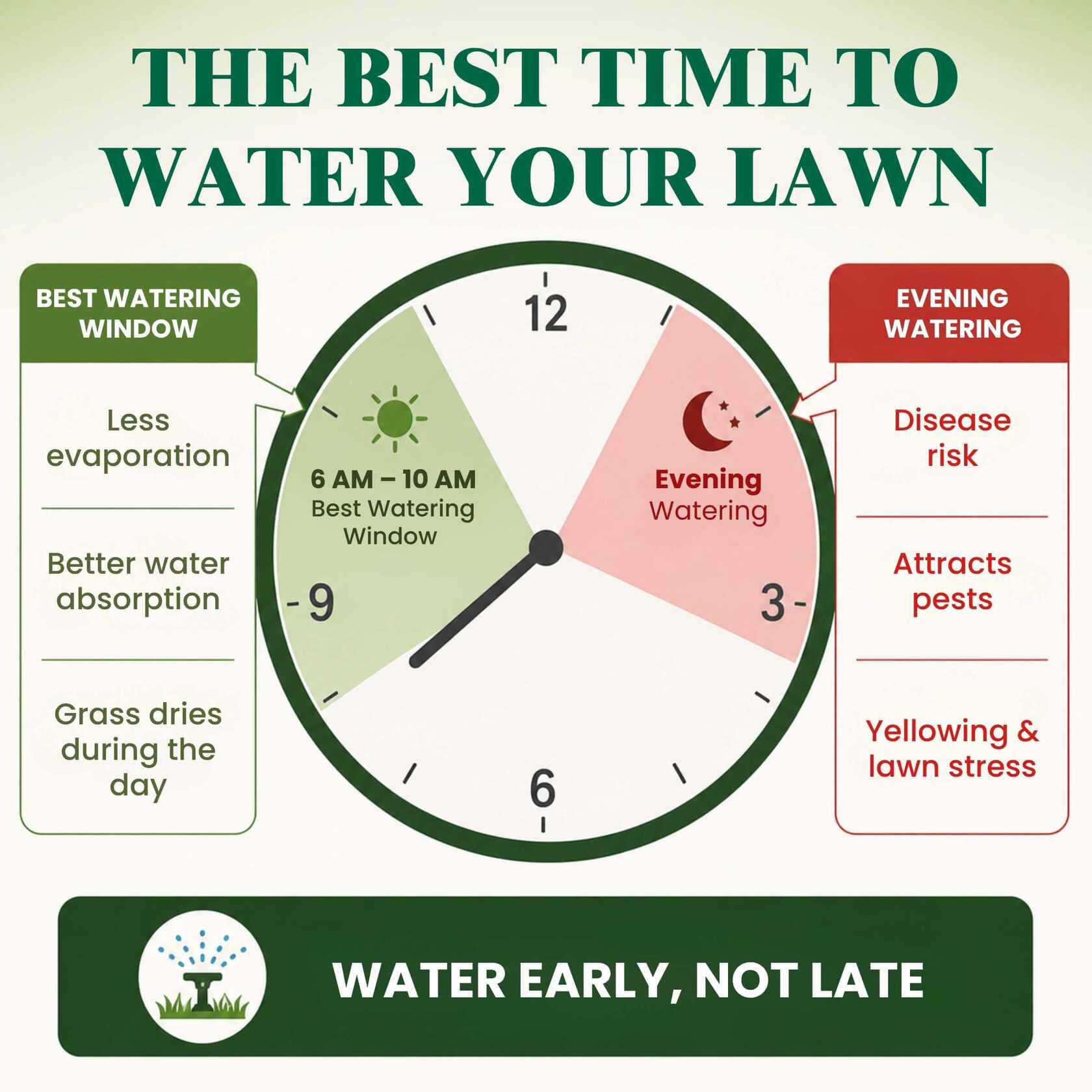
The best time of day to water the lawn is in the early morning — between 6 a.m. and 10 a.m. — to avoid water loss through evaporation.
Watering in the evening can lead to yellowing and other signs of stress in the yard. The lawn doesn’t have enough time to dry off and remains wet overnight, creating the prolonged moist conditions that attract pests and diseases.
Learn More: How to Water Your Lawn: Tips & Schedule
9. Aerate the Soil
When soil becomes compacted, roots struggle to access the water, nutrients, and oxygen needed to grow, which leads to stunted growth, yellowing, and stressed turf.
Core aeration, which involves removing plugs of soil from the ground, relieves compaction and encourages the movement of water, nutrients, and oxygen. As the grass roots expand into the newly available space, the lawn grows thicker and greener.
Heavy clay soil is extremely prone to soil compaction. If you live in an area with clay soils (such as Columbus, OH or Boston, MA), consider scheduling professional aeration services to relieve the lawn’s soil.
10. Remove Thick Thatch
Thatch is the layer of dead and living organic material that accumulates between the grass blades and soil surface. A thin layer of thatch acts as a light mulch layer by insulating the soil and helping it retain moisture.
However, once thatch exceeds one-half inch thick, it ought to be removed. Thick thatch prevents oxygen, nutrients, and water from penetrating the soil’s surface, resulting in weaker grass.
Learn More: Why, When, and How to Dethatch Your Lawn
11. Plant More Grass Seed
When the lawn’s grass canopy becomes too thin, it’s easier for weeds to move in and absorb the nutrients and water intended for your grass, weakening the lawn over time.
The solution is to plant new grass seed over your existing lawn, a process known as overseeding. The resulting density makes it harder for weeds to take hold, keeping your lawn healthier and greener.
12. Train Your Dog
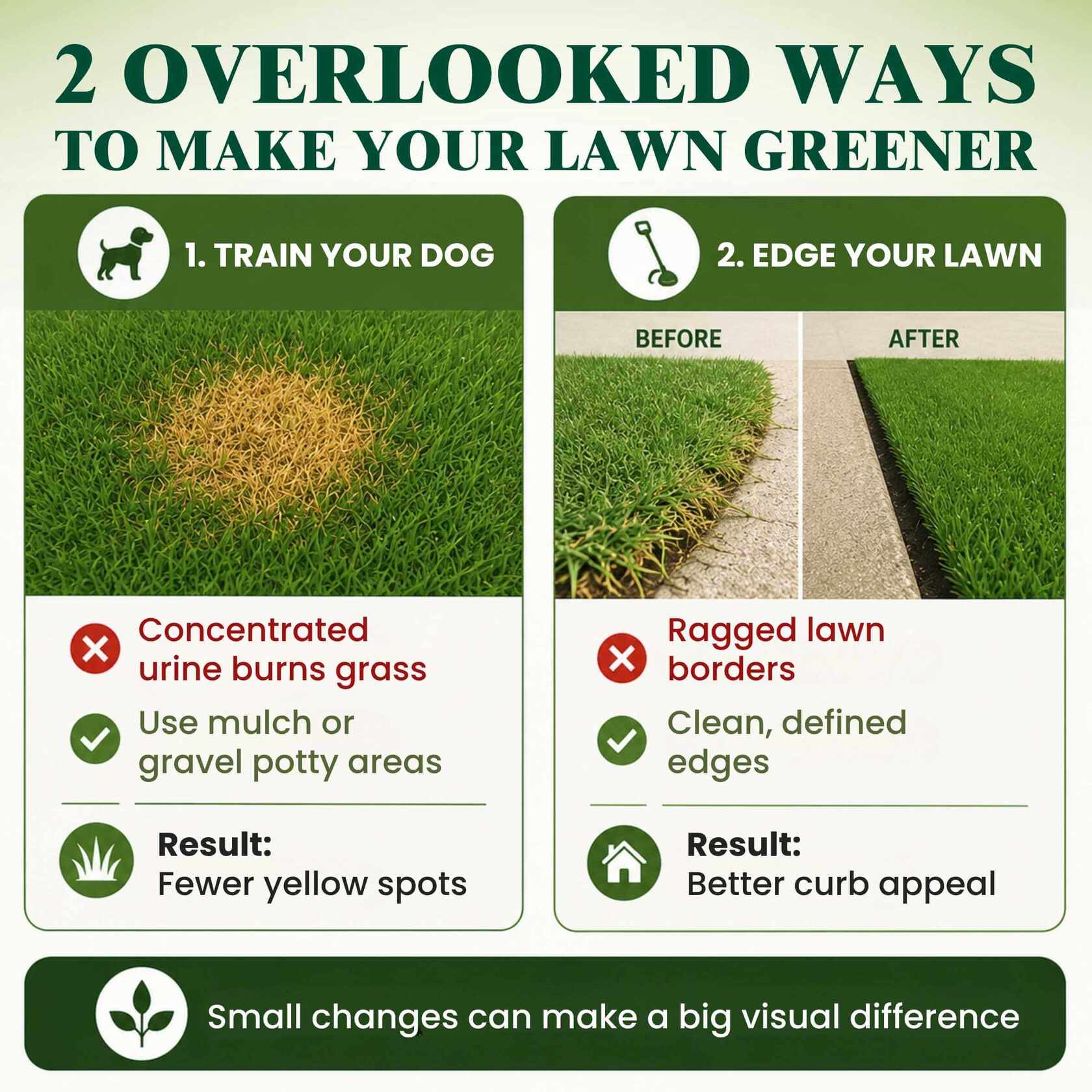
If your lawn has small patches of yellow grass surrounded by even darker green grass, it may mean your dog has turned your lawn into a restroom. Dog urine essentially acts as a fertilizer, but in high concentrations it causes fertilizer burn, turning the grass yellow.
Teach your dog to do its business in a non-grass area, such as mulch or gravel, to help prevent dog urine spots.
13. Edge Your Lawn
Grass along driveways, sidewalks, and flowerbeds is often exposed to heat radiating off hard surfaces, moisture loss, and polluted runoff. This results in yellow, stressed turf that hurts curb appeal.
Edging tools like a manual edger or string trimmer let you remove the damaged growth and define clean lines, giving your lawn a manicured look that makes the rest of your green lawn stand out.
Learn More: How to Edge Your Lawn Like a Pro
Find a Lawn Care Pro Near You
Testing your soil, mowing correctly, and adopting a good lawn care routine are among the best ways to green up your lawn.
When mowing becomes tedious, don’t fall behind and then remove too much grass at once — you risk yellowing the lawn that way. Hire a lawn care professional near you to take the yard work off your plate and protect your turf’s green color.